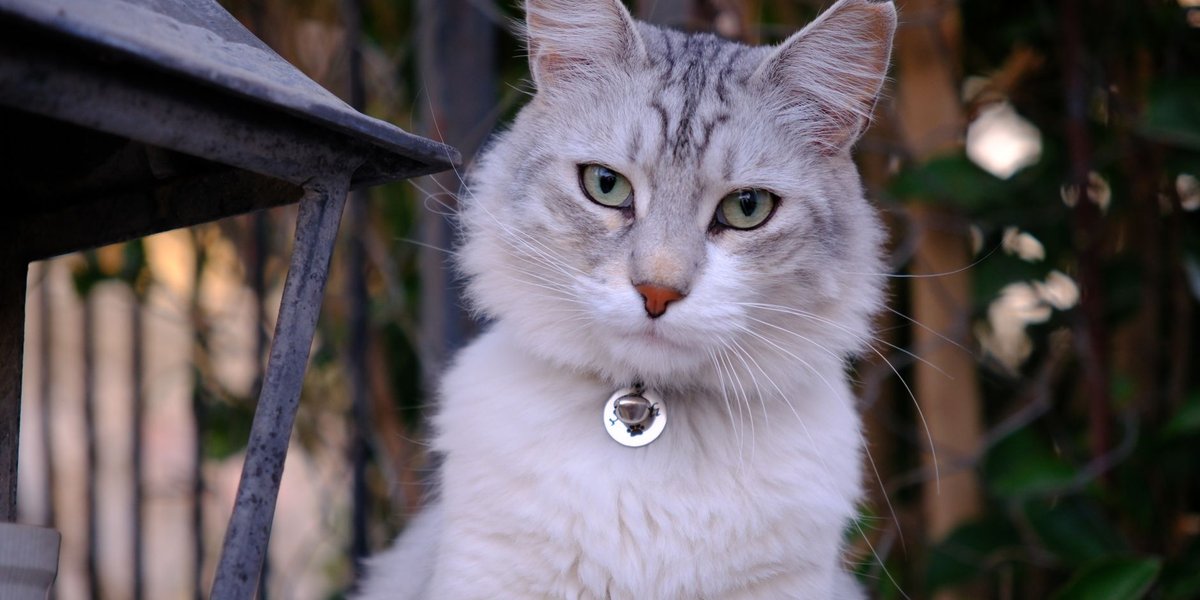
Type “silver tabby” into a cat breed quiz and you’ll get answers that flatly contradict each other, because most quizzes are built on a misunderstanding. Silver tabby isn’t a breed — it’s a coat. Specifically, it’s a color-and-pattern combination that shows up across roughly eight distinct breeds, plus a huge number of mixed cats besides, which is exactly why the label confuses so many people. This is the version that actually names the silver tabby cat breeds, prices them out, and explains why two cats that look nearly identical can be one $50 shelter adoption and one $2,500 pedigreed kitten.
Table of Contents
- The Short Answer
- What Makes a Cat Silver
- Silver Tabby vs Silver Shaded
- The 8 Real Silver Tabby Cat Breeds
- Silver Tabby Breeds at a Glance
- Two Breeds People Mistake for Silver Tabbies
- What a Silver Tabby Actually Costs
The Short Answer
No, silver tabby isn’t a breed. It’s what happens when a dominant inhibitor gene bleaches the base of each hair to white or pale gray while a separate tabby gene keeps the stripes, spots, or ticking intact. Any breed with tabby-patterned bloodlines can, in theory, produce a silver coat — and so can any random-bred domestic cat, which is why the silver tabby lounging on your neighbor’s porch almost certainly isn’t a fancy breed at all. It’s a plain mixed-breed cat wearing an expensive-looking coat for free. The eight breeds below are the ones where silver tabby is a recognized, deliberately bred color rather than a genetic accident.
What Makes a Cat Silver
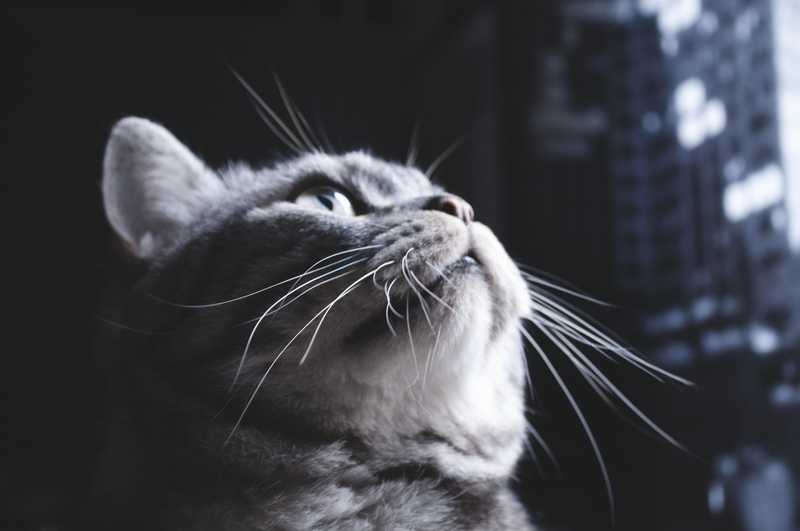
The gene responsible is called the inhibitor gene, and it’s dominant — a kitten needs only one copy from one parent to carry it. What it actually does is suppress pigment production near the base of each hair shaft, so the undercoat comes in silvery-white instead of the warm tan or brown you’d see on a standard brown tabby. The tabby pattern itself — the dark stripes, blotches, spots, or fine ticking — sits mostly at the tip of the hair, where the inhibitor gene has less effect, so the markings stay dark and high-contrast against the pale background.
That contrast is the whole visual appeal of a silver tabby: it’s not a different pattern from a brown tabby, it’s the same pattern with the volume on the background color turned way down. A second gene, the wide-band gene, also plays a role in exactly how much of each hair stays pale versus banded, which is part of why silver tabbies from different breeds can look subtly different from each other even with the identical color genetics underneath.
Silver Tabby vs Silver Shaded
This is the distinction most competing articles skip entirely, and it’s the one that trips up buyers browsing breeder listings. A silver tabby has a visible tabby pattern — actual stripes, blotches, spots, or ticking with clear barring on the legs and a dark line down the spine. A silver shaded cat has no pattern at all: the tipping is even across the whole coat, roughly the top third of each hair, giving a uniform silvery-gray look with no barring anywhere. Go lighter still — tipping on only the very tip of the hair — and you get a chinchilla silver, which reads as almost pure white with a faint gray dusting.
Breeders and registries treat these as different color classes even within the same breed, which is why a “silver Persian” listing might mean three visually different cats depending on whether it’s tabby, shaded, or chinchilla. If the cat in the photo has no visible stripes, you’re not looking at a silver tabby, whatever the listing calls it.
The 8 Real Silver Tabby Cat Breeds
Maine Coon
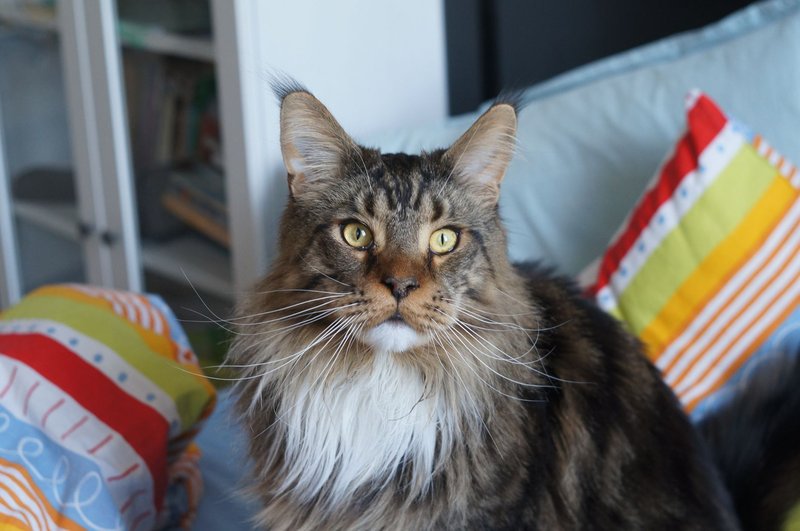
Maine Coons are the breed most people picture when they imagine a big silver tabby — tufted ears, a ruff like a lion’s mane, and a tail long enough to wrap around a coffee mug. Males run 13 to 18 pounds, with some clearing 20. The coat is long and shaggy rather than sleek, heaviest around the neck and britches, and needs a real weekly brushing session or it mats at the armpits first. Temperament-wise, they’re the closest thing to a dog in a cat’s body: they follow you room to room, chirp instead of meowing, and generally tolerate other pets without much drama. One thing worth knowing before you fall for the color: Maine Coons carry a breed-specific mutation linked to hypertrophic cardiomyopathy, so ask any breeder for genetic testing paperwork regardless of coat color. Expect $1,000 to $2,500 for a pet-quality silver tabby kitten from a health-tested line, more for show quality.
British Shorthair
The British Shorthair carries silver about as well as any breed gets to — the classic tabby’s bold, blotched swirls read almost like marble against the pale undercoat, and the breed’s round face and copper eyes give the whole package a stuffed-animal quality. They’re a dense, cobby build, 12 to 18 pounds on males, with a plush double coat that’s short but thick enough that people assume it needs more upkeep than it does. A weekly brush handles it. This isn’t a cat that follows you around the house — it’s more likely to claim one spot on the couch and observe you from a comfortable distance. Silver tabby kittens typically run $1,200 to $2,000.
American Shorthair
If you’ve seen a “classic” silver tabby on a cat food label, there’s a decent chance it was an American Shorthair — the breed’s standard treats silver tabby as close to its signature color. These cats descend from working mousers brought over on ships, and it shows: medium build, 8 to 15 pounds, a short low-maintenance coat, and a temperament built for getting along with kids, dogs, and general household chaos without complaint. Grooming is about as easy as cats get. They’re also one of the more affordable purebred options, with silver tabby kittens usually landing between $800 and $1,200.
Persian
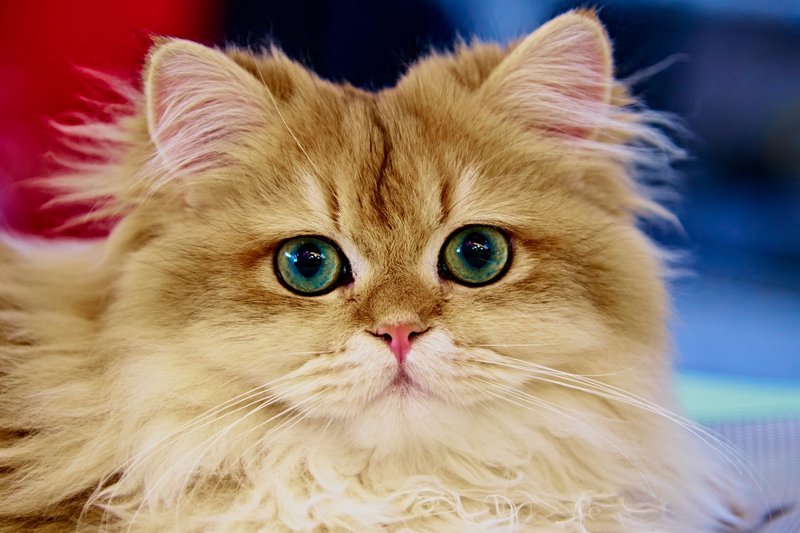
Persians take the silver tabby coloring and turn the volume up: the coat is long, dense, and flowing rather than short, which means daily brushing isn’t optional — skip a few days and you’re looking at mats, especially around the britches and belly. The flat-faced show style can bring breathing and tear-duct issues, so a pet-quality Persian with a slightly less extreme face is often the better choice for a first-time owner. Temperament is calm bordering on sedentary; this is a cat that would rather watch you clean than help. Silver tabby Persians, particularly from chinchilla-line pedigrees prized for the contrast between the silver coat and green eyes, run $1,500 to $3,000, with show-quality lines going well beyond that.
Turkish Angora
Turkish Angoras are the athletic, single-coated option on this list — no dense undercoat means less shedding and less matting than a Persian, even though the coat itself is medium-long and silky. They’re smaller and lighter than most of the other breeds here, usually 5 to 9 pounds, and considerably more talkative and attention-seeking; this isn’t a cat that entertains itself quietly in another room. Weekly brushing is enough. Because the breed hasn’t been as heavily commercialized as Persians or Maine Coons, silver tabby Angoras are comparatively affordable, typically $600 to $1,200 from a reputable breeder.
Egyptian Mau
The Egyptian Mau is the one breed on this list where the spotted tabby pattern wasn’t selectively bred in — it’s a naturally occurring pattern the breed has carried for centuries, and silver is considered the original, classic Mau color. They’re fast: owners and breeders routinely clock them as the quickest domestic cat breed, and it shows in a lean, muscular build made for sprinting rather than lounging. Maus bond hard to one person and can be genuinely wary of strangers, which is part of why they’re less common as household pets. The short coat needs almost no grooming. Because breeding lines are small, expect to pay $1,200 to $2,500 and to wait for a litter.
Norwegian Forest Cat
Norwegian Forest Cats — “skogkatt” back home — were bred to survive actual Scandinavian winters, and the coat proves it: long, water-resistant, and shed out hard twice a year in a way that turns your couch into a felting project. Males run 12 to 16 pounds with a sturdy, triangular-headed build made for climbing rather than sprinting. They’re independent but not aloof, the type to supervise your day from a high shelf rather than your lap. Weekly brushing is the baseline, more during shed season. Silver tabby is a common, well-established color in the breed, typically priced $1,000 to $2,000.
Abyssinian
Abyssinians complicate the list a little, and that’s worth knowing before you go looking for one. Their signature pattern is ticked tabby — each hair banded with color rather than laid out in stripes, giving a fine, sand-like texture instead of bold markings — and the silver version of that pattern is recognized as its own division by TICA, with a pure white undercoat under black, blue, or fawn ticking. Other major registries don’t include silver in their Abyssinian standard, so a silver Abyssinian can win in one organization’s ring and not be eligible to enter another’s. They’re lean, active, endlessly curious cats, 6 to 10 pounds, with a short coat that barely needs brushing. Silver Abyssinian kittens run $800 to $1,500, sometimes less because the color isn’t universally show-eligible.
Silver Tabby Breeds at a Glance
| Breed | Coat Length | Temperament | Grooming | Price Range |
|---|---|---|---|---|
| Maine Coon | Long | Sociable, dog-like | Weekly, more in shed season | $1,000–$2,500 |
| British Shorthair | Short, dense | Reserved, independent | Weekly | $1,200–$2,000 |
| American Shorthair | Short | Easygoing, adaptable | Minimal | $800–$1,200 |
| Persian | Very long | Calm, low-energy | Daily | $1,500–$3,000 |
| Turkish Angora | Medium, silky | Vocal, attention-seeking | Weekly | $600–$1,200 |
| Egyptian Mau | Short | Fast, one-person bond | Minimal | $1,200–$2,500 |
| Norwegian Forest Cat | Long, weatherproof | Independent, climbs | Weekly, more in shed season | $1,000–$2,000 |
| Abyssinian | Short | Active, curious | Minimal | $800–$1,500 |
Two Breeds People Mistake for Silver Tabbies
Search “silver tabby” long enough and Russian Blue photos start showing up, usually because of the breed’s shimmering, silver-tipped guard hairs. But those guard hairs sit over a solid blue-gray coat with zero pattern underneath — the Cat Fanciers’ Association breed standard explicitly disqualifies any tabby markings on a Russian Blue. What looks silver here is a sheen, not a pattern. If the cat in a photo has visible stripes or spots, it isn’t a Russian Blue, whatever the caption says.
The other common mix-up is the striped-faced Siamese-type cat, usually labeled a “lynx point Siamese.” A traditional Siamese is a colorpoint breed — solid color restricted to the face, ears, legs, and tail, no tabby pattern anywhere on the body. The tabby-striped version does exist, but CFA registers it as a separate breed, the Colorpoint Shorthair, not as a Siamese at all. It’s a real, recognized cat — just not the one the label suggests, and not the same silver-plus-tabby combination covered above, since point restriction and silver inhibition are two different genes doing two different jobs.
What a Silver Tabby Actually Costs
Purebred silver tabby kittens generally run from around $800 on the low end (American Shorthair, Abyssinian) to $3,000 on the high end (show-quality Persian), and color alone can add a premium on top of that — breeders often charge $500 to $1,500 more for a silver tabby kitten than a standard brown tabby from the same litter, purely because the coloring photographs better and sells faster. That premium has nothing to do with health or quality, so treat a breeder who leads with “rare color” pricing and can’t produce health testing paperwork as a red flag, not a bargain.
If the specific breed matters less to you than the coat, check shelters first. Silver tabby domestic shorthairs and mixed-breed cats show up constantly, usually for well under $250 including vaccinations and spay or neuter, and the ASPCA notes that shelter cats are, on average, no less healthy than purebreds and often come already socialized. You’ll give up the guaranteed adult size and coat length that comes with a pedigree, but you’ll also skip the waiting list.
None of this makes the label “silver tabby cat” meaningless — it just does less work than people assume. It tells you the coat, not the breed, the temperament, or the price tag. Match the pattern to one of the eight silver tabby cat breeds above, or skip the pedigree entirely and let a shelter surprise you. Either way, you’ll know exactly what you’re looking at instead of guessing from a stack of Google Images tabs.