TLDR
Ask “how many endangered species are in Arkansas” and you’ll get three different answers depending on who’s counting. The U.S. Fish and Wildlife Service lists 32 species in the state as federally endangered or threatened under the Endangered Species Act. The Arkansas Natural Heritage Commission tracks a much longer list — more than 70 species considered rare, vulnerable, or imperiled at the state level, which includes plants and animals the feds haven’t gotten around to reviewing. Neither number is wrong. They’re measuring different things: one is a legal status, the other is a conservation triage list. The species doing the worst right now are cave-dwelling fish found nowhere else on Earth, a handful of bats getting wiped out by a fungus, and freshwater mussels that most people will never see because they live buried in Ozark streambeds.
Table of Contents
- Why the Number Keeps Changing
- Arkansas Endangered Species by Group
- The Signature Species Worth Knowing
- Endangered Species by Arkansas Region
- Why These Species Are Disappearing
- What You Can Actually Do
Why the Number Keeps Changing
Three lists exist, and they answer three different questions.
The federal list, maintained by the U.S. Fish and Wildlife Service, currently carries 32 Arkansas species as endangered or threatened. This is the list with legal teeth — it triggers permitting requirements, habitat protections, and recovery plans. Getting on it, or off it, requires a formal rulemaking process that can take years.
The Arkansas Game and Fish Commission maintains its own list of species of greatest conservation need, which overlaps with the federal list but adds species the state considers at risk even without federal protection.
Then there’s the Arkansas Natural Heritage Commission’s tracking list, which runs past 70 plants and animals. This one exists to catch problems early — species that are declining but haven’t cleared the bar (or waited through the backlog) for a federal listing. A lot of Arkansas’s rare plants live here: species so narrowly distributed that losing one population could mean losing the species from the state entirely, without ever showing up on the federal roll.
None of the three is “the” correct number. If someone tells you Arkansas has exactly one figure for endangered species, ask which list they mean.
Arkansas Endangered Species by Group
The federally listed species break down by taxa like this:
| Group | Examples | Primary threat |
|---|---|---|
| Freshwater mussels | Scaleshell mussel, pink mucket, speckled pocketbook | Dam construction, stream sedimentation |
| Fish | Ozark cavefish, yellowcheek darter, leopard darter | Groundwater contamination, stream fragmentation |
| Bats | Indiana bat, gray bat, northern long-eared bat, tricolored bat | White-nose syndrome, cave disturbance |
| Birds | Red-cockaded woodpecker, interior least tern | Old-growth pine loss, sandbar habitat loss |
| Amphibians | Ozark hellbender | Stream siltation, water quality decline |
| Plants | Missouri bladderpod, running buffalo clover, Geocarpon minimum | Habitat conversion, glade and prairie loss |
Mussels make up the largest single share of the federal list, which surprises most people — they’re not charismatic, and you’d have to wade into a riverbed to ever see one. But Arkansas’s Ozark and Ouachita streams are unusually rich in mussel diversity, and mussels are also unusually sensitive to water quality, so they tend to be the first indicator that a stream system is in trouble.
The Signature Species Worth Knowing
Ozark cavefish (Troglichthys rosae). A little over two inches long, blind, and nearly colorless, this fish spends its entire life in the total darkness of Springfield Plateau cave systems in northwest Arkansas, southwest Missouri, and northeast Oklahoma. It has no use for eyes or pigment because sunlight never reaches where it lives. It’s listed as threatened federally, and its populations are so tightly tied to groundwater quality that a gas station leak or a poorly managed hog operation upstream of the right cave system could functionally end a population overnight.
Yellowcheek darter (Etheostoma moorei). This one is endemic to Arkansas in the truest sense — it exists nowhere else on the planet except four small tributaries of the Little Red River in the Ozarks: the South Fork, Middle Fork, Devil’s Fork, and Archey Creek. According to U.S. Geological Survey research, its numbers have been squeezed by seasonal stream drying combined with the downstream impoundment of Greers Ferry Lake, which cut off habitat and altered flow patterns the fish evolved around.
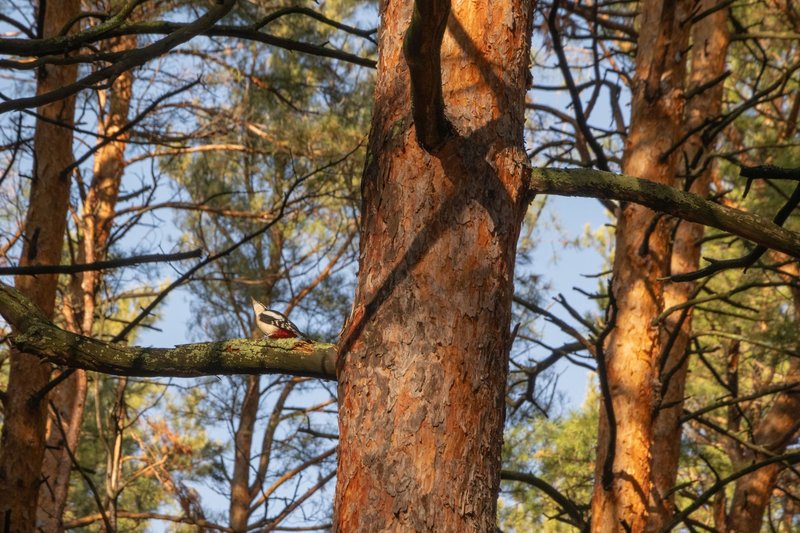
Red-cockaded woodpecker. This bird needs living, old pine trees — usually 80 to 100 years old — soft enough with heart rot for it to excavate a nesting cavity, but still alive so sap flow around the hole deters snakes. That specific combination all but vanished with old-growth pine logging across the South. Arkansas’s best population lives in the Ouachita National Forest’s Pine-Bluestem Restoration Project, roughly 200,000 acres of forest managed with prescribed burns to mimic the open, grassy pine woodland the species needs. The population there grew from around 32 birds in 1990 to more than 85 by the mid-2000s — one of the more encouraging recovery stories on this list, and proof that habitat management works when it’s sustained for decades, not years.
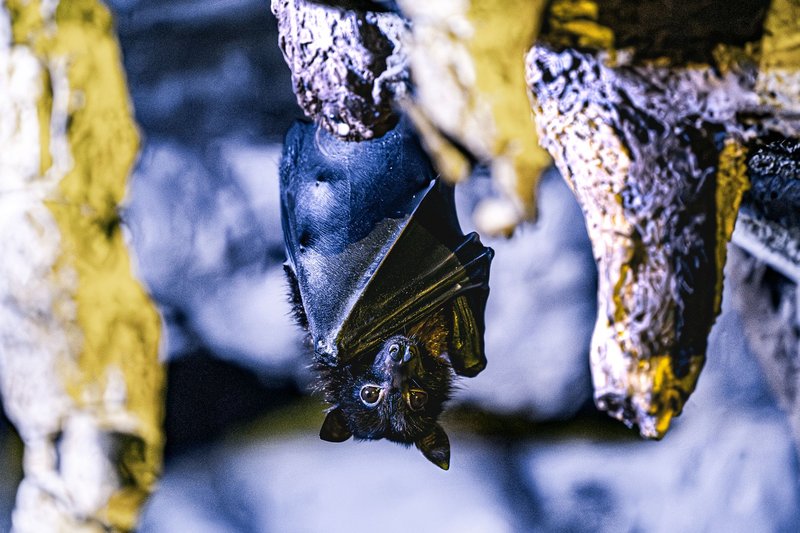
Indiana bat, gray bat, and northern long-eared bat. All three hibernate in Arkansas caves, and all three have been hammered by white-nose syndrome, a cold-loving fungus first confirmed in Arkansas in 2012 that’s since spread to at least 15 counties. Research from the U.S. Forest Service in the Ouachita Mountains documented a 98% decline in northern long-eared bat capture rates after the fungus established itself, alongside a 77% drop in tricolored bats — a species not yet federally listed but clearly headed that direction. Little brown bats, once one of the state’s most common species, have been all but eliminated from several cave systems.
Ozark hellbender. North America’s largest salamander, sometimes stretching past two feet, and one of the better indicators of stream health in the Ozarks because it needs cold, fast, unsilted water with plenty of large flat rocks to hide under. Dam-altered flows and sediment runoff from development have cut its range down to scattered populations, and it’s federally listed as endangered.
Scaleshell mussel. One of the rarest freshwater mussels in North America, historically found across a wide swath of Midwestern and Southern river systems and now reduced to a handful of scattered populations, several of them in Arkansas’s Ozark streams. Its full life cycle depends on a fish host for its larvae to attach to and develop — sever that fish population, and the mussel goes with it, even if the water quality looks fine on paper.
Missouri bladderpod and running buffalo clover. Two of Arkansas’s federally listed plants, both restricted to very specific habitat: limestone glades for the bladderpod, disturbed woodland edges with the right grazing history for the clover. Neither has the charisma of a woodpecker or a salamander, but both illustrate the same point — narrow habitat requirements plus a small footprint in the state add up to fragile populations, no predator or poacher required.
Endangered Species by Arkansas Region
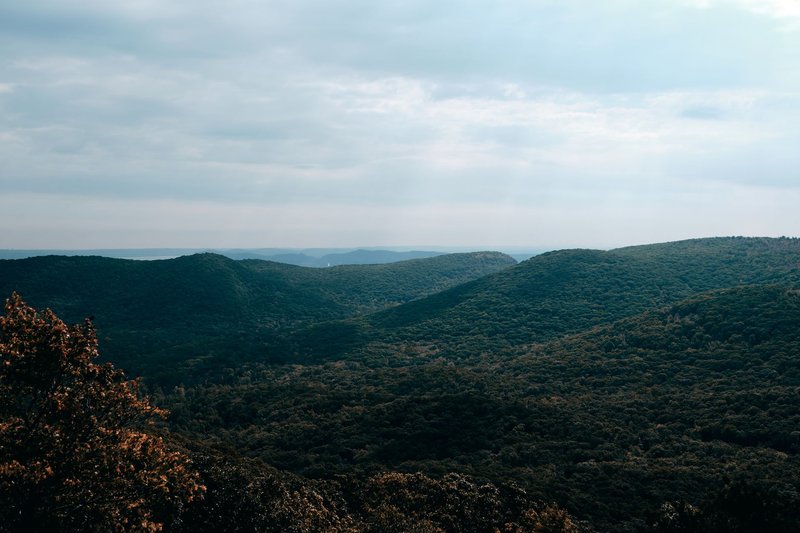
The Ozarks (northwest and north-central Arkansas) carry the heaviest concentration of rare species in the state, mostly because of the region’s karst geology — cave systems, springs, and groundwater-fed streams that support species found nowhere else. Ozark cavefish, yellowcheek darter, gray bat, and Ozark hellbender are all Ozark specialists.
The Ouachita Mountains (west-central Arkansas) are the stronghold for the red-cockaded woodpecker and home to declining bat populations tracked in the Forest Service’s long-term white-nose syndrome research. The Ouachitas’ east-west ridge orientation, unusual for North American mountain ranges, also supports plant endemics found in few other places.
The Delta and coastal plain (eastern and southern Arkansas) deal with a different pressure entirely: nearly all of the original bottomland hardwood forest and prairie has been converted to row-crop agriculture over the past century. Interior least terns nesting on sandbars along the Mississippi and Arkansas Rivers, along with several wetland-dependent plants, are the region’s main federally listed concerns, and their habitat problem is essentially the opposite of the Ozarks’ — too much modification of open water and land, rather than groundwater contamination.
Why These Species Are Disappearing
Three causes account for most of Arkansas’s listings, and they rarely act alone.
Habitat loss and fragmentation hits hardest for species with narrow ranges to begin with — old-growth pine for the woodpecker, specific glade soils for the bladderpod, undisturbed cave systems for the cavefish. When a species’ entire range fits inside one county, one bad land-use decision can be existential.
White-nose syndrome is the newest and fastest-moving threat, and it’s specific to bats. The fungus that causes it, Pseudogymnoascus destructans, thrives in the same cold, humid cave conditions bats need for hibernation, and it kills by disrupting hibernation cycles so bats burn through fat reserves before spring. Arkansas has no cure for it and no realistic containment strategy beyond limiting human traffic into infected caves.
Dam construction and stream alteration explain most of the aquatic listings — mussels, darters, the hellbender. Dams change water temperature, sediment load, and seasonal flow patterns that species evolved around over thousands of years, and they physically block the up-and-downstream movement many aquatic species and their fish hosts depend on.
What You Can Actually Do
If you spend time outdoors in Arkansas, you’re a more useful data point than you might think. The Arkansas Game and Fish Commission and the state’s Natural Heritage Commission both rely on reported sightings to track rare species between formal surveys — a photo of a hellbender or an unusual bat roost, with a location, genuinely helps.
Stay out of caves during winter hibernation months if you’re not on an authorized survey, and decontaminate gear between cave visits if you do go in — the white-nose fungus spreads on boots and equipment as easily as it does bat to bat.
If you want to see any of these species in person, do it through an organized program rather than freelancing it. Guided cave tours, Ouachita National Forest ranger programs, and Ozark stream conservation groups all offer ways to view sensitive habitat without adding to the pressure on it. The animals on this list didn’t get rare because one person looked at them wrong — but cumulative disturbance from well-meaning visitors is a real, documented factor in several of these declines, and it’s the one variable an individual visitor actually controls.