Table of Contents
- Six Ecosystems, One Small Country
- Mammals of the Forest Interior
- Birds: The Torogoz and Beyond
- Reptiles and Amphibians
- Marine Life and the Bay of Turtles
- Where to Actually See This Wildlife
- The Species Worth Worrying About
El Salvador is the smallest country in Central America and the only one without a Caribbean coastline, which sounds like a recipe for a thin species list. It isn’t. Cram six distinct terrestrial ecosystems, a 300-kilometer Pacific coast, and one of the region’s largest mangrove systems into a country the size of Massachusetts, and you get an animal inventory that punches well above its geography: roughly 500 recorded bird species, over 800 fish species along the coast, and a national bird with its own creation myth.
Most rundowns of “animals of El Salvador” are either dry taxonomic lists or a dozen stock photos with a caption underneath. Here’s the actual landscape — organized by where you’d find each animal, not just what phylum it belongs to.
Six Ecosystems, One Small Country
Volcanic highlands, dry tropical forest, cloud forest, mangrove estuary, freshwater wetland, and coastal plain — El Salvador has all six packed within a few hours’ drive of each other. That compression is why a single park like El Imposible, in the western highlands, can hold over 100 mammal species, 285 bird species, 53 reptiles and amphibians, and more than 5,000 species of butterfly inside one protected area, according to Salvanatura, the conservation group that manages it.
The upshot: you don’t need to cross the country to see radically different wildlife. A cloud-forest quetzal and a mangrove-dwelling hawksbill turtle exist within a two-hour drive of each other, which is not something you can say about most countries this size.
Mammals of the Forest Interior
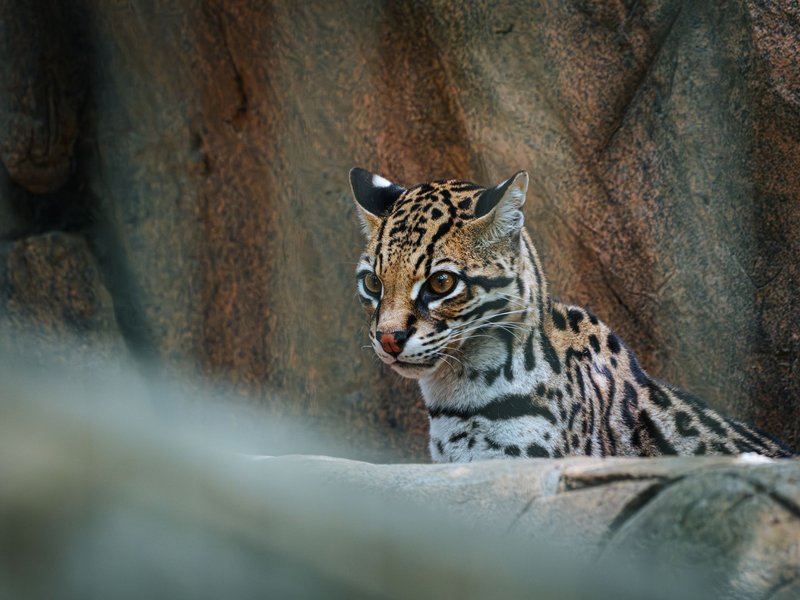
El Salvador’s mammal list reads like a checklist of Central America’s more elusive cats and primates, most of them concentrated in the western highlands where forest cover survived the country’s heavy 20th-century deforestation.
The Central American tapir is the headline act, a stocky, prehensile-snouted herbivore that can weigh over 300 kilograms and one the country has all but lost outside protected reserves. Alongside it, El Imposible shelters the red-faced spider monkey, whose long limbs and near-tailless silhouette make it instantly distinguishable from every other Central American primate, plus small cat species including the ocelot, jaguarundi, and puma. The jaguar itself is now considered extirpated from Salvadoran territory — a loss most visitors don’t realize happened.
Lower down the food chain, raccoons, anteaters, and armadillos work the forest floor and mangrove fringe, doing the unglamorous job of turning over leaf litter and termite mounds that keeps the whole system running.
Birds: The Torogoz and Beyond
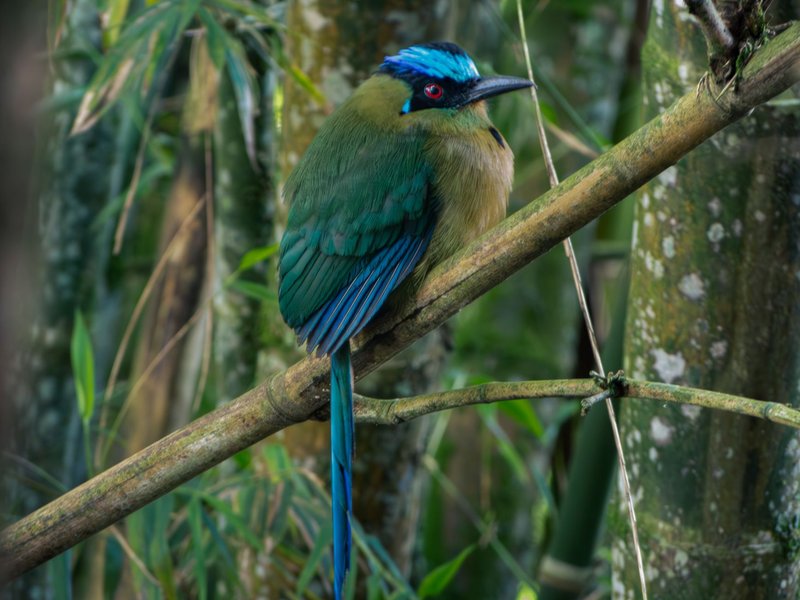
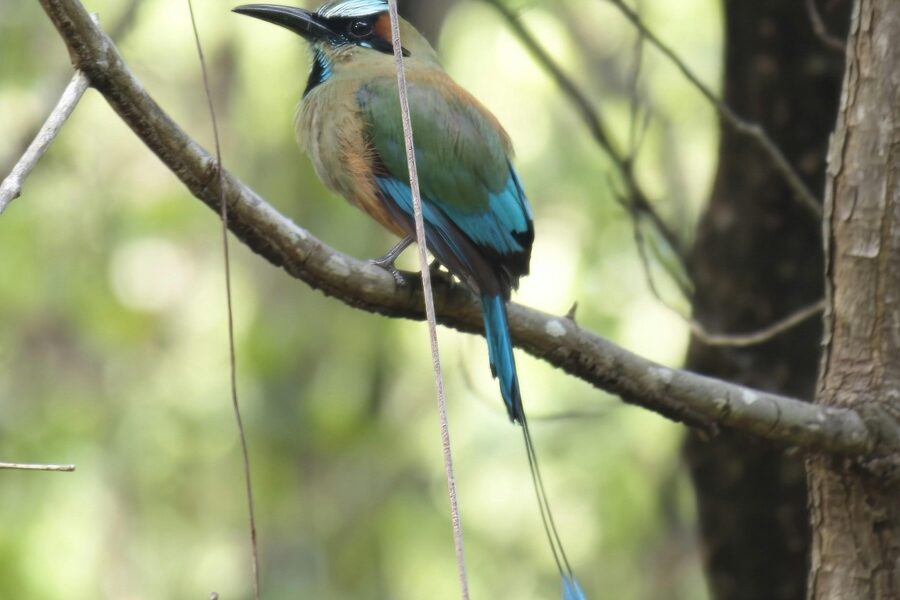
Start with the torogoz, the turquoise-browed motmot and El Salvador’s national bird since 1999 — the animal every Salvadoran schoolkid can identify on sight. It’s a 34-centimeter bird with a racketed, pendulum tail it swings side to side like a metronome, and a call, a soft, rhythmic “toh-roh-gohz,” that gave it its name. Salvadoran folklore holds that the motmot was tasked with waking the other birds at dawn, fell asleep on the job, and was stripped of its tail feathers except the two dangling ones it swings today. That’s why it carries a second nickname: the clock bird.
Beyond the torogoz, El Salvador’s bird list gets serious fast. El Imposible alone hosts the resplendent quetzal and the horned guan — a turkey-sized, black-and-white bird with a fleshy red horn on its forehead, found almost nowhere outside the cloud forests of Guatemala, southern Mexico, and this one Salvadoran park. Add the ornate hawk-eagle, emerald toucanet, and long-tailed manakin, and the highlands alone justify a trip with binoculars.
The coast tells a different bird story. Jiquilisco Bay’s mangroves and mudflats host the bulk of the country’s coastal waterbirds, including nesting colonies of black skimmers, least terns, and American oystercatchers — species that depend entirely on the bay’s undisturbed sandbars, which are increasingly rare on a coastline this developed.
Reptiles and Amphibians
Reptile and amphibian diversity concentrates in the same two places as everything else: the western cloud forests and the eastern mangrove coast. American crocodiles and green iguanas are common enough along waterways that most rural Salvadorans have a crocodile story. Less common is the Central American river turtle (locally called tortuga blanca), a large, entirely aquatic species that’s been hunted for its meat across its range for generations and is now a conservation priority inside protected reserves.
The amphibian side of the ledger is smaller but sharper: the black-eyed tree frog is the only Salvadoran amphibian species considered endangered on a global scale, a status tied directly to the same highland forest loss that’s squeezed the tapir and spider monkey into isolated pockets.
Marine Life and the Bay of Turtles
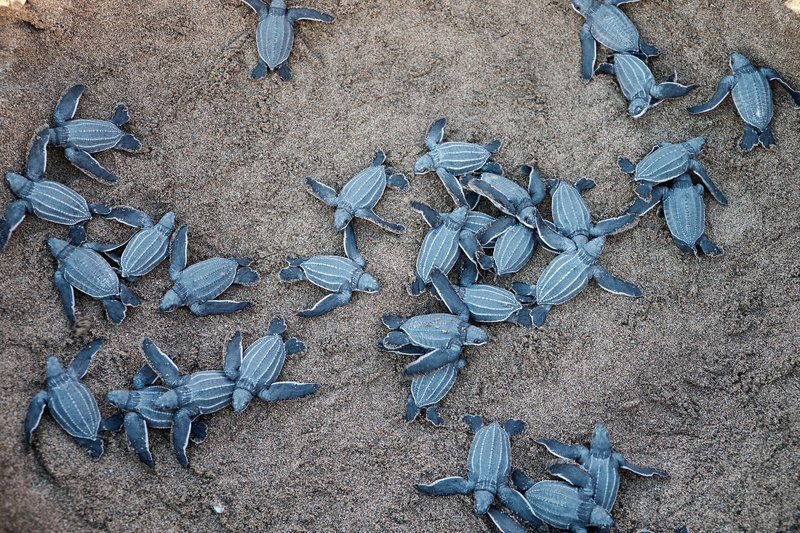
Bahía de Jiquilisco is where El Salvador’s wildlife case gets genuinely internationally significant, not just regionally interesting. The bay, a 623-square-kilometer complex of mangrove channels, estuaries, and barrier islands on the Usulután coast, was designated a Ramsar Wetland of International Importance in 2005 — one of only a handful of Salvadoran sites to carry that status, according to the Ramsar Convention on Wetlands.
The bay’s main claim to fame: it’s one of just two nesting habitats for the hawksbill turtle in the entire eastern Pacific, and by some counts hosts roughly 40% of all known eastern Pacific hawksbill nesting activity each season, with 150 to 200 females coming ashore on Isla San Sebastián and Punta San Juan to lay eggs. The hawksbill, one of El Salvador’s rare animals, is listed as critically endangered worldwide, and researchers working the bay made a discovery that reshaped how the species is understood elsewhere: these turtles spend much of their time living inside the mangrove channels themselves, not just passing through open water to nest, a finding documented by Wild Earth Allies during their long-running tagging program in the bay.
Green turtles, olive ridleys, and occasional leatherbacks nest on the same beaches. Offshore, the bay and surrounding coastal waters support bottlenose dolphins, and El Salvador’s deeper Pacific waters have recorded sightings of Cuvier’s beaked whale, a notoriously deep-diving species rarely seen anywhere near shore.
Where to Actually See This Wildlife
Two places do the heavy lifting for anyone actually planning to see Salvadoran wildlife rather than just read about it.
El Imposible National Park, a two-and-a-half-hour drive from San Salvador, is the country’s largest and most biodiverse protected area — the name comes from a treacherous mule crossing that used to claim pack animals regularly, not the difficulty of the hike today, which is manageable with a guide. Early morning is the move for bird activity; the park requires a certified guide for entry, arranged through Salvanatura.
Jiquilisco Bay, on the southeastern coast near Puerto El Triunfo, is best visited during hawksbill nesting and hatching season, roughly September through January, when local conservation cooperatives run night patrols and let visitors watch releases. Boat tours through the mangrove channels also turn up herons, kingfishers, and, with enough patience, dolphins.
The Species Worth Worrying About
A handful of animals on this list carry conservation weight beyond “interesting to see”: the hawksbill turtle (critically endangered), the horned guan and resplendent quetzal (both increasingly restricted to shrinking cloud-forest fragments), the Central American tapir and red-faced spider monkey (both squeezed by habitat loss outside reserve boundaries), and the black-eyed tree frog (the only Salvadoran amphibian on the global endangered list).
None of that is abstract. El Salvador cleared the vast majority of its original forest cover in the last century, which is exactly why El Imposible and Jiquilisco Bay carry outsized importance — they’re not just good wildlife-watching spots, they’re most of what’s left. Anything you see on a visit to either one, you’re seeing because someone kept it standing.