Cameroon is sometimes called “Africa in miniature,” and that nickname actually earns its place. Pack rainforest, savanna, montane highlands, coastal mangroves, and semi-arid plains into one country, and you get a biodiversity density that most African nations can’t match. Over 900 bird species. More than 300 mammals. Reptiles, amphibians, and fish with ranges measured in single river basins.
This guide organizes the most notable animals of Cameroon by the habitat where you’ll actually find them — not just a flat list of megafauna with a token gorilla thrown in.
Table of Contents
- Rainforest: The Congo Basin Edge
- Savanna and Northern Plains
- Mountains and Highland Zones
- Wetlands and Rivers
- Coastal and Mangrove Zones
- Where to See Cameroon’s Wildlife
- Conservation Note: The Cross River Gorilla
Rainforest: The Congo Basin Edge {#rainforest}
The southern and eastern lowlands of Cameroon are the western edge of the Congo Basin — the second-largest tropical rainforest on Earth. Most of Cameroon’s endemic and endangered species live here. Many of these same species appear throughout the broader Congo rainforest fauna, where the ecological community they belong to extends across several countries.
Western Lowland Gorilla (Gorilla gorilla gorilla)
The western lowland gorilla is the most numerous gorilla subspecies, which doesn’t mean plentiful — the IUCN lists it as Critically Endangered. In Cameroon, they concentrate in the Dja Faunal Reserve and Lobéké National Park in the southeast. Males can reach 180 kg. They’re knuckle-walkers, frugivores, and largely peaceful unless directly threatened. Watch for bent vegetation and dung — guides use these trails to track groups.
Forest Elephant (Loxodonta cyclotis)
The forest elephant was classified as a distinct species from the savanna elephant in 2010. Smaller in body and with straighter, downward-pointing tusks adapted for moving through dense vegetation, it’s also Critically Endangered primarily due to ivory poaching. Lobéké and Campo Ma’an host significant populations. They’re shy and rarely seen in full clearings — your best chance is at forest bais (mineral-rich clearings) at dawn.
Bongo (Tragelaphus eurycerus)
The bongo is the largest forest antelope on the continent and one of the most visually striking — chestnut-red coat with narrow white vertical stripes, spiraling horns on both sexes. They live in the dense lowland forest and are almost entirely nocturnal. Camera trap footage at Dja Reserve documents them regularly; seeing one with your own eyes is a different matter.
Mandrill (Mandrillus sphinx)
The mandrill’s coloring — blue and red on the face, matching in unexpected places — looks almost artificial. They live in groups that can number in the hundreds in productive forest, an arrangement called a horde. Cameroon’s southern forests hold one of the most significant mandrill populations in their range. They’re technically omnivores: insects, fruits, tubers, and occasionally small vertebrates.
Chimpanzee (Pan troglodytes)
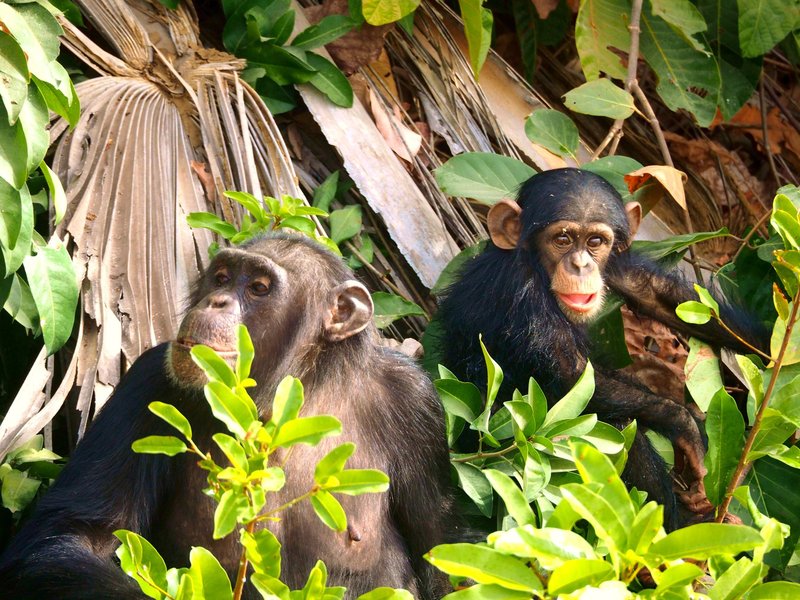
Cameroon sits at the intersection of two chimpanzee subspecies: the western (P. t. verus) in the northwest and the Nigeria-Cameroon (P. t. ellioti), which is the most endangered. Both subspecies use tools, engage in complex social behavior, and have been documented hunting red colobus monkeys cooperatively. Gashaka-Gumti in Nigeria borders Cameroon’s northwest highlands and is one of the better areas for habituation-based chimp trekking close to the border. The Nigeria-Cameroon chimpanzee is also one of the flagship species covered in overviews of Nigeria’s wildlife, reflecting how deeply cross-border the population really is.
African Grey Parrot (Psittacus erithacus)
Cameroon’s coastal and forest zones are a stronghold for the African grey parrot, the species consistently ranked highest for cognitive ability among birds. They’ve been assessed as Endangered largely due to trapping for the pet trade. Wild populations form massive roosts at dusk — sometimes in the thousands — which is extraordinary to witness but also an easy target for trappers.
Goliath Frog (Conraua goliath)
The Goliath frog is the largest frog in the world, reaching up to 32 cm and 3.25 kg. It’s endemic to a small stretch of fast-flowing rivers in southwestern Cameroon and adjacent Equatorial Guinea. It doesn’t call — an adult Goliath frog is mute. Locals hunt them for food, and their exact numbers are poorly tracked, but habitat loss is pushing them toward threatened status. For context on how it compares to other notable species, it stands out even among the top frog species worldwide for sheer size alone.
Savanna and Northern Plains {#savanna}
The north of Cameroon flips the script entirely. Waza National Park in the Far North Region is dry Sudano-Sahelian savanna — flat, open, hot, and closer to Chad than to the Congo Basin.
African Lion (Panthera leo)
Lion populations in Cameroon are small and fragmented. Waza hosts one of the last viable groups in the country — estimates run between 14 and 25 individuals depending on the survey year. This is enough to sustain the population only if connectivity to lions in Chad is maintained. Waza is genuinely the best place in Central Africa to see lions, which reflects more on how depleted the broader region is than on how abundant they are at Waza.
Giraffe (Giraffa camelopardalis)
The Kordofan giraffe (G. c. antiquorum) is one of the rarest giraffe subspecies, and Waza holds a small population. They browse acacia trees along seasonal water sources. The Kordofan is distinguished by irregular spot patterns that often extend below the knee — a small but definitive visual marker compared to the more familiar reticulated patterns.
African Elephant — Savanna Type
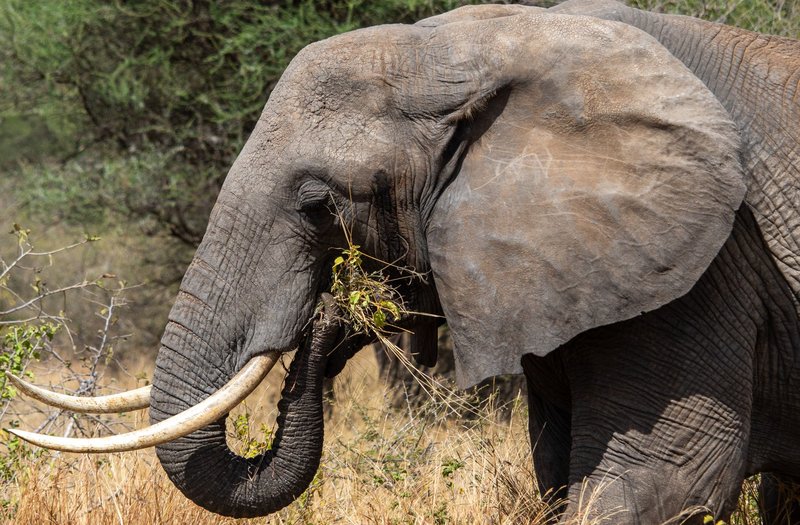
Northern Cameroon has a separate elephant population from the forest south. These savanna-type elephants use the Bénoué National Park complex and the Faro Reserve. They’re larger than their forest cousins, with more pronounced curved tusks and ears shaped for heat dissipation. The Bénoué population has faced heavy poaching pressure; population surveys in the 2010s found numbers significantly below earlier estimates.
Hippopotamus (Hippopotamus amphibius)
Rivers flowing through northern Cameroon — particularly the Bénoué River — support hippo populations. They graze on land at night and spend days in water. Hippos kill more people in Africa than lions or leopards do, mostly through territorial encounters when humans cross paths between the river and the grazing zone. Canoe trips on the Bénoué can offer close-up sightings; guides know where pods rest.
Roan Antelope (Hippotragus equinus)
The roan antelope is one of Africa’s largest antelope species — a horse-sized grazer with distinctive black-and-white face markings and backward-curving horns. Bénoué National Park holds the strongest populations in Cameroon. They’re grazers that prefer medium-length grass and avoid both overgrown bush and heavily cropped areas, which makes them sensitive indicators of fire management in savanna reserves.
Mountains and Highland Zones {#mountains}
Preuss’s Red Colobus (Piliocolobus preussi)
This colobus subspecies is found in Cameroon’s highlands and Cross River area. It’s considered Endangered by the IUCN and appears on lists of the world’s 25 most endangered primates. Groups are arboreal and highly social; they also happen to be the target of chimpanzee hunts, which has been observed and documented at multiple sites in the region.
Bannerman’s Turaco (Tauraco bannermani)
Bannerman’s turaco is a highland endemic — it exists only in the Bamenda Highlands of western Cameroon. It’s listed as Endangered, with a range that covers roughly 1,500 square kilometers of montane forest. The green, red, and blue plumage is partly structural (the turaco’s red is copper-based, not pigment-based, which makes it water-soluble — rain actually washes color off the wings temporarily). Birders specifically visit Mount Oku for this species.
Mount Cameroon Francolin (Pternistis camerunensis)
Another highland endemic, this partridge-like bird is found only on the slopes of Mount Cameroon above 1,500 meters. The mountain itself is active — the most recently active volcano in West Africa, with eruptions in 1999 and 2000. The francolin’s restricted range and habitat vulnerability make it a priority for Cameroon’s endemic species conservation programs.
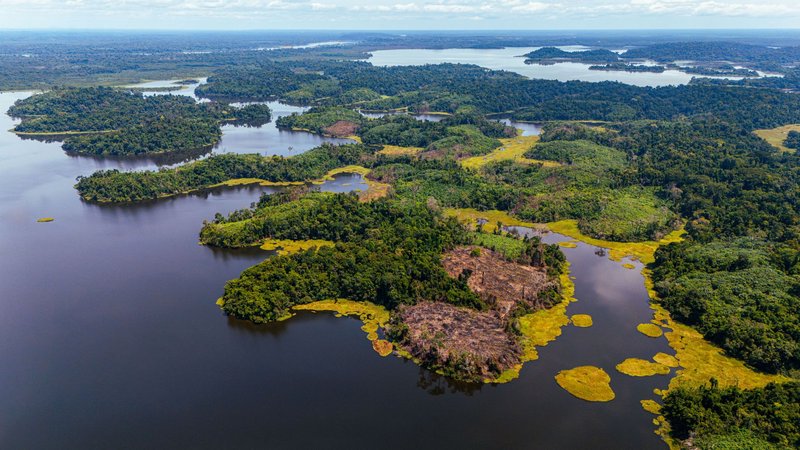
Wetlands and Rivers {#wetlands}
Nile Crocodile (Crocodylus niloticus)
Crocodiles are present in most of Cameroon’s major river systems — the Sanaga, Bénoué, and Nyong. The Nile crocodile, the largest freshwater reptile in Africa, can reach 6 meters and is an ambush predator capable of taking prey as large as zebra or wildebeest. In Cameroon, livestock and occasional humans are the main conflict points. Night boat surveys on rivers regularly turn up pairs of eyes reflecting torchlight along the banks.
Sitatunga (Tragelaphus spekii)
The sitatunga is a semi-aquatic antelope with long, splayed hooves designed for navigating papyrus swamps and flooded forest. Males are shaggy and dark brown; females are smaller and rust-colored. They’re strong swimmers and will submerge up to their necks to escape predators. Cameroon’s coastal wetlands and the Lake Chad basin fringe are their primary habitats in the country.
African Clawless Otter (Aonyx capensis)
The second-largest otter species in the world uses its forefeet to feel for crabs and frogs in muddy river banks without needing claws. They’re found along rivers and estuaries throughout Cameroon’s forested south. Largely nocturnal and rarely seen, but tracks in riverside mud are unmistakable — five distinct toes, no claw marks, and a wide palm pad.
Coastal and Mangrove Zones {#coastal}
Leatherback Sea Turtle (Dermochelys coriacea)
The leatherback is the largest turtle alive, reaching 900 kg, and Cameroon’s beaches in the south — particularly around Kribi — are nesting sites. Leatherbacks don’t have a hard shell; instead, a mosaic of small bone fragments sits under a firm, leathery skin. They dive deeper than any other reptile, tracking jellyfish blooms into cold water. Nesting season runs roughly November through March on Cameroon’s coast.
West African Manatee (Trichechus senegalensis)
Manatees inhabit Cameroon’s coastal lagoons, estuaries, and the lower reaches of major rivers. The west African manatee is less studied than its American cousin and listed as Vulnerable. They’re strictly herbivorous, grazing on aquatic plants and overhanging vegetation. Local fishing communities in the Littoral Region occasionally encounter them, and traditional taboos in some communities have historically limited hunting pressure.
Where to See Cameroon’s Wildlife {#where-to-see}
Lobéké National Park (southeast): The best option for forest elephants, western lowland gorillas, and the full suite of Congo Basin species. The Baka people have deep knowledge of the forest and work as guides. Dry season (December–February) concentrates animals at bais.
Dja Faunal Reserve (south-center): A UNESCO World Heritage Site that covers 5,260 square kilometers of largely intact rainforest. Access is difficult — that’s part of what keeps it intact. Chimpanzees, gorillas, and forest elephants are all present. Expect a 4WD journey and modest infrastructure.
Waza National Park (Far North): Cameroon’s most accessible savanna park, with lions, giraffes, elephants, hippos, and waterbirds concentrated near the Logone River floodplain. Best visited January–April before the extreme heat.
Bénoué National Park (Adamawa): Roan antelope, elephants, lions (rare), and hartebeest on open savanna. The park was badly affected by poaching in the 2000s but has seen some recovery. Dry-season access from Ngaoundéré is straightforward.
Bamenda Highlands (Northwest): The only place to find Bannerman’s turaco. Mount Oku and Lake Oku are the focal points. The drive from Bamenda is scenic and the community conservation model around the lake is worth understanding.
Mount Cameroon (Southwest): Active volcano, montane forest, endemic birds. Guided climbs are organized from Buea. The francolin and several endemic plant species make it a serious destination for naturalists.
Conservation Note: The Cross River Gorilla {#cross-river-gorilla}
The Cross River gorilla (Gorilla gorilla diehli) deserves its own section because it is the most critically endangered great ape in Africa. Fewer than 300 individuals remain, scattered across a handful of forest fragments straddling the Cameroon-Nigeria border in the Cross River highlands. They’re so wary of humans — the result of centuries of hunting pressure — that most of what scientists know comes from camera traps rather than direct observation.
The gorillas don’t know there’s an international border running through their forest. Conservation depends on Cameroon and Nigeria managing a transboundary zone effectively, which requires coordination that wildlife bureaucracies don’t always achieve easily. Several NGOs, including the Wildlife Conservation Society, are working with both governments on corridor protection.
This is not a tourist destination. There’s no habituation program. The Cross River gorilla’s best chance is remaining genuinely difficult to reach.
Cameroon’s biodiversity is real, and the stakes are high. Most of the species on this list face ongoing pressure from habitat loss, bushmeat hunting, or live capture for the wildlife trade. The parks and reserves exist — and some are functioning well — but the gap between protected-on-paper and protected-in-practice is significant in many areas. The animals are still there. The question is for how long.