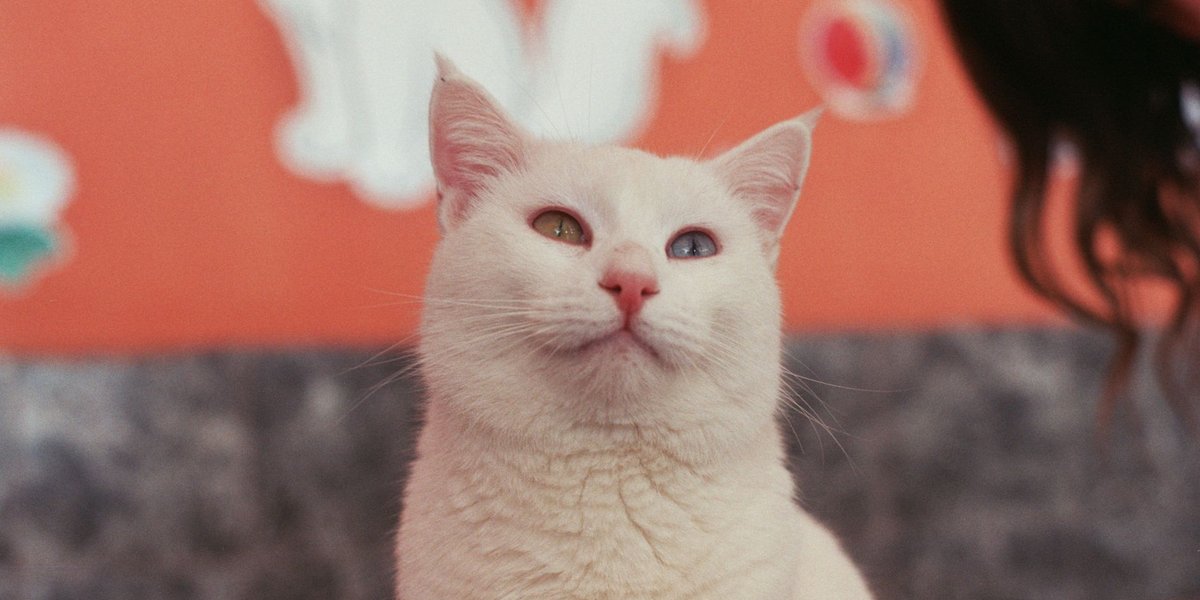
White cats catch your eye. White cats with green eyes stop you cold. That combination is genuinely uncommon, and there’s a reason for it rooted in the same genetics that makes white cats unusual in the first place.
The dominant white gene (W) works by suppressing melanin production — the pigment that colors both fur and irises. Because green eyes require a moderate amount of melanin to form (more than blue eyes, less than amber or copper), white cats with green eyes occupy a narrow genetic window. The W gene tends to push eye color toward blue or odd-eyed rather than green, which is why most white cats end up with blue or copper eyes. Green falls in the middle, and the middle is the hardest place to land.
Below is a curated list of breeds where green eyes in white coats are documented — not just theoretically possible, but observed with enough regularity to be considered part of the breed’s range.
Table of Contents
- The Deafness Question: What You Need to Know First
- White Cat Breeds With Green Eyes
- 1. Turkish Angora
- 2. Norwegian Forest Cat
- 3. Maine Coon
- 4. Persian
- 5. Siberian
- 6. Devon Rex
- 7. Cornish Rex
- 8. Oriental Shorthair
- 9. Balinese
- 10. Japanese Bobtail
- Quick Comparison Table
- FAQ
The Deafness Question: What You Need to Know First {#the-deafness-question}
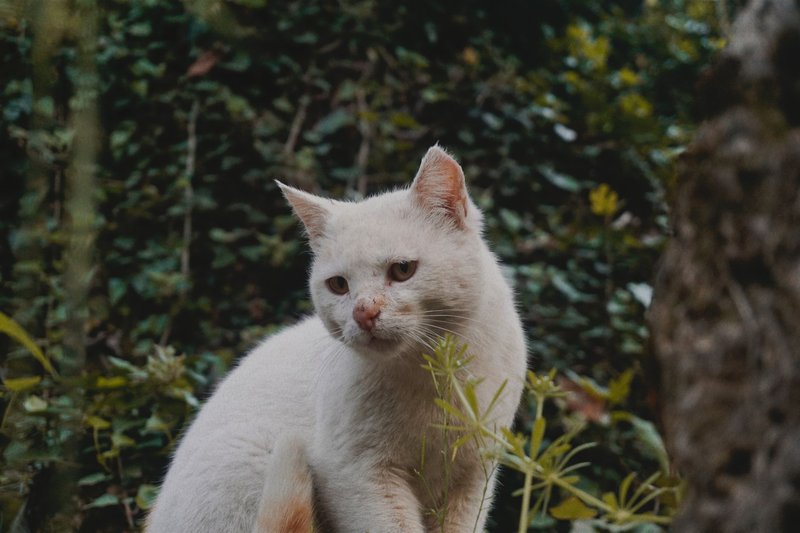
Before getting into breeds, this deserves its own section because it affects every white cat on this list.
The same KIT gene mutation responsible for the dominant white coat is linked to degeneration of the cochlea shortly after birth. Research published in PMC found that white cats with two blue eyes have the highest deafness rates — around 65–85% depending on the study. Odd-eyed white cats (one blue, one another color) show roughly 40% deafness, typically on the side of the blue eye. White cats with two non-blue eyes — including green — have significantly lower deafness rates, estimated at around 17–22%.
That’s not zero. But green-eyed white cats are considerably safer on this front than their blue-eyed counterparts.
If you’re getting a white cat, ask the breeder whether hearing has been tested. BAER (Brainstem Auditory Evoked Response) testing is the standard and can identify unilateral deafness that you’d never detect by watching the cat respond to noise in a room.
White Cat Breeds With Green Eyes {#breeds}
1. Turkish Angora {#turkish-angora}
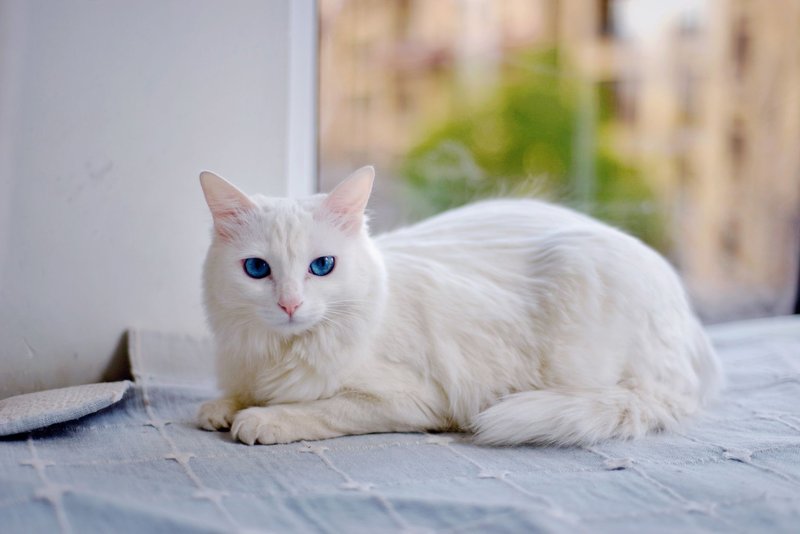
Eye color certainty: Documented, not guaranteed — green appears alongside blue, amber, and odd-eyed
Deafness risk: Present, especially in blue-eyed individuals
Coat: Long, silky, single-layer (minimal matting compared to other longhairs)
Temperament: Athletic, opinionated, bonds deeply with one person
Good for: Experienced cat owners who want an interactive companion
The Turkish Angora is probably the most searched breed in this category, and for good reason. It’s an ancient natural breed from Ankara, Turkey, where the Ankara Zoo has maintained a breeding program since the early 20th century specifically to preserve the white variety. Green eyes occur in white Angoras, but they’re not the most common outcome — blue and odd-eyed are more frequent. The Cat Fanciers’ Association recognizes white Turkish Angoras with green eyes as fully acceptable in the show standard.
What makes the Angora distinct among longhaired cats is the single-layer coat. No thick undercoat means far less shedding and matting than a Persian or Norwegian Forest Cat. The trade-off is that they’re also less lap-cat and more “I’ve decided to open this cabinet” cat.
2. Norwegian Forest Cat {#norwegian-forest-cat}
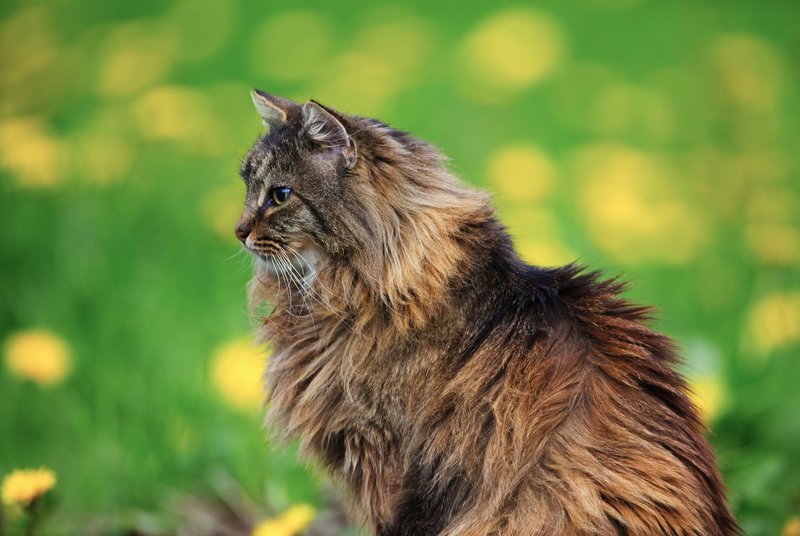
Eye color certainty: Green and green-gold are standard in the breed
Deafness risk: Low — green-eyed individuals show reduced risk
Coat: Long, water-resistant double coat with a dense undercoat
Temperament: Calm, observant, friendly but not clingy
Good for: Families, first-time owners, multi-pet households
The Norwegian Forest Cat — “Wegie” in shorthand — is one of the safer picks for anyone who wants a white cat with green eyes. Green and green-gold are common eye colors across the breed, and white is a recognized coat color. The double coat is designed for Norwegian winters, which means it sheds heavily twice a year during seasonal blowouts. Budget for weekly brushing and two annual grooming marathons. If you’re drawn to cold-adapted longhaired breeds in general, the cold weather cat breeds built for snow and frost include several of the same names you’ll find on this list.
Temperament-wise, Wegies are relaxed and adaptable. They don’t demand attention but enjoy company on their own terms. A good choice for a busy household.
3. Maine Coon {#maine-coon}
Eye color certainty: Green, gold, and green-gold are all breed-standard; green is documented in white individuals
Deafness risk: Moderate — lower in green-eyed cats
Coat: Long, shaggy, semi-water-resistant with a ruff around the neck
Temperament: Sociable, dog-like in loyalty, endlessly curious
Good for: Families, first-time owners, homes with dogs
Maine Coons are one of the largest domestic cat breeds — males regularly hit 15–18 pounds — and white with green eyes is a fully recognized combination in the breed standard. Their coats require regular brushing (two to three times a week), but the personality payoff is substantial. They follow you from room to room, learn their names reliably, and some can be leash-trained. They also chirp instead of meow, which takes some getting used to.
4. Persian {#persian}
Eye color certainty: Green is less common than blue or copper, but documented in white Persians
Deafness risk: Moderate
Coat: Long, dense, requires daily grooming
Temperament: Calm, quiet, affectionate but low-energy
Good for: Quieter households, adults, less active owners
White Persians are some of the most photographed cats in the world, and green eyes do appear — but copper and blue are far more common in this breed. If green eyes are a priority and you’re set on a Persian, ask specifically and see photos of both parents. Persian coats mat within days without daily combing, and the flat face (brachycephalic structure) can cause breathing and eye-drainage issues. Go in with clear expectations.
5. Siberian {#siberian}
Eye color certainty: Green is documented; the breed standard allows green, gold, and blue
Deafness risk: Low to moderate
Coat: Triple-layer, thick, weather-resistant — but lower in the Fel d 1 allergen than most breeds
Temperament: Playful, loyal, slightly dog-like
Good for: Allergy-sensitive households, families, first-time owners
The Siberian is worth a specific mention for allergy-prone cat lovers. Studies have found that some Siberians produce significantly lower levels of Fel d 1 — the protein in cat saliva that triggers most cat allergies — compared to other breeds. This isn’t universal, and no cat is truly hypoallergenic, but it’s a meaningful advantage for people who’ve struggled with other longhaired cats.
White Siberians with green eyes exist, but they’re not common. Expect to spend time finding a reputable breeder who produces this combination specifically.
6. Devon Rex {#devon-rex}
Eye color certainty: Green is confirmed; the breed accepts a wide range of eye colors
Deafness risk: Low
Coat: Short, curly, almost suede-like; minimal shedding
Temperament: Mischievous, highly social, velcro cat
Good for: Active households, families, people who want a cat that acts like a dog
The Devon Rex is an outlier on this list — it’s one of the few short-coated breeds where white with green eyes is a real possibility. The curly coat results from a mutation in the KRT71 gene and sheds so little that Devon Rex cats are sometimes described as low-maintenance in grooming terms (though the ears need regular cleaning). They’re highly social, prone to perching on shoulders, and genuinely unhappy when left alone for long stretches.
7. Cornish Rex {#cornish-rex}
Eye color certainty: Green is documented; a wide range is accepted in the breed standard
Deafness risk: Low
Coat: Short, wavy, very soft; loses heat faster than other cats
Temperament: Active, playful, sociable
Good for: Active households, experienced cat owners
Like the Devon Rex, the Cornish Rex carries a coat mutation — this one affecting only the down (inner) layer of fur, giving the coat a rippled texture. White is a recognized color, and green eyes appear. Because they have so little fur, Cornish Rex cats feel warm to the touch and gravitate toward heat sources. They’re not ideal for cold climates unless the house is well-heated.
8. Oriental Shorthair {#oriental-shorthair}
Eye color certainty: Green is the most common eye color in the breed, making it the most reliable on this list for the green-eye trait
Deafness risk: Low
Coat: Short, close-lying, minimal grooming needed
Temperament: Vocal, opinionated, intensely social
Good for: People who want an interactive cat and don’t mind being talked at
If green eyes are your primary criterion, the Oriental Shorthair is the most reliable route. Green is the breed standard — it’s not occasional or variable, it’s the expected outcome. White Oriental Shorthairs with green eyes are a well-established combination. The downside: Orientals are among the most vocal cats in existence. They will tell you about their feelings at length and at volume.
9. Balinese {#balinese}
Eye color certainty: Typically blue, but green is documented in some white individuals
Deafness risk: Low to moderate
Coat: Long, silky, single-layer — similar to the Turkish Angora
Temperament: Chatty, affectionate, playful
Good for: Families, people who want an interactive longhaired cat
The Balinese is essentially a longhaired Siamese, and like the Siamese it tends toward blue eyes. However, white Balinese outside the pointed pattern can produce green eyes. They’re social in the same way Siamese are — chatty, curious, prone to following you around — but with a silkier coat that’s easier to maintain than a Persian.
10. Japanese Bobtail {#japanese-bobtail}
Eye color certainty: Green is documented and accepted in the breed standard
Deafness risk: Low
Coat: Available in short and longhaired varieties; silky texture
Temperament: Playful, active, good-natured
Good for: Families, children, multi-pet households
The Japanese Bobtail has appeared in Japanese art for over a thousand years, and the tricolor (mi-ke) pattern with a white base is considered lucky in Japanese culture. Solid white Japanese Bobtails with green eyes are less common than the tricolor variety but are recognized. If you’re interested in how white base coats combine with other colors in cats more broadly, bicolor cat breeds covers the coat pattern mechanics in detail. The bobtail is natural — not the result of inbreeding — and the breed has no associated spinal problems. Generally a healthy, active, family-friendly cat.
Quick Comparison Table {#comparison-table}
| Breed | Green Eye Certainty | Coat Length | Deafness Risk | Temperament | Family-Friendly |
|---|---|---|---|---|---|
| Turkish Angora | Occasional | Long | Moderate | Opinionated, active | Better for experienced owners |
| Norwegian Forest Cat | Common | Long | Low | Calm, adaptable | Yes |
| Maine Coon | Common | Long | Moderate | Social, loyal | Yes |
| Persian | Rare | Long | Moderate | Quiet, calm | Yes (quieter homes) |
| Siberian | Occasional | Long | Low-moderate | Playful, loyal | Yes |
| Devon Rex | Documented | Short | Low | Social, active | Yes |
| Cornish Rex | Documented | Short | Low | Active, playful | For active households |
| Oriental Shorthair | Very common | Short | Low | Vocal, interactive | Yes (tolerant of noise) |
| Balinese | Occasional | Long | Low-moderate | Chatty, affectionate | Yes |
| Japanese Bobtail | Documented | Short or Long | Low | Playful, good-natured | Yes |
FAQ {#faq}
Are white cats with green eyes rare?
Yes, genuinely rare. White coat color in cats already affects only a small percentage of the domestic cat population. Green eyes require a specific and moderate level of melanin in the iris — enough to avoid blue, not enough to produce amber or copper. That middle ground is harder to land in when the dominant white gene is suppressing pigment production overall. Green-eyed white cats exist in every breed on this list, but they’re a fraction of the white cats produced within each breed.
The Oriental Shorthair is the exception: green is so standard in that breed that a white Oriental without green eyes would be unusual.
Do white cats with green eyes go deaf?
Less often than white cats with blue eyes, but deafness is still possible. The deafness in white cats is caused by the same KIT gene mutation that produces the white coat, and it operates independently of eye color to some degree. Eye color is a useful predictor — research on congenital deafness in cats consistently shows green-eyed and odd-eyed white cats have lower deafness rates than blue-eyed ones — but it’s not a guarantee.
If you’re getting a white cat from a breeder, ask specifically about BAER testing. A responsible breeder of white cats should be testing their kittens before placement.
Which white cat breed is least likely to be deaf?
Among the breeds on this list, Oriental Shorthairs and Devon Rex cats have the lowest deafness risk in white individuals, in part because their green eyes are more reliably non-blue. Norwegian Forest Cats and Japanese Bobtails are also relatively low risk. Persian and Turkish Angora white cats carry more variable deafness rates depending on eye color.
What causes green eyes in cats generally?
Green eye color in cats comes from a moderate concentration of melanin in the iris combined with Rayleigh scattering of light (the same effect that makes the sky appear blue). More melanin shifts color toward amber; less shifts it toward blue. Green sits in the middle range. It’s the most common eye color in domestic cats overall — just not in white cats, where the pigment-suppressing effect of the W gene makes it harder to land in that range.
Can two white cats produce a non-white kitten?
Yes. The dominant white gene (W) masks underlying coat color but doesn’t erase it genetically. A white cat can carry genes for black, tabby, orange, or any other pattern underneath. If two white cats both carry recessive non-white color genes, they can produce non-white kittens. This is why breeding two white cats doesn’t always produce an all-white litter.