Here’s the thing nobody tells you when you search “bicolor cat breeds”: bicolor isn’t a breed. It’s a coat pattern — white fur plus one other color — and it shows up across dozens of breeds and in the random-bred cat sleeping on your couch right now. So if you came here to find out “what breed is my black and white cat,” the honest answer is usually no breed at all. Most bicolor cats are domestic shorthairs or longhairs, which is the polite term for a cat of mixed, unknown ancestry.
That doesn’t make the question pointless. Plenty of recognized breeds carry bicolor coats — some have it written into their official standard, others just produce it often. And the patterns have real names you can learn to spot in about five minutes. This guide does both jobs: the breeds that reliably come in bicolor, and a quick field guide to naming the pattern on your own cat.
Table of Contents
- What “bicolor” actually means
- The bicolor patterns, named
- Cat breeds that come in bicolor
- How to identify your own bicolor cat
- Frequently asked questions
What “bicolor” actually means
A bicolor cat has white fur plus patches of exactly one other color — black, gray (blue), red (orange), cream, or brown. The white comes from a gene cat people call the white spotting gene, and how much white you get is graded on a rough 1-to-10 scale by the Cornell Feline Health Center and other feline genetics references. Grade 1 is a cat with a tiny white locket; grade 10 is an almost entirely white cat with a few colored spots.
That single gene, dialed up or down, is why a tuxedo cat and a mostly-white “van” cat are both technically bicolor. Same mechanism, different amount of white.
Two quick clarifications, because people mix these up constantly:
- Calico and tortoiseshell are not bicolor. A calico is white plus black and orange — that’s three colors, so it’s officially a tricolor. A tortie blends black and orange with little or no white.
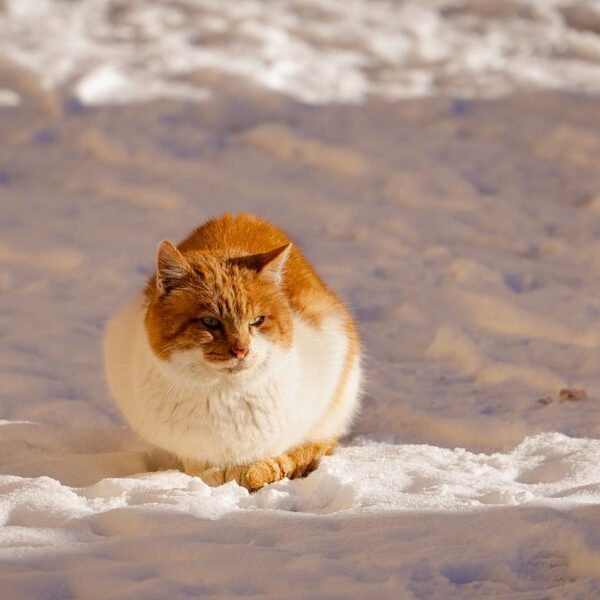
- The non-white color can itself be tabby-striped. A white-and-brown-tabby cat is still a bicolor; the tabby pattern just rides on top of the colored patches. The colored half can be any of the usual cat colors, too — pair white with ginger and you’ve got one of the many orange cat breeds and patterns, or with blue for a gray-and-white cat.
The bicolor patterns, named
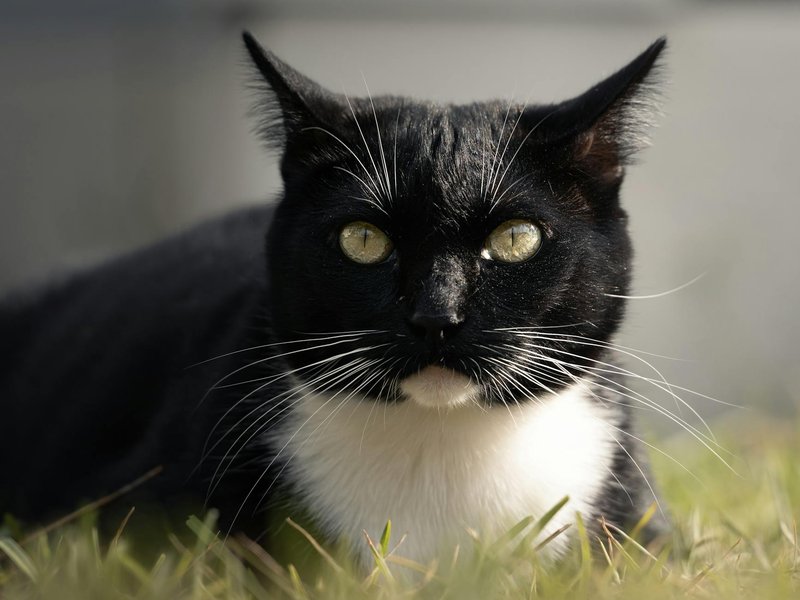
The named patterns are basically a vocabulary for where the white sits and how much of it there is. Here are the ones you’ll actually encounter:
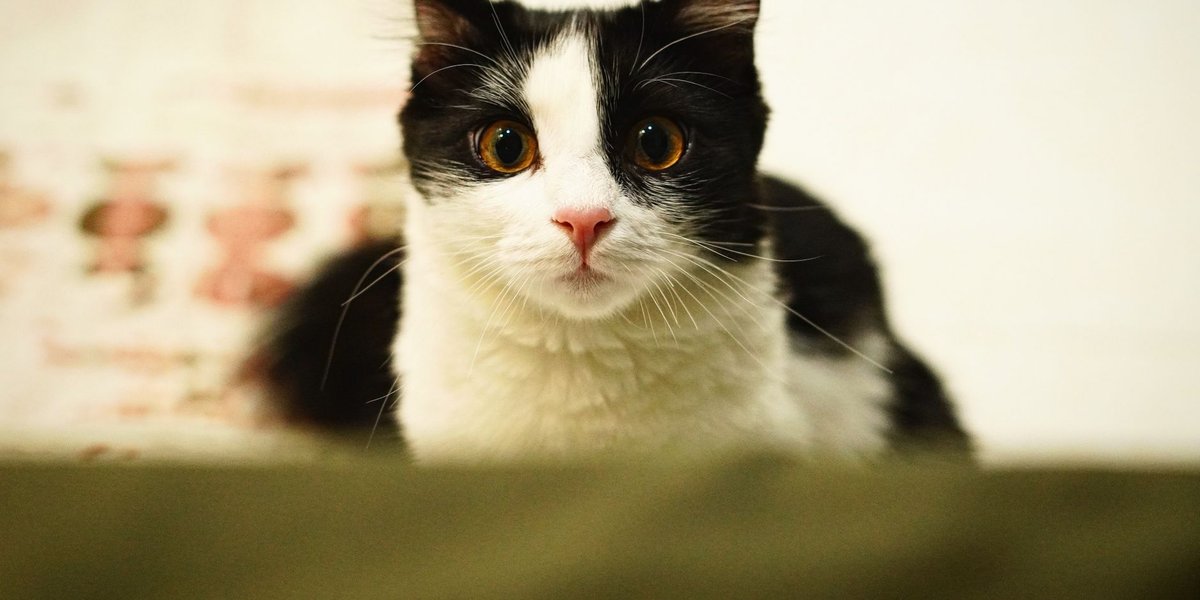
- Tuxedo — black body with white chest, belly, and paws, sometimes a white chin or muzzle. The classic “wearing a suit” look. Low-to-moderate white.
- Mitted — colored body with white only on the feet, like the cat stepped in paint. Often paired with a small white chin or chest spot.
- Locket — a colored cat with a single small patch of white on the chest. The minimum bicolor.
- Mask and mantle — color covers the head (the mask) and drapes down the back and sides (the mantle) like a cape, with white underneath.
- Cap and saddle — color sits on the top of the head (the cap) and a separate patch on the back (the saddle), white everywhere else.
- Harlequin — mostly white with several large, scattered colored patches across the body, plus a colored tail.
- Van — the extreme end: a white cat with color only on the head and tail. Named after the Turkish Van breed that made the pattern famous.
Picture it as a sliding dial. Turn the white up from a locket through tuxedo, mitted, mask-and-mantle, harlequin, and finally to van, and you’ve walked the whole spectrum from “mostly colored” to “mostly white.” The same naming logic applies far beyond cats, too — dogs come in a parallel set of two-tone coats, as the list of bicolor dog breeds and their patterns shows.
Cat breeds that come in bicolor
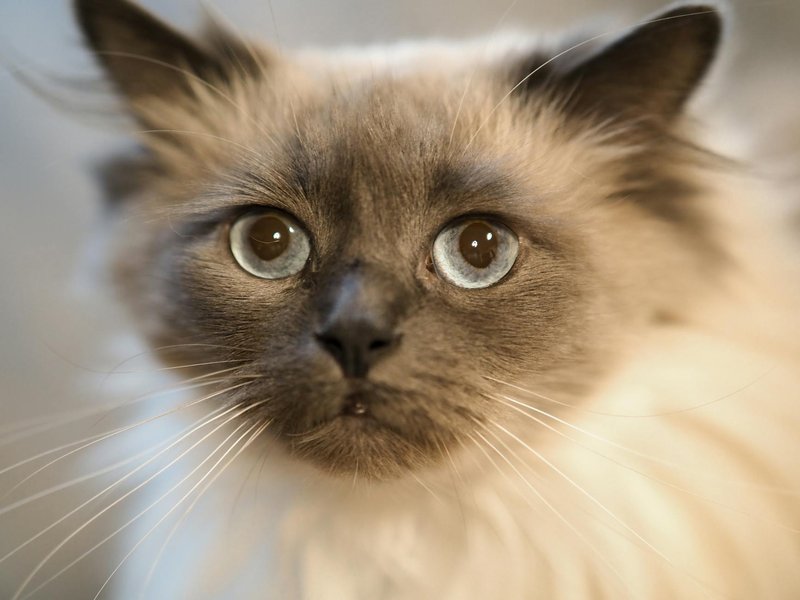
Now the breeds. I’ve split these into two groups, because the distinction matters if you’re choosing a kitten from a breeder: breeds where bicolor is part of the accepted standard versus breeds where it just happens to show up.
Breeds where bicolor is in the standard
Turkish Van. The breed that named the van pattern. A Turkish Van is white with color confined to the head and tail — that’s the breed’s whole signature. They’re large, semi-longhaired, and famous for liking water more than most cats. Sociable and energetic, not a lap-cat lump.
Ragdoll. The bicolor Ragdoll is one of the breed’s four recognized patterns. You get the pointed coloring (darker face, ears, tail) combined with an inverted white “V” on the face, white legs, and a white belly. Ragdolls are big, floppy, and notoriously relaxed — the name comes from how they go limp when you pick them up. Calm, people-following cats that want to be in the room with you.
Snowshoe. A Siamese-Birman cross built specifically around white feet. The “snowshoes” are part of the deal: pointed coloring plus white boots and often a white inverted-V on the face. Talkative, smart, and clingy in the best way — Snowshoes bond hard to one person.
Maine Coon. Bicolor is one of many accepted colorways for this breed. These are the giants of the cat world — some toms top 18 pounds — with shaggy water-resistant coats, tufted ears, and bushy tails. A black-and-white Maine Coon is a recognized, sought-after look. Friendly, dog-like, and slow to mature (they’re not full-grown until around four).
Breeds where bicolor shows up incidentally
British Shorthair. Best known for the solid “British Blue,” but the breed also comes in bicolor. A black-and-white British Shorthair has that same dense, plush, teddy-bear coat and round face. Reserved, dignified, not big on being carried.
American Shorthair. A genuinely all-American working cat, and bicolor is common in the breed. Sturdy, easygoing, healthy — the kind of cat that’s good with kids and doesn’t demand much.
Persian. The flat-faced longhair comes in bicolor too, often a “particolor” white-and-color combination. Expect serious grooming commitment — that coat mats if you skip a few days. Quiet, placid lap cats.
Manx. The tailless cat from the Isle of Man frequently appears in black-and-white. Rounded all over (rounded head, rounded rump), playful, and known for a dog-like loyalty.
Turkish Angora. Most famous as an elegant all-white cat, but bicolor Angoras exist. Fine-boned, silky-coated, and busy — Angoras are active, curious, and stay kitten-like for years. Several of the breeds on this list also turn up in the roundup of fluffy white cat breeds, which makes sense given they’re the same cats with the white spotting gene dialed all the way up.
A practical note for adopters: if a breeder is charging a premium because a kitten is “bicolor,” push back unless the breed standard actually calls for it (Ragdoll, Turkish Van, Snowshoe). In a British Shorthair or a domestic cat, the pattern is just the luck of the white-spotting gene, not a rarity worth a markup.
How to identify your own bicolor cat
You don’t need a DNA test to name your cat’s pattern. Walk through these three questions:
1. How much of the cat is white? Eyeball it. Mostly colored with a little white means you’re in tuxedo/mitted/locket territory. Roughly half-and-half points to mask-and-mantle or harlequin. Mostly white with only a few colored spots means you’re near the van end.
2. Where are the colored patches? Color on the head and tail only = van. A cape down the back = mask and mantle. A cap on the head plus a saddle on the back = cap and saddle. Scattered large patches = harlequin.
3. Where’s the white? White only on the feet = mitted. White chest, belly, and paws on a black cat = tuxedo. A single white chest spot = locket.
For the breed question, be realistic. Unless you have papers from a breeder, your bicolor cat is almost certainly a domestic shorthair or domestic longhair — a mixed-breed cat. Looking like a Maine Coon doesn’t make a cat a Maine Coon; the breed is defined by pedigree, not coat. If you genuinely want to know your cat’s ancestry, a feline DNA test (Basepaws, Wisdom Panel) is the only real answer, and even then “bicolor” won’t show up because it’s a pattern, not a lineage.
Frequently asked questions
What breed is my tuxedo cat? Probably no breed — “tuxedo” is a pattern, not a breed, and most tuxedo cats are domestic shorthairs of mixed ancestry. Several breeds (Maine Coon, British Shorthair, American Shorthair, Manx) can wear the tuxedo pattern, but the pattern alone never tells you the breed.
Is bicolor the same as black and white? Black and white is the most common bicolor combination, but bicolor just means white plus one color. A white-and-orange or white-and-gray cat is equally bicolor.
Are bicolor cats rare? Not at all. The white spotting gene is extremely common, which is why black-and-white and orange-and-white cats are everywhere. The extreme patterns — a clean van or a high-grade harlequin — are less common, which is partly why the Turkish Van stands out.
Is a calico a bicolor cat? No. Calico is white plus black plus orange — three colors, so it’s a tricolor. Bicolor is strictly white plus one other color.
Do bicolor cats have a particular personality? No. Coat color and pattern aren’t linked to temperament in any reliable way. Personality tracks with breed (where there is one), early socialization, and the individual cat — not with how the white spotting gene happened to land.
The short version
Bicolor is white plus one color, controlled by a single gene that decides how much white you get. The pattern names — tuxedo, mitted, van, harlequin, mask-and-mantle — just describe where and how much. A handful of breeds carry it in their official standard (Ragdoll, Turkish Van, Snowshoe), more carry it incidentally (British Shorthair, Maine Coon, Persian, Manx), and the vast majority of bicolor cats belong to no breed at all. Name the pattern, enjoy the cat, and don’t pay a premium for a coat that the white spotting gene hands out for free.