Table of Contents
- Why Ethiopia Matters for Wildlife
- 1. Ethiopian Wolf
- 2. Walia Ibex
- 3. Mountain Nyala
- 4. Gelada Baboon
- 5. African Wild Ass
- 6. Grevy’s Zebra
- 7. Liben Lark
- 8. Ethiopian Amphibian Crisis: Largen’s Frog
- 9. Swayne’s Hartebeest
- 10. African Elephant (Ethiopian Population)
- 11. Bale Mountains Bush Buck
- 12. White-tailed Swallow
- The Big Threats
- How to Help
Why Ethiopia Matters for Wildlife {#why-ethiopia-matters}
Ethiopia isn’t usually the first country that comes to mind for wildlife conservation. That’s a problem, because it arguably deserves more attention than almost anywhere else on the continent.
The country holds 31 endemic mammal species — animals found nowhere else on Earth. It has ecosystems that span everything from the scorching Danakil Depression (one of the hottest places on the planet) to the cool, misty Afroalpine plateaus of the Bale and Simien Mountains above 4,000 meters. That range of altitude in a single country produces biological diversity that most nations can’t match.
The Afroalpine zone in particular — those high grasslands and heathlands above the tree line — acts like an island ecosystem. Species that evolved there over millions of years can’t simply migrate if conditions deteriorate. They’re trapped on the mountain.
Which is why what’s happening there right now matters enormously.
1. Ethiopian Wolf {#ethiopian-wolf}
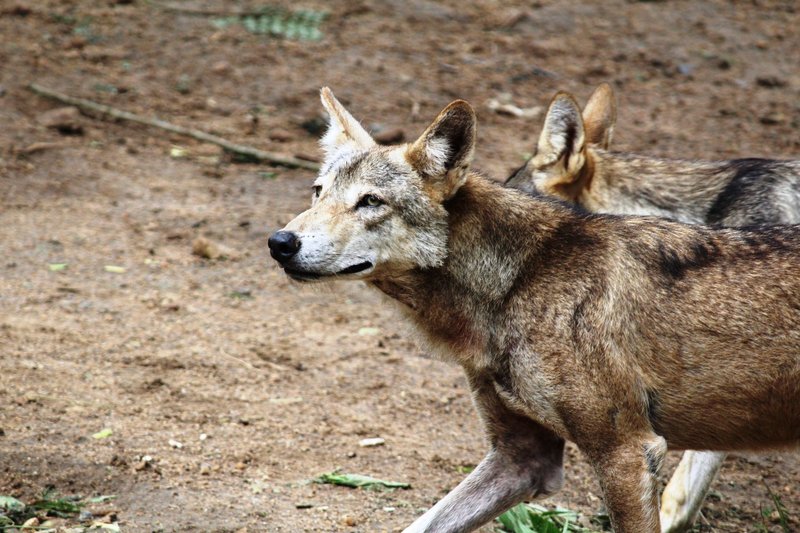
IUCN Status: Endangered Estimated population: ~500 individuals
The Ethiopian Wolf (Canis simensis) is the rarest canid on Earth. It looks a bit like a coyote with rust-red fur, but it evolved separately in the Ethiopian highlands and feeds almost exclusively on Afroalpine rodents — particularly the giant mole rat, which it hunts with the patience of a cat, pressing its narrow snout into burrows and waiting.
The bulk of the population — around 250 to 300 animals — lives in the Bale Mountains. Smaller packs cling on in the Simien Mountains and a handful of other highland areas.
What’s killing them: habitat fragmentation as subsistence farmers push livestock higher up the slopes, outbreaks of rabies spreading from domestic dogs, and canine distemper. The Ethiopian Wolf Conservation Programme has been vaccinating domestic dogs around wolf territories since the 1990s, and it has demonstrably worked — vaccination campaigns have contained several rabies outbreaks that would otherwise have collapsed local wolf subpopulations.
2. Walia Ibex {#walia-ibex}
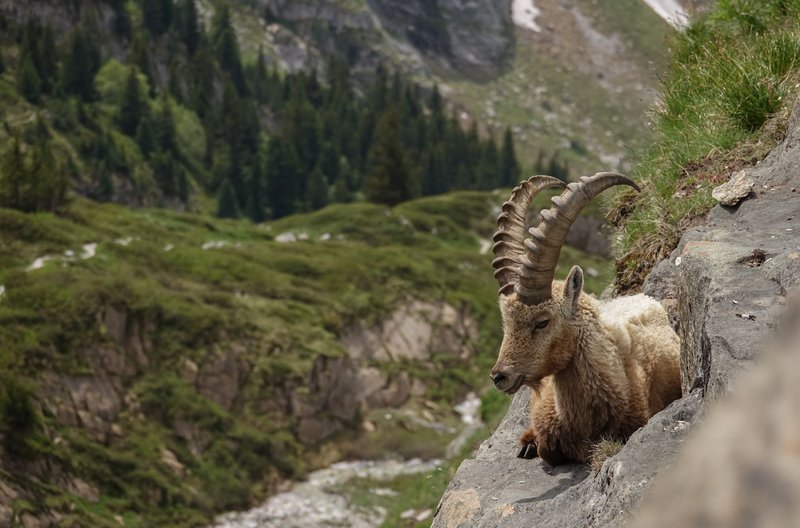
IUCN Status: Endangered Estimated population: ~500–1,000 individuals
The Walia Ibex (Capra walie) lives exclusively in the Simien Mountains — literally nowhere else on Earth. It’s a large, stocky wild goat with dramatically curved horns that can reach a meter in length on adult males, and it navigates near-vertical cliff faces with a matter-of-fact ease that’s almost insulting to watch.
The species nearly went extinct in the 1970s when political instability disrupted the Simien Mountains National Park (a UNESCO World Heritage Site). The population had dropped to an estimated 150–200 animals. Since the park was properly reestablished, numbers have recovered, but the ibex remains fully dependent on that single protected strip of cliffside terrain.
Overgrazing by domestic livestock inside and around the park is the persistent threat. When the highland grasses the ibex depend on get overgrazed by cattle and sheep, there’s no backup habitat to fall to.
3. Mountain Nyala {#mountain-nyala}
IUCN Status: Endangered Estimated population: 2,500–4,000 individuals
The Mountain Nyala (Tragelaphus buxtoni) is another Ethiopian exclusive — a large, spiral-horned antelope that lives only in the highland forests and heathlands of the Bale Mountains region. It’s related to the lowland nyala of southern Africa but evolved completely separately at altitude.
Males carry corkscrew horns that twist 1.2 meters into the air and sport a gray-brown shaggy coat with faint white stripes. The Bale Mountains National Park holds the largest remaining population, but illegal logging and agricultural encroachment around the park’s buffer zone continue to chip away at its habitat.
4. Gelada Baboon {#gelada-baboon}
IUCN Status: Least Concern (but declining) Estimated population: ~200,000 individuals
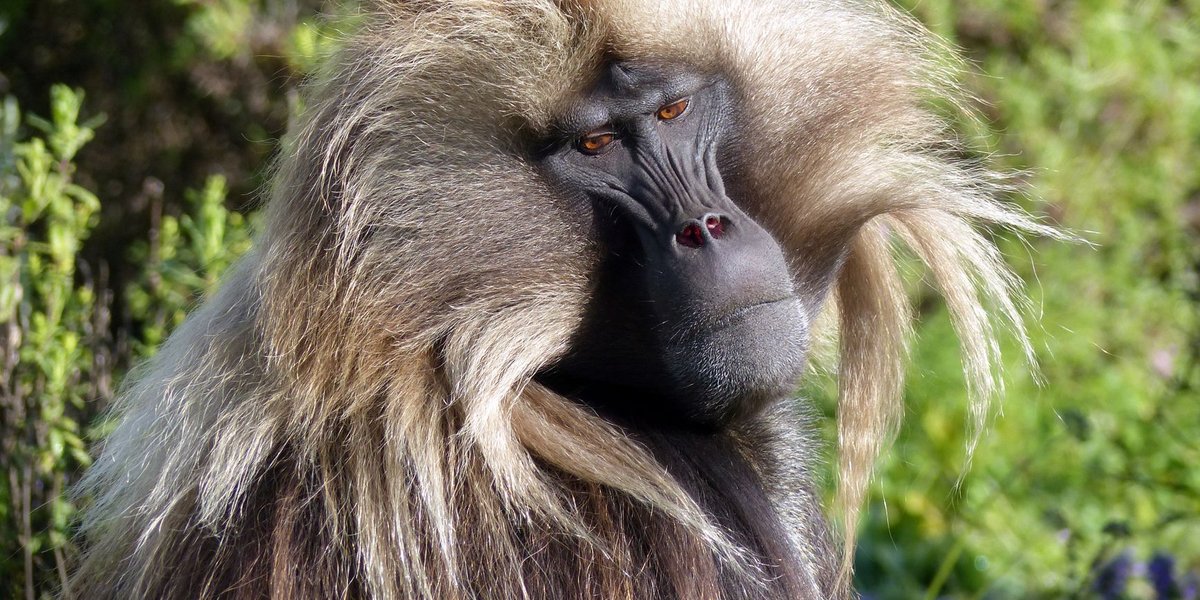
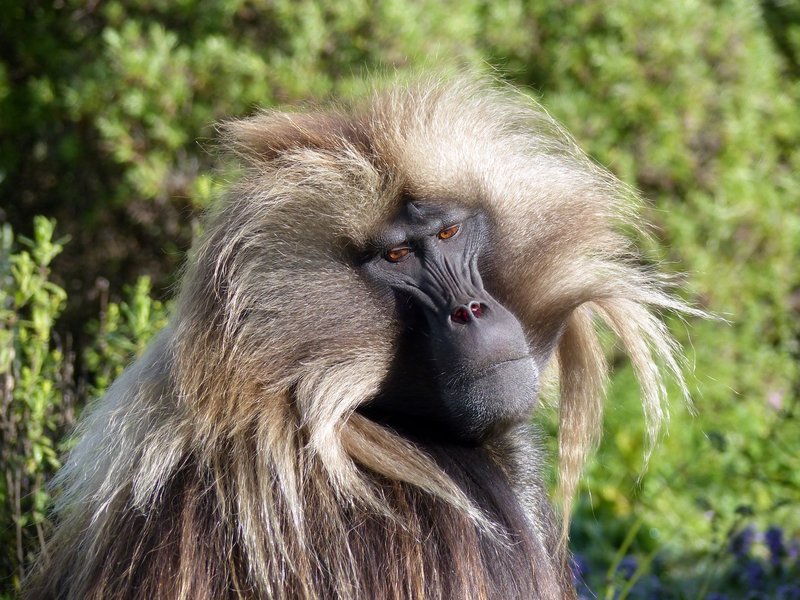
The Gelada (Theropithecus gelada) is technically not endangered yet, but it earns a place here because it’s the last surviving species of a once-widespread genus — all the others went extinct — and its Afroalpine grassland habitat is eroding fast.
Geladas are the only primates in the world that feed primarily on grass, spending their days sitting and pulling blades of grass with their hands in a motion that looks like they’re weaving a basket. They live in the Simien Mountains and a few other highland areas, forming multi-male bands that can number in the hundreds. The Gelada is one of the most distinctive examples among the highland fauna of Ethiopia — a group of species shaped entirely by the pressures of life at altitude.
The threat: the same highland agricultural expansion squeezing everything else. When the grasses go, the Geladas follow.
5. African Wild Ass {#african-wild-ass}
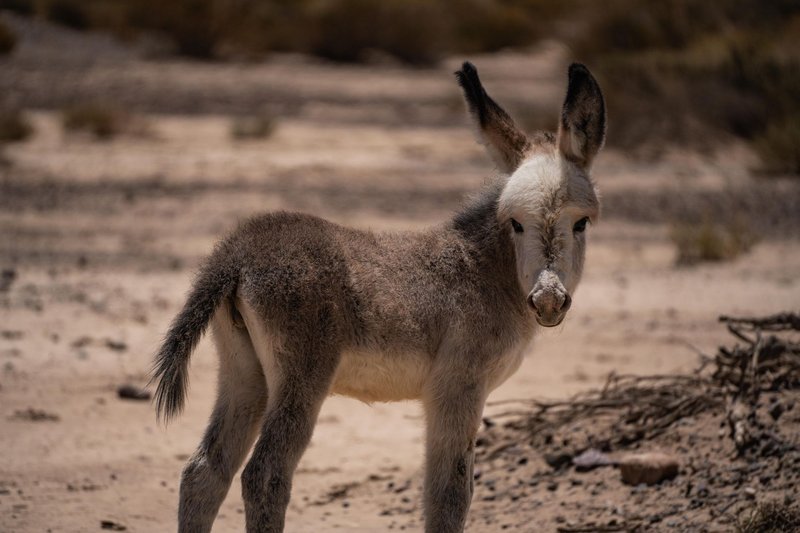
IUCN Status: Critically Endangered Estimated population: fewer than 600 individuals
The African Wild Ass (Equus africanus) is the ancestor of the domestic donkey, and it’s one of the most endangered large mammals on Earth. The Somali subspecies (E. a. somaliensis) clings on in the Danakil Depression and Afar region of Ethiopia, as well as parts of Eritrea and Somalia.
They’re adapted to brutal conditions — sparse scrub vegetation, extreme heat, minimal water. The problem is competition with domestic livestock for that sparse vegetation, combined with hunting. Hybridization with domestic donkeys is diluting the wild gene pool in areas where populations are small enough that finding a pure wild mate is difficult.
According to IUCN Red List assessments, the decline has been severe enough over the past three decades that this may be the most immediately threatened equid species globally.
6. Grevy’s Zebra {#grevys-zebra}
IUCN Status: Endangered Estimated population: ~2,000 individuals (global)
Grevy’s Zebra (Equus grevyi) is the largest wild equid in the world and the most endangered zebra species. Ethiopia holds a small but significant portion of the remaining population in the Borena lowlands near the Kenya border.
It’s visually distinct from the common plains zebra: taller, with much narrower stripes, enormous rounded ears, and a white belly. Unlike plains zebras, which live in stable herds, Grevy’s form loose, fluid associations — a social structure that makes coordinated conservation more complicated.
Overgrazing around water sources and competition with livestock are the primary drivers of decline in Ethiopia’s portion of the range.
7. Liben Lark {#liben-lark}
IUCN Status: Critically Endangered Estimated population: fewer than 100 individuals
The Liben Lark (Heteromirafra sidamoensis) may be the most endangered bird in Africa. It lives on a single flat grassland plain — the Liben Plain in southern Ethiopia — and nowhere else. The entire global range of this species is an area you could drive across in 30 minutes.
It’s a small, nondescript brown bird, easy to overlook. Which is partly why its habitat has been almost entirely converted to agriculture without much public alarm. As recently as 2010 the population was estimated at 90–256 individuals. By the mid-2010s some surveys found fewer than 50.
Fencing the Liben Plain, managing grazing intensity, and working with local farming communities represents the only plausible conservation path — and it’s being attempted, but the margins are razor-thin.
8. Largen’s Frog {#largens-frog}
IUCN Status: Critically Endangered Estimated population: unknown, very small
Ethiopia’s amphibian crisis gets almost no coverage. Rana largenorum — Largen’s Frog — is found only in high-altitude Ethiopian rivers and streams. Like most amphibians globally, it faces a compound threat: habitat loss, water pollution from agricultural runoff, and the chytrid fungal disease (Batrachochytrium dendrobatidis) that has driven dozens of frog species to extinction in recent decades. It’s part of a broader pattern of decline affecting amphibians across Africa, where highland specialists are proving especially vulnerable to land-use change and disease.
The highlands that amphibians depend on for cool, clean water are also exactly the areas being converted to farmland. It’s the same story everywhere in the Ethiopian highlands; the frogs are just less charismatic than wolves or ibex.
9. Swayne’s Hartebeest {#swaynes-hartebeest}
IUCN Status: Endangered Estimated population: approximately 2,000 individuals
Swayne’s Hartebeest (Alcelaphus buselaphus swaynei) is a subspecies endemic to Ethiopia and Somalia. Once numbering in the hundreds of thousands, hunting and habitat conversion reduced the Ethiopian population to a handful of isolated pockets by the 20th century.
The Senkelle Swayne’s Hartebeest Sanctuary protects the largest remaining population — around 1,500 animals in a roughly 54-square-kilometer sanctuary. That’s an extremely small area for a population that size, and disease outbreaks or a single bad drought represent existential risks.
10. African Elephant (Ethiopian Population) {#african-elephant}
IUCN Status: Endangered (Savanna elephant subspecies) Ethiopian population: fewer than 1,000 individuals
Ethiopia’s elephant population is a remnant. Historically elephants roamed across much of the country; today they’re confined to a few protected areas in the south and southwest, primarily the Omo National Park and Chebera Churchura National Park.
Poaching pressure eased significantly after the 1989 international ivory trade ban, but it never fully stopped, and human-elephant conflict is an escalating problem. As farmers expand into elephant range, crop raiding increases — and elephants killed in retaliation for raiding crops are increasingly common.
11. Bale Mountains Bush Buck {#bale-mountains-bush-buck}
IUCN Status: Near Threatened
The Bale Mountains subspecies of the common bushbuck (Tragelaphus scriptus) is distinct enough morphologically that some taxonomists consider it a separate species. It lives only in the Harenna Forest on the southern slopes of the Bale Mountains — a forest that is itself under pressure from illegal logging and charcoal production.
It’s a smaller, darker version of the bushbuck found elsewhere in Africa, and it’s intimately tied to the dense Harenna understory in a way that makes it extremely sensitive to forest degradation.
12. White-tailed Swallow {#white-tailed-swallow}
IUCN Status: Vulnerable Estimated population: 1,500–7,000 individuals
The White-tailed Swallow (Hirundo megaensis) breeds only in a small area of southern Ethiopia around Lake Abaya and Sagan River. It’s one of those birds that almost nobody has heard of, but its restricted range makes it acutely vulnerable to any localized habitat change.
Grassland burning, conversion to farmland, and localized overgrazing are the main threats. The species was only formally described in 1942 and remains poorly studied.
The Big Threats {#the-big-threats}
Across all these species, the same forces keep appearing.
Agricultural expansion into highlands. Ethiopia has a fast-growing human population — over 120 million people — and subsistence farming is pushing into higher altitudes than ever before. The Afroalpine zone that acts as a refuge for endemic species is shrinking from the bottom up.
Livestock competition and overgrazing. In almost every high-altitude Ethiopian ecosystem, livestock density has increased to the point where the native herbivore-plant balance is disrupted. The wolves lose rodents when the grass is gone. The ibex lose cliff-side grazing patches. The geladas lose their grass.
Climate change compounding everything. The Ethiopian highlands are warming and drying. Research published in journals like Global Change Biology documents that the Afroalpine zone is contracting upward as temperatures rise — meaning the “island” that trapped these endemic species is getting smaller. There’s nowhere left to go above 4,500 meters.
Disease transmission from domestic animals. Rabies and distemper spreading from unvaccinated dogs into Ethiopian Wolf populations is perhaps the most immediate lethal threat to what is already the rarest canid on Earth.
How to Help {#how-to-help}
You don’t need to book a flight to the Bale Mountains (though that helps too — ecotourism revenue funds ranger patrols).
Support organizations working directly on the ground:
- Ethiopian Wolf Conservation Programme — the most focused, effective single-species conservation effort in Ethiopia
- African Wildlife Foundation — funds community conservation programs across eastern Africa, including Ethiopia
- Frankfurt Zoological Society — manages direct conservation interventions in the Bale Mountains
Avoid ivory and wild animal products. Demand still drives poaching, even when the supply chain is many steps removed from the buyer.
Spread specific information. The Liben Lark exists in an area smaller than many city parks. The Ethiopian Wolf has fewer individuals than most large university campuses have students. Those specific facts land differently than vague calls to “protect wildlife.”
Ethiopia’s biodiversity crisis is real and accelerating. But these species are not gone yet — and some, like the Walia Ibex, have come back from far worse. The margin for intervention is narrow. But it’s still there.