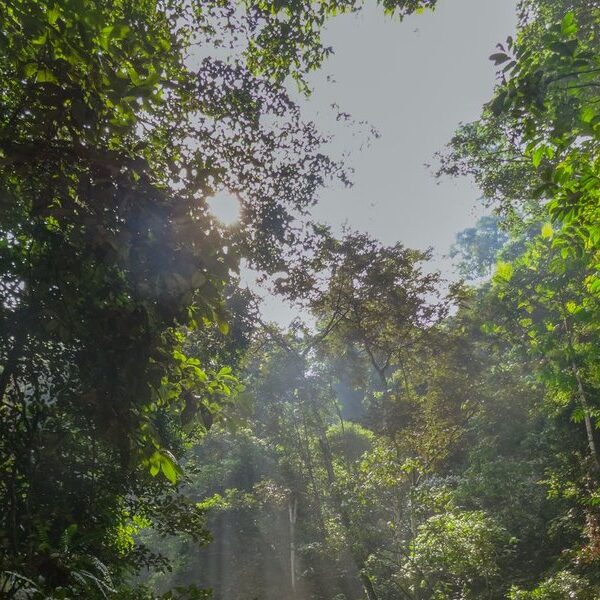
Colombia has roughly 10% of the planet’s species packed into less than 1% of its land. That biodiversity is also exactly what makes the country so easy to wreck. When a foreign animal or plant shows up with no local predators and a taste for native habitat, it doesn’t just survive here. It throws a party.
Colombian authorities have logged more than 500 introduced species across the country, and 23 of them carry an official “invasive” designation that legally obligates the government to act. The most famous one weighs a ton and a half and used to belong to a drug lord. The rest you’ve probably never heard of, and several are doing far more damage than the hippos ever will.
Here’s the rundown of the species reshaping Colombia’s rivers, reefs, farms, and forests, where each one came from, and what conservationists are actually doing about it.
Table of Contents
- Quick reference table
- 1. Hippopotamus
- 2. Giant African Snail
- 3. Red Lionfish
- 4. American Bullfrog
- 5. Nile Tilapia
- 6. Rainbow Trout
- 7. Retamo Espinoso (Spiny Gorse)
- 8. Water Hyacinth
- 9. Yellow Crazy Ant
- 10. Cane Toad
- 11. Smallmouth and Peacock Bass
- What’s being done
Quick reference table
| Species | Origin | Main damage | Status |
|---|---|---|---|
| Hippopotamus | Africa | River ecosystems, public safety | Spreading along the Magdalena |
| Giant African snail | East Africa | Crops, disease vector | In 100+ municipalities |
| Red lionfish | Indo-Pacific | Reef fish collapse | Across the Caribbean coast |
| American bullfrog | North America | Eats native amphibians | Andean wetlands |
| Nile tilapia | Africa | Outcompetes native fish | Nationwide in warm water |
| Rainbow trout | North America | Preys on páramo species | High-altitude lakes |
| Retamo espinoso | Europe/N. Africa | Fire risk, smothers páramo | 15,000+ hectares |
| Water hyacinth | Amazon basin | Chokes waterways | Rivers and reservoirs |
| Yellow crazy ant | Asia | Displaces native insects | Coastal and island zones |
| Cane toad | Central America | Poisons predators | Lowland regions |
| Peacock/smallmouth bass | Americas | Predation on natives | Reservoirs, rivers |
1. Hippopotamus
Hippopotamus amphibius. Native to sub-Saharan Africa.
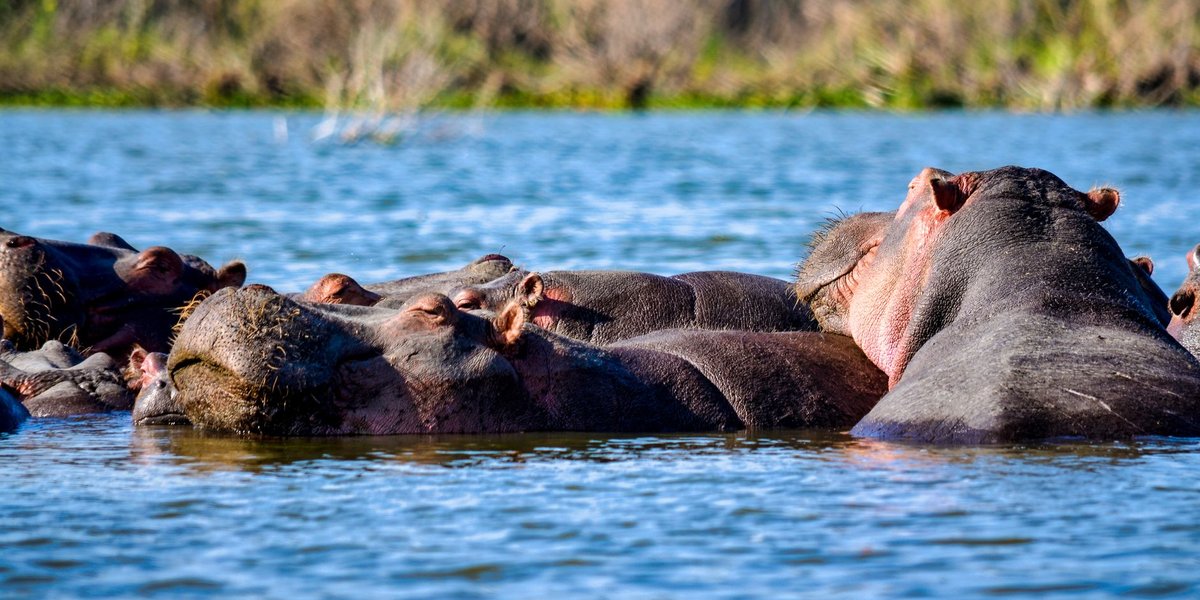
This is the one that made international news. Pablo Escobar imported four hippos for the private zoo at his Hacienda Nápoles estate in the 1980s. After his death in 1993, most of his exotic animals were relocated. The hippos stayed, because moving a wild hippo is a logistical nightmare nobody wanted to fund.
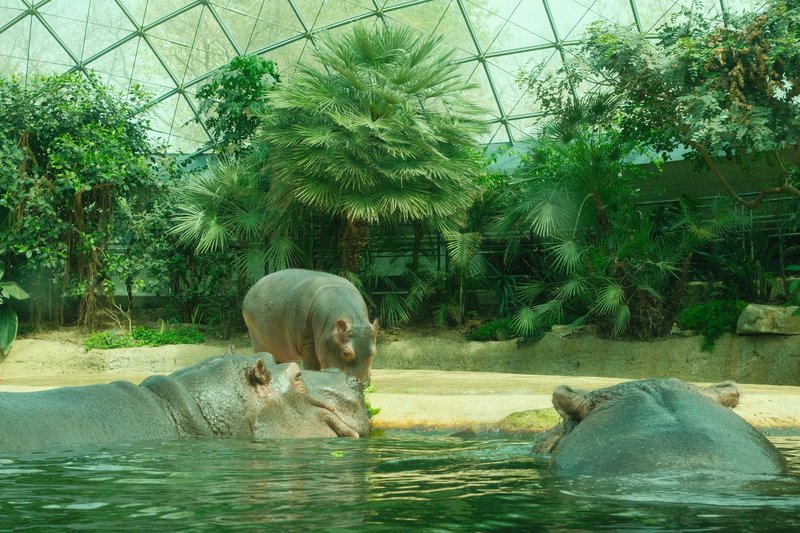
Four became an estimated 150 or more, scattered across the Magdalena River basin. Colombia’s tropical climate has no dry season harsh enough to limit breeding, so females reproduce faster here than in Africa. They reshape riverbanks, dump enormous quantities of nutrients into the water that trigger toxic algae blooms, and displace native capybaras and manatees, among South America’s more threatened animals. In 2009 the government authorized shooting a bull named Pepe, and the public backlash was so severe that lethal control became politically radioactive for years.
In 2022 Colombia officially declared the hippos an invasive species, clearing the legal path for management. The current plan leans on surgical sterilization, which costs around $10,000 per animal and requires darting a one-and-a-half-ton creature that can outrun a human on land. Researchers warn that if nothing changes, the population could hit 1,000 by the 2030s.
2. Giant African Snail
Lissachatina fulica. Native to East Africa.
It can grow as long as your hand and lay up to 1,200 eggs a year. The giant African snail likely entered Colombia through the exotic pet trade and folk-medicine markets, where its mucus was sold as a skin remedy. It spread fast, and by the time anyone took it seriously the snail had reached more than a hundred municipalities across the country.
The problem isn’t just that it eats over 500 plant species, including staple crops. The snail carries a parasitic nematode that can cause meningitis in humans, which is why the official advice is to never touch one with bare hands. Colombian health authorities have run public campaigns telling people how to safely collect and incinerate them, because crushing one just scatters the eggs.
3. Red Lionfish
Pterois volitans. Native to the Indo-Pacific.
The lionfish is the textbook example of how aquarium releases turn into ecological disasters. It established itself across the western Atlantic and Caribbean in the 2000s, reaching Colombian waters around 2008. With venomous spines and no natural predators on this side of the world, it hunts juvenile reef fish with almost no pushback.
A single lionfish can reduce native fish recruitment on a small reef patch by around 80%. It eats commercially important species before they’re old enough to fish, which hits coastal livelihoods on top of the ecological damage. The IUCN and regional bodies have backed an unusual control strategy: eat it. Lionfish is firm, mild, and entirely safe once the spines are removed, so dive operators and restaurants from San Andrés to Santa Marta now run derbies and put it on the menu. It won’t eradicate them, but it keeps numbers down where divers work.
4. American Bullfrog
Lithobates catesbeianus. Native to eastern North America.
Brought in for frog-leg farming, the American bullfrog did what farmed animals always do eventually: it escaped. It’s now established in several Andean wetlands and reservoirs, where its appetite is the whole problem. A bullfrog will eat anything it can fit in its mouth, including native frogs, fish, small snakes, and birds.
Worse, bullfrogs are carriers of chytrid fungus, the pathogen behind amphibian die-offs worldwide. Colombia is one of the most amphibian-rich countries on Earth, with hundreds of endemic frog species found nowhere else. A vector animal that spreads a lethal fungus while also eating the locals is close to a worst-case scenario for that group.
5. Nile Tilapia
Oreochromis niloticus. Native to Africa.
Tilapia is a aquaculture workhorse, cheap to raise and tolerant of poor water, which is exactly why it’s a problem when it gets loose. Escapes from fish farms and deliberate stocking have put Nile tilapia in warm waters across much of lowland Colombia.
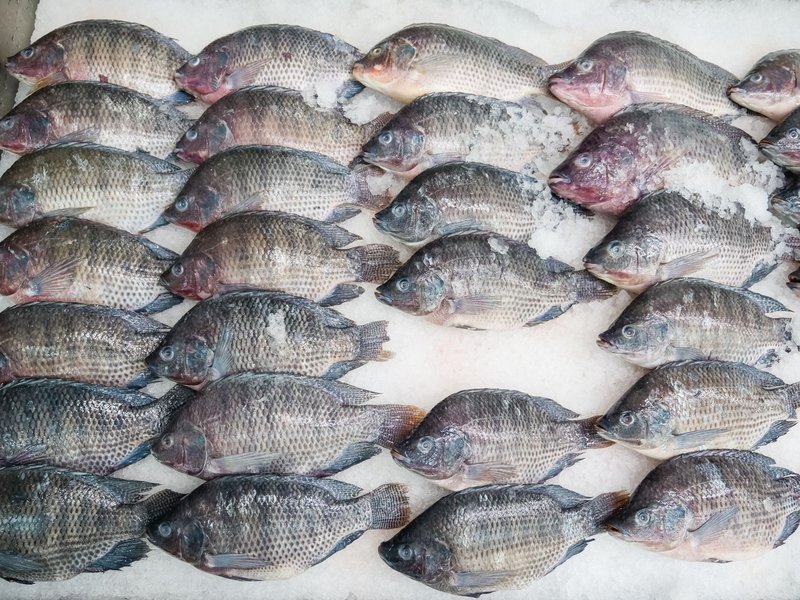
It breeds prolifically, tolerates conditions native fish can’t, and competes directly for food and spawning sites. In the Magdalena basin and various reservoirs, tilapia has become one of the most common fish caught, often at the expense of native species that were already under pressure from dams and pollution. The economic upside as a food fish is real, which makes tilapia a genuinely awkward case: the same trait that feeds people also crowds out the natives.
6. Rainbow Trout
Oncorhynchus mykiss. Native to western North America.
Trout were introduced to Colombia’s cold high-altitude lakes and streams in the early 20th century for sport fishing and food. In the páramo and Andean highlands, those waters historically held very few fish, which means the native amphibians, insects, and crustaceans evolved with almost no fish predators.
Drop an efficient cold-water predator into that and the results are predictable. Rainbow trout prey heavily on native invertebrates and the tadpoles of endemic frogs in some of Colombia’s most fragile ecosystems. The páramos also supply drinking water to cities like Bogotá, so what happens in those lakes isn’t a niche concern.
7. Retamo Espinoso (Spiny Gorse)
Ulex europaeus. Native to Western Europe and North Africa.
If you’ve hiked the hills around Bogotá, you’ve seen it: dense, spiny, yellow-flowering shrub blanketing the slopes. Retamo espinoso was introduced as a hedge and ornamental plant and turned into one of Colombia’s most aggressive plant invaders, covering well over 15,000 hectares in the central Andes.
The plant is built to burn. Its oily, resinous tissue is highly flammable, and it actually benefits from fire because the heat triggers its seeds to germinate. So it fuels wildfires, then recolonizes the burned ground faster than native vegetation can. Removing it is brutal manual labor, since the spines tear through gloves and the seed bank can stay viable in the soil for decades. Bogotá’s environmental authority has run repeated removal-and-restoration campaigns on the eastern hills, replanting native species once the gorse is cleared.
8. Water Hyacinth
Eichhornia crassipes. Native to the Amazon basin.
Here’s the twist: water hyacinth is technically native to South America — one of the many plants that originate in the Amazon basin — but it’s invasive almost everywhere else and behaves like an invader within Colombia too when nutrient pollution lets it run wild. The floating plant doubles its coverage in days under the right conditions, forming mats thick enough to walk on.
Those mats block sunlight, strangle oxygen out of the water, kill fish, and clog hydroelectric intakes and irrigation channels. It thrives on the fertilizer and sewage runoff that pour into Colombian rivers and reservoirs, so the plant is really a symptom of water pollution as much as a problem in itself. Mechanical harvesting buys temporary relief, but unless the nutrient load drops, the mats grow right back.
9. Yellow Crazy Ant
Anoplolepis gracilipes. Native to Asia.
Named for its frantic, erratic movement when disturbed, the yellow crazy ant is one of the world’s worst invasive insects. It doesn’t sting, but it sprays formic acid that blinds and disables other animals, and it forms supercolonies with multiple queens that can blanket the ground.
In Colombia it’s turned up in coastal and island habitats, where it displaces native ants and insects, farms honeydew-producing pests that damage plants, and disrupts the entire ground-level food web. On other tropical islands, crazy ant invasions have collapsed crab and reptile populations. The fear is the same playbook unfolding in Colombia’s sensitive coastal zones, where it’s notoriously hard to eradicate once established.
10. Cane Toad
Rhinella marina. Native to Central and northern South America.
The cane toad is a regional native in parts of its range, but human movement and habitat change have pushed it into areas and densities where it acts as an invader, the same way it devastated Australia. Its defense is a potent toxin secreted from glands behind its head, strong enough to kill a dog, a snake, or a native predator that tries to eat it.
That’s the core danger. Colombian predators that have never encountered the toad don’t know to avoid it, so a single meal can be fatal. The toad also breeds in huge numbers and eats native insects and small animals indiscriminately, giving it a double impact as both prey that poisons and predator that overconsumes.
11. Smallmouth and Peacock Bass
Micropterus and Cichla species. Native to North America and the Amazon, respectively.
Predatory game fish introduced for sport fishing round out the list. Peacock bass, native to the Amazon, become invasive when stocked outside their natural range into other Colombian basins, where they devastate local fish communities. Smallmouth bass and other introduced predators do the same in reservoirs and rivers.
These fish are prized by anglers, which is exactly why they keep getting moved into new water bodies, legally or not. Once a reservoir holds an established population of an aggressive predator, native fish that evolved without that pressure tend to crash, and reversing it is nearly impossible without draining the entire system.
What’s being done
Colombia’s legal framework is further along than most of the region. The environment ministry maintains an official list of recognized invasive species, and that designation matters: it triggers a legal obligation to develop and fund management plans rather than leaving the problem to whoever notices it first. Research institutions like the Humboldt Institute track introductions and map spread, and Colombia has documented far more than 500 introduced species nationwide, a number that keeps the list of candidates for future action long.
The tactics vary by invader. Hippos get sterilization and relocation. Lionfish get turned into dinner. Retamo espinoso gets pulled by hand and replaced with native plants. Snails get incinerated under public-health guidance. None of these are silver bullets, and the honest assessment is that full eradication is off the table for almost every species on this list. Once an invader is established across a country this big and this wet, the realistic goal shifts from removal to containment.
The pattern underneath all of it is the same, whether the culprit is a drug lord’s vanity pet, a pet-trade snail, or a sport-fishing release: nearly every one of these species got here because a human decided it would be useful, decorative, or fun. The biology did the rest. That’s the part worth remembering the next time someone wants to import something new into one of the most biodiverse countries on the planet.