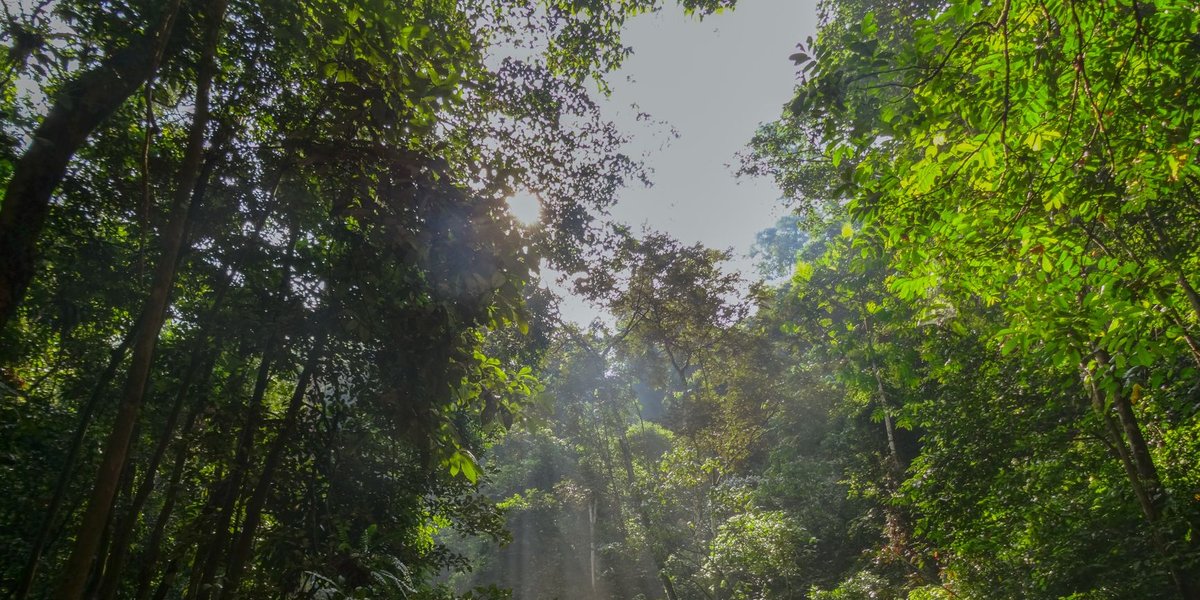
Gabon is roughly 88% forest. Drive an hour out of Libreville in almost any direction and the road narrows into a green wall, layered canopy stacked on canopy, the kind of unbroken cover that makes the country one of the last great carbon sinks on the planet. Several hundred tree species grow inside that wall. A handful of them you’ve almost certainly touched without knowing it — the plywood in your wall, the dark wood on a guitar fretboard, the black keys on a piano.
This is a tour of the trees that built Gabon’s reputation, fed its economy, and in one case triggered a political scandal that took down a government minister. Some are timber giants worth fighting over. Some are sacred. Most are under pressure. Here are twelve worth knowing.
Table of Contents
- Okoumé
- Kevazingo (Bubinga)
- Moabi
- Sapele
- Sipo (Utile)
- African Mahogany (Khaya)
- Limba
- Ayous (Obeche)
- Wengé
- Padouk
- Azobé
- Gabon Ebony
- Why These Trees Matter Now
Okoumé
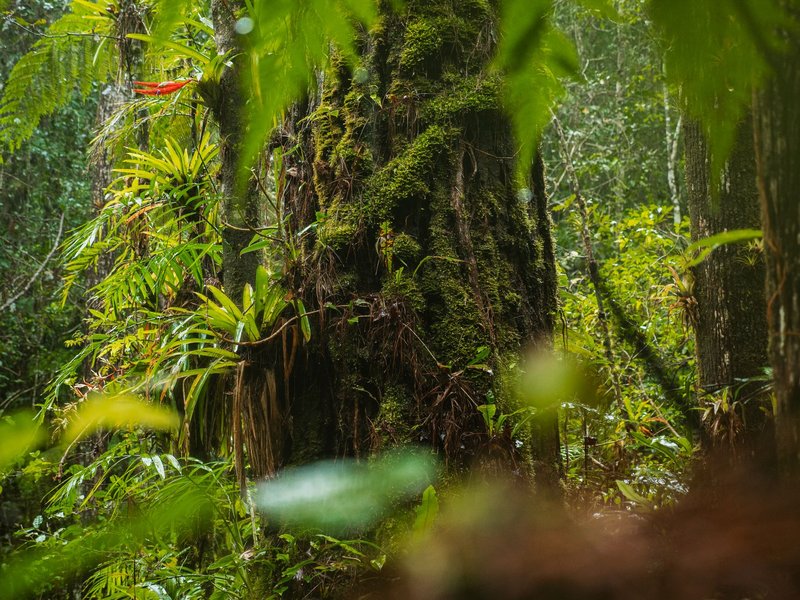
If Gabon has a national tree, this is it. Aucoumea klaineana grows almost nowhere else on Earth — its range is essentially Gabon plus slivers of Equatorial Guinea and the Republic of Congo. Tall, straight, with a pale pinkish wood that peels cleanly into thin sheets, okoumé became the backbone of the global plywood industry. For decades it was Gabon’s single biggest export after oil, and the country still supplies the lion’s share of the world’s okoumé.
You can spot it by the buttressed base and the bark that flakes off in rounded plates, exposing fresh orange underneath. It’s a pioneer species, which is part of why it regenerates well in logged and disturbed ground — a rare bit of good news in a list full of slow growers. Even so, the IUCN Red List classifies it as Vulnerable, a consequence of how hard it’s been worked for a century.
Kevazingo (Bubinga)
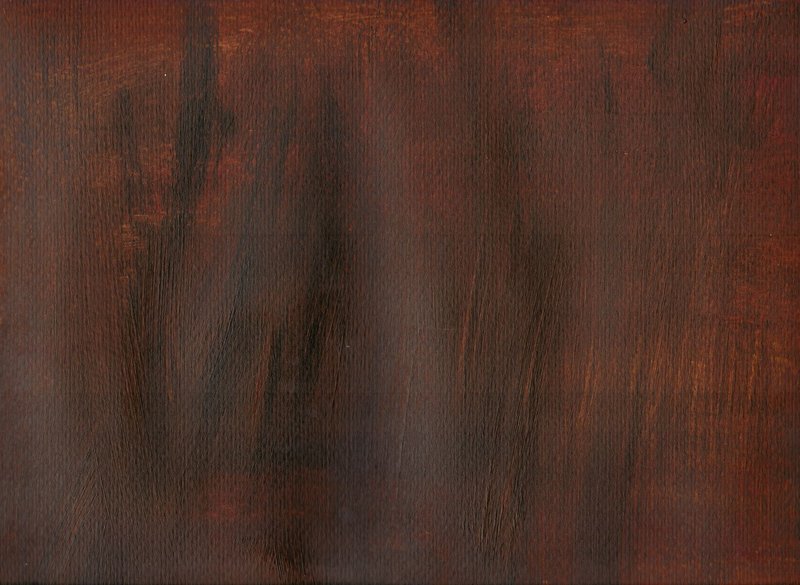
No tree in Gabon carries more weight, literally or culturally. Kevazingo — sold internationally as bubinga, botanically Guibourtia tessmannii and its cousins — produces a dense, deep-red heartwood with swirling figure that furniture makers prize. In Japan it’s carved into the shells of taiko drums. In China it commands staggering prices as luxury hongmu furniture.
It’s also sacred. In several Gabonese communities the oldest kevazingo trees are treated as ancestral, places for ritual and decision-making, not lumber. That collision — holy tree versus six-figure log — exploded in 2019, when hundreds of containers of illegally cut kevazingo vanished from the port of Owendo after being seized. The scandal, nicknamed “Kevazingogate,” cost Gabon’s vice-president and forestry minister their jobs. Atlas Obscura documented how the poaching pipeline ran straight to Chinese workshops. The species is now listed under CITES, which means cross-border trade requires permits.
Moabi
Baillonella toxisperma is one of the giants of the Central African forest, sometimes pushing past 60 meters with a clean trunk most of the way up. The timber is reddish, durable, and valuable — but to the people who live near it, the tree is worth more standing. Its seeds yield moabi oil, used for cooking and skincare, and the bark feeds traditional medicine. A single mature tree can be a multi-generational asset to a village.
That’s the tension in one organism: a logging company sees one harvest, a community sees a lifetime of oil. Moabi grows slowly and fruits irregularly, so a felled tree isn’t coming back in any human timeframe. The IUCN lists it as Vulnerable, and conflicts over moabi rights are a recurring flashpoint between villages and concessions.
Sapele
If you’ve admired a “mahogany” guitar or a wood-trimmed car dashboard in the last few decades, there’s a good chance it was sapele. Entandrophragma cylindricum is the workhorse mahogany substitute of West and Central Africa — reddish-brown, with a ribbon-stripe figure when quartersawn that catches light like watered silk. Luthiers, boatbuilders, and furniture makers all lean on it.
The tree itself is enormous and emergent, breaking through the canopy on a tall buttressed trunk. Decades of demand have thinned it, and it sits at Vulnerable on the Red List. Gabon and Cameroon are its commercial heartland, and it ranks high on any list of Cameroon’s economically important plants.
Sipo (Utile)
Sapele’s close relative, Entandrophragma utile, trades as sipo or utile and does much the same job: a stable, attractive mahogany alternative for joinery, doors, and high-end furniture. The wood is a touch more uniform and slightly coarser than sapele, which some woodworkers actually prefer for large flat panels that need to stay put.
Sipo shares its cousin’s problem too — it’s big, slow, scattered thinly across the forest rather than growing in stands, and rated Vulnerable. Selective logging means felling one tree and dragging it out through a lot of forest, which is part of why these Entandrophragma species are so vulnerable to overcutting.
African Mahogany (Khaya)
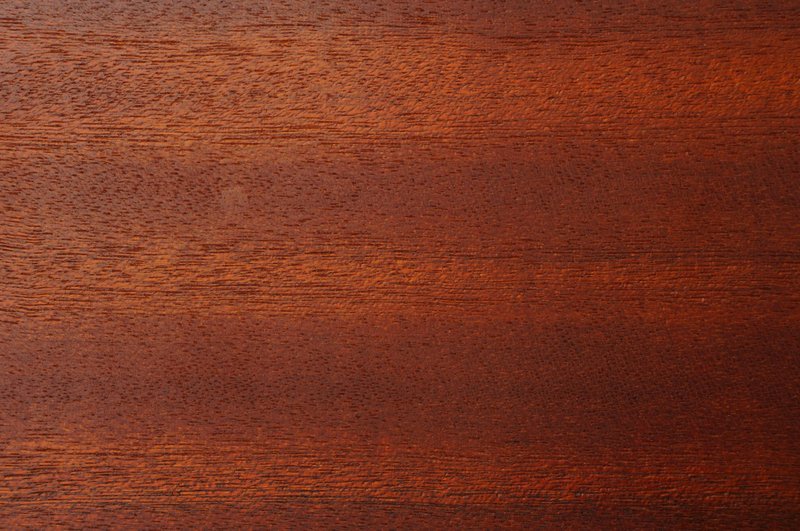
This is the “true” African mahogany, Khaya ivorensis, the species that stepped in as American mahogany supplies tightened. The heartwood is a warm pink-brown that deepens with age and light, and it machines beautifully, which is why it shows up in everything from cabinetry to musical instruments to interior trim on boats.
Khaya can reach impressive size, with a long clear bole prized by sawmills precisely because so much of it is usable. Like the rest of the mahogany family here, it’s been logged hard enough to land on the Red List as Vulnerable. It’s worth distinguishing it from the Entandrophragma group: same family, similar look, different genus — a distinction the timber trade often blurs but botanists don’t.
Limba
You may know this tree better by its guitar name. Terminalia superba is limba, and when figured it’s sold as korina — the wood Gibson used for its original Flying V and Explorer guitars in the late 1950s. Pale, light, and even-grained, it’s easy to work and finishes cleanly, which made it a favorite for furniture and veneer long before it went electric.
Limba is a fast-growing pioneer, often among the first big trees to colonize a clearing, and it tolerates disturbed ground well — part of why it ranges right across the continent, turning up among Togo’s native plants as comfortably as in Gabon. That gives it a healthier conservation outlook than the slow-growing mahoganies — one of the few entries here not flagged as threatened. The trunk has a distinctive fluted, slightly buttressed base.
Ayous (Obeche)
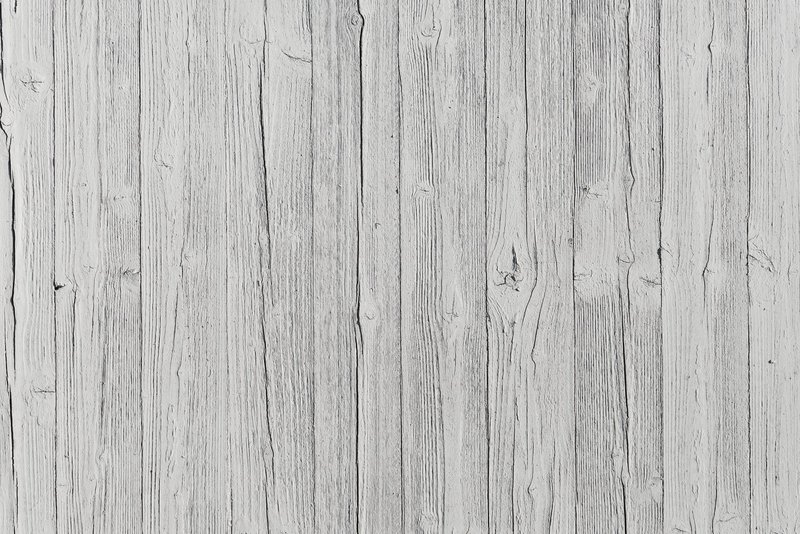
Triplochiton scleroxylon goes by ayous, obeche, samba, or wawa depending on which port it ships from, and it’s one of the most exported timbers in all of Africa. The wood is almost absurdly light and pale, soft enough to carve easily, stable enough for sauna benches, model-making, and the cores of veneered panels. If a piece of “blond” African wood feels suspiciously weightless, it’s probably ayous.
The tree is a fast-growing emergent with a tall, pale-barked trunk and a wide crown. Volume is the story here: huge quantities move through Gabonese and Cameroonian mills every year, which keeps prices low and demand relentless.
Wengé
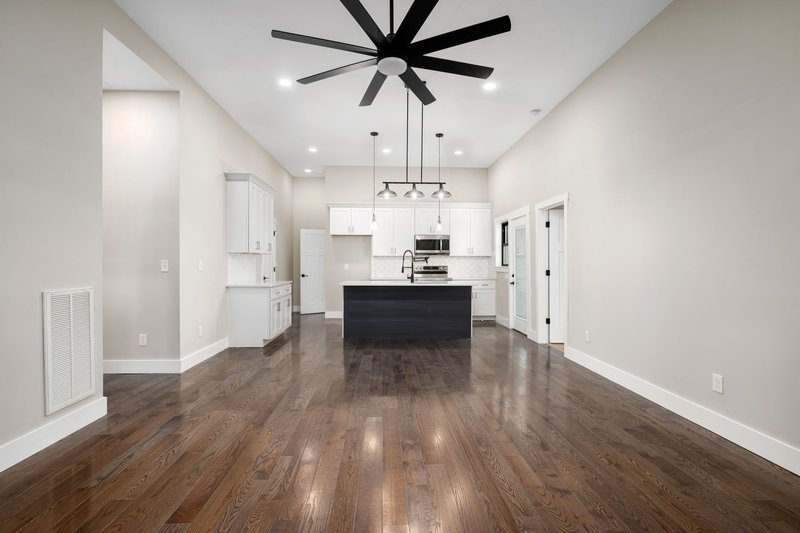
Wengé is the dark one. Millettia laurentii produces a heartwood so deep brown it’s nearly black, streaked with fine pale lines, and it shows up in flooring, furniture, and instrument fingerboards where designers want drama. It’s hard, heavy, and famously tough on saw blades — and on hands, since the splinters are notoriously nasty.
Demand has hit it harder than most. The IUCN rates wengé as Endangered, a step worse than the Vulnerable mahoganies, because it grows slowly and has been cut aggressively across Central Africa for its instantly recognizable color. Genuine wengé is increasingly expensive and increasingly substituted by stained look-alikes.
Padouk
If wengé is the black, padouk is the red. Pterocarpus soyauxii, African padauk, comes out of the saw a startling blood-orange that no stain can fake, then mellows to a deeper reddish-brown as it ages and oxidizes. Woodworkers love it for accent pieces, knife handles, and anything that needs to shout color, and it’s hard and durable enough for flooring.
It’s a relatively obliging tree compared to the giants on this list — it grows reasonably and isn’t currently flagged as threatened, which makes it one of the more sustainable choices among Gabon’s decorative hardwoods. The brilliant color and the way it works under hand tools have kept it a hobbyist favorite worldwide.
Azobé
Some of these trees are admired for beauty. Azobé is admired for brute strength. Lophira alata yields one of the densest, heaviest timbers in Africa — so hard it blunts tools, so durable it shrugs off marine borers. That’s why it ends up where nothing else will survive: harbor pilings, lock gates, railway sleepers, heavy-duty decking, bridge timbers exposed to saltwater and rot.
The tree is a tall canopy species with dark, fissured bark, and the freshly cut wood ranges from chocolate to deep red. Its range runs along the West African coast as well, turning up among the trees of Sierra Leone just as it does in Gabon’s forests. Its toughness is exactly why it’s logged, and it carries a Vulnerable rating. There’s a certain irony in a tree this indestructible being threatened by the demand its indestructibility creates.
Gabon Ebony
The piano-key tree. Diospyros crassiflora produces the jet-black ebony that classical instrument makers consider the standard — fingerboards, tuning pegs, clarinet bodies, the black keys under a pianist’s fingers. The heartwood is so dense and so uniformly dark it polishes to something like stone.
That perfection is also its undoing. Truly black, defect-free ebony is rare even within a single tree, so loggers cut many to find usable wood, and the species is now Endangered. The guitar maker Taylor famously bought a Cameroonian ebony mill and began using streaked, naturally variegated ebony specifically to stop the waste of rejecting anything that wasn’t perfectly black — a small shift with outsized impact on how much of the tree actually gets used. The BBC has reported on the broader fight to keep Central African ebony from being logged out entirely.
Why These Trees Matter Now
Look down the list and a pattern jumps out: Vulnerable, Vulnerable, Endangered, Vulnerable. The trees that made Gabon a timber power are mostly the ones now under threat, because the qualities that make a wood valuable — density, color, size, slow-grown tightness of grain — are exactly the qualities that take a century to replace and a week to fell.
Gabon has responded more seriously than most of its neighbors. In 2010 it banned the export of raw, unprocessed logs, forcing value to be added inside the country and slowing the simple drain of whole trees onto cargo ships. It became the first African nation to be paid for reducing forest-based carbon emissions, under a results-based deal funded through the UN-backed Central African Forest Initiative. And the kevazingo scandal, embarrassing as it was, showed that illegal logging is now treated as a national-level crime, not a quiet cost of doing business.
None of that makes the pressure disappear. Chinese and European demand for tropical hardwood hasn’t softened, and a sacred tree is still worth a fortune to someone willing to cut it at night. But Gabon’s forests remain about 88% intact for a reason — the policy, the remoteness, and a growing recognition that an okoumé standing in the carbon market may be worth more than an okoumé on a truck. These twelve species are the argument, in wood, for keeping it that way.