Search “fish of Uruguay” and you get one of two things: a bare Wikipedia list of 75 species with no pictures, or a FishBase spreadsheet built for aquarium hobbyists who already know their Latin binomials. Neither tells you what’s actually swimming in the Río Uruguay when you’re standing on the bank, or why a fisherman in Rocha cares about dorado but a fish market in Montevideo cares about corvina.
Uruguay sits at a genuine crossroads. Its western border is the Uruguay River, a warm subtropical system shared with Argentina and Brazil that funnels species down from the Paraná basin. Its southern and eastern edge is the Río de la Plata estuary and the open Atlantic, a completely different world of brackish and saltwater fish. Same country, two fish faunas that barely overlap.
Table of Contents
- Freshwater rivers and lagoons
- The Atlantic side: Río de la Plata and open coast
- What this means if you fish, keep aquariums, or just want to know
Freshwater rivers and lagoons
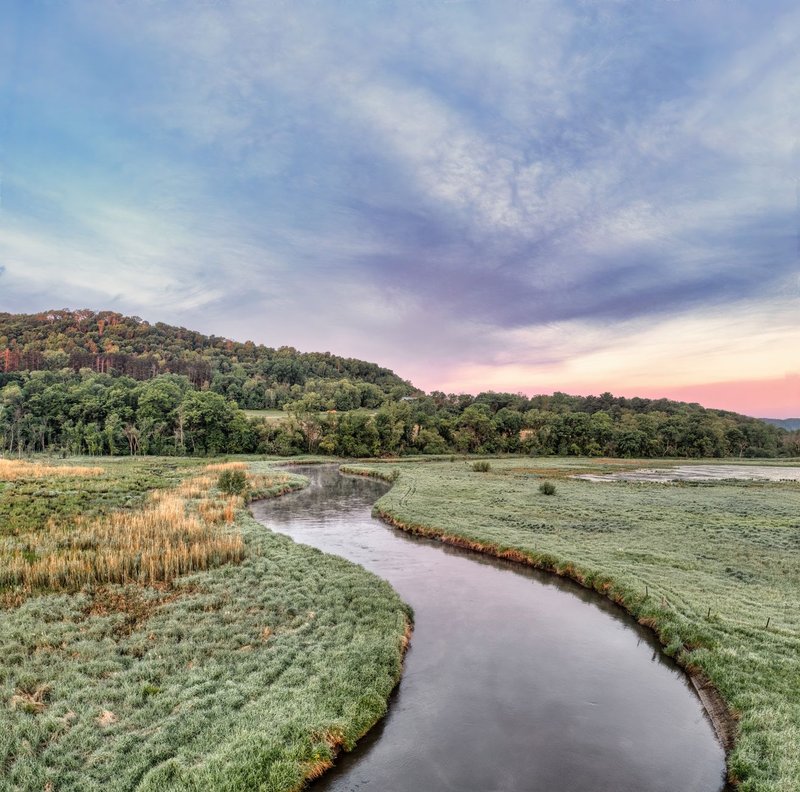
The Uruguay River and its tributaries carry warm, sediment-heavy water north to south, and the fish community reads like a checklist of Paraná basin classics that happen to reach their southern limit here.
Golden dorado (Salminus brasiliensis)
Dorado is the fish Uruguay undersells. Anglers fixate on Argentina’s Paraná for this species, but the stretch of the Uruguay River below the Salto Grande dam holds some of the largest dorado on the continent, fish that gorge year-round in the dam’s tailwater instead of following the usual seasonal migration. A big female can carry up to two million eggs and, according to a U.S. Fish and Wildlife Service risk assessment, can live more than 15 years; the current world record — 55 lb 11 oz — came out of the Uruguay River system in 2006, not from Argentina’s more famous fishing lodges. Why it matters: this is the species that put Uruguay on the international fly-fishing map, and it’s the one worth booking a guide for.
Tararira (Hoplias malabaricus)
Locals call it the wolf fish, and the name is earned. Tararira spends the day motionless in dense weed beds, then lunges at anything that swims past — including other tararira nearly its own size. It tolerates stagnant, low-oxygen water that would kill most species, which is why you’ll find it in irrigation ditches and farm ponds as readily as the main river channel. Why it matters: it’s the species most Uruguayan kids catch first, using nothing more than a hand line and a piece of meat.
Sábalo (Prochilodus lineatus)
Sábalo doesn’t hunt anything. Juveniles eat plankton, but adults develop a modified gut built to process river-bottom detritus — decomposing plants, algae, sediment — turning them into one of the only fish that essentially eats mud for a living. That unglamorous diet makes them the base of the food web the Uruguay River’s predators depend on, and the single most important commercial catch on the river by volume. Why it matters: no sábalo, no dorado — the whole system’s protein supply runs through this fish first.
Boga (Megaleporinus obtusidens)
Boga has incisor-like teeth built for cracking seeds and river snails, but ask any commercial fisherman on the Río Negro or lower Uruguay and they’ll tell you the fish has a weakness for corn. Fishing grounds are baited with grain feeders specifically to concentrate boga schools before netting. It’s the second-most important species in the artisanal fishery, right behind sábalo. Why it matters: it’s the fish on the plate in riverside towns, prized specifically for its flavor rather than its fight.
Surubí (Pseudoplatystoma corruscans)
This is the giant of the group — a long-whiskered catfish that can reach two meters and 120 kilograms, with females routinely outgrowing males. Surubí favor the deep channels and flooded margins of the lower Uruguay River, and catch-and-release rules have spread specifically because the species is slow to recover from overfishing at that size. Why it matters: it’s a genuine trophy fish, and one of the few in the region where releasing your catch is treated as the responsible default, not an afterthought.
Patí (Luciopimelodus pati)
Less famous than surubí but built along similar lines — a long-whiskered catfish reaching over a meter that shares the same deep-channel habitat in the Río de la Plata basin. Patí tends to get caught as bycatch in surubí and dorado fisheries rather than targeted directly, which means far less is known about its population trends than the showier species it swims alongside. Why it matters: it’s a reminder that Uruguay’s rivers hold more large predatory catfish than most visitors assume.
Armado catfish (Pterodoras granulosus)
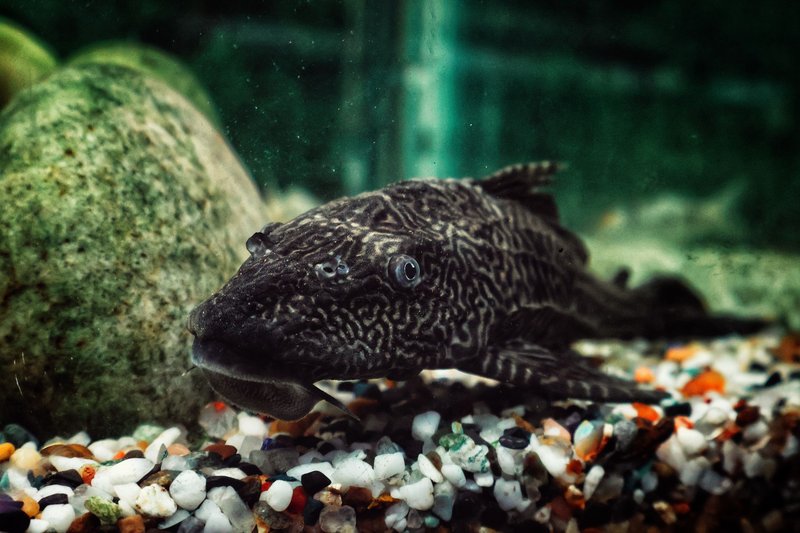
Armado means “armed,” and the name refers to the rows of bony plates running down its flanks — a defense so effective that few predators bother. Juveniles reappeared in the lower Uruguay River near Río Negro after periods of apparent absence, feeding opportunistically on detritus, dead fish, invertebrates, and even fallen fruit. Why it matters: it’s proof that the river’s less charismatic species are still being actively studied, not just assumed to be stable.
Freshwater stingray (Potamotrygon motoro and P. brachyura)
Uruguay is about as far south as freshwater stingrays get. Two species turn up in the lower Uruguay River — the black river stingray and the considerably larger short-tailed river stingray — both armed with a venomous tail spine that makes wading in murky shallows a genuinely different experience than it is further north. The black river stingray is listed as data deficient, while the IUCN Red List assessment for the short-tailed river stingray flags real pressure from the ornamental aquarium trade and subsistence fishing, and a Uruguayan program now actively asks anglers to release any they hook. Why it matters: this is the conservation story in the group — a species whose population trend nobody can currently confirm.
Chanchita cichlid (Australoheros scitulus)
Skip past the big predators and you’ll find this small, deep-bodied cichlid holding territory in calmer stretches near Santa Lucía and the greater Río de la Plata basin. It belongs to a genus of eight species split across the Uruguay and Paraná drainages, several of them found nowhere else on Earth. Currently rated Least Concern, but that status rests on a range narrow enough that a single degraded watershed could change the picture fast. Why it matters: it’s small enough and colorful enough to work in a home aquarium, and it’s the closest thing on this list to a distinctly Uruguayan fish.
The Atlantic side: Río de la Plata and open coast
Cross into the estuary and the Uruguay River’s cast of characters gives way almost entirely to a different set of species built for brackish and salt water.
Pejerrey (Odontesthes bonariensis)
Pejerrey is the fish that bridges both worlds — equally at home in freshwater lagoons and the brackish stretches of the Río de la Plata, sometimes reaching 82 centimeters and over 5 kilograms, though most caught are far smaller. It’s been farmed since the early 1900s specifically because it’s the single most commercially important freshwater fish in both Uruguay and Argentina. Why it matters: this is the fish on Uruguayan dinner tables more than any other, sport-caught or market-bought.
Corvina / whitemouth croaker (Micropogonias furnieri)
Corvina tolerates an extraordinary range of salinity, which is exactly why it thrives in an estuary where the water column can shift from nearly fresh at the surface to properly saline near the bottom within the same cast. Old-school Uruguayan fishermen reportedly located productive grounds by tasting the salinity of bottom water before setting a line — a level of read-the-water skill that doesn’t come up in the sport-fishing brochures. According to Uruguay’s Ministry of Livestock, Agriculture and Fisheries, it’s one of the country’s most important coastal fishery resources. Why it matters: it’s the backbone of Uruguay’s coastal commercial fleet, not a niche catch.
Striped weakfish / pescadilla (Cynoscion guatucupa)
Pescadilla sits toward the marine end of the estuary rather than mixing into brackish water the way corvina does, and the Río de la Plata population has historically pulled in around 15,000 tons a year — roughly a sixth of the region’s total coastal commercial catch. Populations shift with latitude enough that researchers treat the northern and southern groups as distinct stocks rather than one continuous population. Why it matters: alongside corvina, this is the fish that keeps Uruguay’s coastal fishing towns economically afloat.
What this means if you fish, keep aquariums, or just want to know
None of Uruguay’s headline fish are decorative. Dorado, surubí, and patí earn their reputations by fighting hard and growing large in a river system most international anglers overlook in favor of Argentina — worth knowing if a trip below the Salto Grande dam is on the table. Sábalo and boga matter less as trophies and more as the reason the rest of the food web functions, and they’re the ones actually feeding riverside towns. The chanchita cichlid is the one genuine home-aquarium candidate on this list, and also the closest thing to a truly local fish, restricted to this river system and nowhere much beyond it.
The freshwater stingrays are the one open question. Nobody currently has solid population data on either species in Uruguayan waters, which is a strange gap for a country this well-studied — and the reason local programs are pushing catch-and-release rather than waiting for better numbers to arrive first. If you’re after the fish that best captures where Uruguay actually stands — well-documented rivers, a booming commercial fishery on the coast, and at least one genuine conservation blind spot — that’s the one to watch.