Ask someone what grows in Suriname and you’ll probably get “rainforest” as the answer, full stop. Fair enough — over 90% of the country is unbroken Amazonian forest, one of the last places on Earth where that’s still true. But tucked under that canopy, and blooming right along Paramaribo’s market stalls, is a flower scene that rarely makes the postcards: a fire-red national flower with a name that translates to “fiery love,” bucket-shaped orchids that trap bees on purpose, and lobster-claw blooms that look engineered rather than grown.
This isn’t a taxonomy list. It’s a guide to the flowers actually worth knowing — what they mean, who pollinates them, and where you’d stand to see one in bloom.
Table of Contents
- The Faya Lobi: Suriname’s National Flower
- The Orchids Everyone Skips Past
- Heliconia: The Rainforest’s Loudest Color
- Notable Species at a Glance
- Where and When to Actually See Them
The Faya Lobi: Suriname’s National Flower
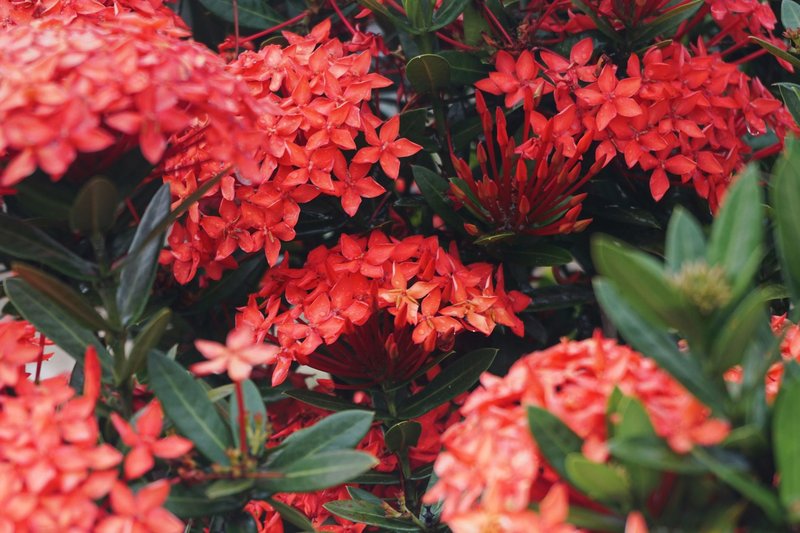
Suriname’s national flower is Ixora coccinea, known locally as Faya Lobi — Sranan Tongo for “fiery love.” It grows as a dense, waist-high shrub that flowers year-round, throwing off tight clusters of small, four-petaled blooms in scarlet, and occasionally orange, yellow, or pink.
The name isn’t decorative. In Surinamese culture the flower is tied to Winti, the country’s Afro-Surinamese spiritual tradition, where it appears in offerings and ceremonial use — the scarlet color read as a marker of devotion rather than just a pretty shade. Ixora also shows up constantly outside any ritual context: as a hedge plant along Paramaribo streets, as a cut flower at the Central Market, and as the answer to “what’s that red bush everywhere” for most first-time visitors.
Botanically, it’s a workhorse. Every part of the plant — flower, leaf, stem, root — carries phytochemicals that have made it a subject of pharmacological research well beyond Suriname’s borders, which is part of why Ixora species get cultivated commercially across the tropics, not just admired locally.
The Orchids Everyone Skips Past
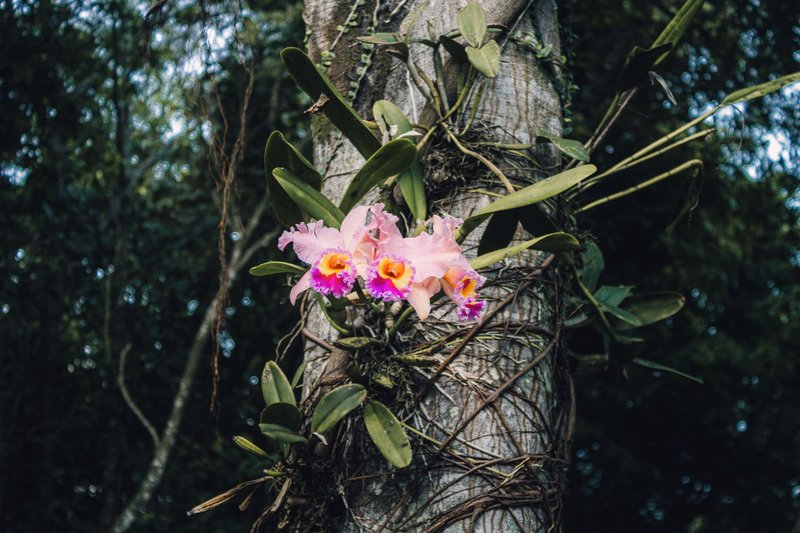
Here’s the gap in most “flowers of Suriname” content: it’s all Faya Lobi, or it’s a bare species list, and nobody explains why the orchids are the actually wild part of the story. Suriname and its Guiana Shield neighbors host well over a dozen native orchid genera—part of the broader Amazon rainforest flora—and a few of them do things that sound made up.
Take Coryanthes, the bucket orchid. It grows almost exclusively on active arboreal ant nests, its roots threading into the accumulated organic debris the ants build up — a free fertilizer supply the plant has adapted to depend on. The flower itself is a trap: it fills a cup-shaped pouch with a self-produced liquid, and male orchid bees, drawn in by the scent, slip on the waxy rim and fall in. The only way out is through a narrow tunnel lined with the flower’s pollen sacs, so the bee leaves carrying (or delivering) pollen whether it wants to or not.
Then there’s Cattleya, the genus most people picture when they think “orchid” without knowing the name — the big, ruffled, fragrant bloom of florist arrangements. In the wild, Cattleyas are canopy specialists: epiphytes that cling to tree trunks and branch crotches high up, forming what botanists call a second story of vegetation above the forest floor, chasing the light and airflow the understory doesn’t get. According to the American Orchid Society, that canopy adaptation is exactly why Cattleyas thrive in the airiest, highest reaches of tropical forest rather than at ground level — which is also why you’re more likely to spot one on a fallen branch than by looking down.
Heliconia: The Rainforest’s Loudest Color
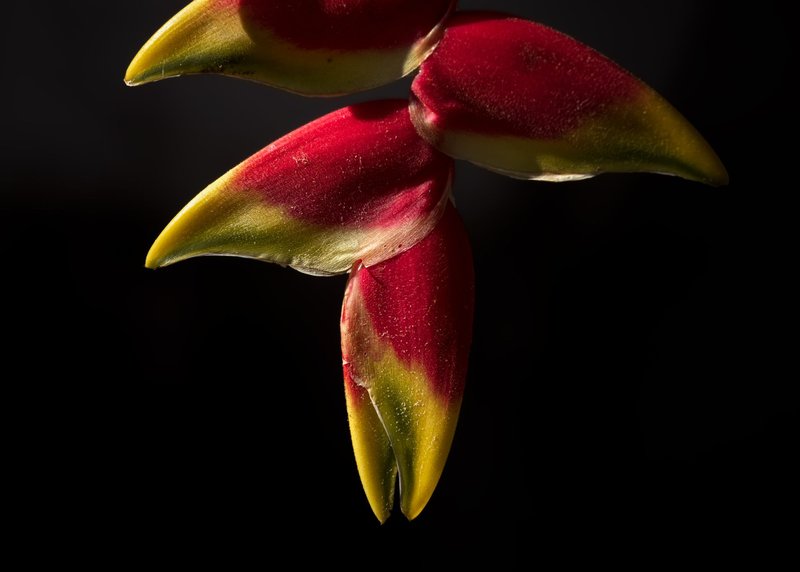
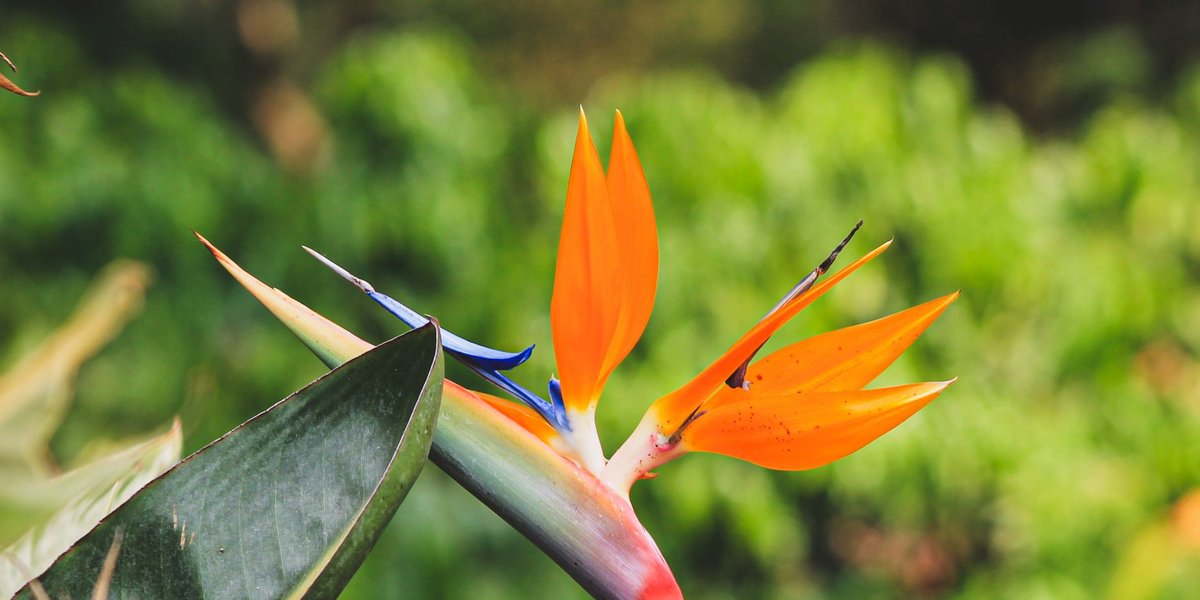
If Ixora is the cultural icon and orchids are the quiet specialists, Heliconia is the flower that makes rainforest photos look unreal. Locally called Red Palulu, Heliconia grows abundantly through the understory of the Guianas, throwing up thick, waxy bracts — not petals, technically, the true flowers are small and tucked inside — in red, orange, yellow, and combinations that look airbrushed.
The shape earns its nicknames honestly: “lobster claw” and “parrot flower” both describe the same beaked, overlapping bract structure. That structure isn’t decorative either. Heliconia bracts hold nectar in a shape built for hummingbird bills specifically, and the birds are the primary pollinators — a relationship tight enough that some Heliconia species and their hummingbird partners have co-evolved matching bill and bract curvatures. Butterflies take a cut of the nectar too, according to the Rainforest Alliance, which notes Heliconia’s role as a reliable year-round nectar source in tropical forest ecosystems. Unlike temperate wildflowers, there’s no single “Heliconia season” here — the tropical climate keeps something blooming continuously, which is good news for anyone planning a trip around seeing them.
Notable Species at a Glance
| Species | Color | Symbolism / Notes | Where Found |
|---|---|---|---|
| Faya Lobi (Ixora coccinea) | Scarlet, occasionally orange/yellow/pink | National flower; “fiery love”; used in Winti offerings | Gardens, hedges, markets nationwide |
| Bucket orchid (Coryanthes spp.) | Cream, maroon, spotted | Grows on ant nests; traps bees to pollinate | Lowland wet forest, arboreal |
| Cattleya orchid | White, lavender, purple | Canopy epiphyte, “second story” specialist | High rainforest canopy |
| Encyclia orchid | Yellow-green, brown | Widespread Guiana Shield epiphyte | Forest edges, lower canopy |
| Red Palulu (Heliconia bihai and relatives) | Red, orange, yellow bracts | “Lobster claw” bracts; hummingbird-pollinated | Rainforest understory, forest edges |
Where and When to Actually See Them
You don’t need a jungle expedition to start. Paramaribo’s Palmentuin (Palm Garden), right in the city center, mixes towering palms with ornamental Ixora beds and is an easy first stop for anyone who wants ground-level flowers without a guide. The Central Market sells cut Faya Lobi and other tropical blooms most mornings, which is as good a crash course in local plant culture as any botanical garden entry fee.
For the orchids and Heliconia, you’re looking at protected forest. Brownsberg Nature Park, a couple of hours south of Paramaribo, sits on a plateau with epiphyte-loaded old growth easily visible from the trail network — no canopy-climbing required. The Central Suriname Nature Reserve, a UNESCO World Heritage site covering close to 4 million acres of untouched rainforest, is the deeper option: multi-day, lodge-based, and the most reliable place to spot Coryanthes and Cattleya in situ rather than in a nursery. Because Heliconia and most native orchids bloom continuously rather than seasonally, there’s no narrow window to plan around — the trade-off is timing your trip for the dry season (roughly August through November, and a shorter stretch in February–March) when trail access into the reserves is easier, not because the flowers demand it.
Suriname’s flower story was never going to fit on one plant. The Faya Lobi gets the flag and the folklore, but the orchids clinging to the canopy and the Heliconia lighting up the understory are doing stranger, more specific work — trapping bees, matching hummingbird bills, running on ant-nest fertilizer. That’s the version of “flowers of Suriname” worth actually knowing.