Table of Contents
- The Short Answer
- How They Hunt: Echolocation and Deep Dives
- Why Their Diet Is So Unusual
- The Teeth That Make It Possible
- What We Still Don’t Know
The Short Answer
Shepherd’s beaked whale eats squid, deep-sea fish, and crab. That’s it — no elaborate mystery, just three prey categories pulled from the guts of stranded animals over the past century.
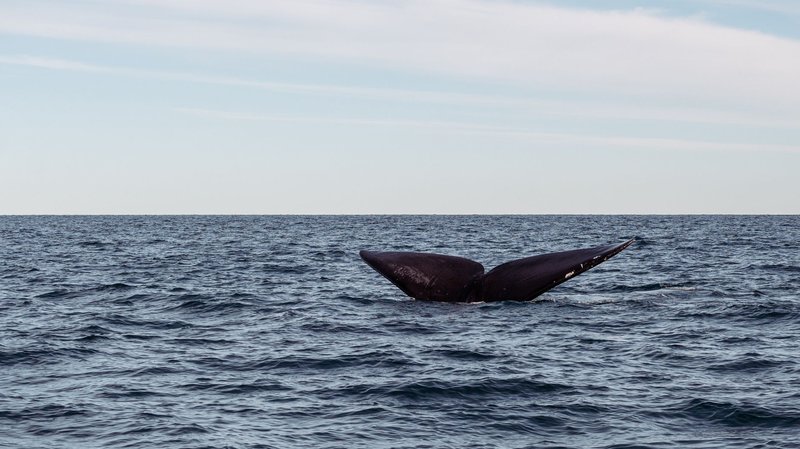
What makes that answer interesting isn’t the list itself. It’s that almost no other beaked whale eats this way. Most of the 24-odd beaked whale species on Earth are cephalopod specialists — squid and octopus, almost exclusively, sucked down whole in deep water. Shepherd’s beaked whale (Tasmacetus shepherdi) breaks the pattern. Fish and crustaceans show up regularly in its stomach contents, not as an occasional snack but as a real part of the menu.
Here’s the rough prey breakdown researchers have pieced together from strandings around New Zealand, South America, and other Southern Hemisphere coastlines:
| Prey Type | How Common | Notes |
|---|---|---|
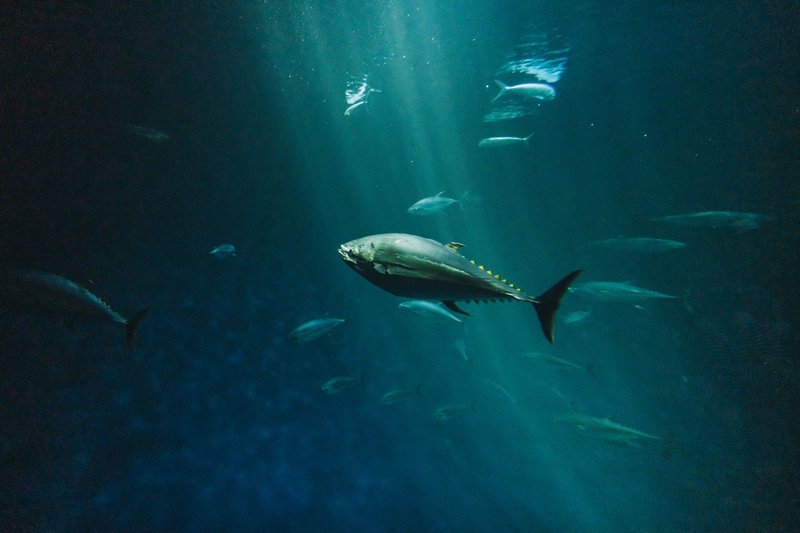
| Squid | Frequent | Cephalopod beaks found in most examined stomachs |
| Deep-sea fish | Frequent | Includes bottom-dwelling and midwater species |
| Crab | Occasional but notable | Rare among beaked whales generally |
How They Hunt: Echolocation and Deep Dives
Shepherd’s beaked whale hunts the way most beaked whales do, in the dark, far below where sunlight reaches. These are deep-diving specialists — dives past 500 meters are routine for the genus, and some beaked whale relatives have been tracked beyond 2,000 meters chasing prey. At that depth, eyesight is close to useless. Sound does the work instead.
Like other beaked whales, Tasmacetus almost certainly uses echolocation to find prey in total darkness: emitting clicks and reading the returning echoes to build a picture of what’s moving nearby. It’s the same basic toolkit dolphins use in shallow water, scaled up for pressure and blackness.
Once prey is located, beaked whales don’t chase and bite the way orcas or dolphins might. They rely on suction feeding — expanding the throat grooves along the underside of the jaw to create a vacuum that pulls prey straight into the mouth. It’s an efficient strategy for soft-bodied squid that would be hard to grab any other way, and it works even better when you’ve got teeth suited to something firmer.
Why Their Diet Is So Unusual
This is the part that actually distinguishes Tasmacetus shepherdi from its 20-plus beaked whale cousins. Species like Blainville’s beaked whale or the various Mesoplodon species are close to obligate squid-eaters — cephalopod beaks dominate their stomach content studies almost to the exclusion of anything else.
Shepherd’s beaked whale doesn’t play by that rule. Fish and crab turn up often enough in dissected stomachs that researchers describe its diet as generalist rather than specialist, a genuine outlier in a family built around one very narrow hunting strategy.
| Species | Primary Diet | Fish/Crustaceans? |
|---|---|---|
| Shepherd’s beaked whale | Squid, fish, crab | Yes, regularly |
| Blainville’s beaked whale | Squid | Rare |
| Cuvier’s beaked whale | Squid, some fish | Occasional |
| Sperm whale (for scale) | Squid | Rare |
The Teeth That Make It Possible
Ask why Shepherd’s beaked whale can eat fish and crab when its relatives mostly can’t, and the answer is in its mouth. Most beaked whales — males especially — carry only a single pair of tusk-like teeth used for fighting other males, not feeding. Females often have no erupted teeth at all. Neither sex has the dental hardware to actually chew.
Tasmacetus shepherdi is different. It’s the only beaked whale with a full, functional set of teeth in both the upper and lower jaws — up to roughly 90 teeth total, arranged in continuous rows rather than a single isolated pair. That’s an unusual feature for the entire beaked whale family, and it’s the anatomical reason the diet looks the way it does. Teeth built for gripping and holding open the door to prey that suction alone can’t manage as cleanly: fish with some heft, crabs with shells.
Skull flexibility plays a supporting role too. Beaked whale skulls generally have some give in the jaw joint to support powerful suction, and in Tasmacetus that flexibility pairs with actual teeth instead of substituting for them.
What We Still Don’t Know
Nobody has watched a Shepherd’s beaked whale feed in the wild. Every diet study comes from necropsies of stranded animals, mostly on beaches in New Zealand, Chile, and Argentina, which means the picture is built entirely after the fact. There’s no confirmed observation of a live hunt, no video, no tagged dive data showing depth-matched to a specific prey capture.
That gap matters. Stomach contents tell you what an animal ate before it died, not how often, not in what proportion across a year, and not whether stranded individuals — often sick or disoriented — ate normally in their final days. Researchers describe the species overall as “rarely observed,” and diet knowledge sits downstream of that same scarcity. The known range spans cool temperate waters of the Southern Hemisphere, and even basic questions about population size remain open, according to the IUCN Red List, which lists the species as Data Deficient.
So the honest version of the answer holds up: squid, deep-sea fish, and crab, with fish-eating enabled by teeth no other beaked whale bothers to keep. Just don’t expect certainty about the how-often or how-much. That data doesn’t exist yet, and might not for a long time given how seldom this whale is seen alive at all.