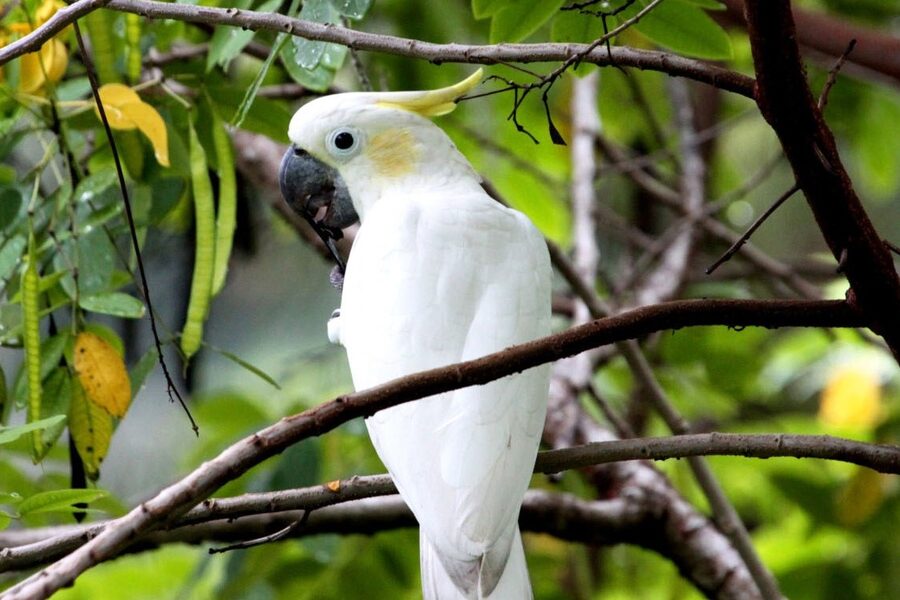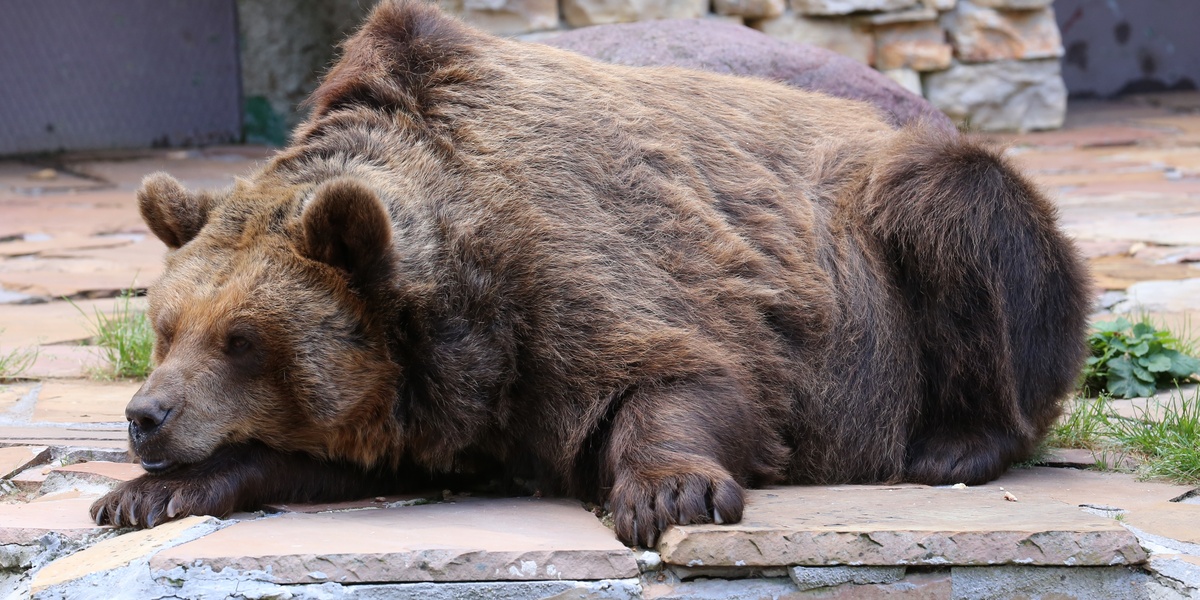
Albania’s varied landscapes—coastline, mountains and wetlands—support a wide mix of wildlife, from sun-loving reptiles to forest mammals. This compact list makes it easy to scan species you might encounter while traveling or studying the region’s fauna.
There are exactly 30 Albania’s native animals, ranging from the Balkan green lizard to the Wild boar. For each entry I list Scientific name,Size (cm),Where found (Albania),Description (30-50 words); you’ll find these details below.
How reliable is the “Where found” information?
The distribution notes combine recent field guides and regional records but can vary with season and local habitat change; think of them as starting points for where the species are commonly observed rather than exhaustive maps.
When and where are you most likely to spot these species in Albania?
Coastal wetlands and lowland forests are best for waterbirds and reptiles in spring and early summer, while upland forests and alpine meadows reveal mammals and mountain specialists later in summer; local guides and protected areas increase your chances.
Albania’s Native Animals
| Name | Scientific name | Size (cm) | Where found (Albania) | Description (30-50 words) |
|---|---|---|---|---|
| Brown bear | Ursus arctos | 140-250 | Albanian Alps,Korab,Pindus | Large omnivore roaming Albania’s high forests and alpine meadows, notably in the Albanian Alps and Korab. Adults are impressive in size; sightings are rare but protected. Important for ecosystem health and a flagship conservation species in Albania. |
| Grey wolf | Canis lupus | 100-160 | Mountains,forests across country | Widespread predator in Albanian forests and mountains, wolves travel in packs across remote valleys and foothills. They help control ungulate populations but sometimes conflict with livestock; legal protection and traditional tolerance shape their conservation in Albania. |
| Wild boar | Sus scrofa | 95-160 | Woodlands,lowlands nationwide | Robust omnivore common in woodlands, wetlands and farmland across Albania. Wild boar root for food at night, influencing habitats and sometimes causing agricultural damage. Hunted and adaptable, they are a familiar species for nature watchers and hunters alike. |
| Roe deer | Capreolus capreolus | 90-130 | Woodlands,hilly regions nationwide | Small, graceful deer inhabiting woodlands, hedgerows and hills across the country. Roe deer are often seen at dawn or dusk, browsing shrubs and providing prey for wolves and lynx. Common and widespread in Albania’s rural landscapes. |
| Chamois | Rupicapra rupicapra | 115-135 | Albanian Alps,mountain cliffs | Agile mountain goat-antelope found on steep cliffs of the Albanian Alps and high ridges. Chamois are expert climbers, visible from rocky trails in summer. They are a prized sighting for hikers and an indicator of healthy alpine ecosystems. |
| Golden jackal | Canis aureus | 70-100 | Lowland scrub,farmland coasts | Versatile canid occupying lowland scrub, farmland edges and coastal marshes in Albania. Golden jackals are omnivorous and increasingly common near villages, scavenging and hunting small prey. Their expanding presence reflects adaptable behavior and changing landscapes. |
| Eurasian otter | Lutra lutra | 90-120 | Rivers,lakes,coastal lagoons | Semi-aquatic carnivore living along rivers, lakes and coastal lagoons. Otters are secretive but present in clean waterways across Albania, feeding on fish and invertebrates. Their presence indicates good water quality and they are protected by conservation measures. |
| European badger | Meles meles | 70-90 | Forests,farmland edges | Nocturnal omnivore of woodlands and farmland edges, badgers dig setts and forage for invertebrates and roots. Widespread but secretive in Albania, they contribute to soil turnover and are a familiar but seldom-seen mammal in rural areas. |
| Red fox | Vulpes vulpes | 60-75 | Across Albania,forests,fields | Adaptable carnivore inhabiting forests, fields and urban edges throughout Albania. Red foxes hunt small mammals and birds, and are often seen at dusk. Their flexible diet and boldness make them a common and noticeable part of Albania’s fauna. |
| European hare | Lepus europaeus | 45-70 | Open fields,farmland,wider lowlands | Grassland and farmland dweller, the European hare is swift and active, often seen at dusk in open areas. Hares are important prey for raptors and carnivores and adapt well to Albania’s agricultural landscapes. |
| European hedgehog | Erinaceus europaeus | 20-30 | Gardens,woodland edges,villages | Small insectivorous mammal common in gardens, hedgerows and woodland edges. Hedgehogs forage at night for beetles and worms, curling into a spiny ball when threatened. They thrive in human-dominated landscapes and are a familiar garden visitor in Albania. |
| Eurasian red squirrel | Sciurus vulgaris | 18-25 | Beech and pine forests | Tree-dwelling rodent of beech and pine forests, red squirrels are active climbers and seed hoarders. Seen across Albania’s woodlands, they are colorful and vocal, adding charm to forest outings and indicating healthy forest habitats. |
| Brown trout | Salmo trutta | 30-80 | Cold mountain streams,rivers | Cold-water salmonid found in Albania’s mountain streams and clear rivers. Brown trout are prized by anglers for their fighting ability and varied coloration; they indicate clean, oxygen-rich waters and are a key species for freshwater conservation. |
| European perch | Perca fluviatilis | 20-60 | Lakes,slow rivers nationwide | Common freshwater predator in lakes and rivers, perch feed on smaller fish and invertebrates. Widespread in Albanian waters, they are popular with anglers and help shape aquatic food webs in lakes and reservoirs. |
| Northern pike | Esox lucius | 50-150 | Lakes,slow-moving rivers | Ambush predator of lakes and slow rivers, pike are long-bodied fishes that hunt by surprise. Present in Albania’s larger freshwater systems, they are sought by anglers and influence fish community structure as top predators. |
| European pond turtle | Emys orbicularis | 20-30 | Wetlands,rivers,coastal lagoons | Freshwater turtle inhabiting slow rivers, marshes and coastal lagoons. Emys swim and bask on logs, feeding on invertebrates and small fish. Their presence reflects healthy wetlands, though local threats include habitat loss and water pollution. |
| Hermann’s tortoise | Testudo hermanni | 15-25 | Dry scrub,coastal hills,karst areas | Terrestrial tortoise of dry scrub, rocky hills and coastal maquis. Hermann’s tortoises are slow-moving herbivores often seen in sunlit clearings; they are a characteristic reptile of Albania’s Mediterranean landscapes and vulnerable to habitat change and collection. |
| Balkan green lizard | Lacerta trilineata | 15-30 | Rocky slopes,gardens,stone walls | Bright, fast-moving lizard on rocky slopes, walls and open scrub. Lacerta trilineata is common in Albania’s lowlands and hills; males show vivid green coloration. Easy to spot and a favorite for photographers and herpetology enthusiasts. |
| Common wall lizard | Podarcis muralis | 12-20 | Rocks,walls,urban areas | Small, agile lizard living on rocks, old walls and urban spaces. Podarcis muralis basks in sunlit crevices and feeds on insects; common in villages, ruins and rocky landscapes across Albania. |
| Nose-horned viper | Vipera ammodytes | 60-90 | Dry rocky slopes,scrublands | Venomous snake of dry, rocky slopes and shrubland, Vipera ammodytes has a distinctive nasal horn. It is shy but can defend itself if threatened; sightings are mainly in sunny hills and karst country across Albania. |
| European green toad | Bufotes viridis | 6-10 | Marshes,ponds,agricultural wetlands | Robust toad species occupying ponds, ditches and seasonally flooded fields. Bufotes viridis tolerates brackish and urban waters; its loud breeding calls mark spring nights and it is common across much of Albania’s lowlands and wetlands. |
| Marsh frog | Pelophylax ridibundus | 6-12 | Wetlands,river margins,lakes | Large pond frog common in marshes, lakes and river margins. Pelophylax ridibundus is often heard calling in summer choruses and is an important predator of aquatic insects and small fish in Albania’s wetlands. |
| Golden eagle | Aquila chrysaetos | 75-90 | High mountains,cliffs (Alps,Korab) | Majestic raptor of high mountains and cliffs, the golden eagle nests in remote Albanian Alps and Korab ranges. Powerful hunter of mammals and birds, it is a symbol of wild highland landscapes and a prized sight for visitors. |
| Griffon vulture | Gyps fulvus | 95-110 | Cliffs,southern canyons | Large scavenging bird using thermals to survey cliffs and canyons; Griffon vultures nest on southern limestone faces and forage widely. Recolonization and protection efforts make their colonies notable, and they are often seen in southern Albania. |
| Eurasian eagle-owl | Bubo bubo | 60-75 | Rocky cliffs,forested mountains | Powerful nocturnal owl of rocky cliffs and mature forests. Bubo bubo inhabits Albania’s mountains and canyons; its deep hoot echoes at night. As one of Europe’s largest owls, it preys on mammals and large birds. |
| Rock partridge | Alectoris graeca | 28-33 | Mountain slopes,stone scree regions | Ground-dwelling gamebird of rocky slopes and scrub, the rock partridge is well camouflaged among Mediterranean maquis and alpine scree. Popular with birdwatchers and hunters, it breeds locally in Albania’s mountains. |
| White stork | Ciconia ciconia | 100-125 | Lowland wetlands,farmland,villages | Long-legged wader nesting on roofs, poles and tall trees near wetlands and farmland. White storks breed in Albanian villages, feeding on amphibians and insects; their nests are cultural landmarks and draw seasonal attention. |
| Mallard | Anas platyrhynchos | 50-65 | Lakes,wetlands,rivers nationwide | Versatile dabbling duck found on lakes, rivers and wetlands. Mallards breed across Albania and are familiar in urban parks and rural ponds; males show glossy green heads while females are mottled brown. |
| Common buzzard | Buteo buteo | 50-60 | Woodlands,hills,open countryside | Medium raptor perched in woodlands and farmlands, the common buzzard hunts small mammals and carrion. Widespread and adaptable, it is frequently seen hovering or perched along Albania’s roads and rural landscapes. |
| European stag beetle | Lucanus cervus | 30-75 | Deciduous woodlands,parks with deadwood | Large, charismatic beetle of deciduous woodlands, Lucanus cervus larvae develop in decaying wood for years. Adult males have impressive mandibles; sightings in Albanian parks and old forests delight naturalists, though habitat loss threatens populations. |
Images and Descriptions
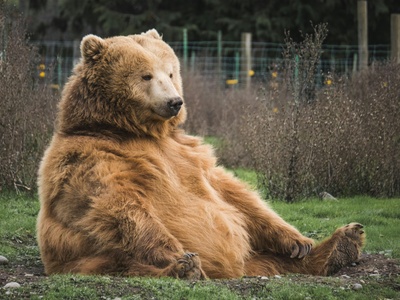
Brown bear
Large omnivore roaming Albania’s high forests and alpine meadows, notably in the Albanian Alps and Korab. Adults are impressive in size; sightings are rare but protected. Important for ecosystem health and a flagship conservation species in Albania.
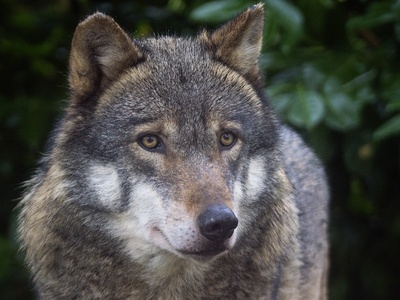
Grey wolf
Widespread predator in Albanian forests and mountains, wolves travel in packs across remote valleys and foothills. They help control ungulate populations but sometimes conflict with livestock; legal protection and traditional tolerance shape their conservation in Albania.
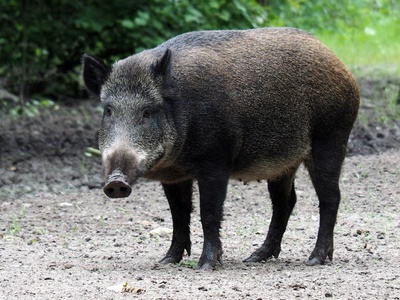
Wild boar
Robust omnivore common in woodlands, wetlands and farmland across Albania. Wild boar root for food at night, influencing habitats and sometimes causing agricultural damage. Hunted and adaptable, they are a familiar species for nature watchers and hunters alike.
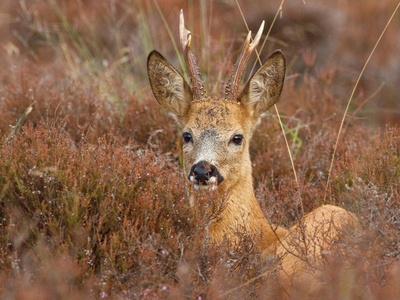
Roe deer
Small, graceful deer inhabiting woodlands, hedgerows and hills across the country. Roe deer are often seen at dawn or dusk, browsing shrubs and providing prey for wolves and lynx. Common and widespread in Albania’s rural landscapes.
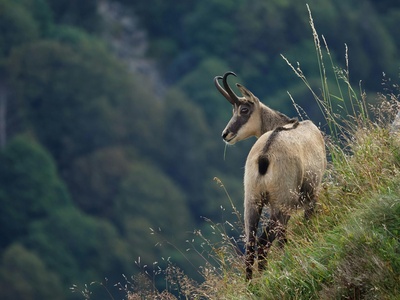
Chamois
Agile mountain goat-antelope found on steep cliffs of the Albanian Alps and high ridges. Chamois are expert climbers, visible from rocky trails in summer. They are a prized sighting for hikers and an indicator of healthy alpine ecosystems.
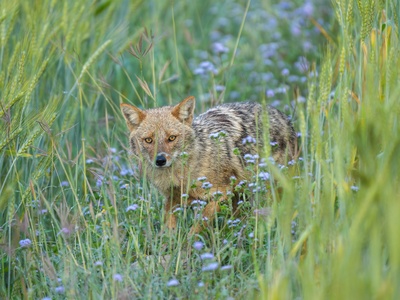
Golden jackal
Versatile canid occupying lowland scrub, farmland edges and coastal marshes in Albania. Golden jackals are omnivorous and increasingly common near villages, scavenging and hunting small prey. Their expanding presence reflects adaptable behavior and changing landscapes.
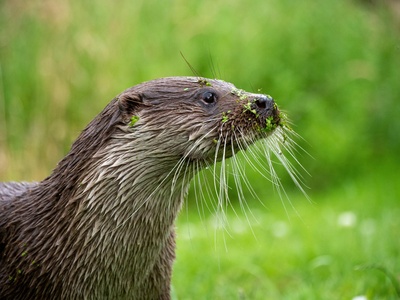
Eurasian otter
Semi-aquatic carnivore living along rivers, lakes and coastal lagoons. Otters are secretive but present in clean waterways across Albania, feeding on fish and invertebrates. Their presence indicates good water quality and they are protected by conservation measures.
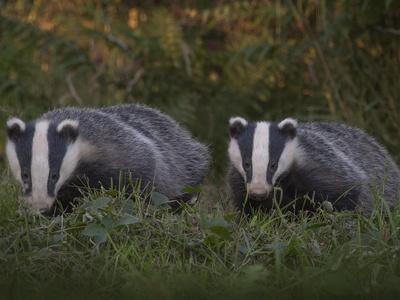
European badger
Nocturnal omnivore of woodlands and farmland edges, badgers dig setts and forage for invertebrates and roots. Widespread but secretive in Albania, they contribute to soil turnover and are a familiar but seldom-seen mammal in rural areas.
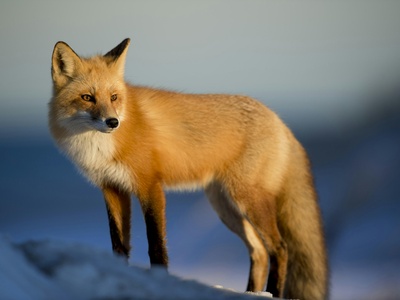
Red fox
Adaptable carnivore inhabiting forests, fields and urban edges throughout Albania. Red foxes hunt small mammals and birds, and are often seen at dusk. Their flexible diet and boldness make them a common and noticeable part of Albania’s fauna.
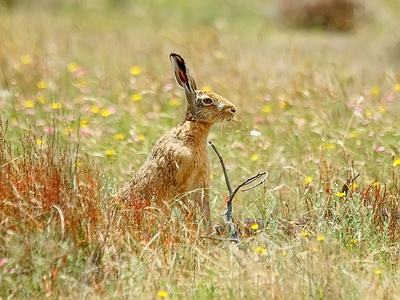
European hare
Grassland and farmland dweller, the European hare is swift and active, often seen at dusk in open areas. Hares are important prey for raptors and carnivores and adapt well to Albania’s agricultural landscapes.
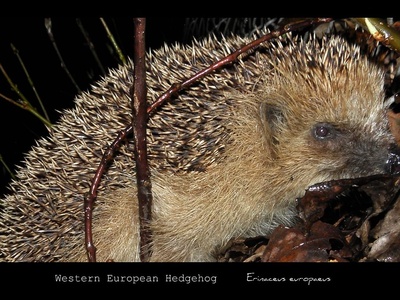
European hedgehog
Small insectivorous mammal common in gardens, hedgerows and woodland edges. Hedgehogs forage at night for beetles and worms, curling into a spiny ball when threatened. They thrive in human-dominated landscapes and are a familiar garden visitor in Albania.
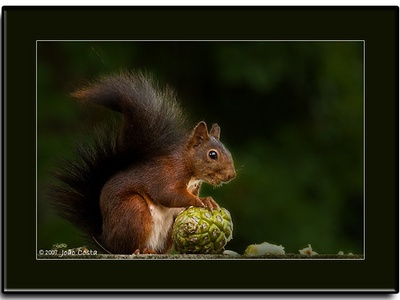
Eurasian red squirrel
Tree-dwelling rodent of beech and pine forests, red squirrels are active climbers and seed hoarders. Seen across Albania’s woodlands, they are colorful and vocal, adding charm to forest outings and indicating healthy forest habitats.
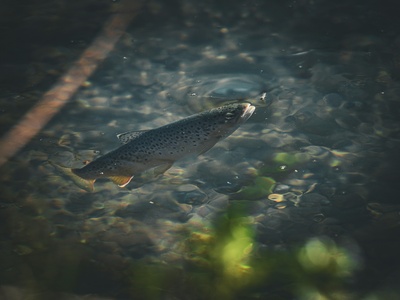
Brown trout
Cold-water salmonid found in Albania’s mountain streams and clear rivers. Brown trout are prized by anglers for their fighting ability and varied coloration; they indicate clean, oxygen-rich waters and are a key species for freshwater conservation.
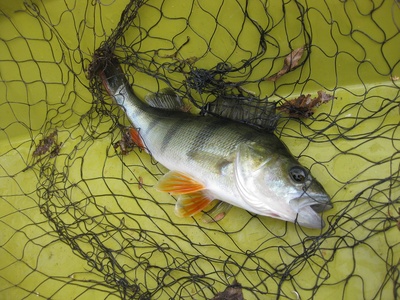
European perch
Common freshwater predator in lakes and rivers, perch feed on smaller fish and invertebrates. Widespread in Albanian waters, they are popular with anglers and help shape aquatic food webs in lakes and reservoirs.
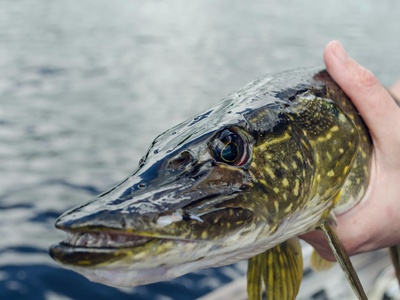
Northern pike
Ambush predator of lakes and slow rivers, pike are long-bodied fishes that hunt by surprise. Present in Albania’s larger freshwater systems, they are sought by anglers and influence fish community structure as top predators.
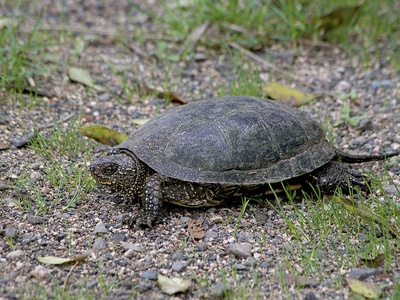
European pond turtle
Freshwater turtle inhabiting slow rivers, marshes and coastal lagoons. Emys swim and bask on logs, feeding on invertebrates and small fish. Their presence reflects healthy wetlands, though local threats include habitat loss and water pollution.
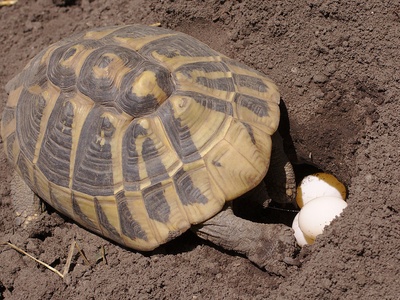
Hermann’s tortoise
Terrestrial tortoise of dry scrub, rocky hills and coastal maquis. Hermann’s tortoises are slow-moving herbivores often seen in sunlit clearings; they are a characteristic reptile of Albania’s Mediterranean landscapes and vulnerable to habitat change and collection.
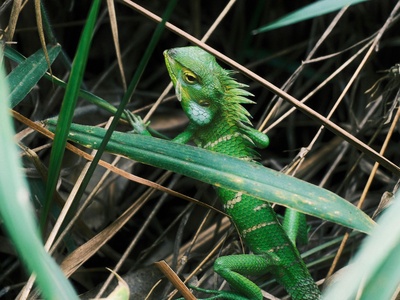
Balkan green lizard
Bright, fast-moving lizard on rocky slopes, walls and open scrub. Lacerta trilineata is common in Albania’s lowlands and hills; males show vivid green coloration. Easy to spot and a favorite for photographers and herpetology enthusiasts.
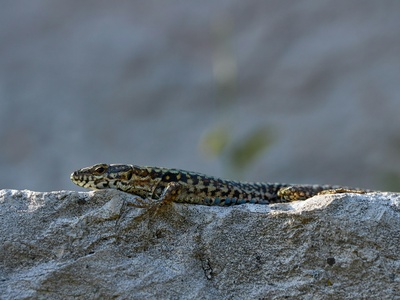
Common wall lizard
Small, agile lizard living on rocks, old walls and urban spaces. Podarcis muralis basks in sunlit crevices and feeds on insects; common in villages, ruins and rocky landscapes across Albania.
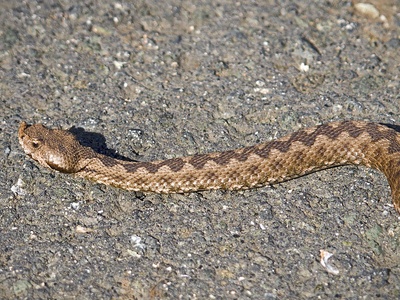
Nose-horned viper
Venomous snake of dry, rocky slopes and shrubland, Vipera ammodytes has a distinctive nasal horn. It is shy but can defend itself if threatened; sightings are mainly in sunny hills and karst country across Albania.
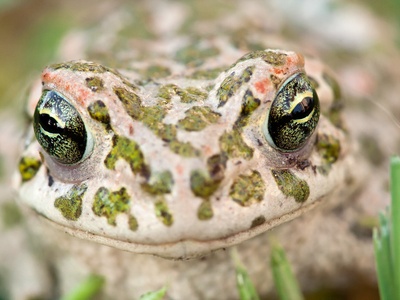
European green toad
Robust toad species occupying ponds, ditches and seasonally flooded fields. Bufotes viridis tolerates brackish and urban waters; its loud breeding calls mark spring nights and it is common across much of Albania’s lowlands and wetlands.
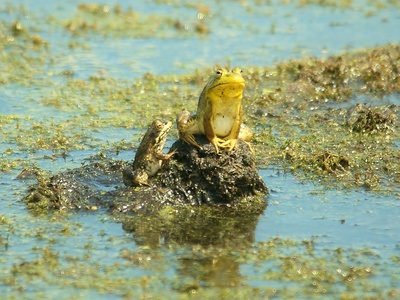
Marsh frog
Large pond frog common in marshes, lakes and river margins. Pelophylax ridibundus is often heard calling in summer choruses and is an important predator of aquatic insects and small fish in Albania’s wetlands.
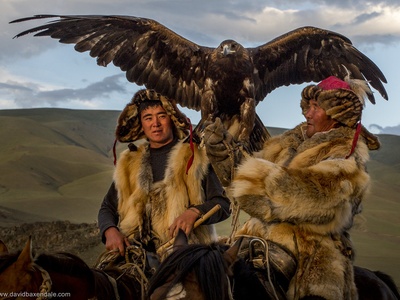
Golden eagle
Majestic raptor of high mountains and cliffs, the golden eagle nests in remote Albanian Alps and Korab ranges. Powerful hunter of mammals and birds, it is a symbol of wild highland landscapes and a prized sight for visitors.
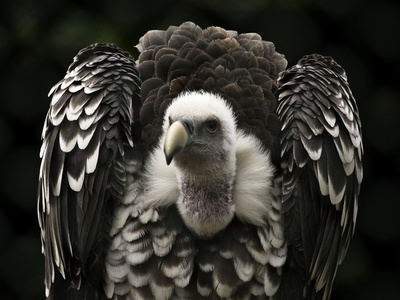
Griffon vulture
Large scavenging bird using thermals to survey cliffs and canyons; Griffon vultures nest on southern limestone faces and forage widely. Recolonization and protection efforts make their colonies notable, and they are often seen in southern Albania.
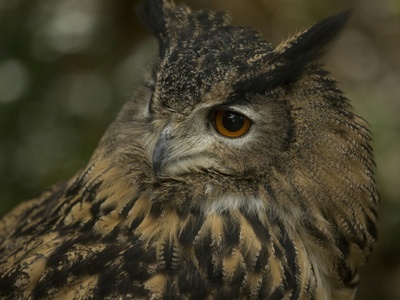
Eurasian eagle-owl
Powerful nocturnal owl of rocky cliffs and mature forests. Bubo bubo inhabits Albania’s mountains and canyons; its deep hoot echoes at night. As one of Europe’s largest owls, it preys on mammals and large birds.
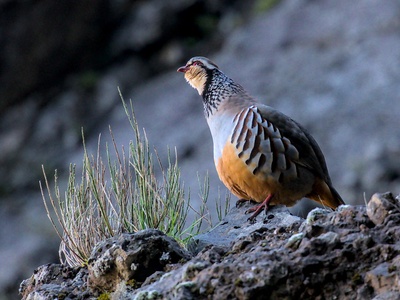
Rock partridge
Ground-dwelling gamebird of rocky slopes and scrub, the rock partridge is well camouflaged among Mediterranean maquis and alpine scree. Popular with birdwatchers and hunters, it breeds locally in Albania’s mountains.
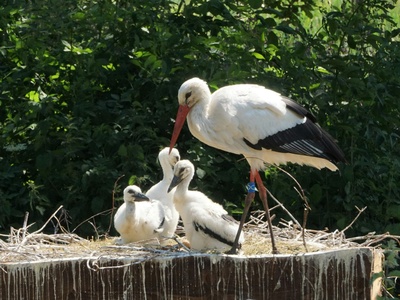
White stork
Long-legged wader nesting on roofs, poles and tall trees near wetlands and farmland. White storks breed in Albanian villages, feeding on amphibians and insects; their nests are cultural landmarks and draw seasonal attention.
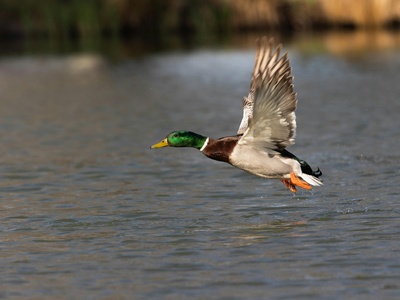
Mallard
Versatile dabbling duck found on lakes, rivers and wetlands. Mallards breed across Albania and are familiar in urban parks and rural ponds; males show glossy green heads while females are mottled brown.
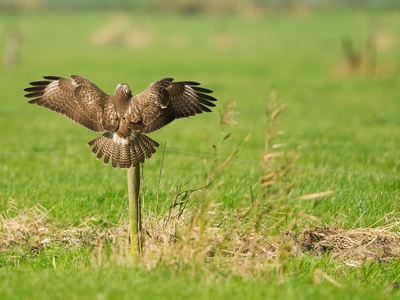
Common buzzard
Medium raptor perched in woodlands and farmlands, the common buzzard hunts small mammals and carrion. Widespread and adaptable, it is frequently seen hovering or perched along Albania’s roads and rural landscapes.
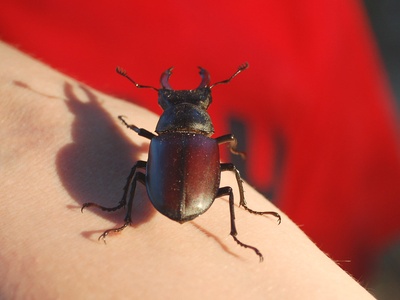
European stag beetle
Large, charismatic beetle of deciduous woodlands, Lucanus cervus larvae develop in decaying wood for years. Adult males have impressive mandibles; sightings in Albanian parks and old forests delight naturalists, though habitat loss threatens populations.