Turkey’s diverse landscapes — from coastal marshes and river deltas to high mountain springs — create many niches for amphibians across the country. These species are important parts of freshwater and terrestrial ecosystems and can tell us a lot about habitat health.
There are 21 Amphibians of Turkey, ranging from Agile frog to Yellow-bellied toad. For each species the data are organized as Scientific name,IUCN status,Range in Turkey; you’ll find these below.
Where in Turkey am I most likely to see these amphibians?
You’ll most often encounter amphibians near standing or slow-moving water: ponds, seasonal pools, marshes, stream margins and wet meadows, as well as springs in mountainous areas. Sightings are likelier in spring and after rains, and regions like the Aegean and Mediterranean coasts, the Black Sea basin and highland wetlands host many species.
Which species are most at risk and how is that tracked?
Threatened species are identified by IUCN categories, with common pressures being habitat loss, pollution, water extraction and disease; monitoring happens through field surveys, population studies and national conservation programs. Check the IUCN status column below to see which species need attention.
Amphibians of Turkey
| Common name | Scientific name | IUCN status | Range in Turkey |
|---|---|---|---|
| Common toad | Bufo bufo | Least Concern | Widespread across Anatolia and Thrace |
| Green toad | Bufotes viridis | Least Concern | Widespread in central, eastern and coastal regions |
| Marsh frog | Pelophylax ridibundus | Least Concern | Lowlands, coasts and river valleys nationwide |
| Levant water frog | Pelophylax bedriagae | Least Concern | Aegean, Mediterranean coasts and southeast lowlands |
| Anatolian frog | Pelophylax caralitanus | Vulnerable | Endemic to SW Turkey (Beyşehir-Burdur lake region) |
| Eastern spadefoot | Pelobates syriacus | Least Concern | Scattered in central and southeastern Anatolia |
| Caucasian parsley frog | Pelodytes caucasicus | Least Concern | Northeastern Turkey along the Black Sea and eastern Pontic region |
| Mediterranean tree frog | Hyla savignyi | Least Concern | Southern and central Anatolia, Mediterranean coast |
| Eastern tree frog | Hyla orientalis | Least Concern | Black Sea coast and northern Turkey |
| European fire-bellied toad | Bombina bombina | Least Concern | Isolated sites in NW Turkey and Black Sea wetlands |
| Yellow-bellied toad | Bombina variegata | Least Concern | Scattered in northeastern Anatolia and Pontic foothills |
| Agile frog | Rana dalmatina | Least Concern | Western and northwestern Turkey including Thrace |
| Long-legged wood frog | Rana macrocnemis | Least Concern | Eastern Anatolia, Pontic and Taurus foothills |
| Holtzi’s frog (Toros frog) | Rana holtzi | Endangered | Very restricted to a few springs in southern Turkey (Taurus mountains) |
| Fire salamander | Salamandra salamandra | Least Concern | Isolated populations in NW Turkey (Thrace and adjacent areas) |
| Levant salamander | Salamandra infraimmaculata | Near Threatened | Southeastern and eastern Anatolia (Taurus and Zagros foothills) |
| Kosswig’s newt | Triturus kosswigi | Endangered | Endemic to northwestern Anatolia (Marmara region) |
| Smooth newt | Lissotriton vulgaris | Least Concern | Widespread in suitable northern and central habitats |
| Southern crested newt | Ommatotriton vittatus | Least Concern | Western and southern Turkey, coastal and lowland areas |
| Strauch’s spotted newt | Neurergus strauchii | Endangered | Eastern and central Anatolia (mountain springs and streams) |
| Kurdish newt | Neurergus crocatus | Endangered | Southeastern Anatolia (Kurdish mountains and springs) |
Images and Descriptions
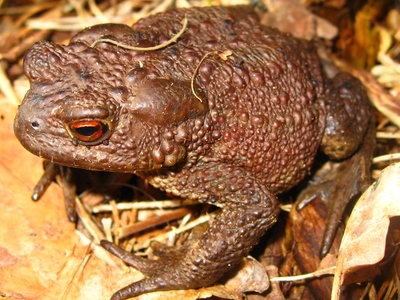
Common toad
Large, stocky toad common in gardens, woodlands and farmland; active at night and breeds in ponds and slow waters. Tolerant species but sensitive to road mortality and local habitat loss.
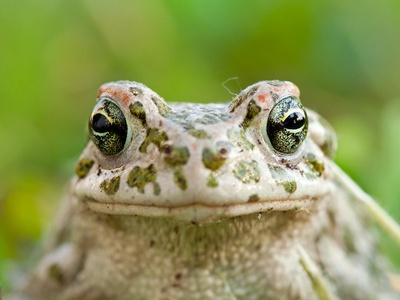
Green toad
Distinctive green blotches on a pale background; inhabits steppe, agricultural land and semi-arid places. Explosive breeder in temporary pools during spring and early summer.
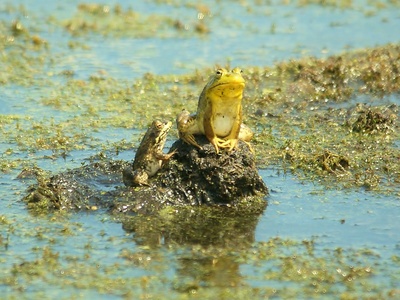
Marsh frog
Large aquatic frog with strong legs and greenish dorsal patterns; common in marshes, rivers and irrigation canals. Good swimmer often heard calling from reeds.
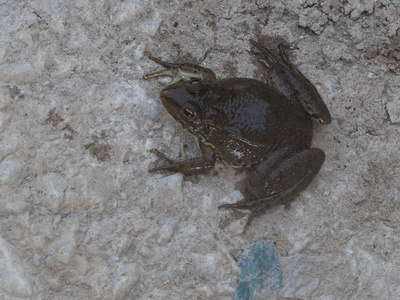
Levant water frog
A medium-large water frog of ponds and irrigation ditches; often found in southern wetlands and gardens. Adaptable but vulnerable to wetland drainage.

Anatolian frog
A regional water frog restricted to lakes and streams in SW Anatolia; flattened head and patterned back. Small range makes it vulnerable to habitat change and water use.
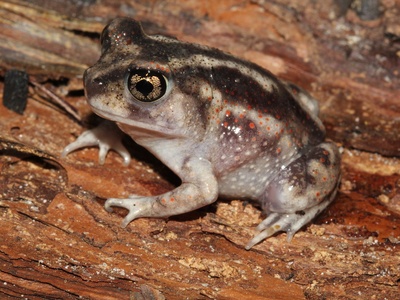
Eastern spadefoot
Nocturnal burrowing frog with vertical pupils and spade-like hind feet for digging; emerges to breed in temporary rain pools after storms.
Caucasian parsley frog
Small, slender frog with smooth skin and subtle markings; prefers damp meadows and forest edges, often near streams.
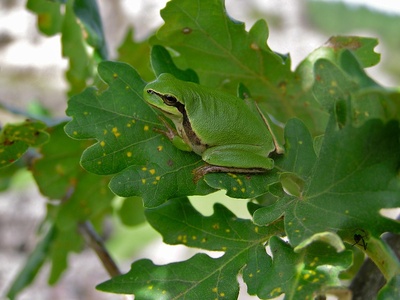
Mediterranean tree frog
Small arboreal frog with adhesive toe pads, often found on shrubs and reeds near water. Bright green or brown; calls from vegetation at night.
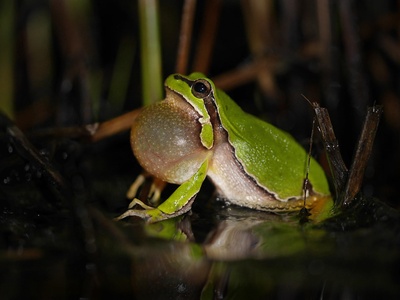
Eastern tree frog
Similar to other tree frogs but centered on northern woodlands and riparian habitats; climbs vegetation and breeds in ponds and slow streams.
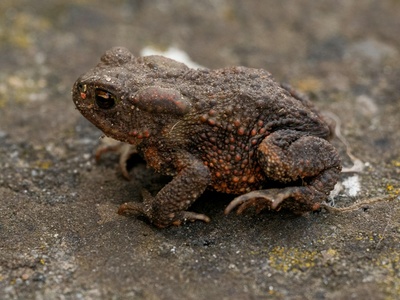
European fire-bellied toad
Small, squat toad with bright ventral warning colours; lives in shallow, sunlit marshes. Populations patchy but locally abundant where wetlands persist.
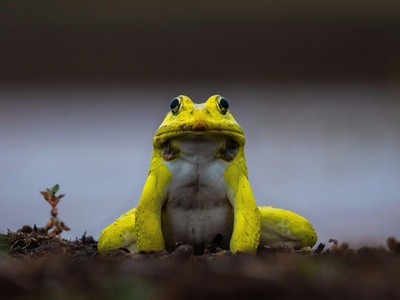
Yellow-bellied toad
Small, warty toad with vivid yellow/orange belly; prefers temporary rocky pools and forest clearings. Sensitive to forest drainage and pollution.
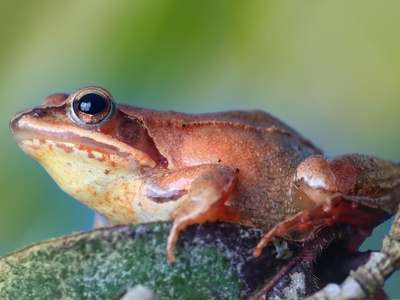
Agile frog
Slender, long-legged frog of woodlands and orchards; notable for long jumps and early spring calls from leafy habitats.
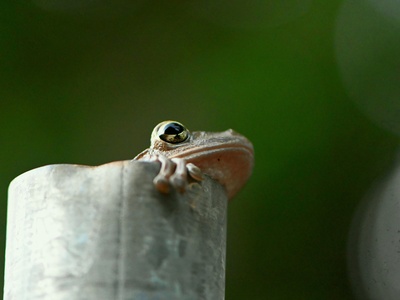
Long-legged wood frog
A robust frog with relatively long hind legs; occupies montane meadows, streams and ponds. Tolerant of cool mountain conditions.
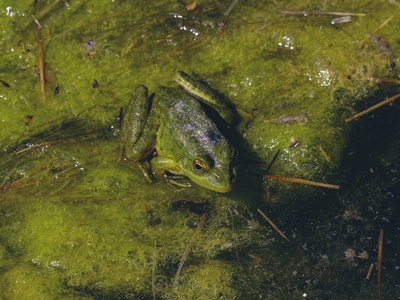
Holtzi’s frog (Toros frog)
Rare endemic frog surviving in cool limestone springs and streams. Small range and water abstraction threaten populations; local conservation priority.
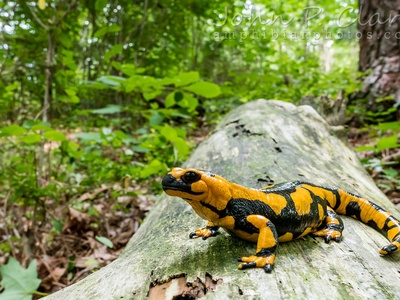
Fire salamander
Black-and-yellow patterned terrestrial salamander of humid woodlands and streams; gives birth to larvae in water. Sensitive to pollution and fragmentation.
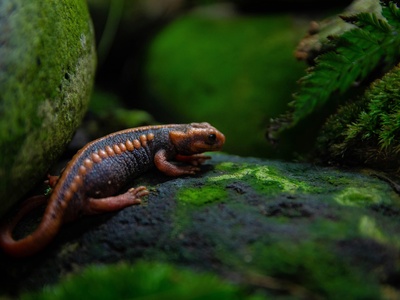
Levant salamander
Dark salamander often with reduced spotting; inhabits humid mountain forests and springs. Local declines from habitat loss and water extraction.
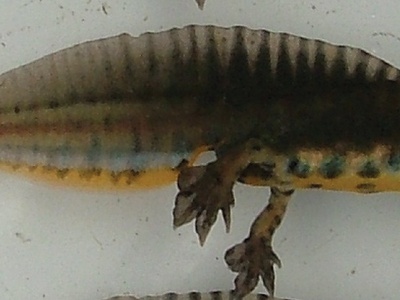
Kosswig’s newt
Small newt restricted to a few wetlands near the Marmara region. Males show bright breeding colors; limited range and wetland loss threaten survival.
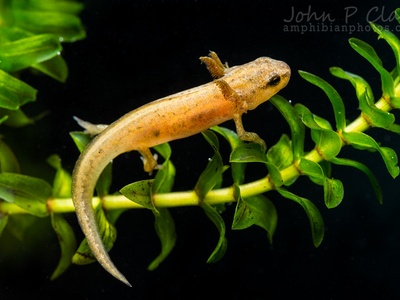
Smooth newt
Small, slender newt of ponds and slow streams; males develop crests in breeding season. Common where aquatic vegetation is present.
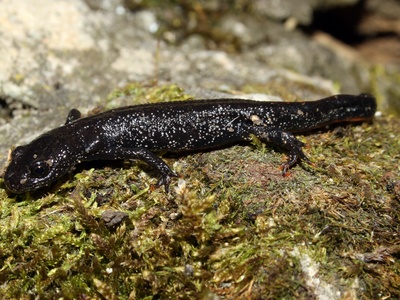
Southern crested newt
Medium-sized newt with dorsolateral crest in males; prefers ponds, ditches and marshy habitats. Tolerant of a range of freshwater sites.
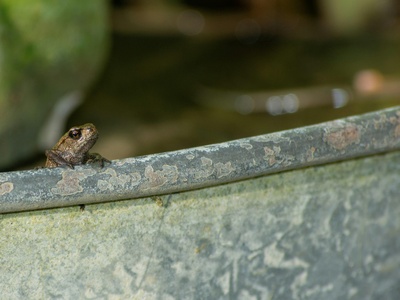
Strauch’s spotted newt
Striking black-and-white patterned stream newt endemic to Anatolian highlands. Highly aquatic, vulnerable to collection and spring degradation.
Kurdish newt
Colorful, patterned newt of rocky mountain streams and springs. Small, fragmented populations threatened by habitat loss and collection.