Liechtenstein’s compact, mountainous landscape packs a surprising variety of habitats into a small area — steep Alpine slopes, river valleys along the Rhine, mixed forests and pastoral meadows. That mix supports birds, reptiles, mammals and invertebrates that adapt to both high-altitude and lowland conditions.
There are 40 Animals of Liechtenstein, ranging from Adder to Wild boar. For each species the list gives Scientific name,Status,Where found — you’ll find below.
Which animals am I most likely to see on a short visit to Liechtenstein?
Expect to spot common birds and small mammals near villages and along river corridors, while larger mammals like deer or Wild boar are more active at dawn or dusk in forests. Adders are secretive and prefer sunny, rocky edges; bring binoculars for birds and wear sturdy boots for woodland trails.
How can I tell which species need protection or special permits?
Check the Status column in the list to see conservation categories and legal protections; species marked as protected may require distance, no-disturbance, or reporting if encountered. For permits or citizen-science opportunities, contact local conservation organizations or the national authorities listed alongside the entries.
Animals of Liechtenstein
| Name | Scientific name | Status | Where found |
|---|---|---|---|
| Roe deer | Capreolus capreolus | Least Concern (IUCN) | Woodland edges, meadows; common across lowland Liechtenstein |
| Red deer | Cervus elaphus | Least Concern (IUCN) | Mixed forests and upland valleys, scattered across the country |
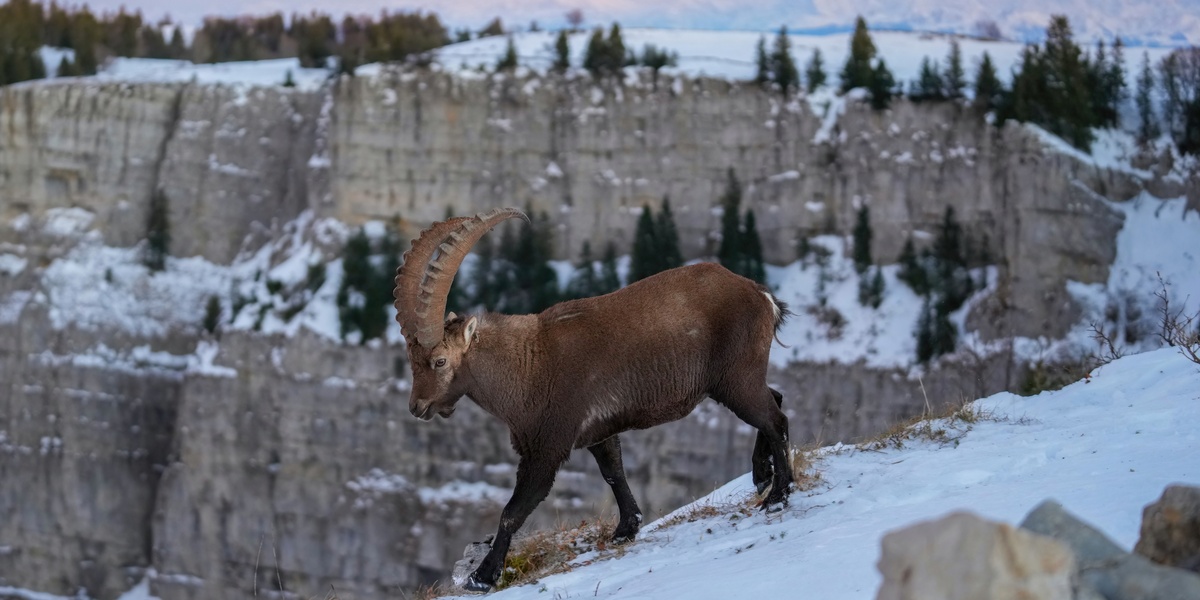
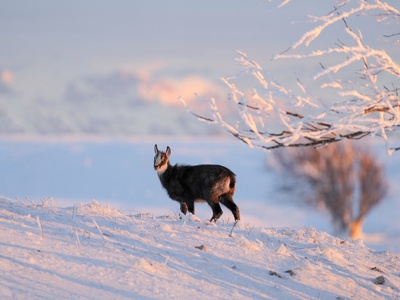
| Chamois | Rupicapra rupicapra | Least Concern (IUCN) | Steep alpine slopes and rocky cliffs, especially higher elevations |
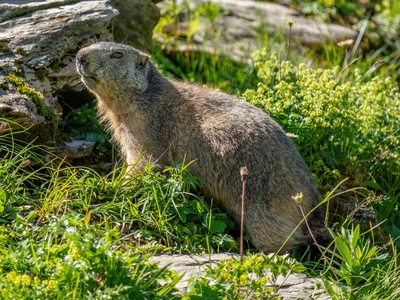
| Alpine marmot | Marmota marmota | Least Concern (IUCN) | Alpine meadows above the tree line; Triesenberg area and high pastures |
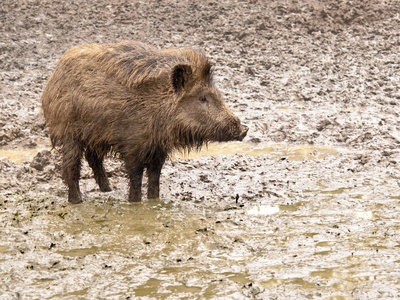
| Wild boar | Sus scrofa | Least Concern (IUCN) | Woodlands, riparian zones, outskirts of farms; Rhine valley |
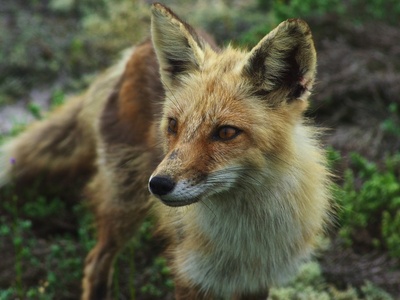
| Red fox | Vulpes vulpes | Least Concern (IUCN) | Farmlands, forests, urban edges across Liechtenstein |
| European badger | Meles meles | Least Concern (IUCN) | Mixed forests, hedgerows, outskirts of villages |
| Pine marten | Martes martes | Least Concern (IUCN) | Wooded slopes and mature forests, scattered across country |
| Stone marten | Martes foina | Least Concern (IUCN) | Villages, farmsteads, open woodlands and rocky areas |
| Stoat | Mustela erminea | Least Concern (IUCN) | Forests, alpine pastures and hedgerows; widespread at varied elevations |
| European hedgehog | Erinaceus europaeus | Near Threatened (IUCN) | Gardens, parks, hedgerows in villages and valleys |
| European hare | Lepus europaeus | Least Concern (IUCN) | Open fields, meadows and valley farmland areas |
| Brown long-eared bat | Plecotus auritus | Least Concern (IUCN) | Woodlands, parklands, often roosts in buildings |
| Common pipistrelle | Pipistrellus pipistrellus | Least Concern (IUCN) | Urban parks, river corridors, forests; widespread |
| Eurasian otter | Lutra lutra | Near Threatened (IUCN) | Rhine and tributaries, riparian reedbeds and pools |
| Common buzzard | Buteo buteo | Least Concern (IUCN) | Woodland edges, valley slopes, seen across Liechtenstein |
| Peregrine falcon | Falco peregrinus | Least Concern (IUCN) | Cliffs, quarry faces and high rocky ridges; occasional nesting sites |
| Common kestrel | Falco tinnunculus | Least Concern (IUCN) | Open fields, meadows, roadside perches across lowlands |
| Eurasian magpie | Pica pica | Least Concern (IUCN) | Villages, farmland, woodland edges throughout country |
| Common raven | Corvus corax | Least Concern (IUCN) | Cliffs, forests and high valleys; present in uplands |
| Alpine chough | Pyrrhocorax graculus | Least Concern (IUCN) | High mountain cliffs and ridges above tree line |
| Barn swallow | Hirundo rustica | Least Concern (IUCN) | Farmland, villages, skies above rivers; summers in Liechtenstein |
| White wagtail | Motacilla alba | Least Concern (IUCN) | Riversides, villages, open ground throughout lowlands |
| European robin | Erithacus rubecula | Least Concern (IUCN) | Woodland edges, gardens, parks across country |
| Great tit | Parus major | Least Concern (IUCN) | Woodlands, parks, gardens across Liechtenstein |
| Chaffinch | Fringilla coelebs | Least Concern (IUCN) | Woodlands, parks and gardens; common breeder |
| Great spotted woodpecker | Dendrocopos major | Least Concern (IUCN) | Deciduous and mixed woodlands, parkland trees |
| Common frog | Rana temporaria | Least Concern (IUCN) | Ponds, wet meadows, forest pools across elevations |
| Common toad | Bufo bufo | Least Concern (IUCN) | Woodlands, gardens, ponds in valleys and lowlands |
| Alpine newt | Ichthyosaura alpestris | Least Concern (IUCN) | Mountain ponds and slow streams up to subalpine zones |
| Grass snake | Natrix natrix | Least Concern (IUCN) | Wetlands, riversides, grassland and forest edges |
| Adder | Vipera berus | Least Concern (IUCN) | Heath, forest edges and alpine meadows; scattered populations |
| Common wall lizard | Podarcis muralis | Least Concern (IUCN) | Rocky walls, ruins, dry sunny slopes in low to mid elevations |
| Viviparous lizard | Zootoca vivipara | Least Concern (IUCN) | Moist grasslands, heaths and alpine meadows; up to high elevations |
| Brown trout | Salmo trutta | Least Concern (IUCN) | Rhine and mountain streams; cold clear water habitats |
| European grayling | Thymallus thymallus | Least Concern (IUCN) | Cold, fast-flowing river sections and clear tributaries |
| European bullhead | Cottus gobio | Least Concern (IUCN) | Shallow rocky streambeds and riffles of rivers |
| Minnow | Phoxinus phoxinus | Least Concern (IUCN) | Small streams, tributaries and quiet river margins |
| Apollo butterfly | Parnassius apollo | Vulnerable (IUCN) | Alpine meadows and flower-rich slopes in higher elevations |
| Old World swallowtail | Papilio machaon | Least Concern (IUCN) | Meadows, gardens and valley slopes; widespread in warm months |
Images and Descriptions
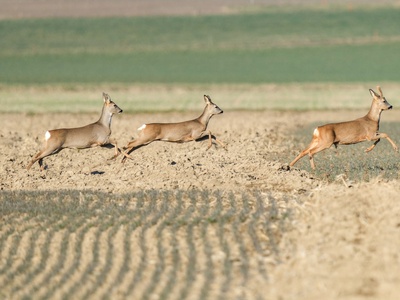
Roe deer
A small, graceful deer 60–90 cm at shoulder with reddish-brown summer coat. Seen year-round at dawn/dusk in fields and forest edges. Common breeder and frequent roadside sighting; important for local ecology and hunters.
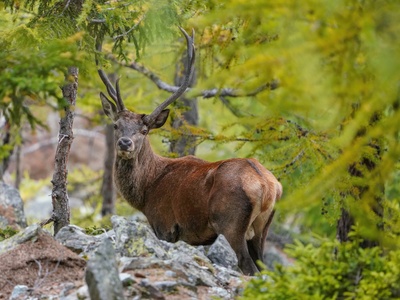
Red deer
Large deer up to 1.2 m shoulder height with reddish coat, males stout with branching antlers. Mostly in forested areas; rut in autumn is notable. Locally monitored for population and forest impact.
Chamois
Agile mountain goat-antelope, 65–80 cm tall, tawny coat and dark face stripe. Visible on cliffs in warmer months; a classic Alpine species and popular with hikers.
Alpine marmot
Stocky, brown marmot 50–70 cm long that hibernates long winters. Common in summer meadows, whistles when alarmed. Burrowing rodents important for montane ecosystems.
Wild boar
Robust omnivore up to 100 kg with coarse dark coat. Active year-round, often nocturnal. Increasing sightings near villages; can damage crops and shape understory vegetation.
Red fox
Slim, red-coated canid 60–90 cm with bushy tail. Opportunistic feeder seen day or night. Adapts to human areas and controls small-mammal populations.
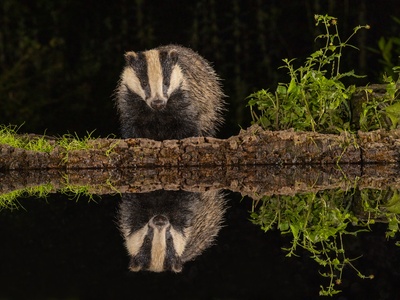
European badger
Stocky nocturnal carnivore with black-and-white face stripes. Lives in setts; feeds on earthworms and fruits. Often seen signs rather than animals; protected in many areas.
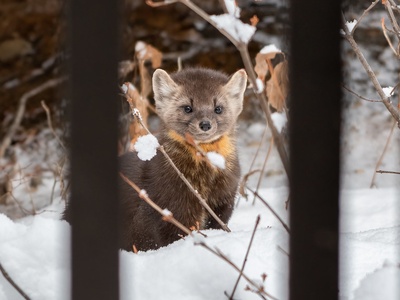
Pine marten
Slim arboreal mammal with brown fur and cream throat patch. Active year-round, preys on small mammals and birds. Indicator of healthy forest environments.
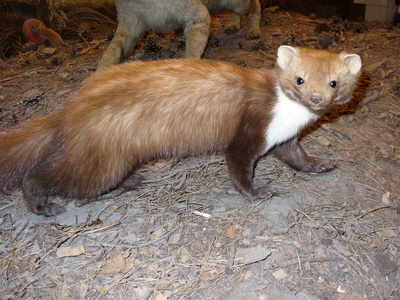
Stone marten
Smaller marten with greyish fur and lighter throat. Common near buildings, sometimes denning in attics. Omnivore that adapts well to human landscapes.
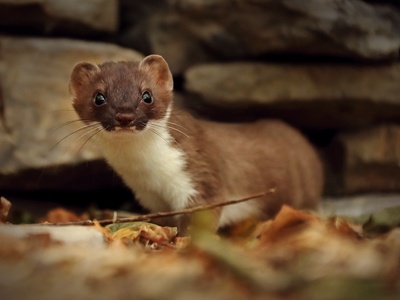
Stoat
Small slender mustelid 20–30 cm with seasonal white winter coat in high areas. Agile predator of rodents; active year-round and occasionally seen during daylight.
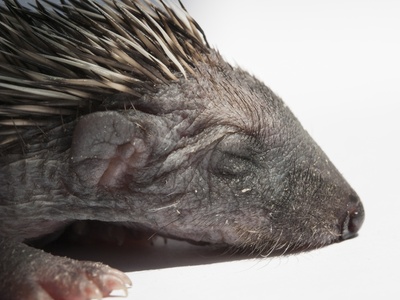
European hedgehog
Small spiny mammal 20–30 cm, nocturnal insectivore. Hibernates in winter. Often found in gardens; valued by residents and vulnerable to road mortality.
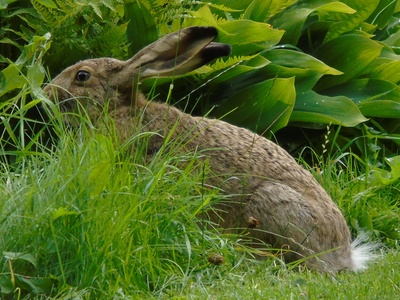
European hare
Large brown hare with long ears and strong hind legs. Seen year-round, mostly crepuscular. Fast runner and iconic farmland species, sometimes hunted.
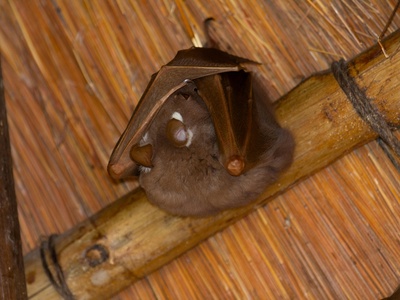
Brown long-eared bat
Medium-sized bat with very long ears. Forages quietly among trees in summer months. Roosts in roofs and caves; important insect predator and protected.
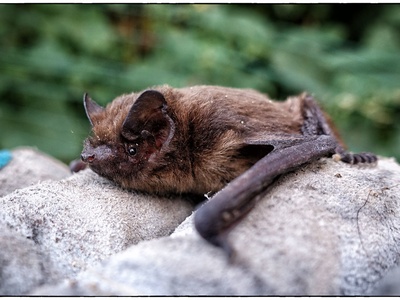
Common pipistrelle
Tiny bat 3–5 g with rapid fluttering flight. Active spring–autumn; emerges at dusk to feed on flying insects. Common around lights and rivers.
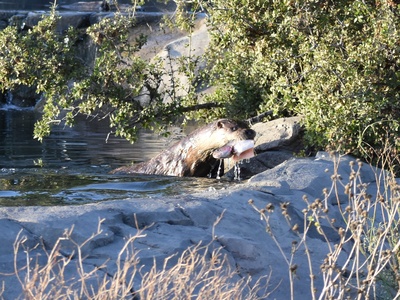
Eurasian otter
Semi-aquatic mammal 60–90 cm with dense fur, fish specialist. Recolonising many European rivers; presence indicates good water quality. Mostly crepuscular and nocturnal.
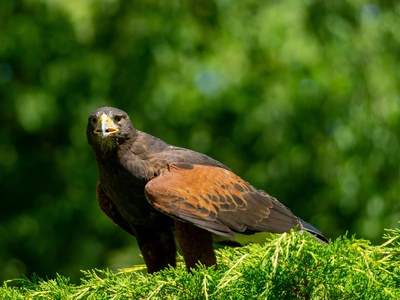
Common buzzard
Medium raptor with broad wings; variable plumage brownish. Soars above valleys year-round hunting small mammals. Very familiar bird of prey locally.
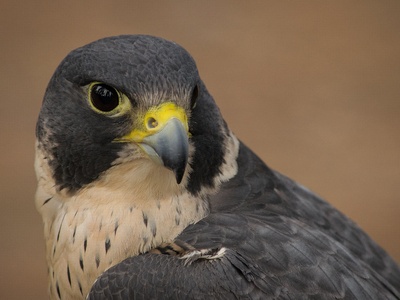
Peregrine falcon
Sleek falcon with dark hood, swift dive speeds. Breeds on cliffs; can be seen hunting birds over valleys in migration seasons. Protected and monitored.
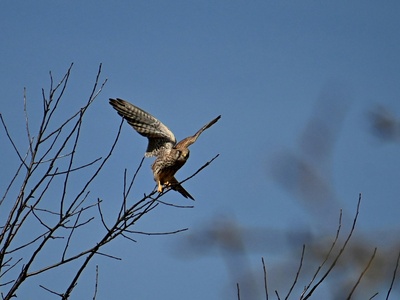
Common kestrel
Small falcon hovering over fields hunting voles and insects. Year-round presence with distinctive hovering flight; often perched on poles.
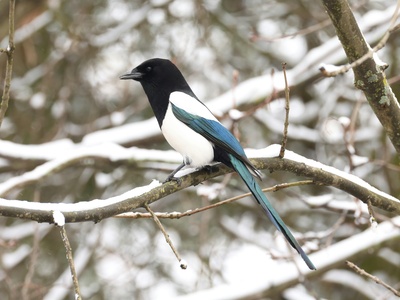
Eurasian magpie
Black-and-white corvid with iridescent tail, highly intelligent. Omnivorous and conspicuous in towns and fields; common and noisy.
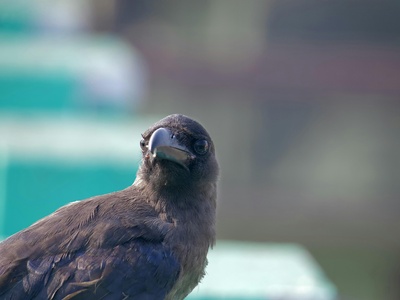
Common raven
Large black corvid with deep call, 50–70 cm long. Highly adaptable and visible in mountain areas; often seen in pairs or small groups.
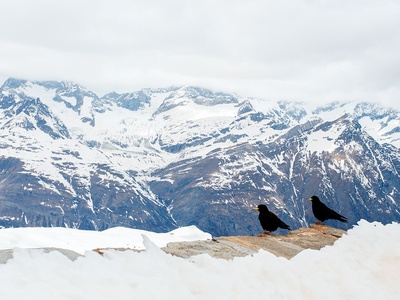
Alpine chough
Glossy black corvid with yellow bill and acrobatic flight. Common in alpine summits and ski areas during summer, social and noisy.
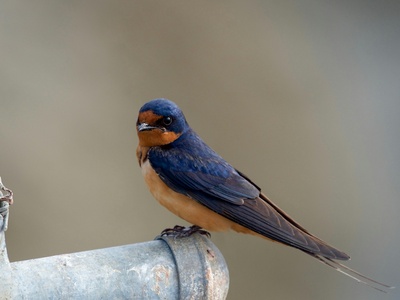
Barn swallow
Slim migratory swallow with forked tail and glossy blue back. Returns in spring, nests on buildings and barns; feeds on aerial insects.
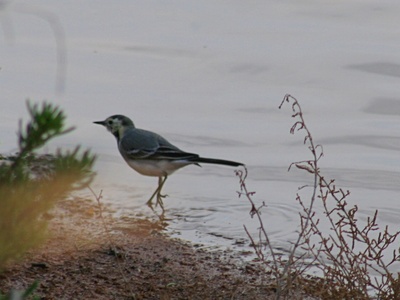
White wagtail
Slender black-and-white songbird with wagging tail. Common near water and on stones; year-round or migratory flocks during winter.
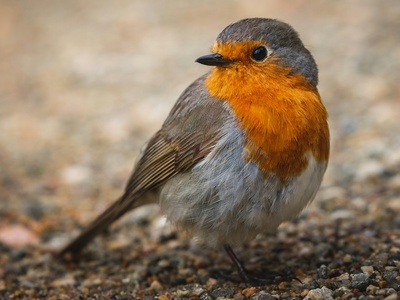
European robin
Small round songbird with orange-red breast. Resident and territorial; often seen singly in gardens and hedgerows year-round.
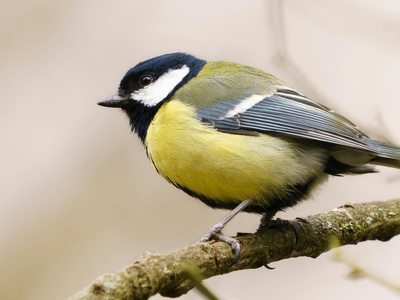
Great tit
Stocky tit with black head and yellow breast. Year-round resident and bold at feeders; cavity nester in mature trees.
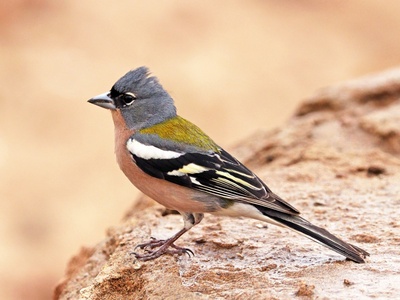
Chaffinch
Medium finch with pinkish underparts (male) and bold wing bars. Common and vocal in spring; flocks gather outside breeding season.
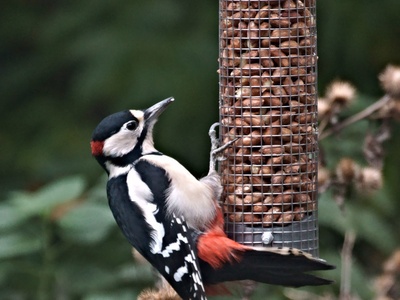
Great spotted woodpecker
Black-and-white woodpecker with red belly patch. Drums on trunks to advertise territory; visible year-round in forested areas.
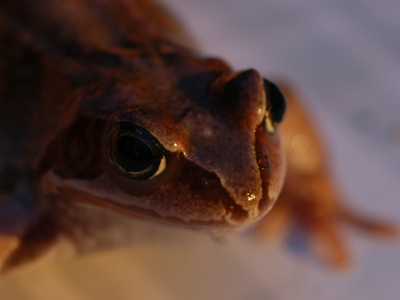
Common frog
Medium green-brown frog 6–9 cm, breeds in spring in ponds. Seen at breeding pools and damp habitats; active spring–autumn, hibernates over winter.
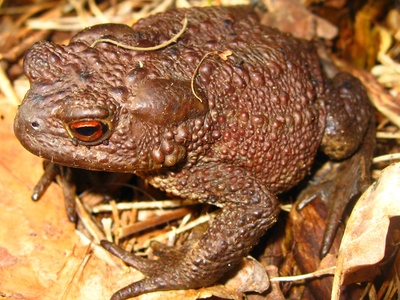
Common toad
Chunky brown amphibian 6–13 cm, nocturnal and breeds in ponds. Often migrates to breeding sites in spring; tolerates gardens and farmland.
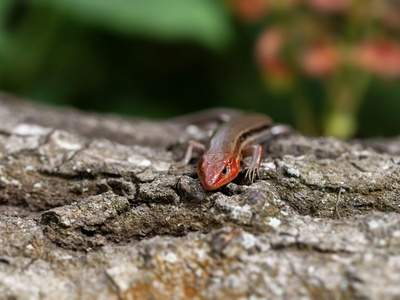
Alpine newt
Colorful newt up to 12 cm with bright belly and crested males in breeding season. Seen in spring–summer in mountain pools.
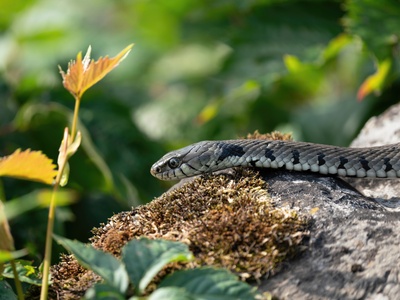
Grass snake
Large non-venomous snake often olive-green with yellow neck collar. Hunts amphibians near water; basks in sun in warm months and overwinters in crevices.
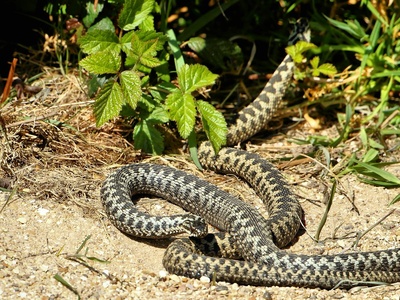
Adder
Venomous viper with zigzag back pattern, up to 60–90 cm. Prefers sunny basking spots; shy and rarely aggressive if left undisturbed.
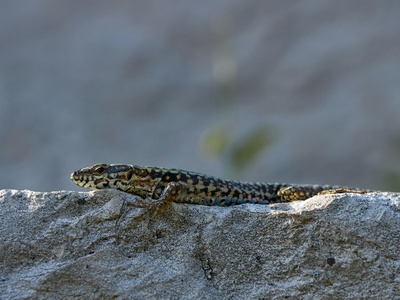
Common wall lizard
Small agile lizard up to 20 cm tail-included, variable coloring. Seen sunning on walls and rocks in spring–autumn; quick and common.
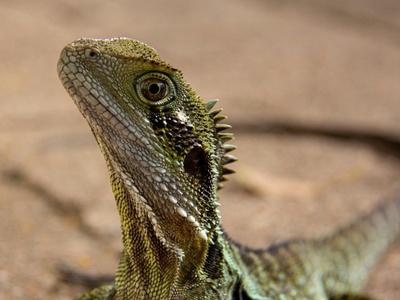
Viviparous lizard
Small lizard giving birth to live young, brownish with subtle stripes. Tolerant of cool climates and found higher than most reptiles.
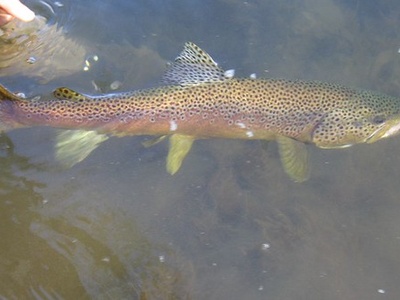
Brown trout
Native trout up to several kilos, silver to brown with spots. Resident and migratory forms; prized by anglers and indicator of clean streams.
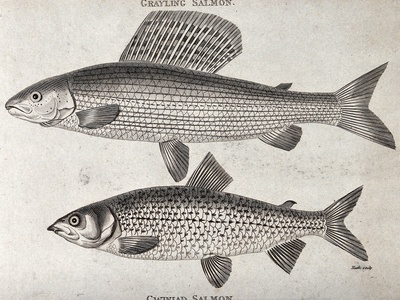
European grayling
Slender silvery fish with large dorsal fin and delicate markings. Found in clean Rhine tributaries; popular with fly fishers in spring–summer.
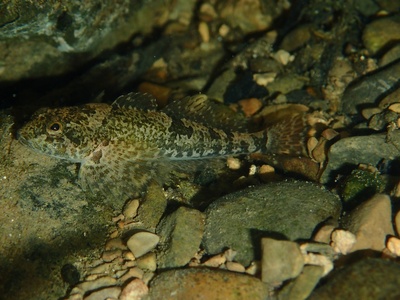
European bullhead
Small bottom-dwelling fish under 15 cm with broad head and mottled body. Sensitive to pollution and a sign of healthy stream habitats.
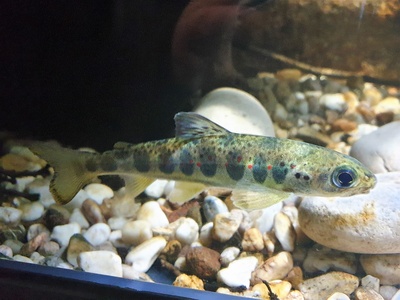
Minnow
Tiny schooling fish under 10 cm with bright breeding colors in males. Common in clear upland streams and often prey for trout.
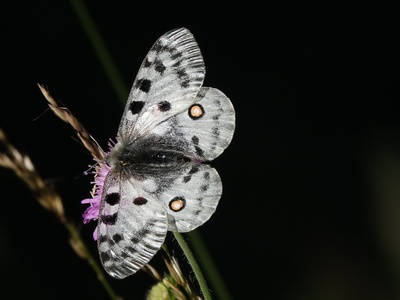
Apollo butterfly
Large white butterfly with red-eye spots, wingspan ~7–9 cm. Flies in summer on sunny mountain pastures; local populations sensitive to habitat loss.
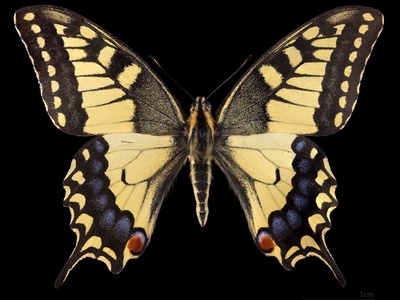
Old World swallowtail
Large yellow-and-black swallowtail with distinctive tail extensions. Migratory and strong flier, visible in spring–summer on flowers and herbs.