Wales punches well above its weight for wildlife. A country the size of New Jersey holds ancient oak forests, 870 miles of coastline, upland moorland, and estuaries that feed tens of thousands of migratory birds every year. The animals here aren’t just present — many of them have comeback stories worth knowing.
This guide covers the major animal groups you’ll find in Wales, the best spots to see them, when to go, and a few conservation stories that genuinely changed the landscape.
Table of Contents
- Birds of Wales
- Red Kite
- Puffin
- Peregrine Falcon
- Chough
- Marine Life
- Bottlenose Dolphin
- Grey Seal
- Harbour Porpoise
- Mammals
- Red Squirrel
- European Otter
- Eurasian Beaver
- Polecats
- Reptiles and Amphibians
- Quick Reference: Iconic Species at a Glance
- Seasonal Viewing Calendar
- FAQ
Birds of Wales
Red Kite
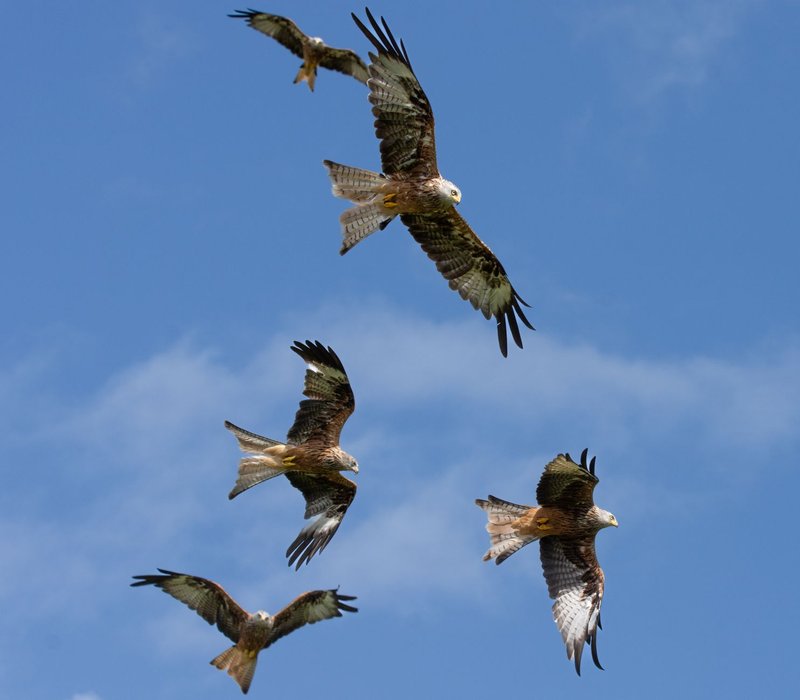
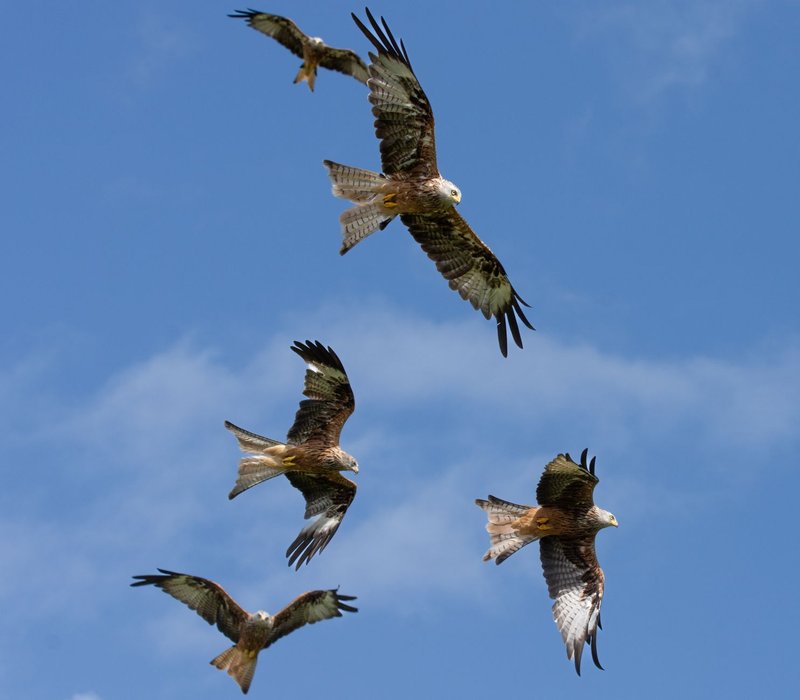
The red kite is Wales’ most famous wildlife recovery story. By the 1930s, centuries of persecution had reduced the entire British population to a handful of breeding pairs — all of them in the mid-Wales hills around the Tywi Valley. Not a few dozen. A handful.
Conservation efforts kept that remnant population alive through the 20th century, and eventually reintroduction programs spread red kites across England and Scotland. But Wales is where the original wild birds never disappeared. The result: mid-Wales now has one of the densest red kite populations in the world.
You’ll see them quartering over fields, tilting on forked rufous tails, often in groups of 10 or 20 around feeding stations. The Gigrin Farm Red Kite Feeding Station near Rhayader in Powys operates daily year-round and draws hundreds of birds in winter — sometimes over 600 on a single afternoon.
Best locations: Rhayader (Powys), Tregaron Bog, Brecon Beacons, Vale of Tywi
Best time: Year-round; feeding stations peak October–March
Puffin
Wales hosts some of the most accessible puffin colonies in Britain. Skomer Island, off the Pembrokeshire coast, holds around 6,000 breeding pairs from late April through July — one of the largest Atlantic puffin colonies in southern Britain. Skokholm Island nearby has another population, and both are run as nature reserves by the Wildlife Trust of South and West Wales.
Getting to Skomer requires a ferry from Martin’s Haven and a timed entry ticket (book well in advance for summer visits). Once there, puffins nest in burrows on the clifftops and walk around your feet with complete indifference. The same crossing also passes through some of the richest seabird water in Wales.
Best locations: Skomer Island, Skokholm Island, Ramsey Island
Best time: Late April to late July
Peregrine Falcon
The peregrine is the fastest animal on Earth in a stoop — recorded at over 240 mph in a dive. Wales has a healthy breeding population on its sea cliffs and quarry faces, and several sites offer reliable views during the nesting season.
Symonds Yat Rock on the England-Wales border is one of the most watched peregrine sites in the UK, with RSPB volunteers on hand during the breeding season. Pembrokeshire cliffs also hold nesting pairs, and the Brecon Beacons host birds year-round.
Best locations: Symonds Yat Rock, Pembrokeshire coast, quarries in Snowdonia
Best time: March–July for breeding activity
Chough
The red-billed, red-legged chough is the bird on the Welsh coat of arms, and it’s genuinely rare — Wales holds the majority of the UK’s breeding population. They’re cliff-nesters that feed on coastal grassland, using that curved red bill to probe for insects in short turf.
Ramsey Island (RSPB reserve off the Pembrokeshire coast) is the most reliable place to see them. They’re acrobatic fliers, often tumbling in pairs over cliff edges, and they have a distinctive sharp “cheeow” call that carries on the wind.
Best locations: Ramsey Island, South Stack (Anglesey), Llŷn Peninsula
Best time: Year-round; most visible March–August near nest sites
Marine Life
Bottlenose Dolphin
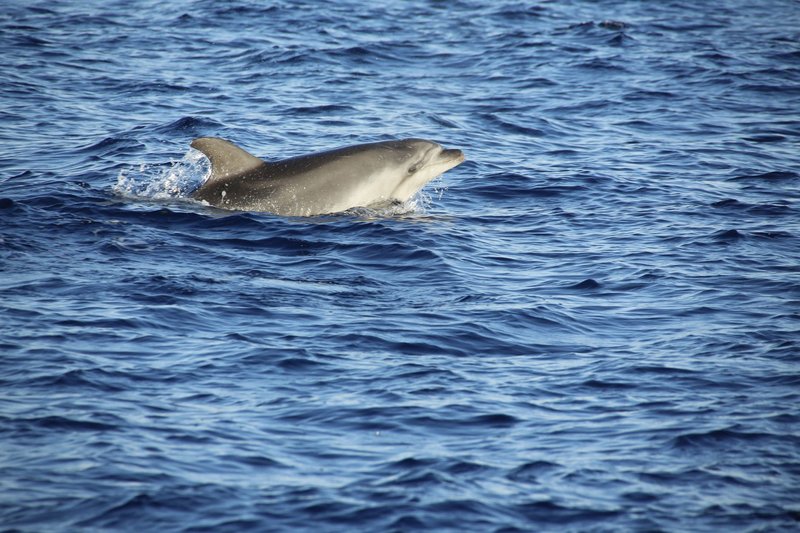
Cardigan Bay holds the largest resident population of bottlenose dolphins in the UK — around 250 individuals that live in the bay year-round rather than migrating. These aren’t seasonal visitors. They’re here in January as well as July, though summer gives the best surface activity.
The New Quay headland in Ceredigion is the go-to land-based watching point. Dolphins regularly feed in the bay within a few hundred meters of shore, especially on an incoming tide. Boat trips also run from New Quay and Aberaeron, and the IUCN Red List classifies the UK’s inshore bottlenose populations as distinct enough to warrant specific protection — the Cardigan Bay group is one of the most-studied small cetacean populations in Europe.
Best locations: New Quay (Ceredigion), Cardigan Bay, Aberystwyth coast
Best time: Year-round; peak activity May–September
Grey Seal
Wales has significant grey seal colonies on its offshore islands and remote headlands. Ramsey Island hosts one of the largest breeding colonies in Wales, with hundreds of pups born in October and November each year. Skomer and Skokholm also have seals haul-out year-round.
Grey seal pups are born with white fur that they shed within a few weeks. By late autumn, the Pembrokeshire coast is dotted with pups in coves and on rocks. The bulls in breeding season are substantial animals — males can reach 300kg and get visibly scarred from territorial fights.
Best locations: Ramsey Island, Skomer Island, Bardsey Island, Pembrokeshire coast
Best time: Year-round for adults; October–November for pup season
Harbour Porpoise
Less dramatic than the dolphins but more widely distributed, harbour porpoises show up along most of the Welsh coast. They’re small (under 2m), shy, and don’t bow-ride boats. The best views come from headlands on calm days — look for a dark, triangular dorsal fin rolling briefly at the surface.
Strumble Head in Pembrokeshire is one of the best land-based cetacean watching points in Britain, with porpoises visible on most calm mornings. The headland channels tidal currents that concentrate fish, and where the fish are, the porpoises follow.
Best locations: Strumble Head, Bardsey Island, Llŷn Peninsula
Best time: Year-round; calmer summer months for easier spotting
Mammals
Red Squirrel
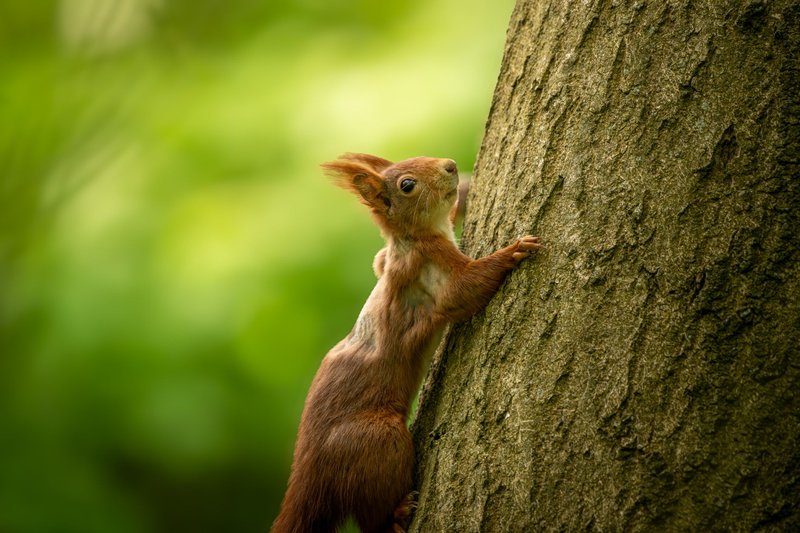
Grey squirrels — introduced from North America in the late 19th century — have displaced red squirrels from most of England and Wales through competition and disease (they carry squirrelpox, which kills reds but doesn’t affect greys). Grey squirrels are among the most impactful invasive species in Wales, having transformed woodland ecosystems across the country. Anglesey is one of the few places in Wales where active management has turned this around.
Grey squirrel culling programs on Anglesey, combined with careful habitat management, have allowed red squirrel numbers to recover from near-zero to over 700 individuals. Newborough Forest on the south end of Anglesey is the most reliable place to see them. They’re active year-round but most visible in autumn when they’re caching food.
Best locations: Newborough Forest (Anglesey), Red Squirrel Trust Wales reserves
Best time: October–November; early mornings
European Otter
Wales has one of the highest otter densities in the UK. The Teifi, Wye, and Dyfi river systems hold strong populations, and otter surveys regularly find signs — spraint (droppings), footprints, holts — along most Welsh rivers.
Seeing an otter requires patience and an early start. Dawn and dusk are peak activity. The upper Teifi around Tregaron Bog (a National Nature Reserve) is a reliable area — walk the riverbanks quietly and scan the water ahead of you. Otters are territorial and predictable once you know a stretch of river they use.
Best locations: Tregaron Bog, River Teifi, River Wye, Dyfi Estuary
Best time: Year-round; dawn and dusk, October–March when vegetation is low
Eurasian Beaver
Beavers are back in Wales. After being hunted to extinction in Britain roughly 500 years ago, trial reintroductions have now established breeding populations in several Welsh river systems. The National Trust’s Cors Dyfi beaver project and private landowner schemes in mid-Wales have produced confirmed breeding.
Finding beavers requires local knowledge and some luck — they’re crepuscular and secretive. But the evidence of their presence is everywhere: dams, felled trees, gnawed stumps, and flooded meadows that didn’t exist before. The ecological impact is measurable within a few years of their arrival.
Best locations: Mid-Wales river systems; contact local wildlife trusts for current sites
Best time: May–September; dawn/dusk watching near dams
Polecats
Wales is the stronghold of the European polecat in Britain. The polecat was exterminated from most of England by gamekeepers by the early 20th century, but a relic population survived in Wales — and from that Welsh core, polecats have been expanding back into England for the past 40 years. The polecat is one of several species covered in depth in the guide to animals only found in Wales, which profiles the country’s most distinctive and range-restricted wildlife.
They’re mustelids (in the same family as otters and badgers), roughly ferret-sized with a distinctive dark mask. Nocturnal and elusive, they’re most often seen on quiet country roads at night. The mid-Wales uplands and the border counties are the best areas.
Best locations: Mid-Wales, Powys and Ceredigion, border counties with England
Best time: Year-round; most sightings at night
Reptiles and Amphibians
Wales has all six native British reptile species, though none are unique to Wales. The adder — Britain’s only venomous snake — lives on heathland and moorland edges. It’s not aggressive; most sightings involve them basking on sunny banks in spring. For context on how the adder compares to other species across Britain, the list of dangerous animals in the United Kingdom covers assessed risk levels and where each is found. Sand lizards are rarer and largely restricted to coastal dunes and heathland.
For amphibians, Wales has strong populations of great crested newts, a protected species that’s declined sharply in England. Welsh farmland ponds and wet grasslands retain good numbers.
Best locations for adders: Pembrokeshire heathland, Gower Peninsula, upland edge habitats
Best time for reptiles: March–September; warm sunny mornings for basking species
Quick Reference: Iconic Species at a Glance
| Species | Type | Best Location | Best Season |
|---|---|---|---|
| Red Kite | Bird | Rhayader, Powys | Year-round |
| Puffin | Bird | Skomer Island | April–July |
| Chough | Bird | Ramsey Island | Year-round |
| Peregrine Falcon | Bird | Symonds Yat | March–July |
| Bottlenose Dolphin | Marine | New Quay, Cardigan Bay | Year-round |
| Grey Seal | Marine | Ramsey Island | Year-round (pups Oct–Nov) |
| Harbour Porpoise | Marine | Strumble Head | Year-round |
| Red Squirrel | Mammal | Newborough Forest, Anglesey | Oct–Nov |
| European Otter | Mammal | River Teifi, Tregaron | Year-round |
| Eurasian Beaver | Mammal | Mid-Wales rivers | May–Sept |
| Polecat | Mammal | Mid-Wales uplands | Year-round |
| Adder | Reptile | Pembrokeshire heath | March–Sept |
Seasonal Viewing Calendar
Spring (March–May) The most active season for birds. Red kites are on nests, peregrine pairs are visible at cliff sites, and puffins arrive at Skomer from mid-April. Adders emerge to bask in March — the best window for reptile watching. Otters are more visible before bankside vegetation grows back.
Summer (June–August) Peak season for seabirds and marine mammals. Puffin colonies are at full activity through July. Bottlenose dolphin surface activity increases with calmer seas. Grey seal adults haul out on rocks throughout. Red squirrels are active but harder to spot in full leaf.
Autumn (September–November) Grey seal pupping season in Pembrokeshire runs October–November. Red kites concentrate at feeding stations as weather cools — this is when Gigrin Farm peaks. Beavers are actively caching food and most visible at dawn. Otter visibility improves as vegetation dies back.
Winter (December–February) Bottlenose dolphins stay in Cardigan Bay year-round and are often easier to spot from shore on clear winter days with calm water. Red kite feeding stations are at peak attendance. Polecats are sometimes caught in headlights on empty mid-Wales roads.
FAQ
What is the most famous animal in Wales? The red kite. It’s on the Kite Country tourism branding for mid-Wales and represents one of the most successful bird conservation stories in European history. The fact that the entire British wild population once came down to a few pairs in the Welsh hills — and now numbers in the thousands — makes it a genuinely significant story.
Are there any dangerous animals in Wales? The adder is venomous but rarely dangerous to healthy adults. Bites are uncommon and almost never fatal. Give them space and they’ll move off. No other Welsh wildlife poses serious risk to humans.
Can you see whales in Wales? Occasionally. Minke whales are seen off the Pembrokeshire and Ceredigion coasts in summer, usually from headlands or boat trips. Humpback and fin whale sightings happen but are not reliable. For guaranteed cetaceans, stick to bottlenose dolphins and porpoises.
Where is the best place for wildlife watching in Wales overall? Pembrokeshire gets the strongest argument: seabirds on offshore islands, grey seals, choughs, porpoises from headlands, dolphins from New Quay an hour north, and adders on the heath. If you have one week, base yourself somewhere between Fishguard and St David’s.
Is Pembrokeshire good for wildlife year-round? Yes. The grey seals are there all year, peregrine falcons breed on the cliffs, and the marine mammal activity off Strumble Head runs through winter. It’s quieter than summer, which is not a bad thing.
Are red squirrels native to Wales? Yes. They’re native to Britain; grey squirrels are the invasive species. The greys arrived in the 1870s, brought over from North America as a curiosity for country estates. The conservation work on Anglesey is specifically aimed at recovering the native population.