Japan’s islands host a surprising mix of habitats — from subtropical forests and coral-fringed coasts to temperate mountains — and each supports wildlife found nowhere else. Coastal reefs, isolated island valleys and long periods of separation have driven the evolution of species that are locally unique.
There are 15 Animals Only Found in Japan, ranging from Amami rabbit to Ryukyu black-breasted leaf turtle. Entries list Scientific name,Range (main islands),Size (length cm / weight kg) so you can quickly see where each species lives and how big it gets — you’ll find below.
Where within Japan are most endemic species located?
Many endemics are concentrated on smaller southern island groups (Ryukyu, Amami, Izu) and isolated mountain pockets on the main islands; isolation plus unique habitats explain why species are restricted to specific islands or ranges, so check the Range (main islands) column for exact locations.
Are these endemic animals protected and can I see them in the wild?
Several are legally protected or threatened (for example, the Amami rabbit faces conservation concern); seeing them often requires guided visits, permits, or trips to reserves—avoid disturbing habitats, follow local rules, and consult conservation authorities before planning sightings.
Animals Only Found in Japan
| Name | Scientific name | Range (main islands) | Size (length cm / weight kg) |
|---|---|---|---|
| Japanese macaque | Macaca fuscata | Hokkaido, Honshu, Shikoku, Kyushu | 50–60 cm / 9–18 kg |
| Japanese serow | Capricornis crispus | Honshu, Shikoku, Kyushu | 60–80 cm / 20–30 kg |
| Japanese giant salamander | Andrias japonicus | Honshu, Shikoku, Kyushu | 100–150 cm / up to 30 kg |
| Japanese dormouse | Glirulus japonicus | Honshu, Shikoku, Kyushu | 6–9 cm / 0.02–0.03 kg |
| Japanese weasel | Mustela itatsi | Honshu, Shikoku, Kyushu | 30–40 cm / 0.2–0.7 kg |
| Japanese marten | Martes melampus | Honshu, Shikoku, Kyushu | 40–55 cm / 1–2 kg |
| Japanese badger | Meles anakuma | Honshu, Shikoku, Kyushu | 60–85 cm / 4–11 kg |
| Japanese dwarf flying squirrel | Pteromys momonga | Honshu, Shikoku, Kyushu | 20–30 cm / 0.10–0.20 kg |
| Amami rabbit | Pentalagus furnessi | Amami Ōshima, Tokunoshima (Ryukyu) | 38–48 cm / 1.8–2.2 kg |
| Iriomote cat | Prionailurus bengalensis iriomotensis | Iriomote (Ryukyu) | 50–80 cm / 3–5 kg |
| Okinawa rail | Gallirallus okinawae | Okinawa Island (Ryukyu) | 28–32 cm / 0.2–0.4 kg |
| Bonin white-eye | Apalopteron familiare | Ogasawara (Bonin) Islands | 13–15 cm / 0.02–0.03 kg |
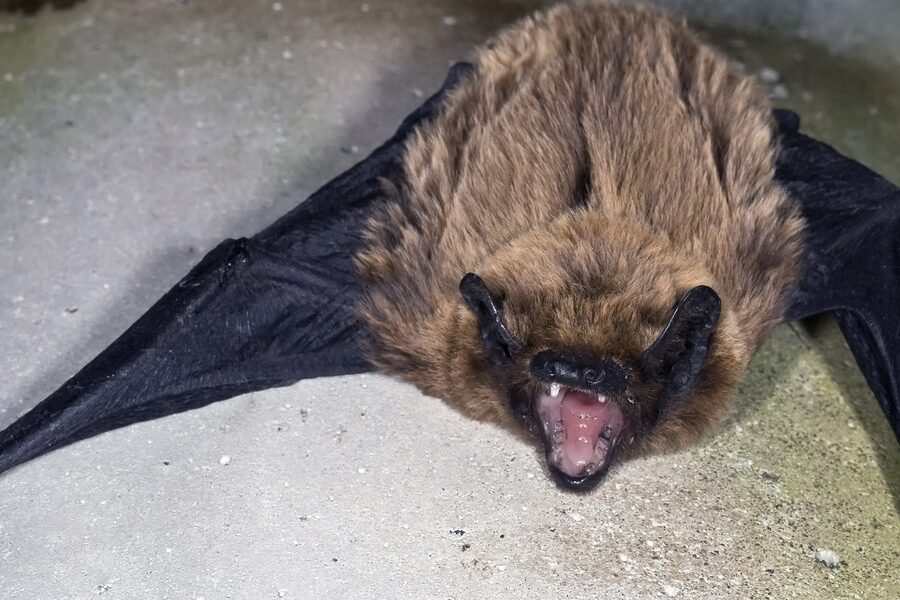
| Bonin flying fox | Pteropus pselaphon | Ogasawara (Bonin) Islands | 18–25 cm / 0.4–0.7 kg |
| Japanese pond turtle | Mauremys japonica | Honshu, Shikoku, Kyushu | 20–25 cm / 0.3–0.8 kg |
| Ryukyu black-breasted leaf turtle | Geoemyda japonica | Ryukyu Islands | 12–16 cm / 0.8–1.5 kg |
Images and Descriptions
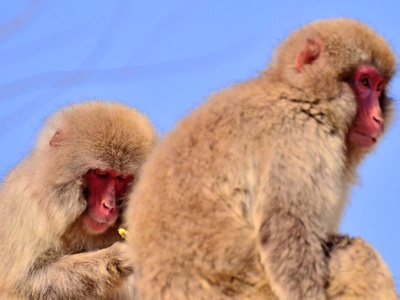
Japanese macaque
Famous “snow monkeys” with pink faces and thick fur; watchable bathing in hot springs. Lives in temperate forests in social troops. Notable for intelligence and cultural research. Conservation: generally secure but local conflicts and habitat loss threaten some populations.
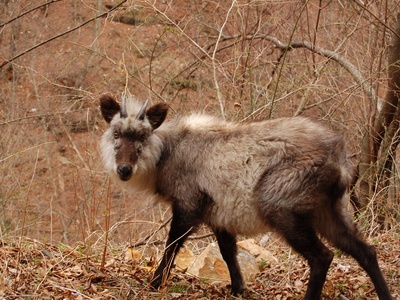
Japanese serow
Goat-antelope with coarse fur and short horns, often on steep forested slopes. National symbol of wild Japan, shy and solitary. Notable for cliff-climbing ability and protected status. Conservation: legally protected and recovered after historical hunting declines.
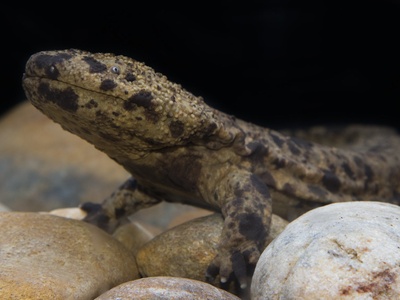
Japanese giant salamander
Massive, ancient-looking amphibian with wrinkled skin and flat head; nocturnal in cold mountain streams. One of the world’s largest salamanders, a living fossil. Conservation: Habitat fragmentation and hybrids with introduced salamanders threaten populations.

Japanese dormouse
Tiny nocturnal tree-dweller with large eyes and bushy tail; nests in forest canopies. Rarely seen, prized by naturalists, and research ongoing. Conservation: Forest loss and fragmentation reduce habitat, but local protections exist.
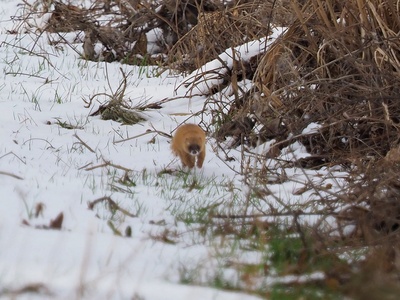
Japanese weasel
Slender carnivore with reddish-brown fur; hunts rodents and birds in forests and farmland. Smaller than European polecat; adaptable but declining in parts. Conservation: Habitat change and competition with introduced species cause local declines.
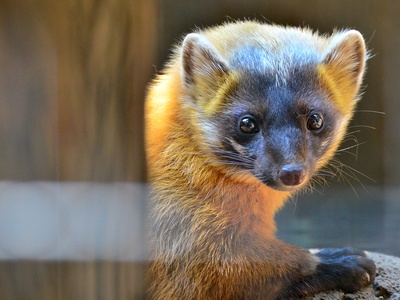
Japanese marten
Forest-dwelling mustelid with bushy tail and pale throat patch; agile climber and omnivorous diet. Important seed disperser and predator. Conservation: Forest clearing and trapping have reduced some populations; protections in place.
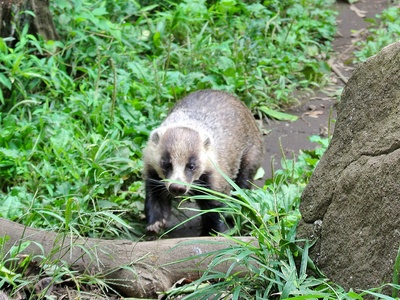
Japanese badger
Stocky nocturnal omnivore with striped face; digs for invertebrates and roots. Common in woodlands and satoyama landscapes. Conservation: Habitat loss and hunting impact some areas, but overall population stable regionally.
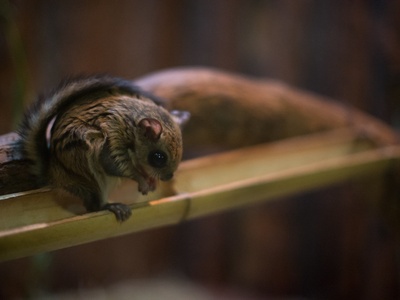
Japanese dwarf flying squirrel
Small gliding mammal with big eyes and furry patagium; active at night in deciduous forests. Charming and often seen in treetops. Conservation: Forest fragmentation threatens nesting and glide routes seasonally.
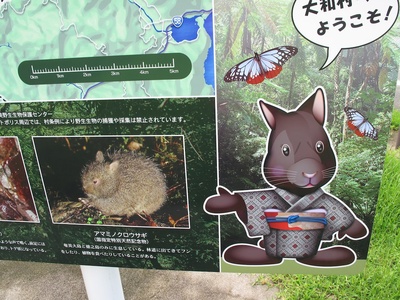
Amami rabbit
Primitive-looking rabbit with short ears and dark fur, unique to Amami Islands. A living relic from ancient lineages, it lives in dense understory. Conservation: Critically endangered from habitat loss and introduced predators.
Iriomote cat
Wildcat subspecies endemic to Iriomote Island, rare and secretive, brown-speckled coat. Cultural icon and top predator of small mammals and birds on the island. Conservation: Critically endangered due to habitat loss, traffic, and feral dogs.
Okinawa rail
Flightless rail with dark plumage and bold white markings; only on northern Okinawa. Walks the forest floor and is easily spotted. Conservation: Endangered from habitat loss, roadkills, and introduced predators.
Bonin white-eye
Small, noisy songbird with olive-yellow plumage, confined to Ogasawara Islands. Ecological generalist that recovered after invasive species control. It feeds on fruits and insects and is easy to watch at forest edges. Conservation: Vulnerable historically, improving with active conservation.
Bonin flying fox
Fruit bat endemic to Ogasawara with large eyes and wingspan up to about 1 m; key seed disperser. Lives in island forests and feeds on native fruits. Conservation: Threatened by habitat loss and human disturbance.
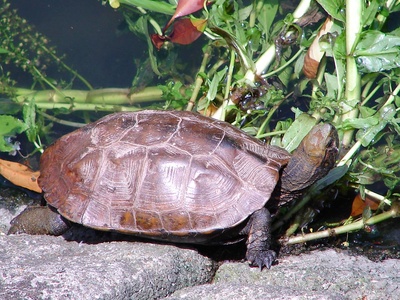
Japanese pond turtle
Freshwater turtle with olive shell, common in rice paddies and slow rivers in main islands. Often basks on logs and feeds on invertebrates. Conservation: Locally threatened by habitat loss and hybridization with introduced turtles.
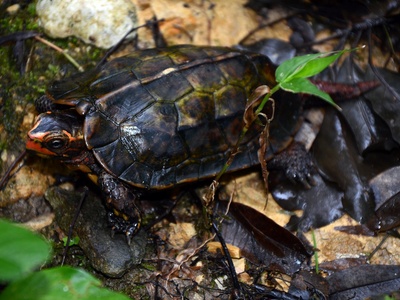
Ryukyu black-breasted leaf turtle
Small forest turtle with keeled shell and dark plastron, native to Ryukyu Islands. Secretive and terrestrial near streams. Conservation: Endangered from collection and habitat destruction. Illegal trade is a major threat.