Madagascar’s forests, spiny thickets and coastal regions host an array of animals found nowhere else on Earth. From island endemics tucked into rainforests to species adapted to dry, rocky landscapes, the island’s isolation has produced a remarkable—and sometimes fragile—mix of life.
There are 24 Animals Only Found in Madagascar, ranging from Aye-aye to Verreaux’s sifaka. For each species the table lists Scientific name,IUCN status,Size (cm); details you’ll find below.
Which of these Madagascar-only animals are most at risk?
Many of the island’s endemics face pressure from habitat loss, hunting and invasive species, so several appear with concerning IUCN statuses; use the IUCN status column to see which need priority action and check local conservation programs for up-to-date measures.
How should I use the Scientific name,IUCN status,Size (cm) columns?
Use the Scientific name for precise identification, the IUCN status to understand conservation urgency, and Size (cm) to visualize the animal and compare species quickly—together they help you prioritize which species to learn more about or support.
Animals Only Found in Madagascar
| Name | Scientific name | IUCN status | Size (cm) |
|---|---|---|---|
| Aye-aye | Daubentonia madagascariensis | Endangered | 40 |
| Indri | Indri indri | Critically Endangered | 64 |
| Ring-tailed lemur | Lemur catta | Endangered | 40 |
| Verreaux’s sifaka | Propithecus verreauxi | Endangered | 45 |
| Coquerel’s sifaka | Propithecus coquereli | Endangered | 45 |
| Diademed sifaka | Propithecus diadema | Endangered | 45 |
| Gray mouse lemur | Microcebus murinus | Least Concern | 9 |
| Fossa | Cryptoprocta ferox | Vulnerable | 80 |
| Falanouc | Eupleres goudotii | Vulnerable | 30 |
| Ring-tailed vontsira | Galidia elegans | Least Concern | 40 |
| Common tenrec | Tenrec ecaudatus | Least Concern | 30 |
| Madagascar fish eagle | Haliaeetus vociferoides | Critically Endangered | 70 |
| Madagascar pochard | Aythya innotata | Critically Endangered | 45 |
| Helmet vanga | Euryceros prevostii | Vulnerable | 25 |
| Pitta-like ground-roller | Atelornis pittoides | Near Threatened | 22 |
| Panther chameleon | Furcifer pardalis | Least Concern | 45 |
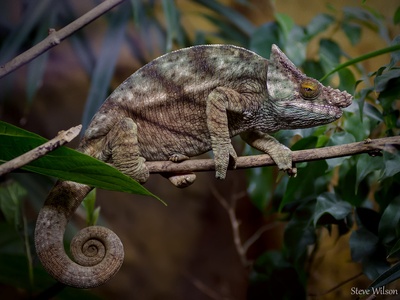
| Parson’s chameleon | Calumma parsonii | Near Threatened | 60 |
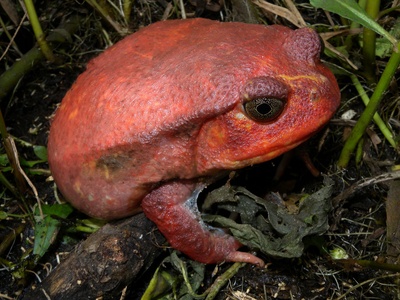
| Tomato frog | Dyscophus antongilii | Near Threatened | 10 |
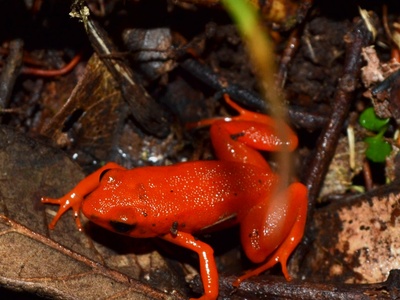
| Golden mantella | Mantella aurantiaca | Critically Endangered | 2.5 |
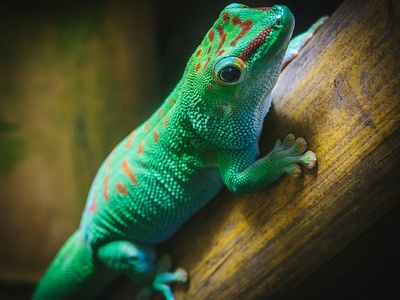
| Madagascar giant day gecko | Phelsuma grandis | Least Concern | 30 |
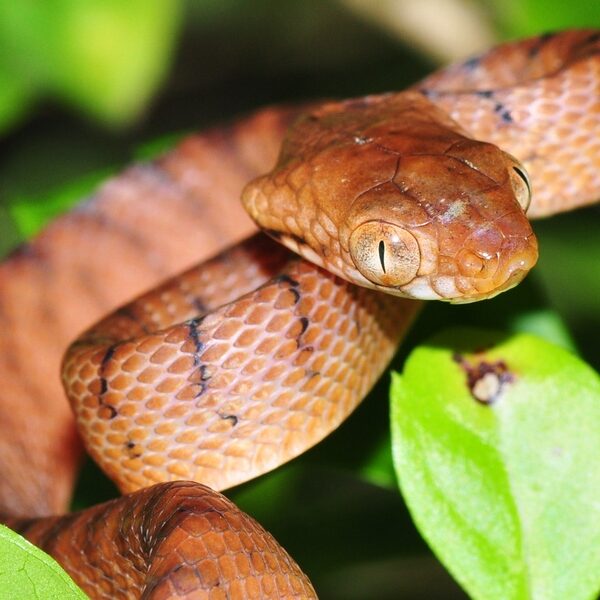
| Madagascar tree boa | Sanzinia madagascariensis | Near Threatened | 180 |
| Comet moth | Argema mittrei | Not Evaluated | 20 |
| Giraffe weevil | Trachelophorus giraffa | Not Evaluated | 8 |
| Hissing cockroach | Gromphadorhina portentosa | Not Evaluated | 7 |
Images and Descriptions
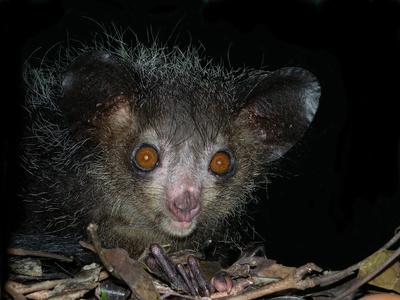
Aye-aye
Nocturnal, odd-toed lemur with continuously growing incisors and an elongated middle finger used to tap and extract insect larvae from wood. Lives in varied forests across Madagascar, solitary habits; threatened by habitat loss and local persecution.
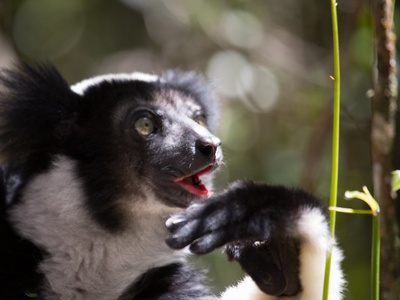
Indri
Largest living lemur known for its loud, haunting calls and vertical clinging and leaping between tall eastern rainforests. Black-and-white, herbivorous, lives in small family groups; extremely vulnerable due to deforestation and hunting.
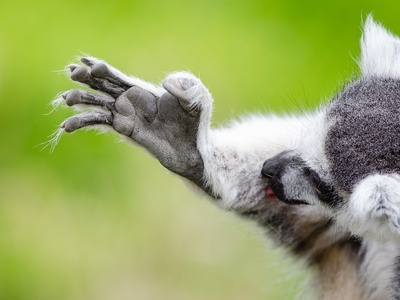
Ring-tailed lemur
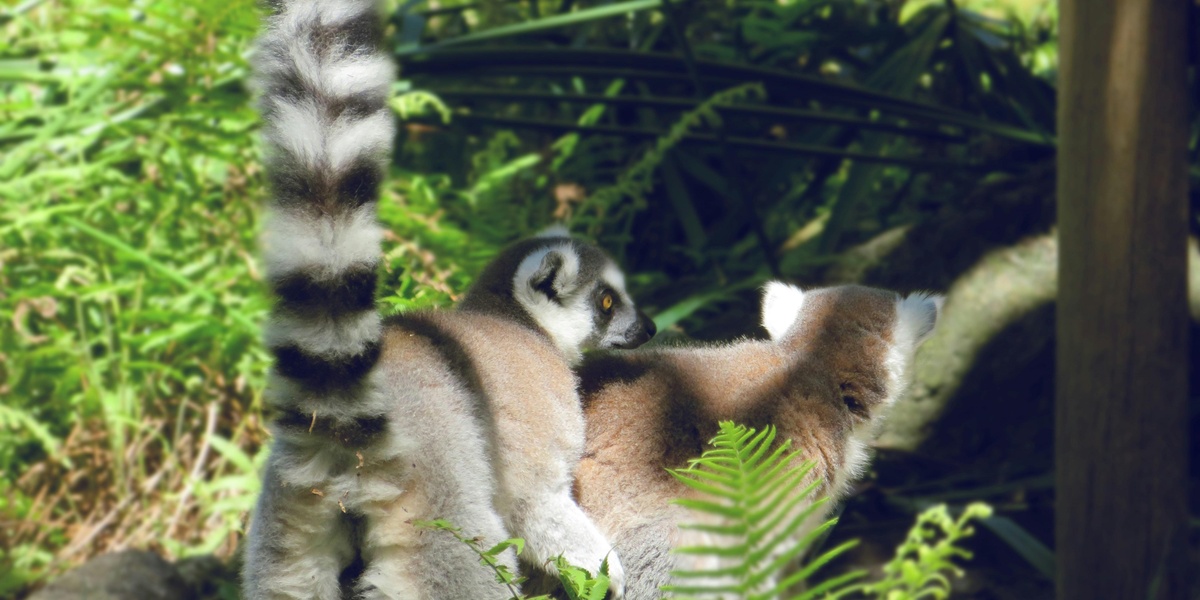
Iconic social lemur with a long black-and-white ringed tail, found in southern and southwestern dry forests and spiny thickets. Diurnal and group-living, omnivorous diet; population declines from habitat loss and hunting.
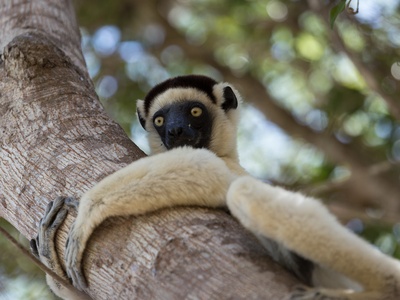
Verreaux’s sifaka
Leaping lemur famous for sideways bipedal hops across open ground and graceful tree acrobatics. White coat with dark face, inhabits dry deciduous forests and karst limestone areas in southwest Madagascar; threatened by habitat fragmentation.
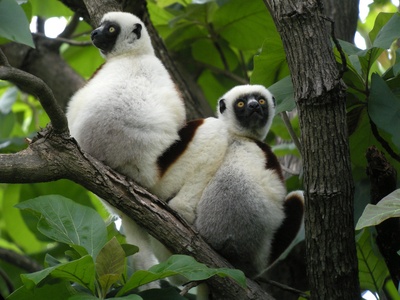
Coquerel’s sifaka
Distinctly white with dark patches, Coquerel’s sifaka lives in western dry forests and gallery forests. Highly social, uses powerful hind legs to leap between trees. Populations reduced by logging and hunting for bushmeat.
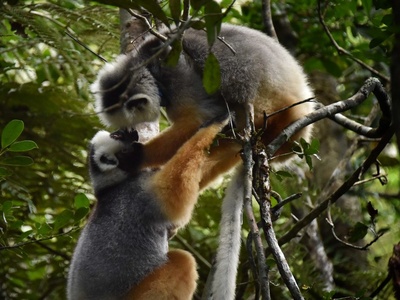
Diademed sifaka
Spectacularly colored sifaka with a mane-like ruff and varied golden, white and dark fur. Inhabits eastern rainforests, including protected areas; large home ranges, slow reproductive rates, threatened by habitat loss and fragmentation.
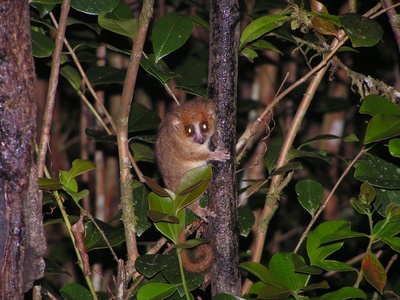
Gray mouse lemur
Tiny nocturnal primate weighing only a few dozen grams, with big eyes and a long tail. Found in a wide range of forests across Madagascar; omnivorous and adaptable but facing localized habitat threats.
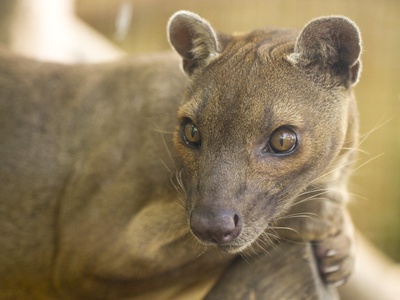
Fossa
Top Malagasy carnivore resembling a cat-like mongoose, with muscular body and retractable-like claws. Hunts lemurs and other vertebrates across forests and scrubland; secretive, solitary, vulnerable from habitat loss and retaliatory killing.
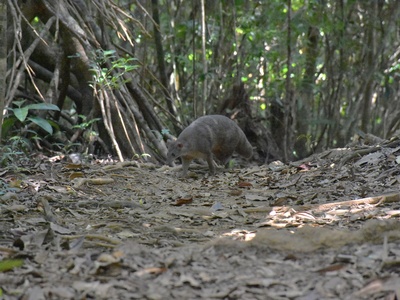
Falanouc
Weasel-like, insectivorous carnivoran with coarse brown fur and elongated body, found in eastern humid forests and dry deciduous zones. Forages for invertebrates and small vertebrates; rare and threatened by deforestation and hunting.

Ring-tailed vontsira
Also called ring-tailed vontsira or ring-tailed mongoose, this diurnal small carnivore has a long striped tail and hunts insects, small vertebrates and fruit in deciduous forests and scrub. Adaptable but locally declining.
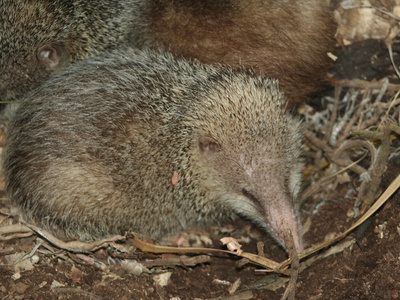
Common tenrec
Largest Malagasy tenrec with hedgehog-like defensive spines in some subspecies; omnivorous scavenger found across habitats including forests and anthropogenic areas, and adaptable to human-modified landscapes. Important for ecosystem turnover, sometimes hunted locally.
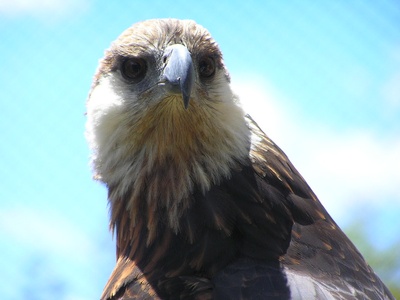
Madagascar fish eagle
Massive raptor restricted to large rivers and lakes on northwest Madagascar, striking white and dark plumage. Specialized fish-eater, nests on tall trees; fewer than a few hundred breeding pairs due to habitat loss and disturbance.
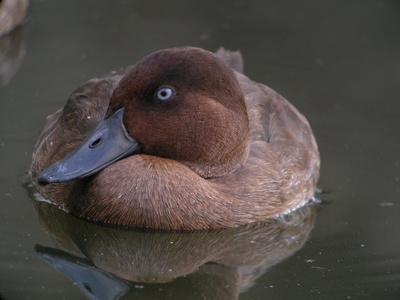
Madagascar pochard
Once thought extinct, this diving duck survives in remote highland lakes and degraded marshes. Very rare, small populations managed by captive-breeding and reintroduction efforts; loss of wetland habitat caused its dramatic decline.
Helmet vanga
Striking forest bird with a heavy, helmet-like bill and bold blue skin patches; inhabits humid eastern rainforests. Feeds on insects and large arthropods, often solitary or in pairs; dependent on intact forest.
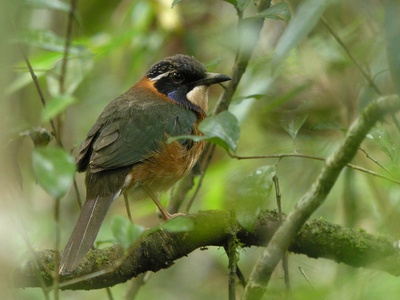
Pitta-like ground-roller
Cryptic, terrestrial bird of eastern montane and lowland forests, with vivid underparts and long tail. Forages on leaf litter for insects and small invertebrates; threatened by deforestation and fragmentation and hunting pressure.
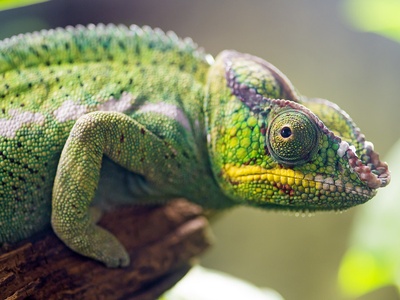
Panther chameleon
Colorful arboreal chameleon common across Madagascar’s varied habitats, from rainforests to dry forests and plantations. Males display dramatic color changes during courtship and territoriality. Often targeted by the pet trade, yet many wild populations remain widespread where habitat persists.
Parson’s chameleon
One of the largest chameleons, robust-bodied with a prominent casque and casque-marked males. Lives in eastern montane and lowland rainforests; slow reproduction and habitat specificity make it susceptible to forest loss and collection.
Tomato frog
Bright orange, squat frog found in northeastern coastal rainforests and marshes. Secretes sticky toxins when threatened, which deter predators; habitat loss and collection for pet trade threaten small populations and pollution.
Golden mantella
Tiny, brilliantly colored frog from eastern rainforests and wetlands; bright orange warns predators of toxins. Highly localized distribution and collection for the pet trade make this species critically endangered despite captive-breeding programs.
Madagascar giant day gecko
Large bright green diurnal gecko native to eastern Madagascar, living in rainforest canopy and plantations. Feeds on insects, nectar and fruit; adhesive toe pads enable climbing smooth surfaces. Attractive coloration makes it a target for the pet trade in some areas.
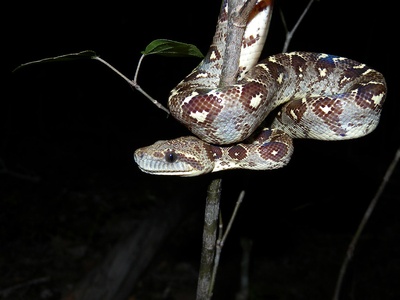
Madagascar tree boa
Nocturnal arboreal boa inhabiting eastern humid forests and edges, with heavy-bodied green or brown morphs. Ambush predator feeding on birds and mammals; threatened by habitat loss and collection for the pet trade.
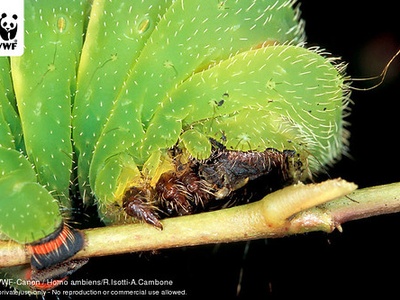
Comet moth
Spectacular giant silk moth with long trailing hindwing tails and bright green forewings, endemic to Malagasy rainforests. Adult moths do not feed; habitat loss and collection for silk and trade threaten wild populations.
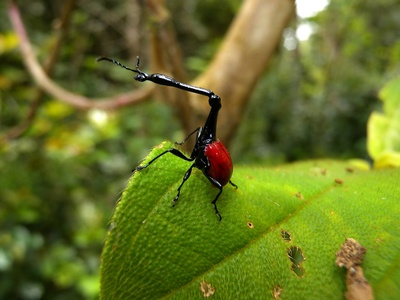
Giraffe weevil
Remarkable long-necked weevil found in eastern rainforests; males have elongated necks used in fights over mates. Feeds on leaves and lays eggs in stems; micro-endemic populations vulnerable to forest clearance.
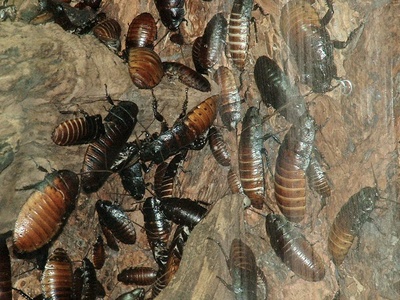
Hissing cockroach
Large, wingless roach native to Madagascar’s forest floor and leaf litter, known for loud hissing used in communication and defense. Popular in the pet trade, yet wild populations depend on intact forest habitats.