Table of Contents
- Can you actually grow vegetables in the Arctic?
- What actually grows up there
- Why it’s hard: permafrost, bolting, and six-week summers
- The tech that makes it work
- Three places already doing it
- It’s not just cultivated crops
- The real stakes: food security and a changing diet
- What transfers if you garden at northern latitudes
TLDR
Yes — kale, spinach, lettuce, potatoes, tomatoes, and most brassicas grow well above the Arctic Circle, just not in open dirt through a Canadian winter. The trick is a controlled environment: a greenhouse, a hydroponic rig, or both, timed around the region’s one real asset — nearly 24 hours of summer daylight — and its biggest liability, six-week growing windows and permafrost that never fully lets go of the ground. Towns from Inuvik, Northwest Territories to Longyearbyen, Svalbard are already doing it, and the produce isn’t a novelty. It’s groceries.
Can you actually grow vegetables in the Arctic?
Yes. Not in a field, not without help, and not year-round in most places — but yes. The Arctic Circle isn’t uniformly frozen tundra; towns like Inuvik and Longyearbyen have short, intense summers where the sun barely sets and soil temperatures climb enough to run a real garden. What changes the math isn’t the crop, it’s the infrastructure wrapped around it.
The confusion usually comes from picturing the Arctic as one climate. It’s not. Coastal Nunavut, interior Alaska, and Svalbard’s high-Arctic archipelago each have their own soil, daylight, and wind profile, and each has produced a different solution — an arena-turned-greenhouse in one town, a geodesic dome in another, a zero-waste micro-farm in a third.
What actually grows up there
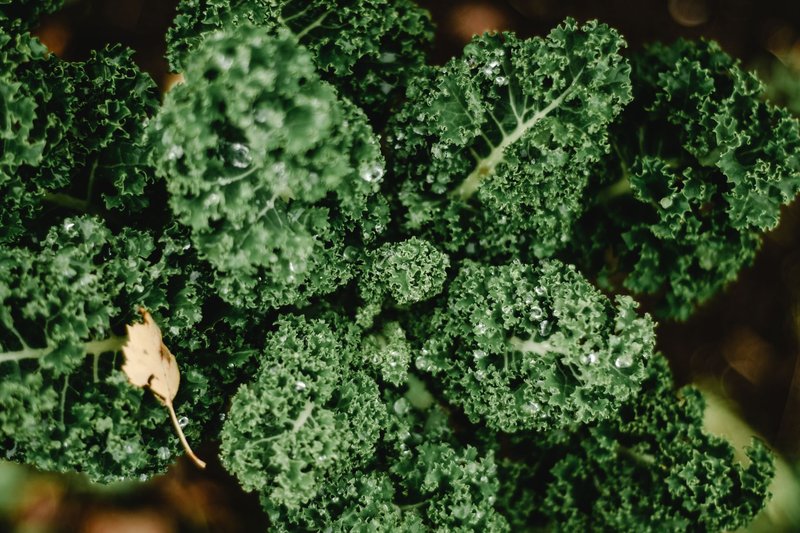
Leafy greens do best because they’re fast: kale, spinach, lettuce, and chard can go from seed to harvest before a short season runs out. Root vegetables come next — potatoes, carrots, radishes, beets — because they tolerate cooler soil and store well once pulled. Tomatoes and cucumbers show up too, but almost always under glass or plastic, never as an open-field crop.
Brassicas in particular have a home-field advantage: cabbage, broccoli, and cauliflower actually sweeten in cold snaps, converting stored starches to sugar as a frost-defense mechanism. A grower in Inuvik isn’t fighting the cold on every crop — on some, the cold is doing the work for free.
Why it’s hard: permafrost, bolting, and six-week summers
Three problems stack on top of each other, and solving one doesn’t solve the others.
Permafrost means the ground a few feet down never thaws, so drainage is poor and root systems hit a cold, saturated wall. Raised beds and imported soil sidestep this, but you can’t just till a field and plant.
Season length is brutal. Places like Inuvik get a growing window of roughly May through late September before frost returns — call it four months if you’re generous, and a lot less for anything that needs a long maturation period.
Daylight itself is a problem, not just a benefit. Near-constant summer sun accelerates growth, which sounds like an advantage until a plant bolts — shoots up a flower stalk and turns bitter — because its internal clock reads endless daylight as a signal to reproduce immediately rather than build leaves. Lettuce and spinach are especially prone to it. Growers manage this with shade cloth, timed plantings, and bolt-resistant varieties bred for long-day conditions.
The tech that makes it work
Three tools show up in almost every Arctic growing operation, usually in combination.
Greenhouses buy season length by trapping heat and blocking wind, which is often the single biggest yield factor this far north — wind chill does more damage to young plants than the raw temperature.
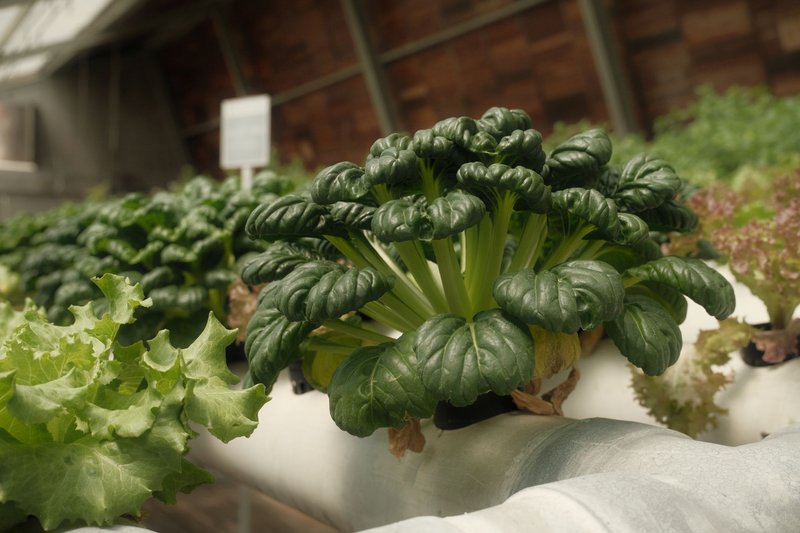
Hydroponics removes soil and permafrost from the equation entirely. Plants grow in nutrient solution instead of ground, which sidesteps drainage problems and lets a grower stack crops vertically in a small heated footprint — a meaningful advantage when every square foot of heated space is expensive to build and run.
Waste-heat reuse is the quieter innovation. Communities that already burn diesel or gas for power and heating can duct that excess warmth into an attached greenhouse instead of losing it to the sky, cutting the single largest operating cost for northern growers: heating fuel.
Three places already doing it
Inuvik, Northwest Territories
The Inuvik Community Greenhouse sits about 120 miles above the Arctic Circle, in a building that used to be a hockey arena. The Community Garden Society converted it in 1988 rather than build from scratch, splitting the 4,000-square-foot space between a commercial section and roughly 180 individual plots that residents tend themselves. Members grow spinach, lettuce, carrots, tomatoes, strawberries, squash, and the occasional watermelon between May and late September, and the 24-hour daylight pushes growth fast enough that one grower reported hauling in 220 pounds of produce just three weeks into a single harvest season.
Naujaat, Nunavut
Naujaat sits at the edge of the Arctic Circle in a community of roughly 1,000 people, and until Growing North built a 13-metre geodesic dome there, fresh produce meant a costly flight in. The dome runs on hydroponics: rows of vegetables hang and grow fed by nutrient solution rather than soil, and just four hours of direct sun can heat the interior 30 degrees Celsius above the outside air. Inside, growers have raised kale, spinach, chard, potatoes, tomatoes, peas, beans, beets, radishes, broccoli, and cauliflower — essentially a full southern-Canada vegetable garden, running on a fraction of the daylight hours. At its peak the project supplied enough produce for half the town to eat vegetables daily.
Longyearbyen, Svalbard
Svalbard is a different kind of extreme: the world’s northernmost settlement, three months of total winter darkness, and no soil worth farming in. Chef Benjamin Vidmar founded Polar Permaculture Solutions there after over a decade working in Longyearbyen’s hotel kitchens, building a zero-waste greenhouse that composts restaurant scraps to fertilize crops it then sells back to those same restaurants and the town’s supermarket. Tomatoes, cucumbers, potatoes, lettuce, herbs, and microgreens have all come out of the operation, though the deep winter darkness is severe enough that Polar Permaculture concentrates its growing in summer rather than fighting the polar night year-round.
It’s not just cultivated crops
Cultivated vegetables get the headlines, but the tundra was already feeding people before anyone shipped in a greenhouse kit. Cloudberries — sometimes called Arctic gold — ripen in late summer and taste like a cross between raspberry and apricot, though the plants take two years to fruit and the harvest window is short. Mountain sorrel offers a lemony, refreshing green that Arctic foragers have long treated as one of the tundra’s few reliable leafy vegetables. Labrador tea, a low tundra shrub, has been steeped by Inuit communities for generations, though it needs a gentle steep rather than a boil — concentrated doses release a compound called ledol that turns the plant from remedy to irritant.
None of this competes with a greenhouse tomato on volume. But it’s a reminder that “Arctic vegetables” isn’t only a story about imported infrastructure — it’s also a much older story about what already grows there, if you know where to look.
The real stakes: food security and a changing diet
This isn’t a hobby story. Nearly 60% of Nunavut households reported being food insecure in 2024, according to Statistics Canada — the highest rate in the country, and Inuit households specifically report food insecurity at multiples of the non-Inuit rate in the same communities. A head of lettuce flown into a fly-in community can cost several times what it does in Toronto or Vancouver, and the freight isn’t optional — there’s no road.
There’s a cultural layer underneath the cost problem, too. Traditional Inuit diets leaned on country food — caribou, seal, char, and the wild plants above — and decades of climate shifts, changing animal migration patterns, and colonial disruption have pushed many communities toward store-bought, less nutritious substitutes. A local greenhouse doesn’t replace country food or fix that history. But it does put a fresh, non-shipped vegetable back on the table in a place where that’s been genuinely rare, and every project profiled above was built explicitly to address that gap, not to make a novelty garden for tourists.
What transfers if you garden at northern latitudes
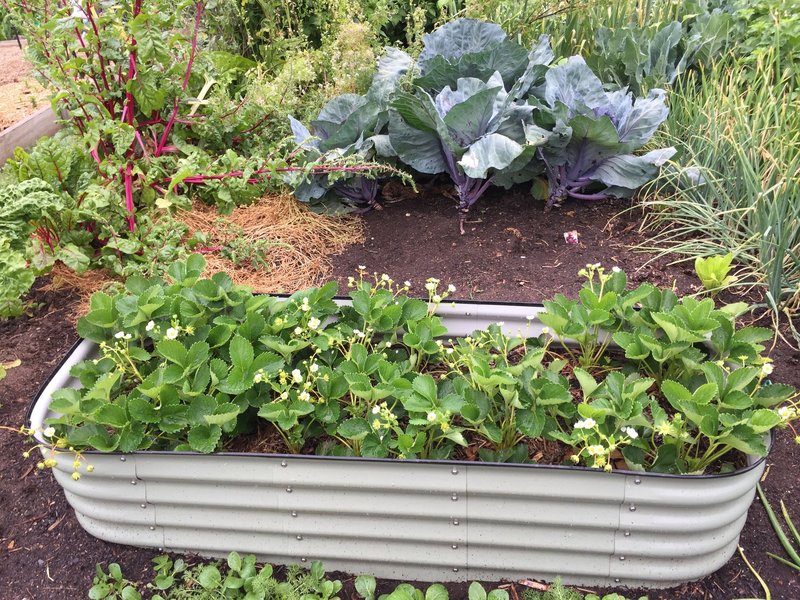
You don’t need an Arctic town’s budget to borrow its playbook. If you’re gardening in a short-season northern climate — think interior Alaska, northern Scandinavia, or just a rough Canadian or northern-U.S. winter — a few things scale down easily:
- Raised beds solve the same drainage and cold-soil problem permafrost creates, just at a smaller scale — they warm faster than ground-level soil in spring.
- Bolt-resistant varieties matter more than people think once daylight stretches past 16–18 hours; look for seed packets that specifically flag long-day or bolt-resistant lettuce and spinach.
- A cold frame or mini greenhouse buys weeks on both ends of the season, which is often the difference between a tomato that ripens and one that doesn’t.
- Shade cloth in midsummer sounds backwards this far north, but it slows the bolting trigger on your leafy greens exactly the way growers in Inuvik manage it.
None of that requires a converted hockey arena. It just requires borrowing the same logic the Arctic’s growers already proved out: control the environment, work with the daylight instead of against it, and pick crops that want what your season actually offers.