In 1989 NASA’s Clean Air Study put houseplants on the map by showing that certain potted species could remove volatile compounds from sealed chambers. That clear, surprising result helped spark wider interest in greenery indoors — and for good reason. Most of us spend about 90% of our time inside, where air quality, humidity, and stress shape daily health and performance. Houseplants are more than decor: they deliver measurable benefits for air, health, thinking, and living spaces — and here are ten science-backed ways they improve everyday life. This list groups those benefits into four practical categories so you can pick what matters most.
Health and Wellbeing

Plants influence both physical and mental health through a mix of physiological effects and behavioral routines. Lab research and clinical trials — from NASA’s 1989 chamber work to Roger S. Ulrich’s 1984 hospital recovery study — anchor this evidence. Below are three concrete health and wellbeing benefits supported by experiments and real-world trials.
1. Improved indoor air quality
Certain common houseplants can reduce indoor pollutants in controlled settings. NASA’s 1989 Clean Air Study found species removed benzene, formaldehyde and trichloroethylene from sealed chambers, demonstrating a plant–soil–microbe pathway for degrading some VOCs.
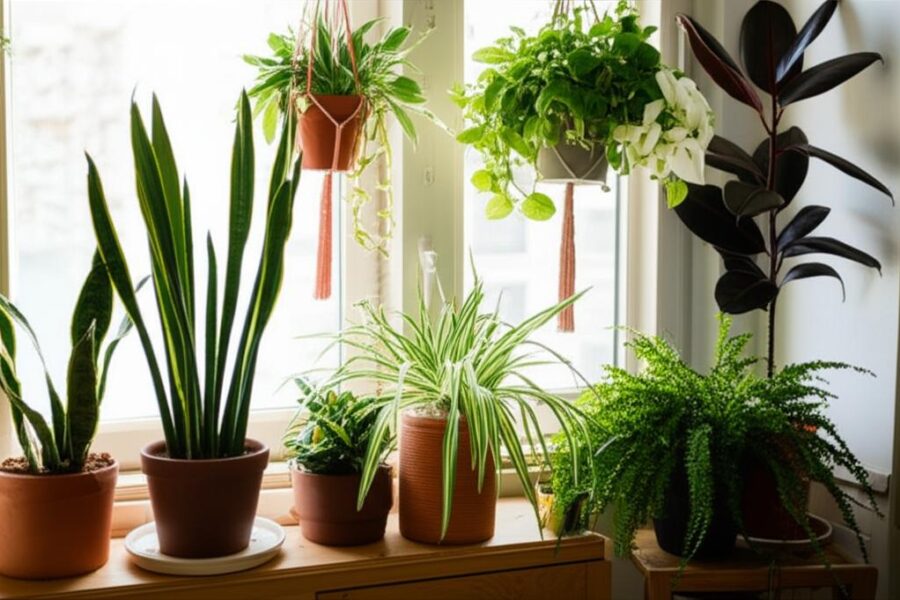
Real rooms aren’t sealed test chambers, so the practical effect depends on plant number, potting mix biology, and room volume. To get useful contribution from plants, use several specimens rather than one lone pot, choose active species such as pothos (Epipremnum aureum), spider plant (Chlorophytum comosum), or snake plant (Sansevieria/Dracaena trifasciata), and keep basic ventilation and filtration running.
Plants can supplement ventilation and HEPA/activated-carbon filtration but don’t replace them. Think of plants as part of a layered approach: source control, mechanical ventilation, filters, and then greenery for added benefit.
2. Reduced stress and improved mood
Interaction with plants — even small acts like watering or pruning — is linked to lower reported stress and improved mood in behavioral and physiological studies. Short plant-care rituals reduce anxiety, and people often show small reductions in heart rate and perceived tension after brief exposure to greenery (for example, several controlled trials in the 2000s and 2010s).
Try one or two desk plants, a sunny windowsill garden, or a five-minute daily care routine to get these benefits. The mechanism is partly visual (calming green), partly biophilic (an innate attraction to living things), and partly behavioral — the pause and focused attention during care acts as a mini restorative break.
These effects show up in offices, bedrooms, and waiting areas where people need quick, low-effort stress relief.
3. Faster recovery and better outcomes in clinical settings
Exposure to plants or views of nature has been tied to quicker recovery and reduced pain in some clinical studies. Roger S. Ulrich’s 1984 hospital-window study famously found surgical patients with green views required fewer painkillers and had shorter stays than those facing a brick wall.
Hospitals and rehab centers now use plants or green views in waiting rooms and recovery wards to support mood and perceived pain, and therapeutic horticulture programs help in convalescent settings.
Clinical use requires hygiene and infection-control protocols, of course — potted plants are not appropriate in all wards — but where allowed they can aid patient experience and some outcome measures.
Air Quality and Indoor Microclimate

The benefits of indoor plants extend to room-level chemistry, humidity, and perceived comfort. Plants release moisture through transpiration, change localized thermal conditions, and can interact with indoor VOCs and microbial communities. Below are three measurable microclimate advantages and practical tips for maximizing them.
4. Removal of volatile organic compounds (VOCs)
Common indoor VOCs include benzene and formaldehyde, and lab studies have shown that plants and their potting-soil microbes can remove or metabolize some of these compounds. Those chamber results are informative but optimistic for rooms with regular air exchange.
In practice, meaningful VOC reduction in real rooms typically requires many plants, healthy potting mixes, and complementary strategies. Combine plants with source control (choose low-VOC paints and furnishings) and active air cleaning such as a HEPA unit with activated-carbon prefilter to address gaseous pollutants.
Place clusters of potted plants in higher-emission zones like kitchens and hobby rooms to get the most practical benefit.
5. Increased humidity and fewer dry-air symptoms
Many houseplants raise local relative humidity through transpiration, which can ease dry eyes, dry throat, and itchy skin in heated or air-conditioned spaces. Industry and public-health guidance commonly cite a comfortable indoor humidity range of about 30–60% (WHO and building-industry sources).
To boost humidity noticeably, group plants together and choose moisture-loving species such as Boston fern (Nephrolepis exaltata) or maidenhair fern. Use an inexpensive hygrometer to monitor room RH and place plants near seating areas or near a heating source to counteract dry air in winter.
Remember that plants provide modest humidity increases — not the same as a dedicated humidifier for very dry climates.
6. Microclimate cooling and perceived comfort
Transpiration and leaf shading create localized cooling and can improve perceived comfort near seating or work areas. The effect is a microclimate one: you feel cooler near a cluster of plants, but they won’t replace central air conditioning.
Use larger-leaved plants such as a fiddle-leaf fig near a reading chair or place plants on balconies to reduce heat gain. Pair plants with ceiling fans or cross-ventilation to amplify comfort without blocking airflow or natural light.
A little strategic placement goes a long way for afternoon sun and hot spots.
Productivity, Learning and Cognitive Benefits
The environment shapes our focus and memory. Adding greenery to work and learning spaces correlates with measurable gains in attention, task performance, and engagement. Below are two practical cognitive benefits and deployment ideas for offices and classrooms.
7. Improved concentration and productivity
Several controlled office studies report better concentration and productivity after plants are added to workspaces. One workplace trial from the mid-2010s reported measurable improvements on attention-based tasks once greenery was introduced into cubicle areas.
For offices, place plants within sight of workstations, choose low-maintenance species like peperomia or small succulents, and avoid placing foliage where it will reflect on screens or obstruct movement. Combine plants with task lighting and ergonomic layout for larger overall gains.
Small, visible plants reduce fatigue and help sustain attention during long stretches of focused work.
8. Enhanced learning and classroom outcomes
Plants in classrooms have been linked to better attention, memory recall, and student engagement in a number of pilot studies. Student involvement in daily plant care also builds responsibility and observation skills, which supports active learning.
Simple deployments work well: a row of hardy plants on a windowsill, student-run watering schedules, or integrating plant growth observations into science lessons. Choose resilient species that tolerate variable care such as pothos, spider plant, or snake plant.
Hands-on plant projects make abstract biology tangible and keep classes calmer and more focused.
Aesthetics, Economics, and Biodiversity
Plants lift interiors visually, nudge perceived value, and support small-scale biodiversity. From staging a rental to creating a balcony habitat for pollinators, greenery is a cost-effective way to improve spaces. Below are two combined aesthetic and ecological benefits with practical sourcing and care tips.
9. Aesthetic appeal and modest economic upside
Plants elevate interior design at relatively low cost and are widely used by home-staging companies and short-term rental hosts to improve first impressions. A healthy plant in the living room or entryway can make a space feel lived-in and cared-for.
For staging, match plant scale to room size, pick vigorous specimens, and use planters that complement the decor. Mainstream vendors such as IKEA, The Sill, and Bloomscape make it easy to source affordable, ready-to-ship options for quick updates.
Simple staging — one or two well-placed plants — often has a higher visual return than many pricier redecorations.
10. Support for indoor biodiversity and microbial balance
Potted plants and their soils host diverse microbial communities that add to indoor microbial variety. Exposure to a range of non-pathogenic microbes can contribute to a healthier indoor ecological balance, though claims about clinical immune effects should be cautious.
On balconies or patios, native flowering plants like lavender and salvias can support pollinators when conditions allow. Indoors, use quality, sanitized potting mixes rather than raw garden soil, and manage pests with non-toxic methods to keep the ecosystem healthy.
Thoughtful plant selection and clean potting practices bring biodiversity benefits without inviting problems.
Summary
- NASA’s 1989 Clean Air Study helped launch scientific interest in houseplants; follow-up work and clinical research (e.g., Ulrich, 1984) show benefits for air, recovery, and mood.
- Layer plants with ventilation and filtration for the best air-quality results; aim for indoor RH near the WHO guidance of 30–60% when targeting humidity benefits.
- Small, visible plants improve focus, lower stress, and lift perceived value in homes and rentals; start with low-maintenance options like snake plant or pothos for quick wins.
- Combine planting with simple practices: group pots for humidity, use quality potting mix for microbial balance, and pair greenery with HEPA/activated-carbon filtration for VOC control.
Pick one desk plant or a windowsill herb today — you’ll get immediate visual and psychological payoff while you plan bigger green projects.