In the mid-1800s a naturalist cataloging tropical invertebrates wrote of a centipede so large it stunned collectors, a specimen that lingered in museum cabinets and travelers’ tales alike. That encounter is a vivid reminder that these creatures range from tiny soil dwellers to formidable hunters. Around 8,000 described centipede species worldwide cover a huge span of form and behavior, and centipedes can have from 15 to 191 pairs of legs.
This piece profiles ten notable species — from household allies to rain‑forest giants — describing how to recognize each, where they live, what they eat, and what to do if you meet one. Most keep to leaf litter, wood piles, or cellar corners and try to avoid people; a few can deliver painful bites, but serious harm is rare. Read on for practical ID tips, real field observations, and a few surprisingly specific museum and survey notes that illuminate these often-misunderstood predators.
Famous Giant Predators
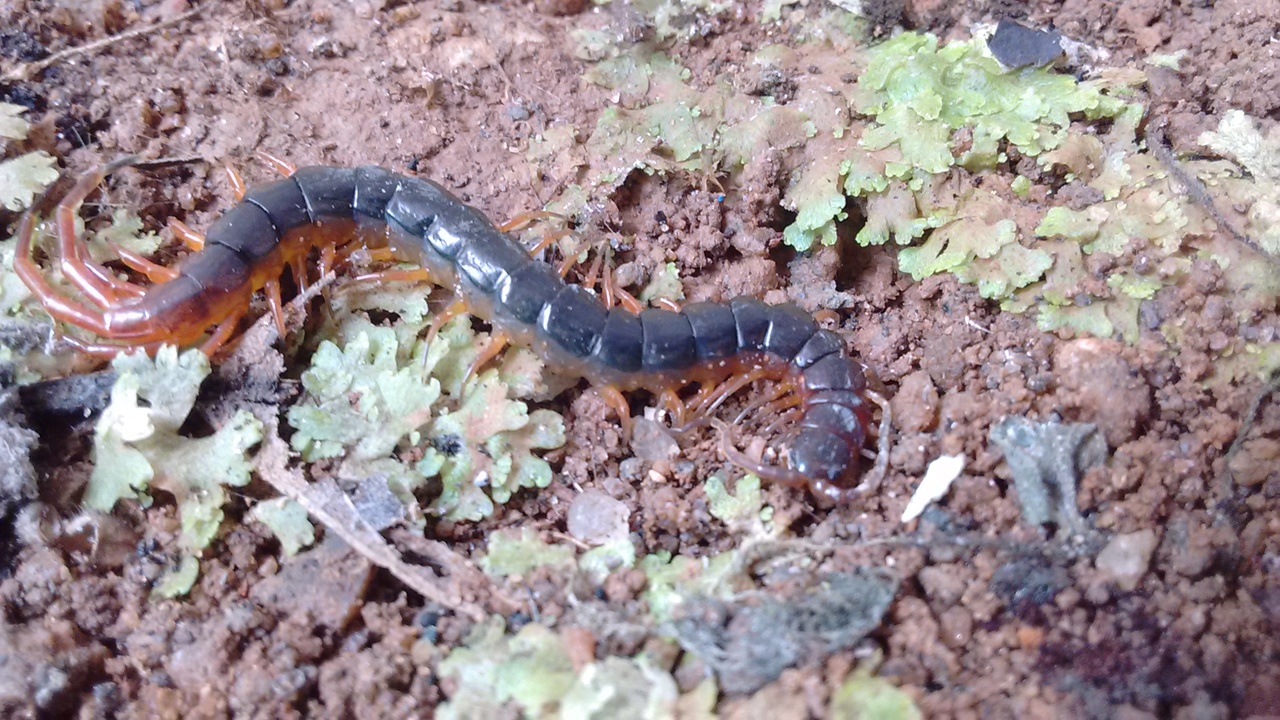
Large Scolopendra centipedes act as top invertebrate predators in tropical forests, taking large insects and occasionally vertebrates. Adults of the biggest species commonly reach 20–30 cm, hunt frogs, lizards, and small mammals, and show up in human habitations near forests. Their bites can cause intense local pain and swelling; museum specimen records and field notes provide most of the reliable natural‑history evidence for size and prey.
1. Amazonian Giant Centipede (Scolopendra gigantea)
Scolopendra gigantea is one of the largest known centipedes, often called the Amazonian giant. Museum specimen records report individuals approaching 30 cm (about 12 inches) in preserved condition, and collectors in northern South America and the Caribbean have documented similarly large animals in the field.
Its range includes northern South America and some Caribbean islands, where it hunts at night in rainforest leaf litter and under logs. Naturalist accounts describe S. gigantea taking frogs, small lizards, and on rare occasions small rodents or bats that become trapped in caves or crevices.
Human bite reports typically note severe, immediate pain and localized swelling; systemic effects are uncommon. A concrete museum measurement and several field observations together make clear why its size matters: as a large invertebrate predator it can influence small vertebrate populations and occasionally turn up around rural homes where prey is plentiful.
2. Vietnamese Centipede (Scolopendra subspinipes)
Scolopendra subspinipes is a widespread, medically notable member of the genus. Adults commonly reach about 20–25 cm and are recorded across tropical Asia and, through accidental human transport, in many pantropical locations.
Entomology reports and hospital case summaries from Southeast Asia document painful bites that sometimes require medical attention for pain management and wound care. The species also appears in traditional remedies in dried form in some cultures, though modern medical advice cautions against attempting to self‑treat with animal parts.
Because S. subspinipes frequents human‑altered sites — compost heaps, gardens, and cluttered storage areas — public‑health guidance in affected regions emphasizes simple exclusion and careful handling rather than eradication. Field notes and regional specimen records provide much of what we know about its distribution and bite profile.
3. Australian Giant Centipede (Ethmostigmus rubripes)
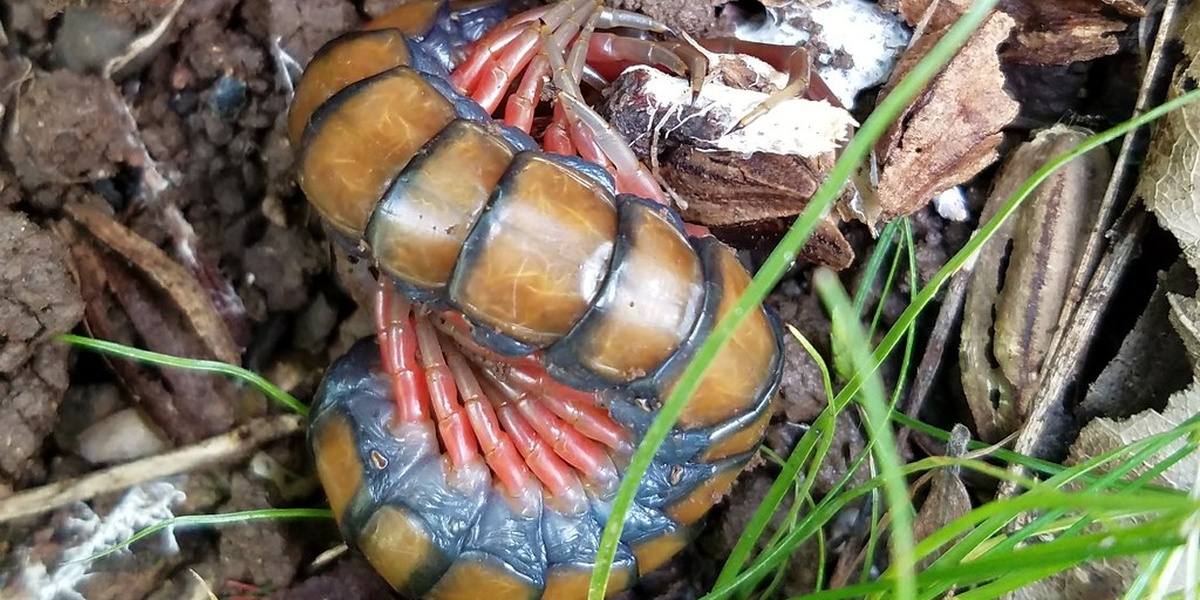
Ethmostigmus rubripes is a conspicuous large centipede found across northern Australia and nearby islands. Adults often exceed 15 cm, and some Queensland museum specimens show striking orange or reddish color phases that make them easy to notice in the field.
It lives in rainforest and savanna leaf litter and under logs, where it preys on insects and other invertebrates. Naturalist records link its presence to healthy leaf‑litter communities; sightings around homes are usually brief and defensive rather than aggressive.
Australian museum and field‑guide notes document both its ecological role and occasional interactions with pets or curious people. If you find one outdoors, it’s best left undisturbed; handling provokes a defensive posture and a painful nip in some cases.
Common Garden and Household Species
Species encountered in homes and gardens are often overlooked allies, consuming insects that people consider pests. They tend to be smaller or more agile than tropical giants and are usually non‑aggressive; learning a few ID points helps distinguish harmless visitors from medically notable species and reduces unnecessary worry.
4. House Centipede (Scutigera coleoptrata)
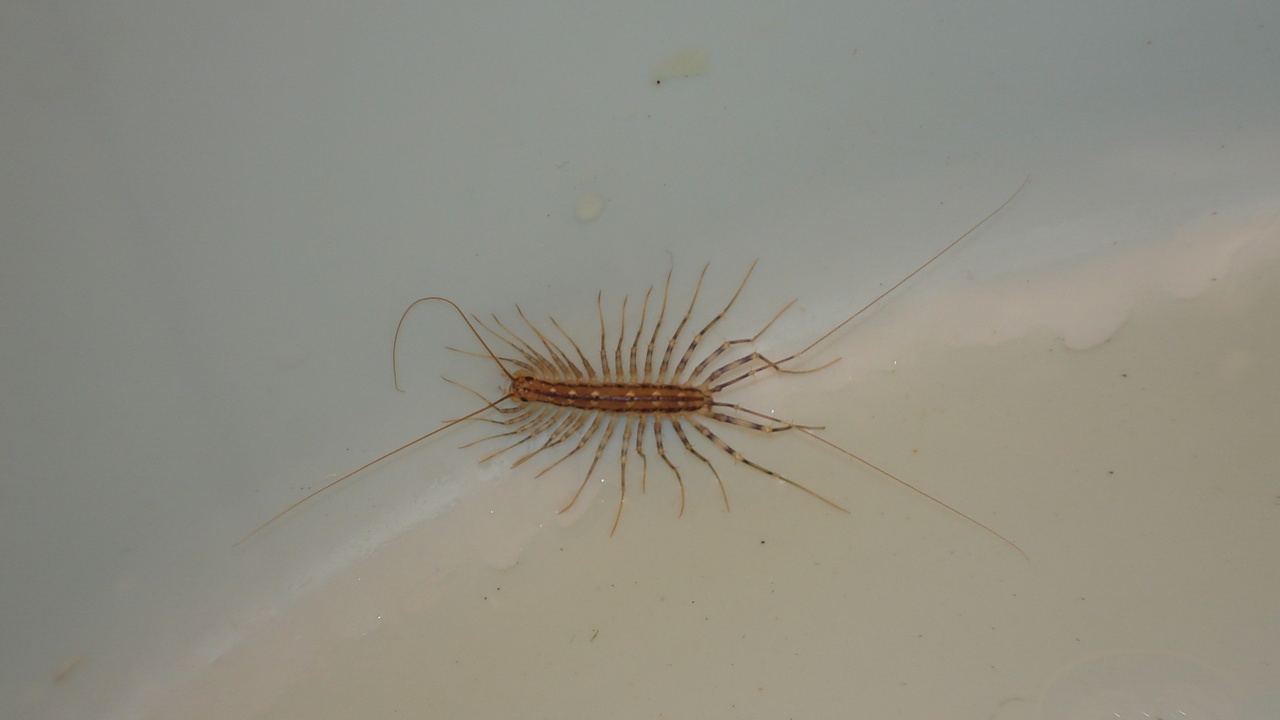
Scutigera coleoptrata is the centipede most commonly seen indoors in many parts of the world. The body is only about 2–3 cm long, but the legs are very long and give a spidery appearance; it runs fast and hunts nocturnally.
Many centipede species are excellent household predators, and S. coleoptrata does an especially good job on cockroaches, flies, silverfish, and other small arthropods. Urban pest‑control guides often list it as a beneficial occupant rather than a pest.
Bites are rare and typically produce minor, short‑lived pain. Identification tips include an elongate body with 15 pairs of long legs and long antennae; sightings are common in basements, bathrooms, and behind furniture in Europe and North America.
5. Garden Centipede (Cryptops hortensis)
Cryptops hortensis is a small, common centipede in temperate gardens. It reaches roughly 2–3 cm, prefers moist microhabitats under stones or in compost, and feeds on small soil arthropods and insect larvae.
Gardeners often encounter it when turning compost or lifting stones; horticulture extension offices note that these centipedes help reduce pest larvae and are rarely a threat to people. They move and behave quietly, making them easy to overlook despite being common.
6. Stone Centipede (Lithobius forficatus)
Lithobius forficatus is a widespread, medium‑sized species frequently found under stones and logs across Europe and in introduced populations elsewhere. Typical length is 1–3 cm with a robust, flattened body and 15 pairs of legs.
Field guides and citizen‑science records show it plays a steady role in leaf‑litter predation and nutrient cycling. Spotting them in a yard often indicates a healthy micro‑ecosystem; they rarely bite people and are best appreciated for their quiet work in the soil.
Soil, Bark, and Burrowing Specialists
Cryptic centipedes living in soil, bark crevices, and beneath leaf litter often have many more leg pairs and bodies adapted for slipping through narrow spaces. They are important predators of soil pests and contribute directly to decomposition and nutrient turnover in forests and gardens.
7. European Soil Centipede (Geophilus carpophagus)
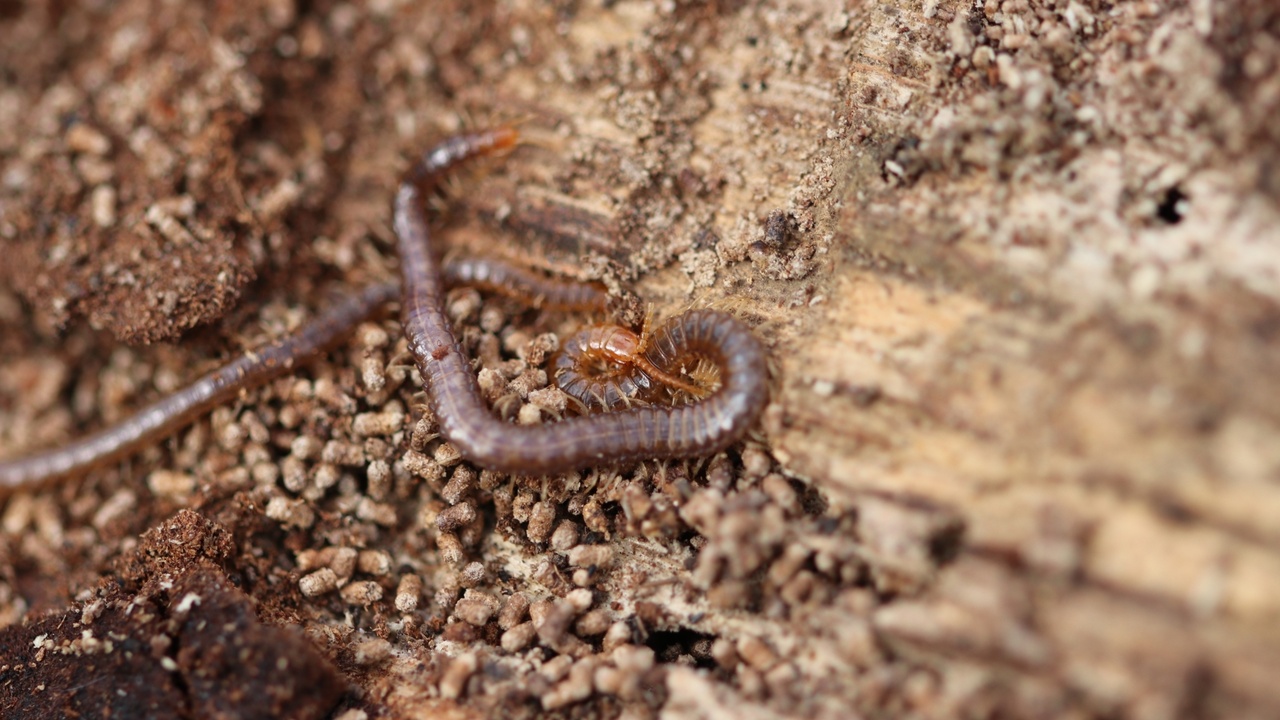
Geophilus carpophagus is a long, thin soil centipede common in Europe. It often has more than 40 pairs of legs and measures several centimeters in length, making it well suited for life in moist soil and under garden debris.
Soil fauna surveys regularly record Geophilus among the abundant micro‑predators in garden soils. Its diet consists of small soil invertebrates such as springtails and larvae, and it helps keep those populations in check while aiding decomposition processes.
8. Common Cave or Troglophile Centipede (Thereuopoda longicornis)
Thereuopoda longicornis and related long‑legged species turn up in humid, sheltered microhabitats — caves, rock overhangs, and moist forest floors in Southeast Asia. Their long legs and rapid running suit them to open, humid spaces where quick pursuit matters.
Cave and forest surveys have recorded them as regular components of subterranean and near‑subterranean food webs. Their strong antennae and speed help locate prey in low‑light conditions, and cave fauna studies often cite them among common predatory invertebrates.
9. Tropical Lithobiid and Geophilomorph Mix (Representative species)
Tropical forests host a large number of small lithobiid and geophilomorph centipedes that are abundant in leaf‑litter samples but often poorly known taxonomically. Many of these species are described only from a handful of museum specimens, while others remain undescribed.
Leaf‑litter biodiversity studies can turn up dozens of centipede specimens per sample, underscoring how important these small predators are for controlling insect larvae and other invertebrates. Tropical collections in natural history museums frequently note that further taxonomic work is needed to fully document this diversity.
Notable Regional and Niche Species
Some centipedes stand out because of striking coloration, cultural associations, or unusual habits. Regional species often appear in local field guides and extension notes, and they can help raise awareness of habitat health and biodiversity at a neighborhood scale.
10. Texas Redheaded Centipede (Scolopendra heros)
Scolopendra heros is a visually striking North American species noted for a bright red or orange head set against a darker body. Adults typically reach about 10–15 cm and occur from the southern United States into Mexico.
Texas field guides and extension office notes report frequent garden sightings, especially in warm, shaded yards with ample cover. The species adopts a defensive posture when handled, and bites can be painful but are rarely medically serious.
Regional attention to S. heros helps people learn local natural history and encourages simple coexistence practices, like keeping firewood and debris away from house foundations and checking gloves before gardening in known habitat areas.
Summary
- Centipedes range from tiny soil specialists to giants approaching 30 cm; they can have from 15 to 191 pairs of legs and about 8,000 described species globally.
- These predators matter: large Scolopendra influence small vertebrate prey, while many smaller species control pest larvae and contribute to nutrient cycling in soil and leaf litter.
- For safe coexistence, identify visitors (look at size, leg length, and habitat), avoid handling unfamiliar large species, and relocate small garden centipedes gently if needed; remember many centipede species help keep pests in check.
- Support invertebrate‑friendly gardening: leave some log and leaf cover for soil health, use exclusion around foundations, and participate in local night or leaf‑litter surveys to learn more about neighborhood biodiversity.