
In the 1970s Jane Goodall documented brutal intergroup violence among chimpanzees at Gombe, while contemporaneous fieldwork in the Congo revealed bonobos living in markedly more peaceful, female-led communities. Those juxtaposed field notes—Gombe research ongoing since the 1960s and de Waal’s Wamba observations beginning in the 1970s—helped spark a decades-long effort to understand why two closely related apes behave so differently. Comparing chimpanzees vs bonobos sheds light on human evolution, frames targeted conservation priorities, and refines theories of social behavior because small differences in ecology or social bonding can cascade into very different group outcomes.
Genetically close but behaviorally distinct, chimpanzees and bonobos differ across social structure, conflict and sexual behavior, tool use, ecology, cognition, and conservation — here are eight clear differences that matter for science and conservation.
Social systems and dominance

The two Pan species both live in flexible, fission–fusion societies, but the shape and drivers of their social lives diverge in important ways. Fieldwork at Gombe and Taï for chimpanzees and at Wamba and the Luo Scientific Reserve for bonobos reveals contrasting leadership styles, coalition patterns, and the social leverage of females versus males.
Those differences influence mating access, who leads group movements, and how managers design conservation interventions for populations that may number very differently across sites.
1. Dominance and leadership styles differ
Chimpanzees tend to have male-dominant, linear hierarchies where high-ranking males form coalitions to secure status and mating opportunities. Long-term observations at Gombe—begun by Jane Goodall in 1960—document repeated rank challenges, coalition formation, and male patrols that enforce territorial boundaries.
Bonobos, by contrast, show strong female coalitions and greater female influence over group choices. Frans de Waal’s work at Wamba highlighted how allied females can check male aggression and steer access to resources, producing a more female-centered social order in many groups.
2. Group size and cohesion
Both species exhibit fission–fusion dynamics—subgroups split and recombine across days—but typical community sizes and territorial behavior differ. Chimpanzee communities often range from about 20 to 150 individuals depending on site; many East and West African sites report communities of 30–100 individuals.
Bonobo communities are usually smaller or more fluid in party composition, with frequent mixing between subgroups observed at sites in the Democratic Republic of Congo. That higher inter-party tolerance affects disease transmission, gene flow, and the likelihood of human–ape encounters near villages.
3. Grooming, alliances, and social bonding
Grooming is crucial for both species, but its social function differs. In chimpanzees, grooming commonly cements male alliances and helps maintain rank; Taï and Gombe studies record grooming concentrated among coalition partners.
In bonobos grooming spreads more evenly and often reinforces female–female bonds that limit aggression. Those bonding patterns affect infant care, coalition formation, and how quickly groups recover after disputes.
Sexual behavior, conflict, and peacemaking
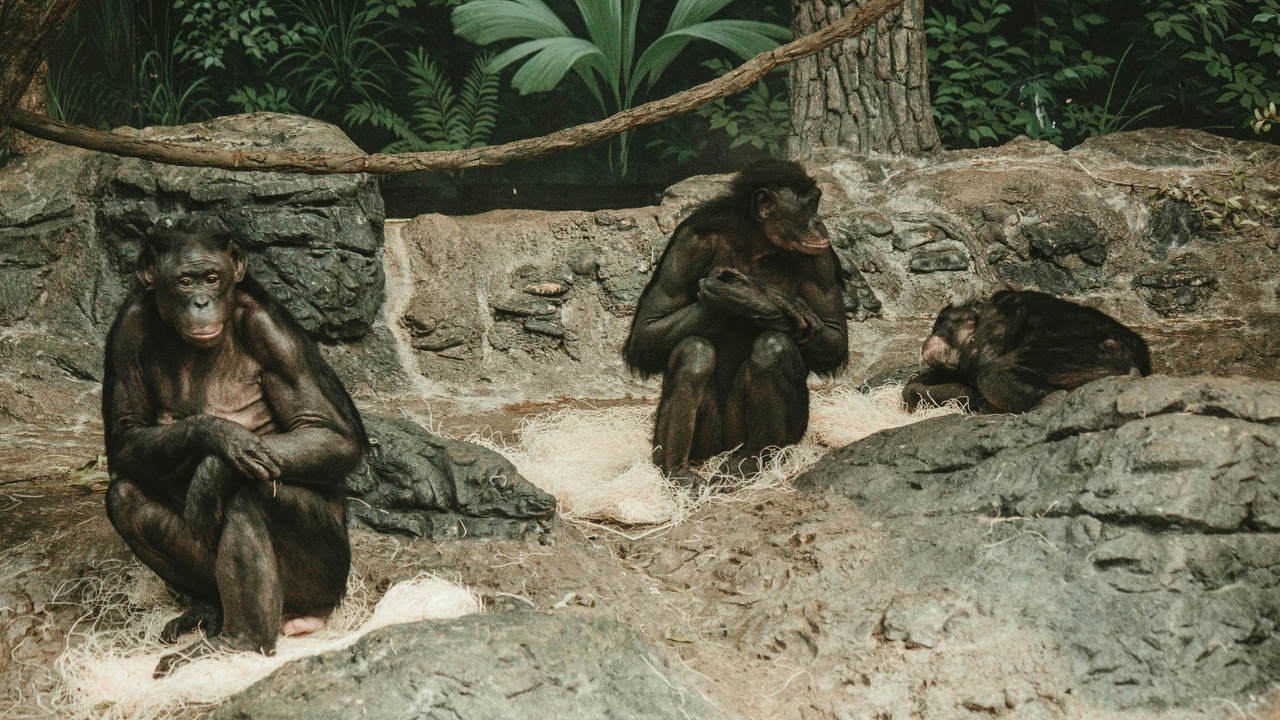
Sex and aggression play very different roles in the social repertoires of the two Pan species. Bonobos use sociosexual behavior broadly—between sexes and within age classes—as a social tool for greeting, reconciliation, and tension reduction. Chimpanzees rely more on coalitionary aggression, coordinated patrols, and, at times, lethal intergroup violence.
Those behavioral strategies are tightly linked to dominance structures, resource distribution, and reproductive skew in each species, and they have been central to evolutionary debates about human social evolution.
4. Sociosexual behavior as social tool (common in bonobos)
Bonobos routinely use sexual contact—male–female, female–female (including genital–genital rubbing, “GG rubbing”), and juvenile play-sex—as a social currency. Frans de Waal’s Wamba field notes describe frequent post-conflict sexual contacts and high rates of affiliative sex across adult pairs.
These behaviors ease immediate tension, reduce escalations, and reconfigure social bonds quickly. The result is lower short-term aggression and a distinctive pattern of mate access compared with chimpanzees.
5. Aggression and lethal violence (more frequent in chimpanzees)
Chimpanzees display coordinated territorial patrols and documented lethal intergroup aggression at multiple long-term sites. A widely cited episode at Gombe between 1974 and 1978 involved a community split and a string of lethal attacks that reshaped local demography.
Researchers at Taï National Park and other sites have recorded coordinated hunts, patrols, and coalitionary killings as recurring features of male strategy—behaviors linked to resource defense and reproductive advantage.
6. Reconciliation and conflict management differ
Both species use reconciliation—grooming, play, proximity—but the modes differ. Bonobos favor sexual and affiliative reconciliation that often restores tolerance within minutes. Chimpanzees reconcile via grooming and affiliation too, yet persistent hostility and revenge-like dynamics occur more often in some populations.
Measured post-conflict affiliation rates vary by site; where data exist, bonobos show higher immediate affiliative responses, which translates into different patterns of infant safety and coalitionary cooperation.
Ecology, cognition, and physical differences
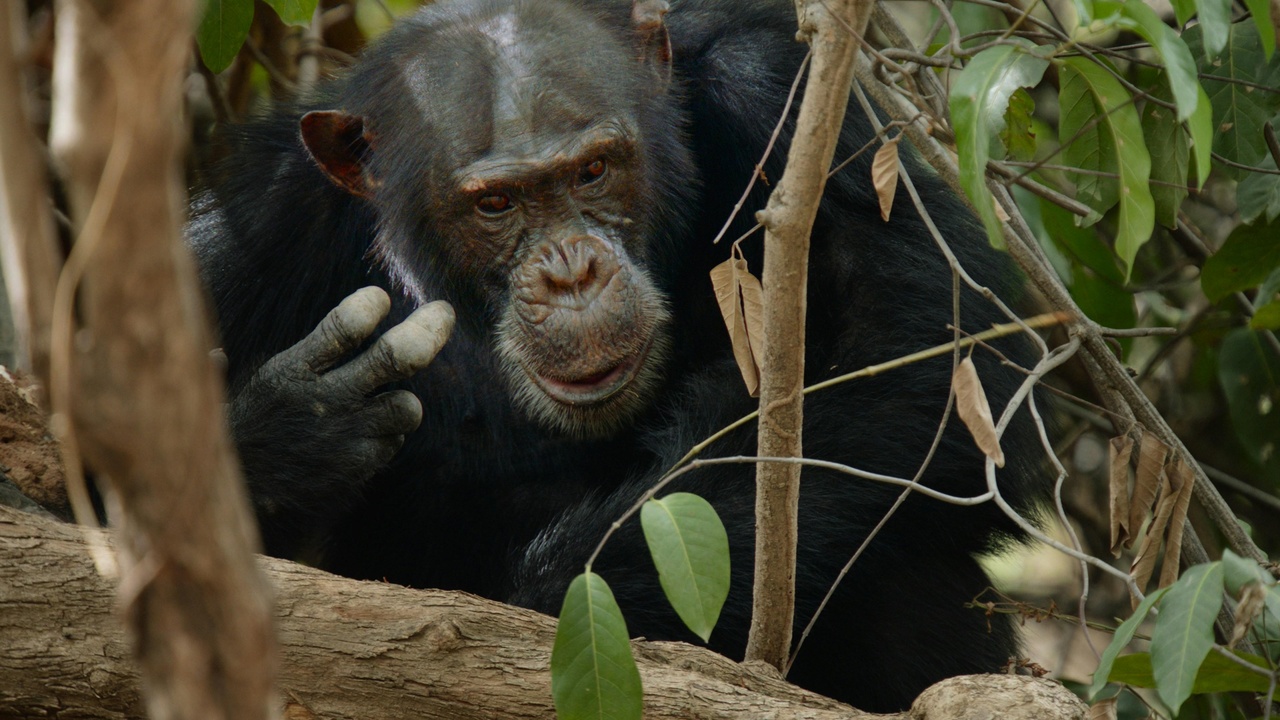
Diet, tool culture, morphology, vocal repertoires, genetics, and conservation status all show both overlap and divergence. The two Pan species split roughly 1–2 million years ago, whereas the human lineage diverged from Pan about 6–7 million years ago. Population estimates emphasize the conservation contrast: common chimpanzee counts are roughly estimated at 170,000–300,000 individuals across Africa, while bonobos are thought to number under 20,000.
Those numbers matter: a restricted range and small population make bonobos especially vulnerable to habitat loss, hunting, and political instability in the Democratic Republic of Congo.
7. Tool use and foraging traditions
Wild chimpanzees show rich, well-documented tool traditions—termite fishing with twig probes, stone-anvil nut-cracking at Bossou, and tool-assisted hunting at Taï. These behaviors vary by site and are considered cultural traditions transmitted across generations.
Wild bonobos display fewer habitual tool traditions, though captive bonobos readily learn tool tasks. That difference suggests ecology and opportunity, as much as cognitive capacity, shape cultural expression; chimp tool repertoires have been key case studies for cultural transmission in primates.
8. Habitat, morphology, genetics, and conservation status
Geographically, chimpanzees occupy a broad swath of West, Central, and East Africa; bonobos are restricted to the Congo Basin south of the Congo River in the DRC. Morphologically, bonobos are generally more gracile with relatively longer legs, narrower chests, and frequently pinker lips and darker faces; sexual dimorphism is somewhat reduced compared with many chimp populations.
Genetically they’re close—Pan troglodytes and Pan paniscus split an estimated 1–2 million years ago—but ecological histories diverged. Both species are listed as endangered by the IUCN; threats include habitat loss, bushmeat hunting, and disease. Conservation organizations such as the Jane Goodall Institute and the Max Planck Institute for Evolutionary Anthropology support research and protection efforts focused on site-specific needs.
Summary
Below are the key takeaways that synthesize the most important differences and their implications for research and conservation.
- Social structure: chimpanzees tend toward male-dominant, coalitionary hierarchies (Gombe and Taï records since the 1960s), while bonobos often show female-centered alliances and higher inter-party tolerance.
- Conflict and peacemaking: bonobos use sociosexual behavior widely to reduce tension; chimpanzees exhibit more coordinated territorial aggression (notably the Gombe episodes of 1974–1978).
- Cultural and cognitive markers: chimpanzees have richer wild tool traditions (Bossou, Taï), whereas wild bonobo tool use is rarer despite demonstrated learning in captivity.
- Ecology and conservation: Pan species split ~1–2 million years ago; chimpanzees number in the low hundreds of thousands across Africa, bonobos likely under 20,000 and confined to the DRC—making targeted conservation urgent.
- Research and action: understanding these differences (chimp vs bonobo sociality and ecology) refines hypotheses about human evolution and guides conservation priorities—support reputable groups like IUCN, the Jane Goodall Institute, and university research programs through donations, advocacy, or following field updates.