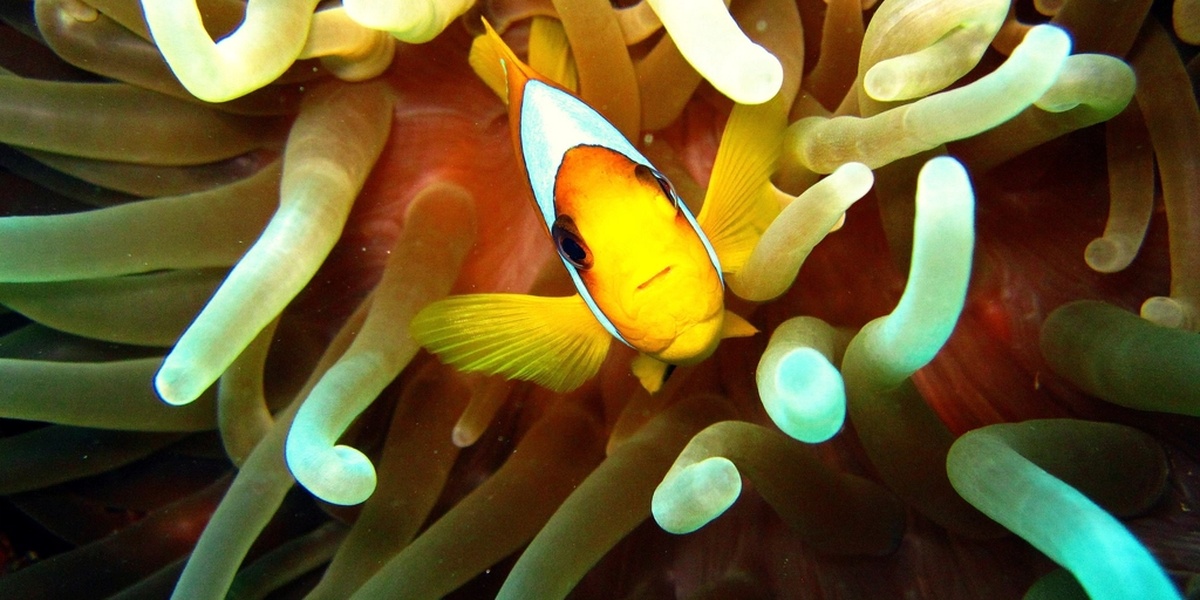
Coral reefs are underwater cities where hundreds of species share reef slopes, crevices and coral heads. From shallow lagoons to steep drop-offs, these environments support fish, invertebrates and other animals that shape reef communities and local fisheries.
There are 66 coral reef animals, ranging from Anemone (Bubble-tip) to Yellow tang. For each entry you’ll find below the Scientific name, Habitat/Range, and Size (cm) so you can quickly compare distribution and typical dimensions as you browse the list.
How can I use the list to narrow down an unknown reef animal I saw while snorkeling?
Start by noting size and habitat (reef crest, lagoon, or depth) and then scan the Scientific name and Habitat/Range columns for likely matches; size helps rule out similar-looking species. Use the list alongside photos or a regional field guide for confirmation, since coloration and behavior can vary.
Which of these species are commonly kept in home aquariums and what should I consider?
Some, like Yellow tang and certain anemones, appear in the aquarium trade, but they need specific tank sizes, water quality and compatible tankmates; others are protected or difficult to care for. Always check local regulations and choose sustainably sourced specimens with proper husbandry information.
Coral Reef Animals
| Name | Scientific name | Habitat/Range | Size (cm) |
|---|---|---|---|
| Clownfish | Amphiprion ocellaris | Shallow reef lagoons and anemone patches, Indo‑Pacific | 11 |
| Blue tang | Paracanthurus hepatus | Outer reef slopes and lagoons, Indo‑Pacific | 30 |
| Stoplight parrotfish | Sparisoma viride | Reef crests and fore reefs, Caribbean | 50 |
| Butterflyfish | Chaetodon auriga | Inner and outer reefs, Indo‑Pacific | 22 |
| Regal angelfish | Pygoplites diacanthus | Reef lagoons and slopes, Indo‑Pacific | 25 |
| Yellow tang | Zebrasoma flavescens | Reef flats and slopes, central Pacific (Hawaii) | 20 |
| Cleaner wrasse | Labroides dimidiatus | Cleaning stations on reef slopes and flats, Indo‑Pacific | 10 |
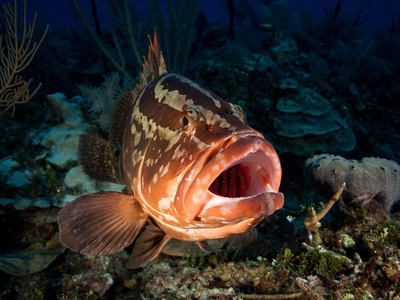
| Nassau grouper | Epinephelus striatus | Reef ledges and caves, Caribbean | 120 |
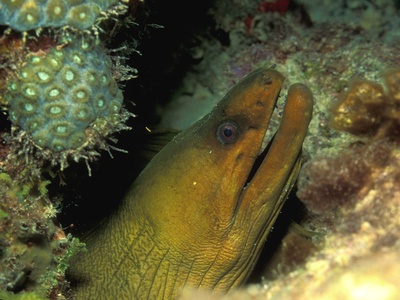
| Green moray | Gymnothorax funebris | Crest, reef flats, and crevices, Western Atlantic | 200 |
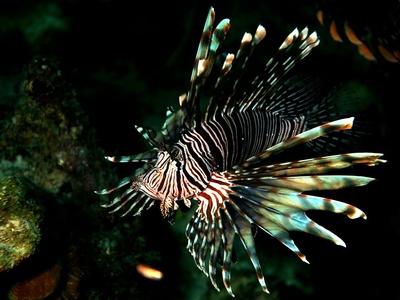
| Lionfish | Pterois volitans | Reef slopes and wrecks, Indo‑Pacific (invasive in Atlantic) | 38 |
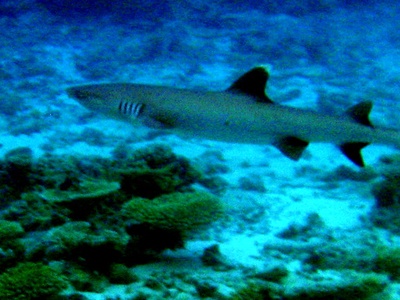
| Whitetip reef shark | Triaenodon obesus | Reef slopes and drop-offs, Indo‑Pacific | 170 |
| Blacktip reef shark | Carcharhinus melanopterus | Shallow reef flats and lagoons, Indo‑Pacific | 150 |
| Humphead wrasse (Napoleon) | Cheilinus undulatus | Fore reef and coral heads, Indo‑Pacific | 200 |
| Titan triggerfish | Balistoides viridescens | Reef flats and seaward reefs, Indo‑Pacific | 75 |
| Parrotfish | Scarus frenatus | Reef crests and slopes, Indo‑Pacific | 35 |
| Gobies (Cleaner goby) | Elacatinus oceanops | Reef crests and coral heads, Western Atlantic (Caribbean) | 6 |
| Longnose hawkfish | Oxycirrhites typus | Gorgonians and black coral on reef slopes, Indo‑Pacific | 15 |
| Squirrelfish | Holocentrus rufus | Reef crests, caves and night-active, Caribbean | 40 |
| Cardinalfish (Banggai) | Pterapogon kauderni | Seagrass edges and shallow reef patches, Banggai Islands | 8 |
| Moray eel (Giant moray) | Gymnothorax javanicus | Reef lagoons and crevices, Indo‑Pacific | 300 |
| Coral grouper | Plectropomus leopardus | Reef slopes and coral patches, Indo‑Pacific | 80 |
| Banded coral shrimp | Stenopus hispidus | Crevices and cleaning stations, Indo‑Pacific and Atlantic | 6 |
| Staghorn coral | Acropora cervicornis | Shallow reef flats and fore reefs, Caribbean and western Atlantic | 120 |
| Elkhorn coral | Acropora palmata | High-energy reef crests and shallow fore reefs, Caribbean | 200 |
| Brain coral | Diploria labyrinthiformis | Reef fronts and lagoons, Western Atlantic | 100 |
| Boulder star coral | Orbicella annularis | Fore reef and reef crest, Caribbean | 120 |
| Porites lobe coral | Porites lobata | Reef slopes and protected lagoons, Indo‑Pacific | 100 |
| Pillar coral | Dendrogyra cylindrus | Reef slopes and fore reef, Western Atlantic | 150 |
| Cauliflower coral | Pocillopora damicornis | Shallow reef flats and bommies, Indo‑Pacific | 30 |
| Mushroom coral | Fungia scutaria | Reef flats and sand patches, Indo‑Pacific | 20 |
| Sea fan (Gorgonian) | Gorgonia ventalina | Fore reef and back reef, Caribbean | 100 |
| Sun coral (Cup coral) | Tubastraea coccinea | Shaded crevices, Indo‑Pacific (invasive in some regions) | 6 |
| Fire coral | Millepora alcicornis | Reef crest and shallow slopes, Caribbean | 50 |
| Crown-of-thorns starfish | Acanthaster planci | Reef slopes and seaward reefs, Indo‑Pacific | 80 |
| Long-spined sea urchin | Diadema setosum | Reef flats, crevices and rubble, Indo‑Pacific | 20 |
| Blue sea star | Linckia laevigata | Reef flats and rubble, Indo‑Pacific | 25 |
| Chocolate chip sea star | Protoreaster nodosus | Shallow reef flats and seagrass edges, Indo‑Pacific | 30 |
| Feather star | Comaster nobilis | Deep reef slopes and gorgonians, Indo‑Pacific | 30 |
| Sea cucumber (Black) | Holothuria atra | Sand patches and reef flats, Indo‑Pacific | 40 |
| Giant clam | Tridacna gigas | Shallow reef flats and lagoons, Indo‑Pacific | 120 |
| Fluted giant clam | Tridacna squamosa | Reef flats and coral heads, Indo‑Pacific | 60 |
| Queen conch | Lobatus gigas | Seagrass beds and sandy reef edges, Caribbean | 30 |
| Cone snail (Geography cone) | Conus geographus | Sandy patches near reef and rubble, Indo‑Pacific | 10 |
| Spanish dancer (nudibranch) | Hexabranchus sanguineus | Coral rubble and sponge-rich reef areas, Indo‑Pacific | 40 |
| Tiger cowrie | Cypraea tigris | Coral rubble and under overhangs, Indo‑Pacific | 13 |
| Day octopus | Octopus cyanea | Reef flats, crevices and coral slopes, Indo‑Pacific | 100 |
| Chromodoris nudibranch | Chromodoris willani | Sponge-rich reef slopes, Indo‑Pacific | 5 |
| Cleaner shrimp | Lysmata amboinensis | Cleaning stations on reef crests and bommies, Indo‑Pacific | 5 |
| Peacock mantis shrimp | Odontodactylus scyllarus | Reef rubble and crevices, Indo‑Pacific | 30 |
| Caribbean spiny lobster | Panulirus argus | Reef ledges, rubble and caves, Western Atlantic | 75 |
| Hermit crab (Large) | Dardanus megistos | Shallow reefs and coral rubble, Indo‑Pacific | 20 |
| Porcelain crab | Neopetrolisthes maculatus | Within anemones and coral crevices, Indo‑Pacific | 2 |
| Spiny lobster cleaner (Boxer) shrimp | Stenopus hispidus | Crevices and cleaning stations, global tropical reefs | 6 |
| Giant barrel sponge | Xestospongia muta | Reef slopes and channels, Caribbean | 2,500 |
| Purple tube sponge | Aplysina archeri | Shallow reef walls and crevices, Caribbean | 60 |
| Boring sponge | Cliona delitrix | Encrusting on coral skeletons, Caribbean | 5 |
| Christmas tree worm | Spirobranchus giganteus | Embedded in massive corals on reef flats and slopes, global tropics | 2 |
| Hawksbill turtle | Eretmochelys imbricata | Coral reef edges and crevices, tropical oceans worldwide | 90 |
| Green turtle | Chelonia mydas | Seagrass beds and reef margins, tropical and subtropical seas | 100 |
| Spotted eagle ray | Aetobatus narinari | Shallow reef flats and channels, global tropics | 240 |
| Hawkfish (Longnose) | Oxycirrhites typus | Perches on gorgonians and coral outcrops, Indo‑Pacific | 10 |
| Brittle star (Serpent) | Ophiocoma echinata | Under coral ledges and reef rubble, Caribbean | 15 |
| Reef stonefish | Synanceia verrucosa | Reef flats and rubble, Indo‑Pacific | 35 |
| Anemone (Bubble-tip) | Entacmaea quadricolor | Shallow reef slopes and lagoons attached to substrate, Indo‑Pacific | 75 |
| Anemone (Magnificent) | Heteractis magnifica | Outer reef slopes and lagoons, Indo‑Pacific | 120 |
| Mantlefish (Filefish) | Aluterus schoepfii | Seagrass and reef margins, Western Atlantic | 90 |
Images and Descriptions
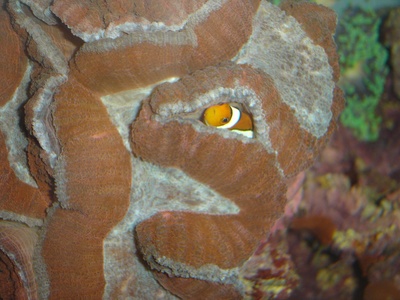
Clownfish
Bright orange with white bands, lives in symbiosis with sea anemones. Easy to ID by its bold stripes and anemone home, omnivorous diet of plankton and algae, popular species for learning reef mutualisms.
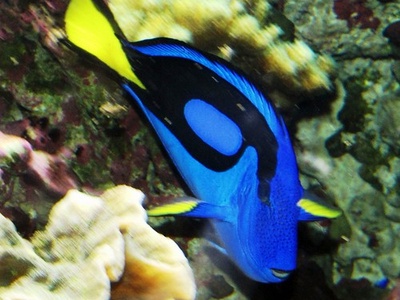
Blue tang
Flat, bright blue body with black palette-shaped mark and yellow tail. Grazes on algae, important for reef health; shy schooling fish often seen near coral heads and cleaning stations.
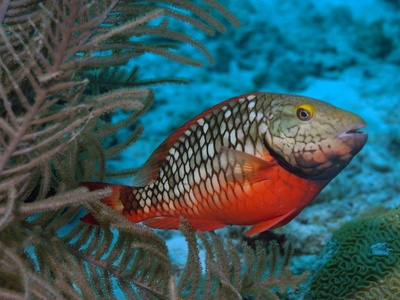
Stoplight parrotfish
Greenish to reddish with a distinctive red throat patch in adults; strong beaklike teeth for scraping algae and bioeroding coral. Important reef herbivore that helps control algal growth and create sand.
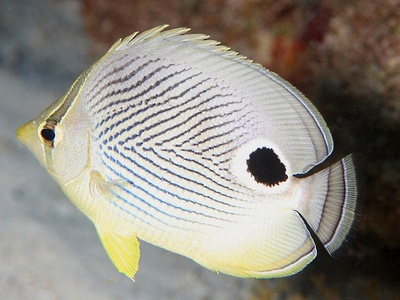
Butterflyfish
White body with diagonal black bands and distinctive eye stripe; often seen singly or in pairs feeding on coral polyps and small invertebrates. Good indicator of coral diversity due to coral-specialist diets.
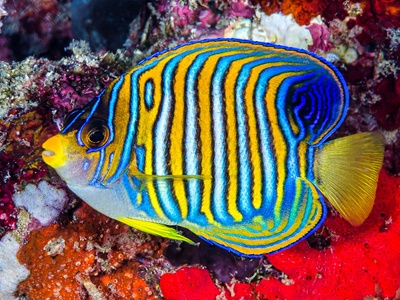
Regal angelfish
Striking vertical orange, blue and white stripes with high dorsal fin. Shy reef dweller that nibbles sponges and tunicates; look for it among crevices and complex coral formations.
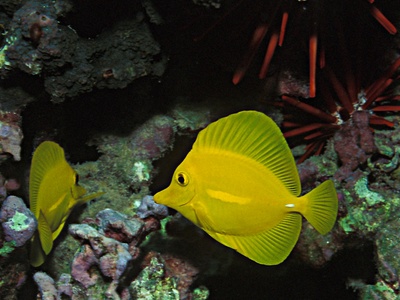
Yellow tang
Solid bright yellow surgeonfish with oval body and a scalpel-like spine near tail. Active algal grazer common on Hawaiian reefs; bold color makes it easy to spot in schools.
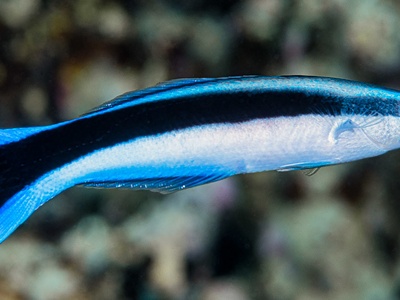
Cleaner wrasse
Thin black‑and‑white fish that sets up cleaning stations to remove parasites from larger fish. Watch for clients holding still—an iconic mutualism and great ID by behavior.
Nassau grouper
Large mottled brown grouper with thick body and large mouth. Ambush predator feeding on fish and crustaceans, forms seasonal spawning aggregations that are vulnerable to overfishing.
Green moray
Large greenish moray eel with long, serpentine body and sharp teeth. Secretive crevice-dweller at night, ambush predator that feeds on fish and crustaceans; often seen with only head protruding from holes.
Lionfish
Distinctive with long venomous fin rays and zebra-like stripes. Ambush predator that eats small fishes and crustaceans; invasive populations on Atlantic reefs have major impacts on native communities.
Whitetip reef shark
Slender gray shark with white-tipped dorsal fins. Nocturnal hunter that rests in caves by day, feeds on reef fishes and octopus; commonly seen around reef ledges at night.
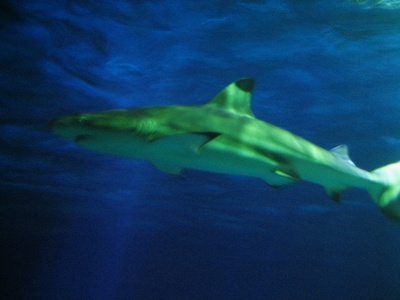
Blacktip reef shark
Medium-sized shark with distinctive black-tipped fins. Often patrols shallow reefs; feeds on bony fishes and cephalopods, approachable by divers in shallow water.
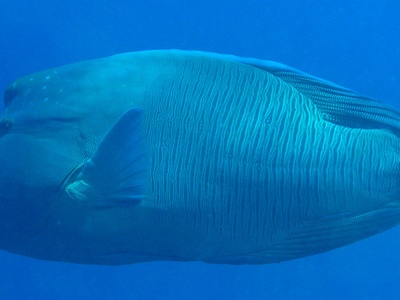
Humphead wrasse (Napoleon)
Large, colorful wrasse with pronounced forehead bump in adults. Feeds on hard-shelled prey like mollusks and crown-of-thorns; long-lived and endangered due to slow reproduction and overfishing.
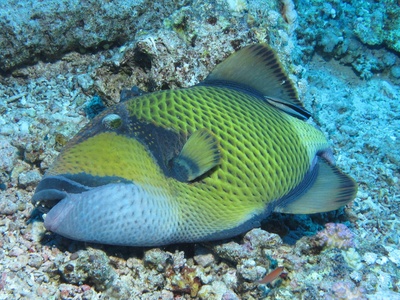
Titan triggerfish
Robust, colorful triggerfish with strong jaws; guards nests aggressively and may charge divers. Eats urchins, mollusks, and coral; ID by large size, square body, and bold markings.
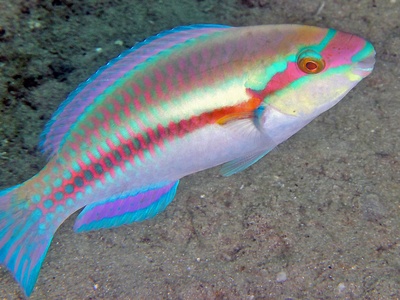
Parrotfish
Vividly colored, fused teeth form a beak for scraping algae and eroding dead coral into sand. Often seen grazing in groups; sexual color changes can complicate ID.
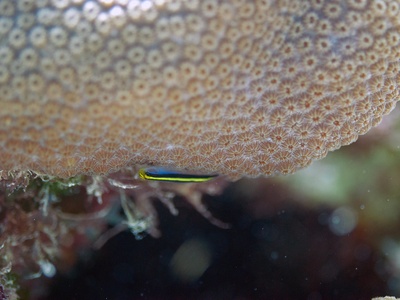
Gobies (Cleaner goby)
Tiny, slender goby often found at cleaning stations on reef; bright blue stripe on body. Cleans parasites from client fish; watch for perched behavior on coral branches.
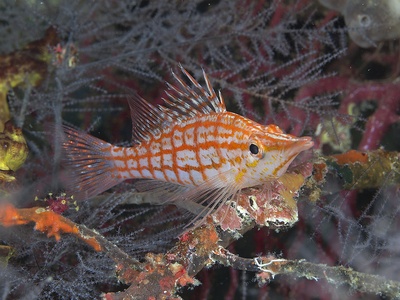
Longnose hawkfish
Small, red-and-white patterned fish perching on sea fans and gorgonians. Distinctive elongated snout for picking small crustaceans from crevices; often seen singly or in pairs.
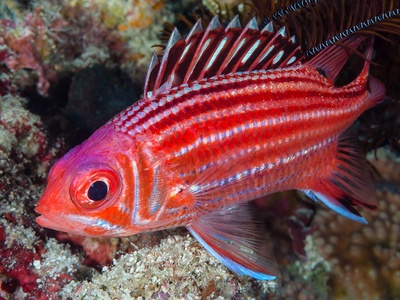
Squirrelfish
Red, big-eyed nocturnal fish that shelters in crevices by day. Feeds on shrimp and small fishes at night; large eyes and spiny fins are good ID features.
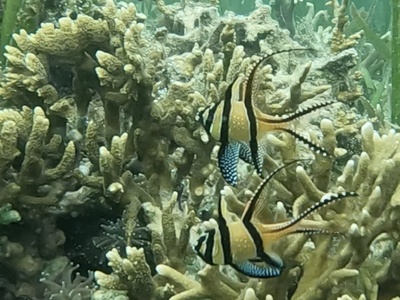
Cardinalfish (Banggai)
Small, silver fish with black vertical bars and long fins. Mouthbrooder male carries eggs; now endangered and famous among aquarium hobbyists for unique reproductive behavior.
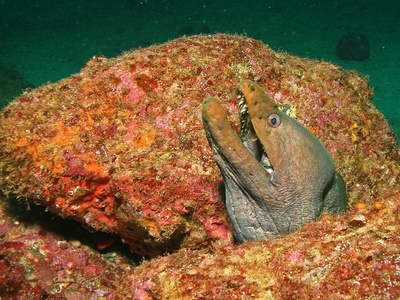
Moray eel (Giant moray)
One of the largest morays with mottled brown pattern and powerful jaws. Nighttime predator that ambushes fish and octopus; often seen peeking from coral holes.
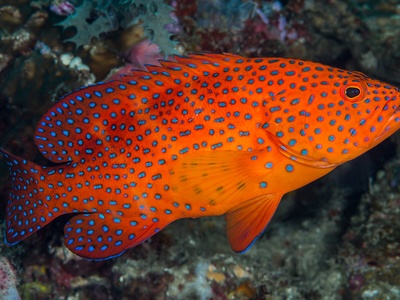
Coral grouper
Spotted red grouper common on reefs, ambush predator of fishes and crustaceans. Bold red spots and streamlined body make it a familiar sight near bommies and ledges.
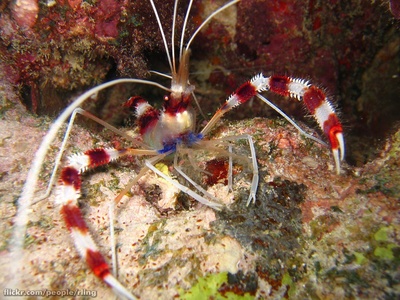
Banded coral shrimp
Red-and-white striped shrimp with long white antennae and pincers. Acts as cleaner shrimp, picking parasites off fishes; highly visible at cleaning stations.
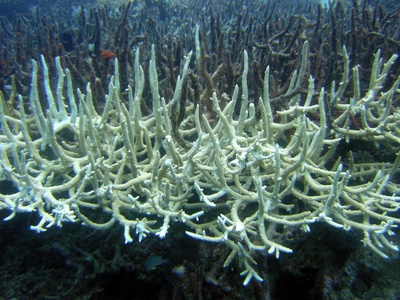
Staghorn coral
Fast-growing branching coral forming thickets that provide habitat complexity. Thin, cylindrical branches and small corallites are ID features; critically important reef builder now threatened by disease and bleaching.
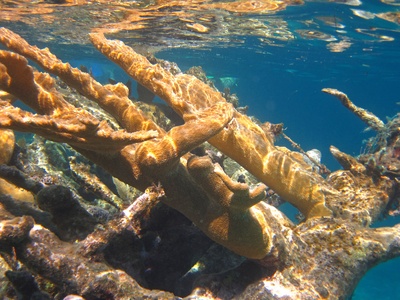
Elkhorn coral
Large, flattened branching coral resembling elk antlers. Major reef framework builder in Caribbean; thick branches resist waves but have declined sharply from disease and warming.
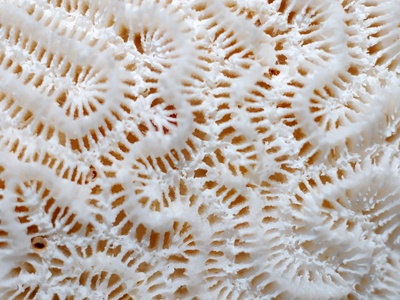
Brain coral
Massive, domed coral with grooved, maze-like surface resembling a brain. Slow-growing reef builder that hosts many invertebrates; identifiable by winding valleys and rounded form.
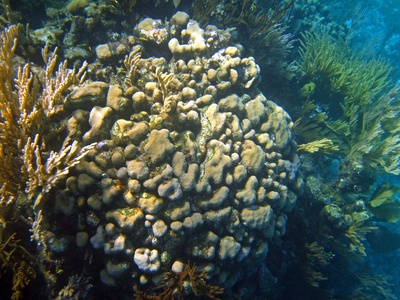
Boulder star coral
Massive, knobbly colonies forming dense reef framework. Variable color with small corallites; important habitat provider that responds slowly to disturbance.
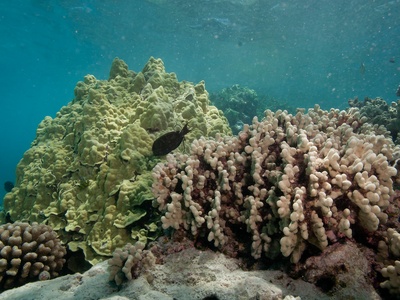
Porites lobe coral
Forms massive boulders or thin plates; small polyps and smooth surface distinguish it. Hardy and long-lived, often dominates degraded reef areas and supports reef community structure.
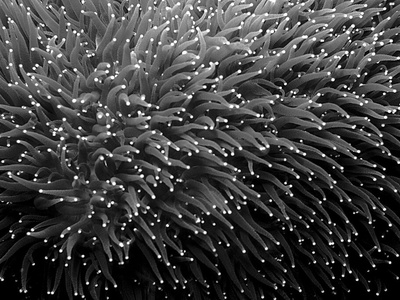
Pillar coral
Colonies of tall, cylindrical pillars with polyps extended at night. Unique columnar growth and pronounced nocturnal feeding on plankton make it distinctive on Caribbean reefs.
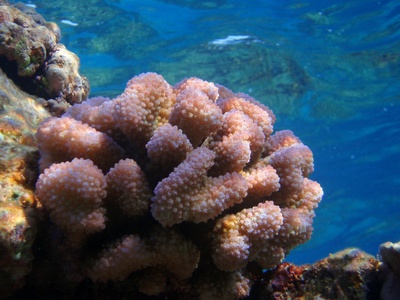
Cauliflower coral
Bushy, knobbly branching coral common on disturbed reefs. Small polyps and rapid growth rate; often first to recolonize after damage, useful ID by compact branch tips.

Mushroom coral
Solitary, free-living disk coral that lies on sand with radiating septa. Often seen detached from reef, feeds on plankton at night and aids sandy habitat diversity.
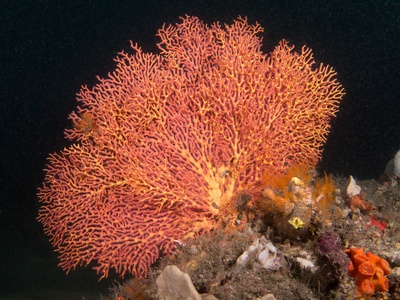
Sea fan (Gorgonian)
Flat, lace-like fan of purple or orange branches anchored to reef. Filter-feeding cnidarian that orients perpendicular to currents; provides habitat for shrimps and brittle stars.
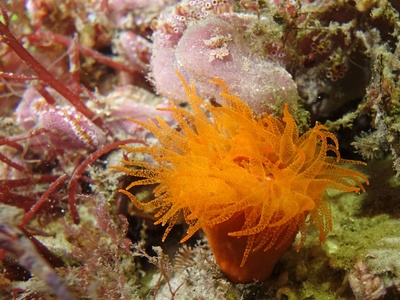
Sun coral (Cup coral)
Orange colonial coral with extended yellow polyps at night. Non-photosynthetic, captures plankton; often found in shaded reef spots and sometimes invasive outside native range.
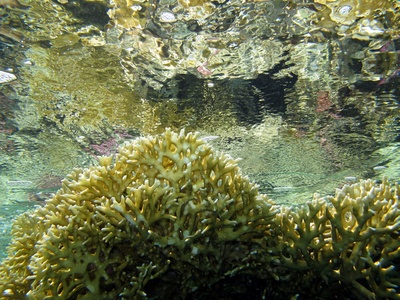
Fire coral
Hydrocoral with branching or plate forms; delivers painful sting on contact. Golden-yellow and encrusting varieties common; contributes to reef structure while deterring predators.
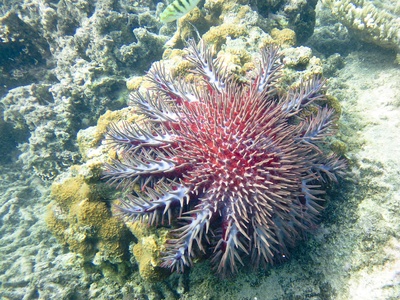
Crown-of-thorns starfish
Large, spiny starfish that preys on coral polyps and can cause major reef damage during outbreaks. Identified by multiple arms and venomous spines; key species affecting coral cover.
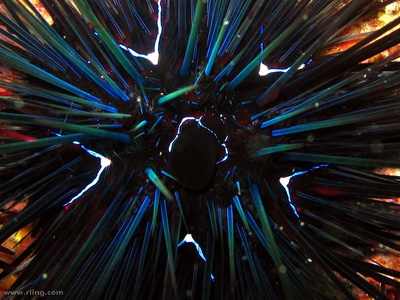
Long-spined sea urchin
Very long black spines and tiny body; major algal grazer that helps keep reefs clear of macroalgae. Spines are fragile and can cause painful wounds.
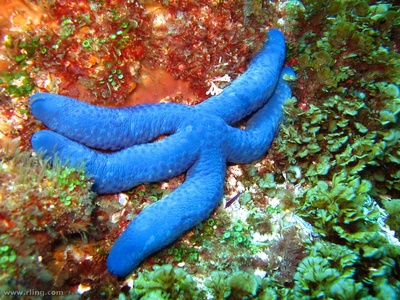
Blue sea star
Bright blue, five-armed sea star common on sandy patches and reef flats. Scavenger and detritivore often seen in daylight; regenerates arms readily if injured.
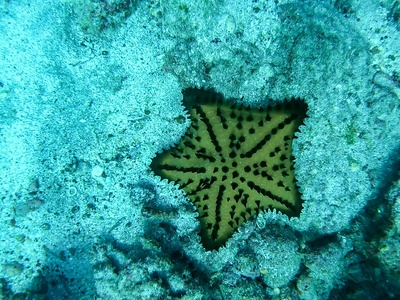
Chocolate chip sea star
Cream-colored star with dark cone-like knobs resembling chocolate chips. Slow-moving omnivore feeding on detritus and small invertebrates; common in lagoonal reefs.
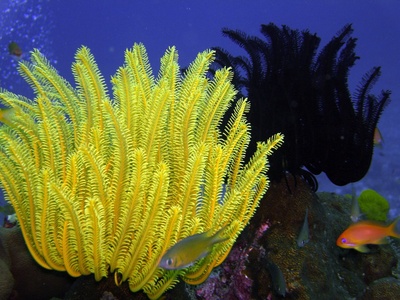
Feather star
Colorful crinoid with feathery arms used for suspension feeding. Perches on corals and sponges, filtering plankton from water; arms retract when disturbed, identifiable by feathery silhouette.
Sea cucumber (Black)
Smooth black sea cucumber that recycles organic material and bioturbates sediments. Often seen on sandy edges of reefs; plays key role in nutrient cycling and sediment health.
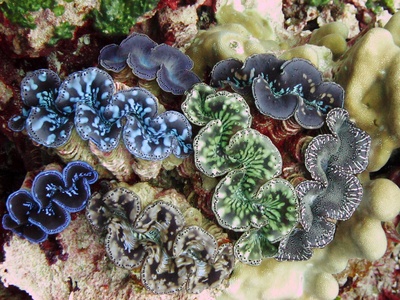
Giant clam
Massive bivalve with colorful mantles housing symbiotic algae, responsible for photosynthetic energy. Anchored in coral reef substrate, filter-feeds and creates microhabitat for small fishes and invertebrates.
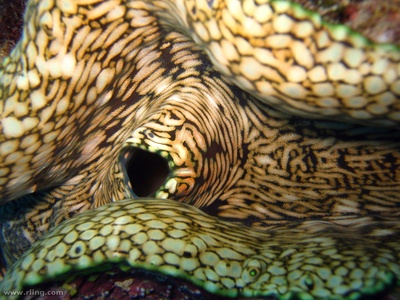
Fluted giant clam
Smaller than T. gigas with distinctive fluted shell margins and vivid mantle patterns. Hosts zooxanthellae for photosynthesis and sits semi-buried in reef matrix.
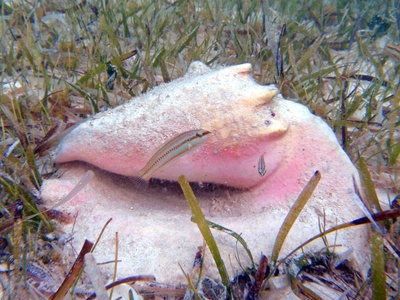
Queen conch
Large spiral shell and flared lip in adults; herbivorous grazer that moves between seagrass and reef margins. Iconic Caribbean species subject to fisheries pressure for meat and shells.
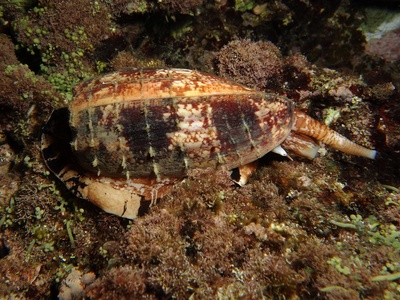
Cone snail (Geography cone)
Beautifully patterned cone shell; highly venomous hunter that immobilizes fish with a harpoon-like radula. Admired by collectors but dangerous to handle.
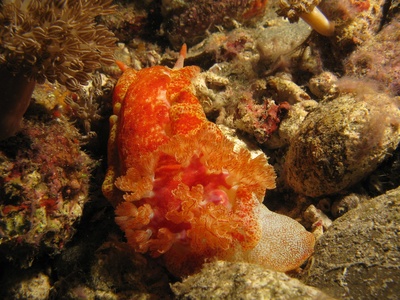
Spanish dancer (nudibranch)
Large, bright red dorid nudibranch that swims in undulating ribbons. Feeds on sponges and emits defensive chemicals; unmistakable by size and vivid color.
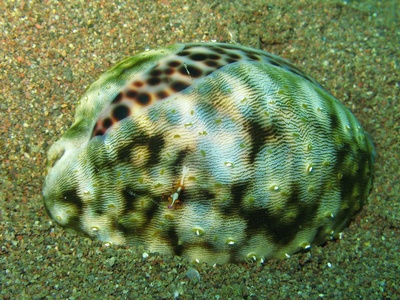
Tiger cowrie
Glossy, domed shell with dark blotches on cream background. Nocturnal grazer on algae and sponges; often spotted in crevices or under ledges by divers.
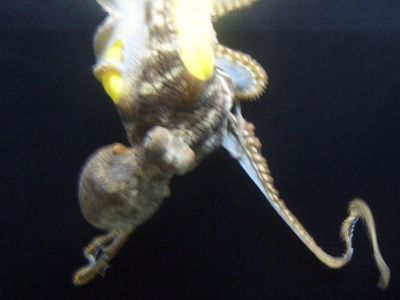
Day octopus
Active during day, mottled brown to reddish color, highly intelligent and camouflaging. Hunts crabs and fishes using den sites under coral heads; often observed changing color and texture.
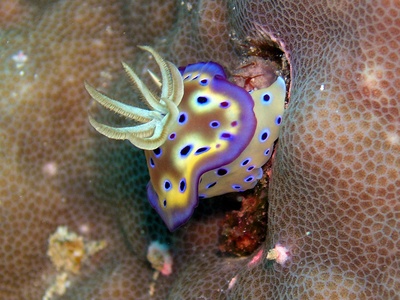
Chromodoris nudibranch
Slim, colorful nudibranch with blue, black and white patterns. Feeds on specific sponges and sequesters toxins; small but highly visible to macro photographers.
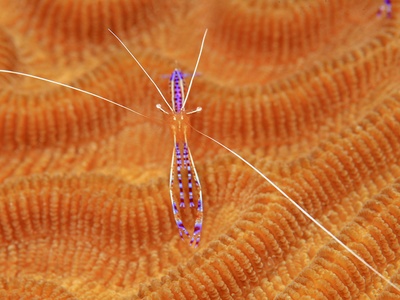
Cleaner shrimp
Red-and-white banded shrimp that establishes cleaning stations to remove parasites from fish. Recognizable by long white antennae and cooperative behavior with clients.
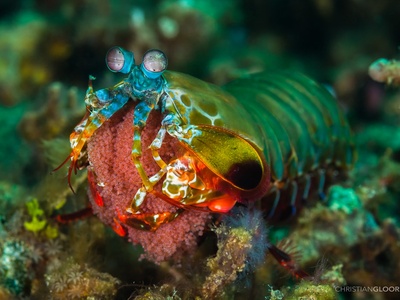
Peacock mantis shrimp
Vividly colored stomatopod with smashing claws that crack shells. Powerful predator with complex eyes and explosive strikes; inquisitive and territorial in crevices.
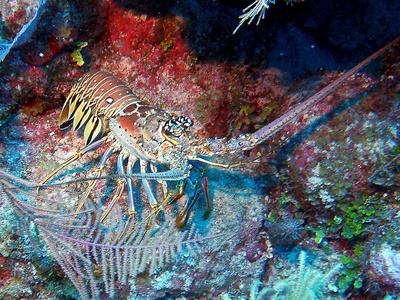
Caribbean spiny lobster
Large spiny lobster with long antennae and no claws. Nocturnal forager on reefs and important fisheries species that shelters in crevices by day and forms social daytime aggregations.
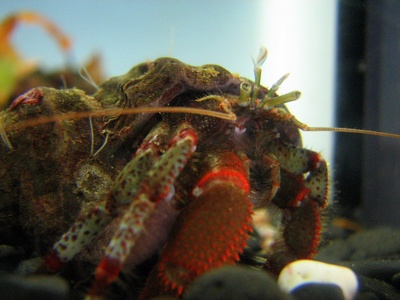
Hermit crab (Large)
Large hermit crab that occupies empty gastropod shells and scavenges detritus. Often visible on reef flats; helps recycle organic matter and shapes small-scale habitat structure.
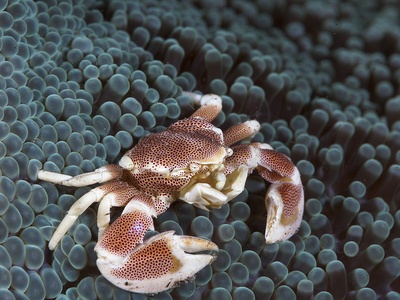
Porcelain crab
Tiny, flattened crab often living commensally inside anemones. Filter-feeds using feathery mouthparts; delicate and commonly photographed in close-up macro shots.
Spiny lobster cleaner (Boxer) shrimp
See banded coral shrimp row; acts as cleaner and is characterized by spiny exoskeleton, long claws and white antennae—common on reefs worldwide.
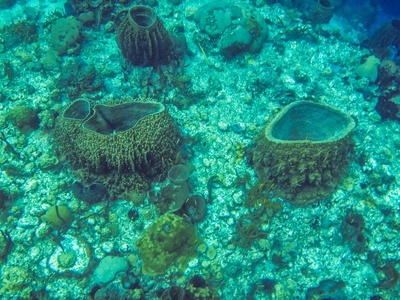
Giant barrel sponge
Massive vase-like sponge forming important three-dimensional habitat. Filters large volumes of water, supports diverse microhabitats; identifiable by large central osculum and firm, spongy texture.
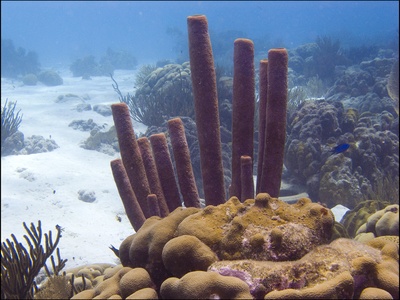
Purple tube sponge
Tall, tubular purple sponge common on Caribbean reefs. Filter-feeding sponge that provides shelter for small fishes and invertebrates; vivid color and tube clusters aid ID.
Boring sponge
Encrusting sponge that bores into calcium carbonate, weakening coral skeletons. Often visible as yellowish patches; plays role in reef bioerosion and turnover.
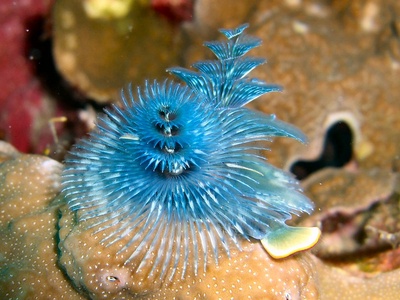
Christmas tree worm
Colorful spiral gills protruding from tiny tubes on live coral. Polychaete worm that filters plankton; retracts rapidly when disturbed and is a favorite macro photo subject.
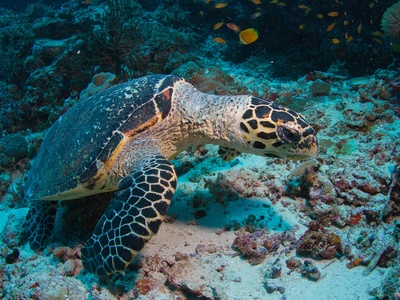
Hawksbill turtle
Distinctive pointed beak and patterned shell, specializes on sponges and invertebrates found on reefs. Critically endangered, essential for sponge control and coral reef health.
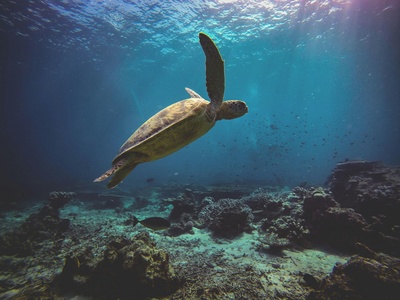
Green turtle
Large herbivorous turtle often grazing algae near reef edges. Rounded shell and paddle-like flippers; juveniles use reefs for foraging and shelter while adults migrate widely.
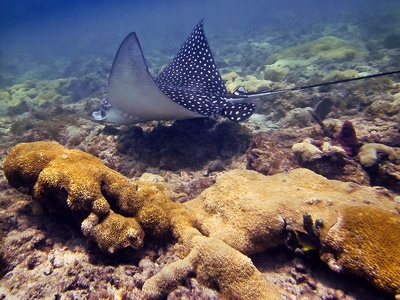
Spotted eagle ray
Large, graceful ray with spotted dorsum and long tail. Feeds on benthic mollusks and crustaceans, often seen cruising over reefs or near cleaning stations.
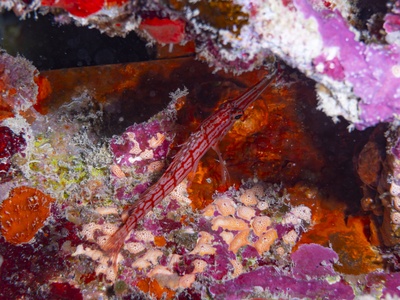
Hawkfish (Longnose)
(Duplicate species avoided) Small ambush predator that perches motionless on coral fans; elongated snout picks small crustaceans from crevices, identifiable by habit of sitting prominently on branches.
Brittle star (Serpent)
Nocturnal scavenger with long flexible arms that hide under ledges by day. Important detritivore and commensal host for small organisms; arms readily detach as escape mechanism.
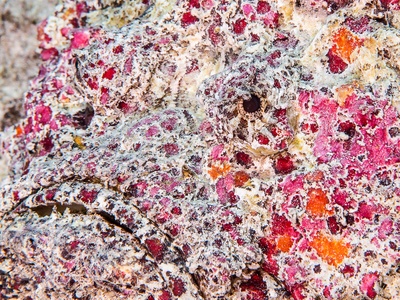
Reef stonefish
Highly camouflaged ambush predator with venomous dorsal spines. Warty, rock-like appearance makes it hard to spot; sits motionless to capture small fishes and crustaceans.
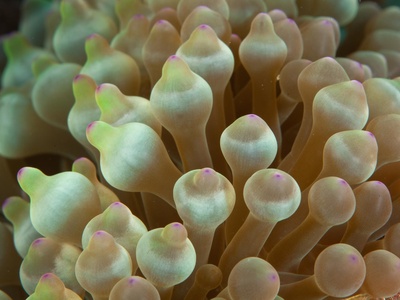
Anemone (Bubble-tip)
Hosts clownfishes and has bulbous tentacles that vary in color. Provides shelter and protection for symbiotic fish; tentacles sting small prey and capture plankton.
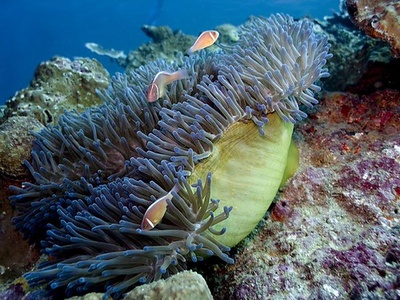
Anemone (Magnificent)
Large, colorful host anemone with long tentacles supporting clownfish species. Often found on sand patches and coral heads; notable for mutualism and striking appearance.
Mantlefish (Filefish)
Laterally compressed fish with small mouth, feeds on seagrass and small invertebrates. Often cryptic among corals and algae, with variable coloration and elongated snout for picking prey.