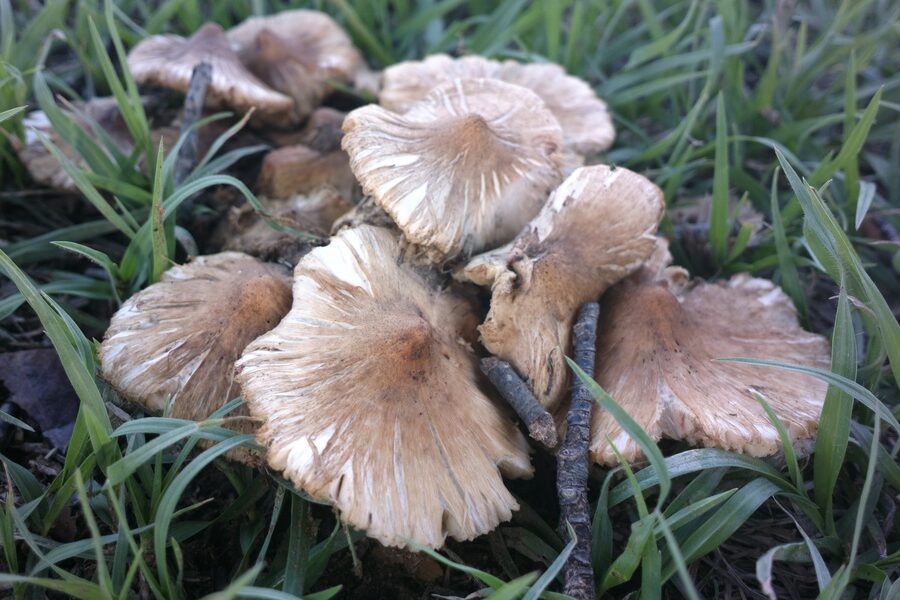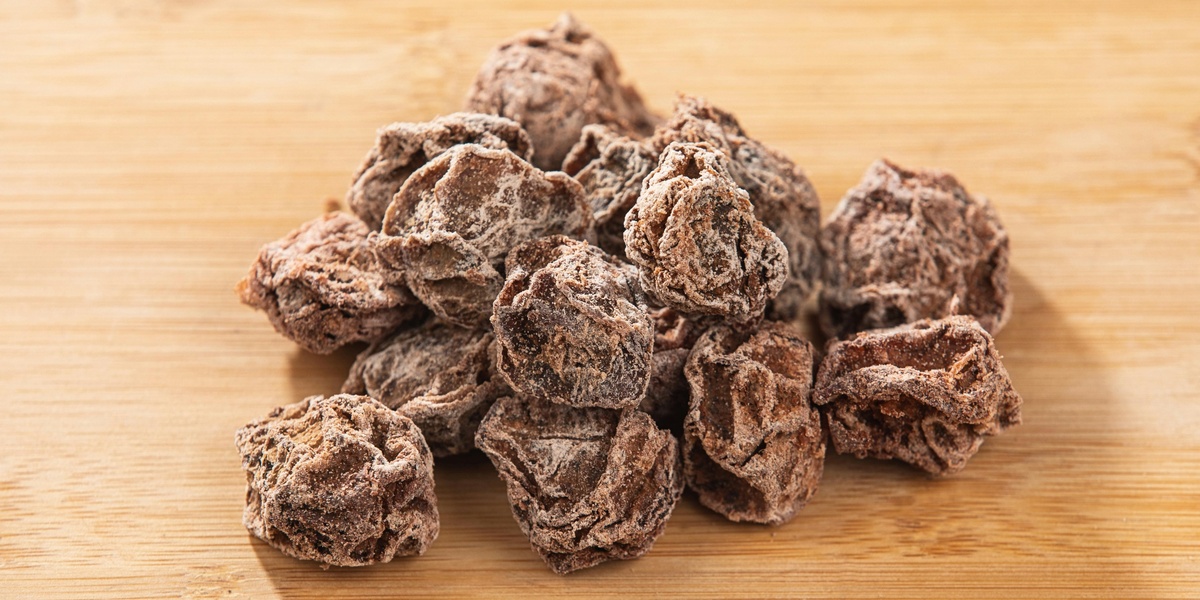
Deserts look empty at first glance, but beneath the sand and on bare rock a surprising variety of fungi keep ecosystems running—breaking down scarce organic matter, partnering with plants, and stabilizing soils. Many of these organisms live hidden lives, active only after rare rains or sheltered in rock crevices and lichen crusts.
There are 21 Desert Fungi, ranging from Common rock lichen to Valley fever fungus. For each species I list Scientific name, Range / habitat, Key adaptations so you can compare how they cope with heat, drought, and nutrient limits—you’ll find below.
How do desert fungi survive extreme heat and dryness?
They use several simple strategies: dormancy and thick-walled spores to wait out dry spells, pigments and protective cell layers to limit damage from UV and heat, microhabitats (under rocks or inside soil aggregates) that retain moisture, and partnerships like lichens that share resources—these let fungi resume activity quickly after moisture returns.
Are any desert fungi dangerous to people or animals?
A few are pathogenic—most notably the Valley fever fungus (Coccidioides), which can cause respiratory illness when dusty soils are disturbed. Risk is generally tied to inhaling spores in endemic arid regions; practical precautions include avoiding dusty work, wetting soil before disturbance, and using masks when exposure is likely.
Desert Fungi
| Name | Scientific name | Range / habitat | Key adaptations |
|---|---|---|---|
| Tirmania truffle | Tirmania nivea | Sahara, Middle East, Mediterranean semi-arid zones | Hypogeous fruiting;mycorrhizal;spore dormancy;rain-triggered fruiting |
| Terfezia truffle | Terfezia boudieri | North African Sahara margins and Mediterranean semi-arid soils | Hypogeous;mycorrhizal with shrubs;drought-resistant spores |
| Juniper truffle | Picoa juniperi | Mediterranean semiarid and steppe under juniper and shrubs | Hypogeous;host-specific mycorrhiza;rain-dependent fruiting |
| Soil crust lichen | Collema tenax | Global arid regions including Sonoran, Mojave, Patagonian steppes | Cyanobacterial photobiont;desiccation-tolerant;rapid rehydration |
| Sand crust lichen | Endocarpon pusillum | Gobi, northern China, Central Asian deserts | Thick thallus;desiccation-resistant;soil-binding rhizines |
| Rock lichen (sandstone) | Acarospora socialis | Sonoran, Mojave, Chihuahuan deserts (North America) | Saxicolous;sun-tolerant pigments;low water needs |
| Rock shield lichen | Xanthoparmelia chlorochroa | Western North American deserts and drylands | Foliose;UV-screening pigments;slow growth |
| Soil lichen | Psora decipiens | Global drylands and cold deserts | Crustose;rapid hydration response;soil-stabilizing |
| Golden crust lichen | Candelariella aurella | Temperate and arid regions on rocks and soils | Bright pigments (carotenoids);sun and drought tolerance |
| Halophilic fungus | Wallemia ichthyophaga | Hypersaline desert salt pans and salt flats | Extreme halotolerance;thick cell walls;osmoprotectants |
| Salt-flat black yeast | Hortaea werneckii | Saline ponds, coastal and inland salt pans (including desert salinas) | Extreme halotolerance;melanized cell walls;osmolyte production |
| Rock black fungus | Coniosporium apollinis | Sun-exposed limestone and sandstone in Mediterranean drylands | Melanization;endolithic/saxicolous growth;thermal tolerance |
| Valley fever fungus | Coccidioides posadasii | Sonoran, Chihuahuan and other American deserts;arid soils | Dormant arthroconidia;heat and desiccation tolerance;soil reservoir |
| Ectomycorrhizal pioneer | Pisolithus tinctorius | Dry Mediterranean, temperate arid soils worldwide | Drought-tolerant mycorrhizae;sclerotia-like spores;salt tolerance |
| Rock-inhabiting fungus | Knufia petricola | Saxicolous on exposed rocks in Mediterranean and arid regions | Melanized, slow growth;endolithic niches;UV resistance |
| Desert morel | Morchella rufobrunnea | Arid coastal and desert regions of Baja California and southern California | Saprobic on burned or disturbed soils;fruiting after wet periods |
| Dung-specialist fungus | Sporormiella intermedia | Arid grasslands and deserts on herbivore dung | Coprophilous lifecycle;spore longevity;heat tolerance |
| Common rock lichen | Lecanora muralis | Rocks, walls and boulders across temperate and arid regions | Crustose;tolerant of sunlight and thermal extremes |
| Fog-oasis lichen | Vermilacinia ceruchis | Fog deserts of Pacific coasts (Namib, Baja, Atacama fringe) | Efficient fog water capture;pendant/fruticose growth;low water loss |
| Soil-stabilizing lichen | Rhizocarpon geographicum | Cold and some cold-arid deserts, high-elevation rocks | Slow growth;extreme desiccation tolerance;pigmented crusts |
| Endophytic desert fungus | Epichloë/Neotyphodium spp. | Arid grasses and steppe ecosystems worldwide | Systemic endophyte;drought-enhancing alkaloids;seed-transmitted |
Images and Descriptions
Tirmania truffle
Tirmania nivea is a white desert truffle forming mycorrhizae with shrubs and herbs. It fruits underground after episodic rains, has a firm, aromatic gleba, and is valued in regional cuisines and traditional foraging in North African and Middle Eastern deserts.
Terfezia truffle
Terfezia boudieri is a dark desert truffle associated with arid Mediterranean and Saharan steppe. It forms ectomycorrhizae with host plants, fruits after heavy rains, and is recognized by its warted peridium and edible, spore-filled interior.
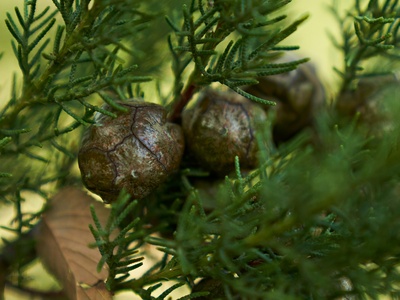
Juniper truffle
Picoa juniperi grows under juniper and other shrubs in dry Mediterranean areas. This hypogeous truffle has a compact gleba and brown spores, fruits after winter or spring rains, and is of local culinary and ecological importance.
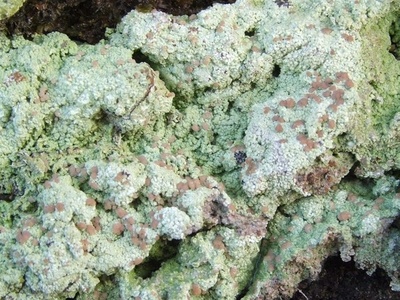
Soil crust lichen
Collema tenax is a gelatinous cyanobacteria-lichen forming extensive biological soil crusts in deserts. It stabilizes soil, fixes nitrogen, and darkens when wet, making it easy to recognize after rains on compacted arid soils and playa edges.
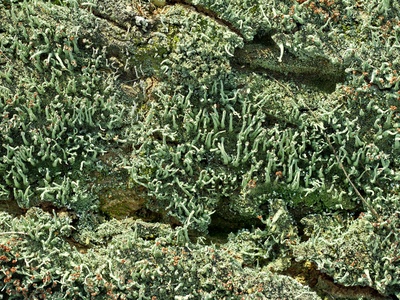
Sand crust lichen
Endocarpon pusillum is a common soil-crust lichen in Asian deserts used in restoration. Its rounded lobes and dense rhizines bind sand, reducing erosion. It tolerates extreme dryness and is visible as pale, cracked patches on sun-baked soils.
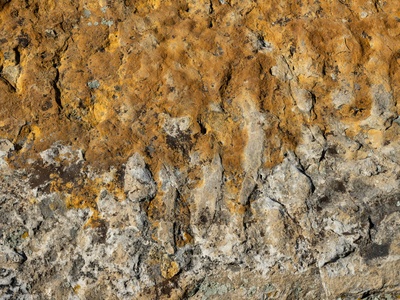
Rock lichen (sandstone)
Acarospora socialis forms crustose patches on rocks and pebbles in North American deserts. Often pale to rusty, its tightly attached thallus survives intense sun and thermal cycling; common on exposed outcrops and useful for rock surface identification.

Rock shield lichen
Xanthoparmelia chlorochroa is a foliose rock lichen forming broad, flattened rosettes on exposed stone. Its greenish to gray upper surface and distinctive lobes make it recognizable; it tolerates high UV and limited moisture in arid habitats.
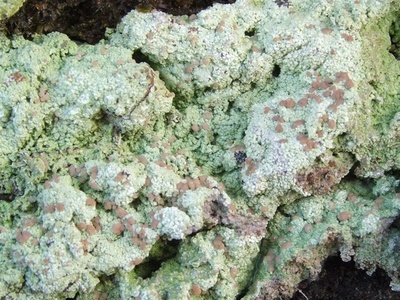
Soil lichen
Psora decipiens is a small, often warted soil crust lichen common in arid steppes and deserts. It binds loose soil particles, responds quickly to rare moisture events, and appears as dusty brown to gray patches across desert substrates.
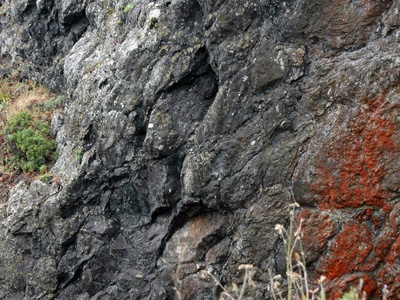
Golden crust lichen
Candelariella aurella is a bright yellow crustose lichen found on sun-exposed rocks and soil in dry areas. Its vivid color, small apothecia, and tendency to form scattered crusts make it stand out in desert landscapes.

Halophilic fungus
Wallemia ichthyophaga is an obligate halophilic fungus inhabiting salt crusts and hypersaline soils of desert playas. It tolerates saturated salt conditions, grows slowly on salty substrates, and is an important extremophile model for salt-adapted fungal life.
Salt-flat black yeast
Hortaea werneckii is a black, yeast-like fungus frequenting saline desert pans and salterns. Its melanized cells resist UV and desiccation; it’s known from coastal and inland salt deserts and often forms dark biofilms on salty substrates.
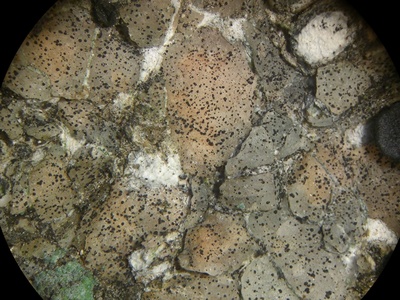
Rock black fungus
Coniosporium apollinis is a rock-inhabiting black fungus that colonizes sun-baked stone surfaces in Mediterranean and semi-arid zones. Its dark, melanized cells protect against UV and heat; it often contributes to patina and rock weathering.
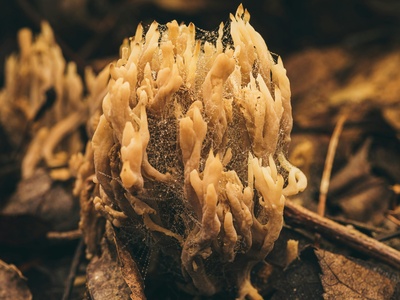
Valley fever fungus
Coccidioides posadasii is a soil-dwelling pathogenic fungus causing valley fever. It lives in arid soils, forms airborne arthroconidia when disturbed, and is adapted to hot, dry environments where it persists between outbreaks.
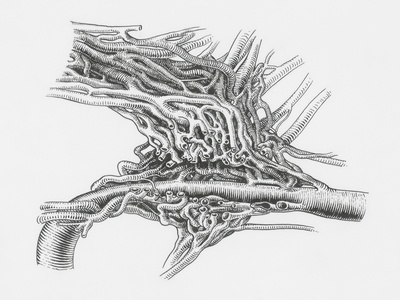
Ectomycorrhizal pioneer
Pisolithus tinctorius is an ectomycorrhizal “puffball” that tolerates poor, dry soils and salinity. It forms robust symbioses with trees and shrubs, aiding establishment in reforestation and reclamation of arid sites.
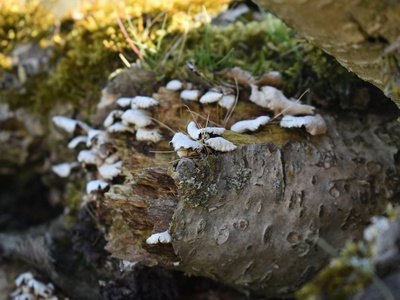
Rock-inhabiting fungus
Knufia petricola is a black, crustose fungus growing on rock surfaces in sun-exposed dry landscapes. It penetrates tiny rock cracks, survives extreme desiccation and heat, and contributes to rock weathering and microhabitat formation.
Desert morel
Morchella rufobrunnea is a morel that fruits in chaparral and arid coastal deserts after rains or fire. It appears as a honey-brown, conical cap morel and is notable for fruiting in otherwise dry landscapes following moisture events.
Dung-specialist fungus
Sporormiella intermedia is a common coprophilous ascomycete found on dung in drylands. Its small dark perithecia release spores timed with host and weather cycles; it plays a role in nutrient cycling where vertebrate dung is a key moisture resource.
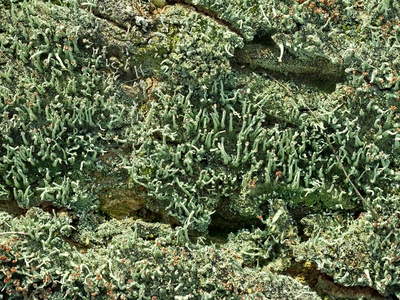
Common rock lichen
Lecanora muralis is a widespread crustose lichen often seen on sunlit rocks and masonry in dry areas. Its pale gray thallus and circular apothecia make it recognizable; it endures frequent drying and large temperature swings.
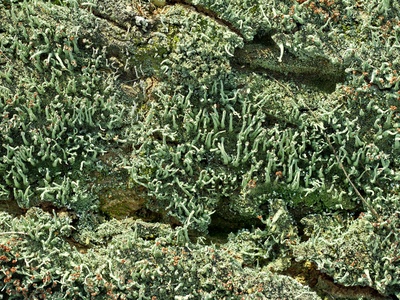
Fog-oasis lichen
Vermilacinia ceruchis is a fruticose lichen adapted to coastal fog deserts. Its branching thallus efficiently captures moisture from fog, supporting nutrient cycles and coastal desert biodiversity where rainfall is scarce.
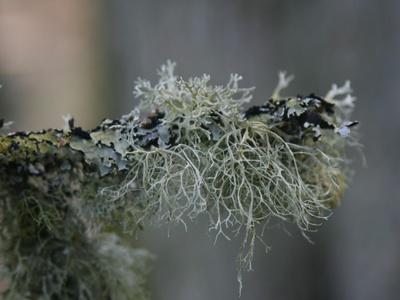
Soil-stabilizing lichen
Rhizocarpon geographicum is a crustose lichen common on exposed rocks in cold deserts and some arid highlands. Noted for its longevity and map-like patches, it tolerates intense solar radiation and binds weathered rock surfaces.
Endophytic desert fungus
Epichloë (formerly Neotyphodium) endophytes live symbiotically inside many dryland grasses, producing compounds that can increase host drought tolerance and herbivore deterrence. They persist in seeds and influence grassland resilience in arid zones.