Centuries-old folk paintings and palace carvings frequently show a single striped beast: the tiger. That animal’s image helped shape a national identity long before modern Korea existed, and those visual echoes still turn up on municipal seals, in museum galleries, and as mascots at festivals.
These animals matter today for several reasons: they anchor myths and public identity, they focus conservation priorities and protected-area funding, and they drive tourism—from crane-watching tours to island dog festivals. This piece profiles ten of the most influential creatures, grouped into three themes: Cultural & Historical Icons; Native Wildlife & Conservation; and Domesticated & Island Endemics.
This list of the famous animals of south korea mixes myth and biology to show how culture, science, and local economies intersect—read on for museums, reserves, and festivals tied to each species.
Cultural & Historical Icons
Header image alt text: A collage of Joseon-era tiger folk painting, a stone haetae guardian, and a stylized kumiho from modern media.
Animals have long served as carriers of moral values, protective power, and civic identity in Korea: tigers as courage, haetae as guardians, magpies as harbingers of good news, and the kumiho as a shape-shifting moral lesson. These images appear in minhwa (folk paintings), palace gate statuary, and modern K-drama costumes—so culture keeps these animals present even when wild populations change.
This category contains four famous animals best understood through history, art, and media; all reappear today in mascots, souvenirs, and heritage tourism.
1. The Korean Tiger (symbolic Amur/Siberian tiger)
The tiger is the most enduring animal symbol in Korean culture. Joseon-era minhwa (folk paintings) from the 17th–19th centuries routinely depict bold, striped tigers (Joseon dynasty: 1392–1897), and tiger motifs appear on royal banners and municipal emblems across the peninsula.
Although wild tiger populations disappeared from much of the peninsula by the early 20th century due to hunting and habitat loss, the animal’s cultural footprint has only grown—museum exhibits (National Museum of Korea) and tiger-themed festivals draw visitors, and brands still use tiger iconography in logos and packaging.
For background on historical imagery and range contraction see the National Museum and the IUCN Red List for Panthera tigris (IUCN).
2. Haetae (mythical guardian lion-dog)
The haetae is a mythic, lion-dog guardian traditionally placed near palaces and government buildings to ward off fire and disaster. Stone haetae (often paired) stand at Gyeongbokgung and other major sites; restoration records from the Cultural Heritage Administration document their historic placements and conservation work.
Haetae functioned in ceremonies and now appear in signage, public sculpture, and souvenirs—bridging protective folklore with modern civic identity. Examples include the haetae statues flanking palace gates (notably at Gyeongbokgung) and municipal logos that reference their posture and mane.
See the Cultural Heritage Administration for restoration records and descriptions (Cultural Heritage Administration).
3. The Kumiho (nine‑tailed fox) — folklore and pop culture
The kumiho is a legendary fox with nine tails that appears throughout classical folktales as a trickster or seductress; the “nine tails” motif (nine being a culturally resonant number) is central to its identity.
Its presence is alive in modern media: K-dramas such as Tale of the Nine-Tailed, webtoons, and films have reimagined the kumiho for contemporary audiences, fueling tourism to sites associated with local legends and generating merchandise tied to the creature’s image.
For folklorists, see collected folktale anthologies and recent media analyses of how the kumiho is adapted for screens and web platforms.
4. The Korean Magpie (Oriental magpie) — the national bird of luck
The Oriental magpie is widely associated with good news in Korean folktales—stories describe magpies chattering to announce visitors or good tidings—so the bird functions as a folk “national bird” in popular imagination.
Magpies are common across urban and rural areas, and their image appears in holiday customs, children’s books, and municipal designs. Birding groups in Korea track seasonal distributions; for counts and citizen-science data see organizations such as the Korean Federation for Environmental Movement and local birding clubs.
For citizen-science numbers and seasonal records consult regional birding groups and the Korea Ministry of Environment’s wetlands and biodiversity pages (Korea Ministry of Environment).
Native Wildlife & Conservation
Category image alt text: A red-crowned crane standing in a shallow west-coast mudflat, with reeds and a distant tidal plain.
This group focuses on species native to the peninsula and the conservation efforts around them: protected wetlands, national parks, and recovery programs that balance biodiversity goals with eco-tourism.
Across these subsections you’ll find current protection statuses, population trends, and named reserves where visitors can learn and participate responsibly.
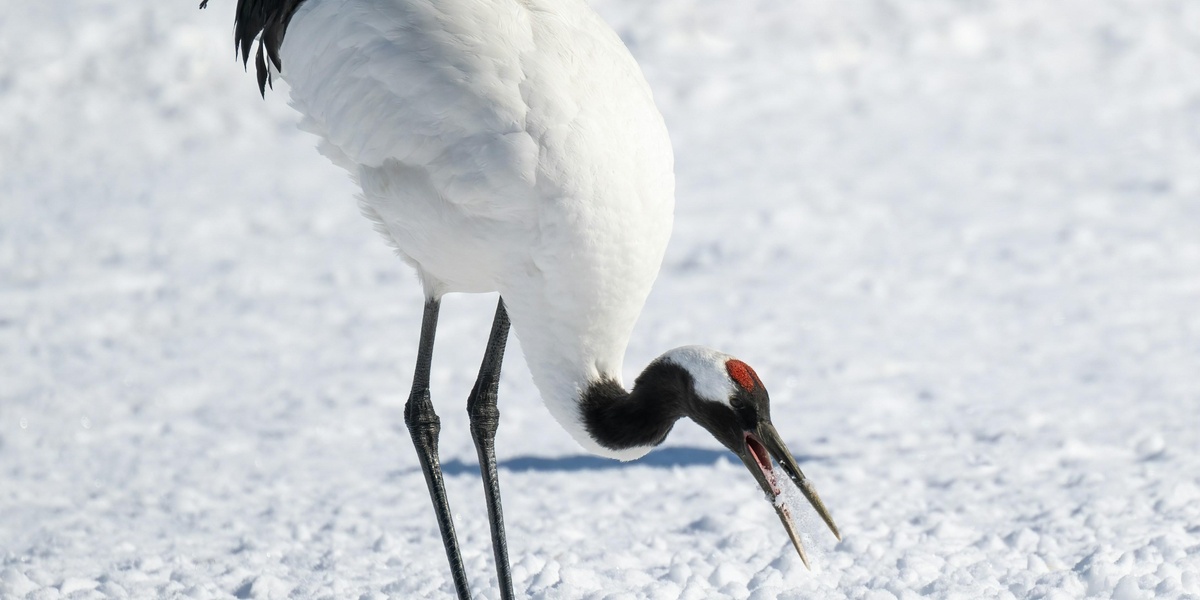
5. Red‑crowned Crane — symbol of longevity and a conservation priority
The red-crowned crane is an emblem of longevity in East Asian art and a flagship species for wetland conservation in Korea. Internationally, the species is listed by the IUCN as Endangered and its global population is estimated in the low thousands (roughly 3,000–4,000 individuals, per IUCN).
In Korea, key wintering and breeding sites include the west-coast mudflats and protected reserves near the DMZ; Ramsar-listed wetlands and local reserves offer guided crane-watching (for example, the Han River estuary and nearby protected flats).
Conservation actions—wetland protection, community-based eco-tourism, and monitoring—help both birds and local livelihoods. For up-to-date figures and reserve names consult the Korea Ministry of Environment and the Ramsar site listings.
6. Korean Water Deer — the tusked deer unique to East Asia
The Korean water deer (noted for its fang-like canines rather than antlers) is native to the peninsula and neighboring regions. Its unusual morphology makes it distinctive in field guides and museum displays.
Water deer occur across lowland wetlands and agricultural margins; they feature in human–wildlife interactions such as road collisions and occasional crop damage, so regional mitigation (wildlife crossings, signage) is common near busy roads and park edges.
For species accounts and current range information see the National Institute of Biological Resources (NIBR) and peer-reviewed camera-trap studies documenting distribution in Korean lowlands (NIBR).
7. Korean Goral — a hardy mountain ungulate
The Korean goral is a cliff- and crag-dwelling ungulate that prefers steep, rocky slopes in higher elevations. Its presence indicates intact upland habitat and it’s monitored as a biodiversity indicator in mountain parks.
Gorals are recorded in several national parks (e.g., Seoraksan and Odaesan) where park authorities run periodic surveys; recent government and academic surveys provide counts and trend data used to guide protections (see Korea National Parks Service reports).
For the latest survey numbers and park reports consult the Korea National Parks Service and relevant journal publications on mountain ungulates.
Domesticated & Island Endemics
Category image alt text: A Jindo dog standing on a windswept shoreline, with a Jeju pony grazing behind low stone walls.
These animals are closely tied to people or to specific islands. Legal protections, breeding programs, and festivals sustain both the animals and local economies—while also attracting tourists eager to experience living heritage.
8. Jindo Dog — Korea’s island-born national breed
The Jindo dog is famed for loyalty and originated on Jindo Island. The breed received formal cultural protection as Natural Monument No. 53 in 1962 (designated by the Cultural Heritage Administration), which helped establish breeding and purity standards.
Jindo dogs are central to a local economy: annual Jindo Dog Festivals, breed museums, and conservation kennels bring visitors to the island. Genetic and veterinary studies—some published in Korean academic journals—have examined breed distinctiveness and health.
For designation details and festival information see the Cultural Heritage Administration and Jindo county tourism pages (Cultural Heritage Administration).
9. Jeju Horse — an island pony with deep local roots
The Jeju horse is a small, hardy pony endemic to Jeju Island with centuries of agricultural and cultural use. Local government programs support breeding centers and public ranches that preserve the breed and offer riding programs for tourists.
Provincial preservation initiatives and research at agricultural institutes track numbers and genetic diversity; public festivals and ranch tours on Jeju promote the horse as both living heritage and an eco-tourism draw.
For program details and numbers consult Jeju provincial government resources and agricultural research centers (Jeju Special Self-Governing Province official site).
10. The Asian (Moon) Bear — cultural presence and conservation concerns
The Asian black bear, often called the moon bear for its pale chest patch, has a long place in Korean folklore and was historically present in much of the peninsula. Today it’s the focus of conservation, rehabilitation, and conflict-mitigation programs.
Internationally the species is listed by the IUCN as Vulnerable (IUCN), and Korea hosts rescue and rehabilitation centers that work with confiscated or injured bears and run public-education campaigns in cooperation with NGOs and the Ministry of Environment.
For program and protection dates, see the Korea Ministry of Environment and major conservation NGOs working on captive care and release efforts.
Summary
- Iconic creatures—from the tiger and haetae to the magpie and kumiho—shape cultural identity even when wild populations decline.
- Protected wetlands, national parks, and designated-breed programs (for example, the Jindo dog’s Natural Monument designation in 1962) tie conservation to local economies and tourism.
- Several species on this list are listed by IUCN (red-crowned crane and Asian black bear among them), so supporting reputable organizations helps fund monitoring and habitat protection (IUCN; Korea Ministry of Environment).
- Learn or help by visiting reserves and festivals responsibly, reporting wildlife incidents to local authorities, or donating to conservation groups working in Korea’s wetlands and mountain parks.
- To explore further, check museum collections (National Museum of Korea), the Cultural Heritage Administration, and national park reports for species-specific programs and visitor guidelines.