
Most of what’s written about invasive species in Serbia lives behind a paywall, wrapped in abstracts and distribution matrices. If you searched this term, you probably wanted a straight answer about the ragweed wrecking your allergies, the stink bugs in your kitchen, or the tiger mosquito biting you in broad daylight. Here it is — organized by group, with where each species came from, where it’s spreading, and why it matters.
Serbia sits at a crossroads. The Pannonian Basin in the north is flat, warm, and agricultural — a soft landing pad for newcomers. The Danube cuts straight through, acting as a highway for waterborne and riverbank invaders. Put those two together and you get one of the more porous corners of Europe for alien species.
Table of Contents
- The Quick List
- Invasive Insects
- Invasive Plants
- Aquatic and Riverbank Invaders
- Why the Pannonian Basin Gets Hit Hardest
- What You Can Actually Do
The Quick List
If you only want the headline species and the one thing that makes each a problem, start here.
| Species | Group | Origin | Main Problem in Serbia |
|---|---|---|---|
| Brown marmorated stink bug (Halyomorpha halys) | Insect | East Asia | Damages orchards, vegetables; swarms homes in autumn |
| Southern green stink bug (Nezara viridula) | Insect | Africa/tropics | Feeds on soybeans, peppers, tomatoes |
| Asian tiger mosquito (Aedes albopictus) | Insect | Southeast Asia | Daytime biter; potential disease vector |
| Asian bush mosquito (Aedes japonicus) | Insect | East Asia | Cold-tolerant biter expanding north |
| Common ragweed (Ambrosia artemisiifolia) | Plant | North America | Severe allergenic pollen; crop weed |
| Black locust (Robinia pseudoacacia) | Plant | North America | Crowds out native riverbank forest |
| Danube riparian neophytes | Plants | Various | Smother native floodplain vegetation |
Invasive Insects
Brown marmorated stink bug (Halyomorpha halys)
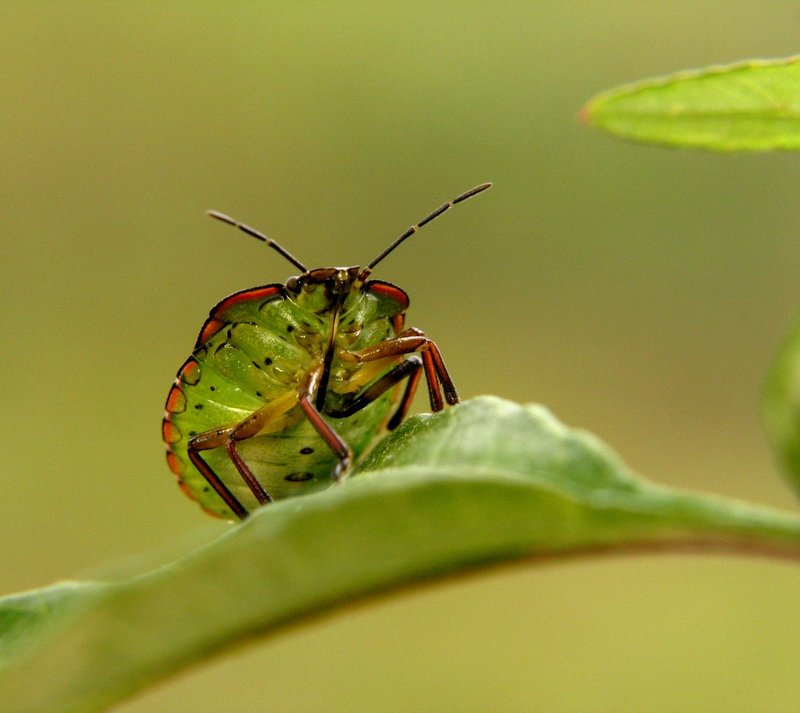
If you’ve found a shield-shaped brown bug sunning itself on your window screen in October, this is the one. The brown marmorated stink bug arrived in Serbia from East Asia, reaching the country in the mid-2010s after sweeping through Europe from an initial foothold in Switzerland. It’s now established across the north.
What makes it a genuine pest rather than a nuisance is its appetite. It feeds on more than 100 plant species — apples, pears, peppers, hazelnuts, corn — piercing the fruit and leaving corky, deformed spots that knock produce out of the saleable grade. Then, when temperatures drop, the adults look for somewhere warm to overwinter, which is how a few hundred end up clustered in the corner of someone’s attic. They don’t bite or breed indoors, but the smell when you squash one earns the name.
Southern green stink bug (Nezara viridula)
The southern green stink bug is the brown one’s tropical cousin — bright green, originally from Africa, now thoroughly at home across the warmer parts of southern Europe and into the Pannonian south. It’s a soybean specialist, which is a problem in a country where soy is a serious crop, and it also works over peppers and tomatoes. Warming summers have let it push its range steadily northward over the past two decades.
Asian tiger mosquito (Aedes albopictus)
Black with sharp white stripes and a willingness to bite in the middle of the afternoon, Aedes albopictus is the mosquito that changed the rules. Native to Southeast Asia, it spread globally through the used-tire and ornamental-plant trade — eggs ride along in the trapped water — and is now established in Serbia, particularly in urban and suburban areas where small containers of standing water are everywhere.
It bites during the day, unlike the native species that wait for dusk, and it’s a competent vector for diseases like dengue and chikungunya. The World Health Organization tracks it precisely because of that potential. No major local outbreaks so far, but the biology is in place.
Asian bush mosquito (Aedes japonicus)
Less famous than the tiger mosquito but arguably more concerning for a country with cold winters: Aedes japonicus tolerates cooler temperatures, which lets it colonize areas and elevations the tiger mosquito struggles with. It’s been recorded in Serbia and continues to expand. The two species together close the gap — one covers the warm lowlands, the other the cooler edges.
Invasive Plants
Common ragweed (Ambrosia artemisiifolia)
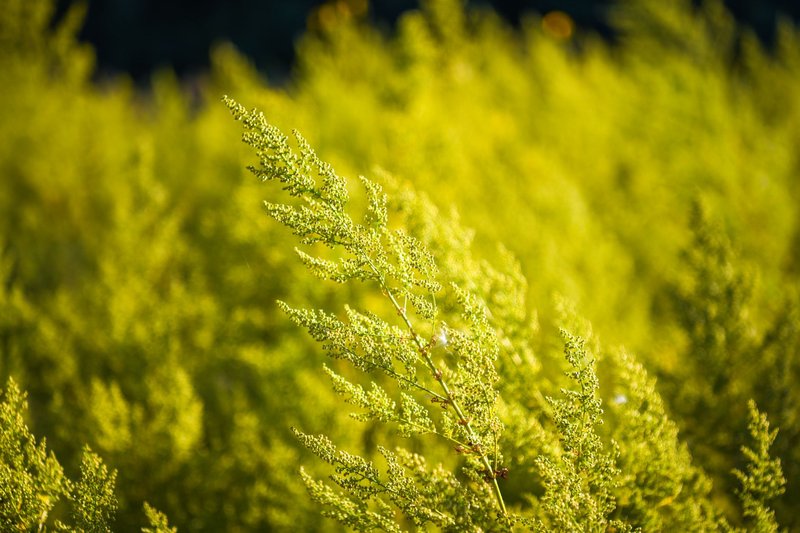
Locally it’s ambrozija, and if you live in Vojvodina you already hate it. Common ragweed is a North American annual that found the Pannonian Basin to be near-perfect habitat: disturbed ground, sunny fields, roadsides, and abandoned plots. Serbia now has some of the heaviest ragweed infestations in Europe.
The trouble is the pollen. A single plant releases enormous quantities of it in late summer, and it’s one of the most aggressive allergens around — it drives hay fever and asthma across the region every August and September. The European Centre for Disease Prevention and Control flags ragweed pollen as a growing public-health burden as its range expands with the climate. On top of the allergy angle, it’s a competitive crop weed in sunflower and corn fields.
There’s one genuinely interesting wrinkle: a leaf beetle called Ophraella communa, itself accidentally introduced to Europe, eats ragweed voraciously and has started knocking back populations in some areas. It’s the rare case of one invader doing the continent a favor — an unplanned biocontrol that researchers are watching closely.
Black locust (Robinia pseudoacacia)
Black locust is the species people argue about. Brought over from North America for timber, erosion control, and its fragrant flowers — bagremov med, acacia honey, is a Serbian staple — it’s been planted deliberately for generations. The downside is that it doesn’t stay where it’s planted. It fixes nitrogen in the soil, which changes the ground chemistry in favor of more weeds, and it spreads aggressively along riverbanks and disturbed land, crowding out native floodplain forest. The IUCN lists it among Europe’s problematic woody invaders. Useful tree, genuine ecological cost — both things are true.
Aquatic and Riverbank Invaders
The Danube does for plants and aquatic life what the highway network does for stink bugs: it moves them fast and far. The river’s floodplains host a roster of riparian neophytes — non-native plants that colonize the wet, frequently disturbed banks. Species like Amorpha fruticosa (indigobush) and Echinocystis lobata (wild cucumber) form dense thickets that smother native willow and poplar communities along the floodplain.
These aren’t dramatic, headline-grabbing invasions. They’re slow, quiet replacements — a riverbank that used to be a mosaic of native species becomes a monoculture of one tough import. The cumulative effect on the Danube’s floodplain ecosystems is exactly the kind of thing the academic literature documents in detail and the general public never hears about.
Why the Pannonian Basin Gets Hit Hardest
Look at a map of where these species concentrate and a pattern jumps out: the north. Vojvodina and the broader Pannonian Basin take the brunt, and the reasons are structural.
It’s flat, fertile, and intensively farmed, which means constant soil disturbance — the exact conditions ragweed and other pioneer weeds need. It’s warm, with mild winters that let tropical-origin insects survive the cold season. And it’s threaded with trade routes and the Danube corridor, giving newcomers an easy path in. A species that lands in Belgrade or crosses the Hungarian border has a clear runway.
Climate change tilts the table further. As summers lengthen and winters soften, the southern green stink bug and the tiger mosquito push into territory that used to be too cold for them. The trend line points one direction.
What You Can Actually Do
You’re not going to reverse a continental invasion from your backyard, but a few things genuinely help:
- Pull ragweed before it flowers. From June onward, yank it out by the root before it sets pollen in August. It’s an annual, so a plant removed now produces no seed for next year. Wear gloves and a mask if you’re sensitive.
- Drain standing water weekly. Tiger and bush mosquitoes breed in tiny amounts of trapped water — saucers under flowerpots, clogged gutters, old buckets, tire piles. Tip them out every week and you cut the local population at the source.
- Don’t squash overwintering stink bugs indoors. Vacuum them up or sweep them into a container and put them outside. Crushing them releases the odor and, in numbers, stains surfaces.
- Report sightings. Serbia contributes to international biodiversity databases. If you spot something unusual, citizen-science platforms feed the GBIF global occurrence records that researchers use to track spread.
- Think twice about black locust. It’s a fine honey tree, but if you’re planting near a waterway or natural area, choose a native instead and don’t let it self-seed into wild ground.
None of these are heroic. Together, across enough people, they’re the difference between managing an invasion and surrendering to it. The species are here to stay — the question is how much ground we hand them.