TLDR
Afghanistan holds somewhere between 118 and 150 mammal species, and almost all of the interesting ones live in the same place: the vertical stack of terrain running from the Hindu Kush and Pamir peaks down through steppe and desert. Snow leopards, Marco Polo sheep, and markhor cling to the high country in the Wakhan Corridor and the northeast; wolves, hyenas, and gazelles work the lower steppe and desert. Three big predators — the Caspian tiger, the Asiatic cheetah, and the Asiatic lion — used to round out that food chain and don’t anymore. What’s left is a smaller, tougher cast, and most of it is barely hanging on.
Table of Contents
- Why Afghanistan’s Wildlife Runs on Elevation
- The High-Altitude Specialists
- Mid-Elevation Forest and Scrub Mammals
- Steppe and Desert Mammals
- The Bats Nobody Talks About
- Gone: What Afghanistan Has Already Lost
- Conservation Status at a Glance
- Why So Few Large Mammals Survive
Why Afghanistan’s Wildlife Runs on Elevation
Afghanistan doesn’t have much in the way of forest or wetland left, but it has elevation, and elevation does most of the ecological work here. The Hindu Kush and Pamir “Knot” in the northeast climb past 7,000 meters, and from there the land drops in stages — alpine meadow, juniper scrub, dry steppe, sand desert — over just a few hundred kilometers. Each band supports a different set of mammals, and a lot of Afghanistan’s species list is really a list of who lives at which altitude.
That gradient is why the Wakhan Corridor, a narrow finger of territory pinched between Tajikistan, Pakistan, and China, punches so far above its weight for wildlife. It’s remote, thinly populated, and vertical enough to hold snow leopard habitat, ibex herds, and marmot colonies within a day’s walk of each other. Most of the species below either live there or depend on habitat that looks a lot like it.
The High-Altitude Specialists
These are the animals that need the mountains — they don’t show up in the lowlands, and they’re the reason people study Afghan wildlife at all.
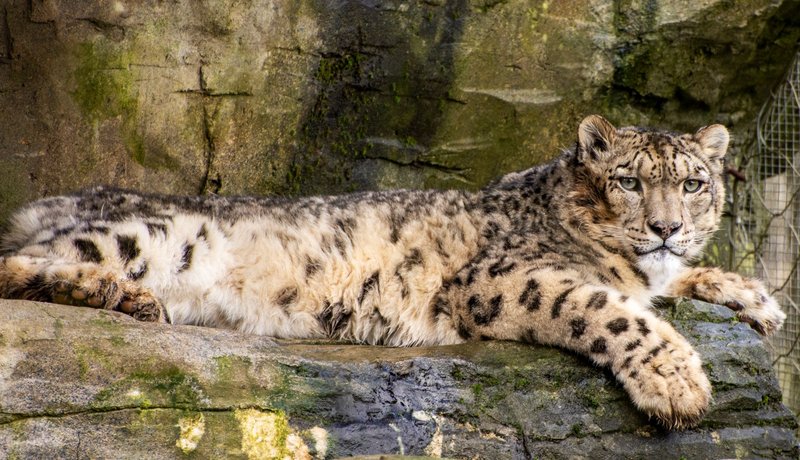
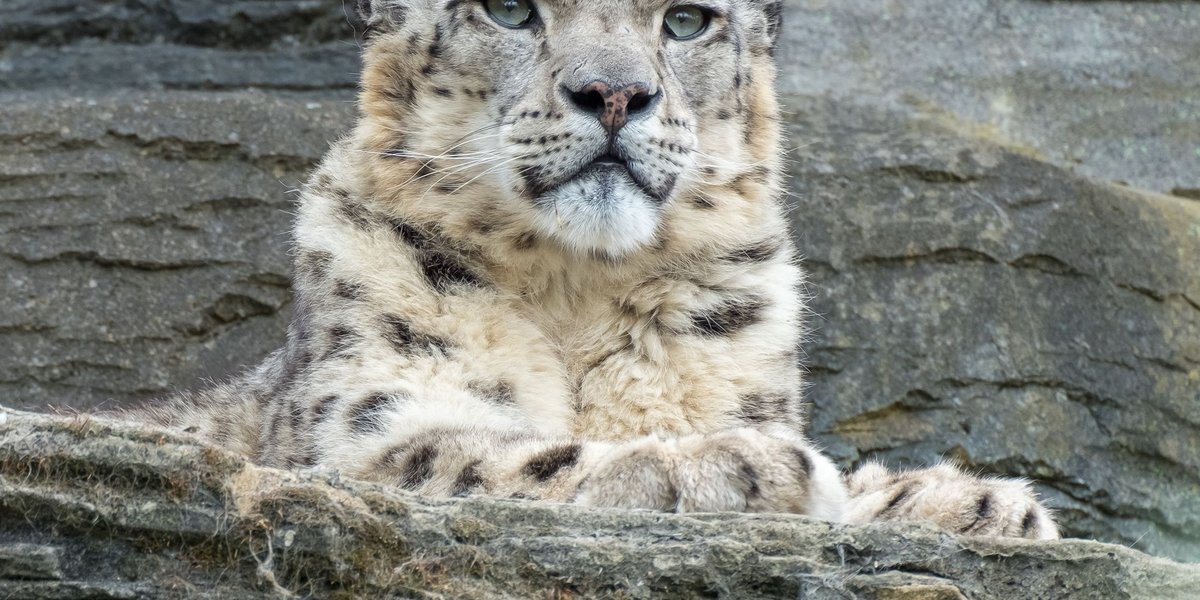
Snow leopard. Afghanistan’s national animal lives above 3,000 meters in the Wakhan and the eastern ranges, hunting ibex and marmots on terrain too steep for most predators to bother with. The country’s population sat at an estimated 100 to 200 animals for years, but camera-trap surveys run by the Wildlife Conservation Society between 2012 and 2019 recorded a real density increase in Wakhan National Park — from roughly 1.4 to 3.6 cats per 100 km². It’s one of the only wildlife trend lines in the country pointing up. The IUCN Red List classifies the species as Vulnerable.
Marco Polo sheep. A subspecies of argali, and the largest wild sheep on Earth — rams can hit 180 kg with horns that spiral out more than a meter. They live nowhere in Afghanistan except the high Wakhan plateau, grazing alpine grassland at altitudes that would give most livestock altitude sickness. Poaching for those horns, sold as trophies, is the main pressure on the population.
Markhor. The corkscrew-horned wild goat that shows up on wildlife conservation logos worldwide has small, scattered herds in Afghanistan’s eastern and northeastern mountains, near the Pakistan border. Markhor were hunted hard enough across their range that the IUCN once listed them as Endangered; the global population has recovered enough for a downgrade to Near Threatened, though Afghanistan’s own pocket of animals remains fragile.
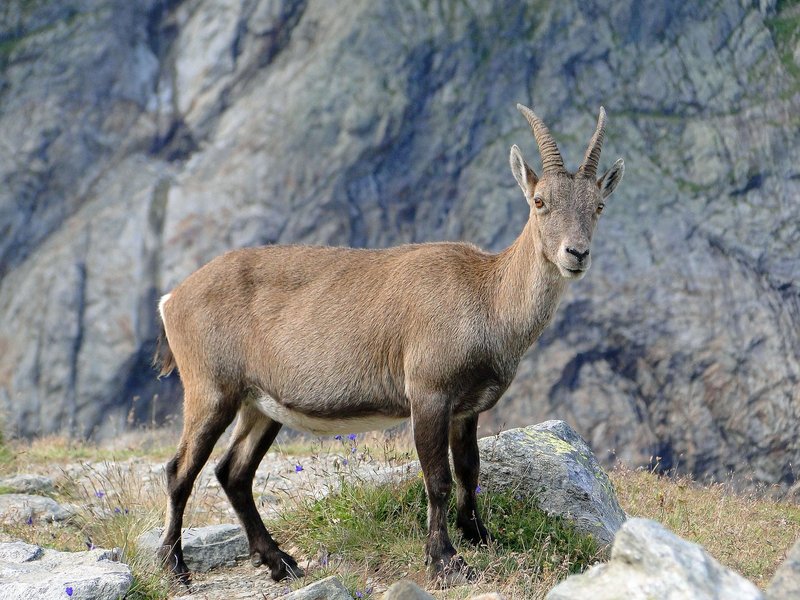
Siberian ibex. The snow leopard’s main prey species and, not coincidentally, found in the same rugged terrain. Ibex herds move in groups of a few dozen, favor cliff faces steep enough to lose most predators, and are a genuine conservation success story locally — populations in Wakhan have held stable where livestock grazing pressure hasn’t crowded them out.
Afghan urial. A wild sheep smaller and stockier than the Marco Polo, found on drier mountain slopes at somewhat lower elevation. Urial horns curl outward rather than up, and rams will fight for dominance in head-on collisions loud enough to hear from a distance. Numbers have dropped sharply from decades of unregulated hunting during and after the Soviet war.
Mid-Elevation Forest and Scrub Mammals
Below the alpine zone, in juniper woodland and rocky scrub, a different set of mammals takes over — mostly predators and omnivores that can work a wider range of terrain.
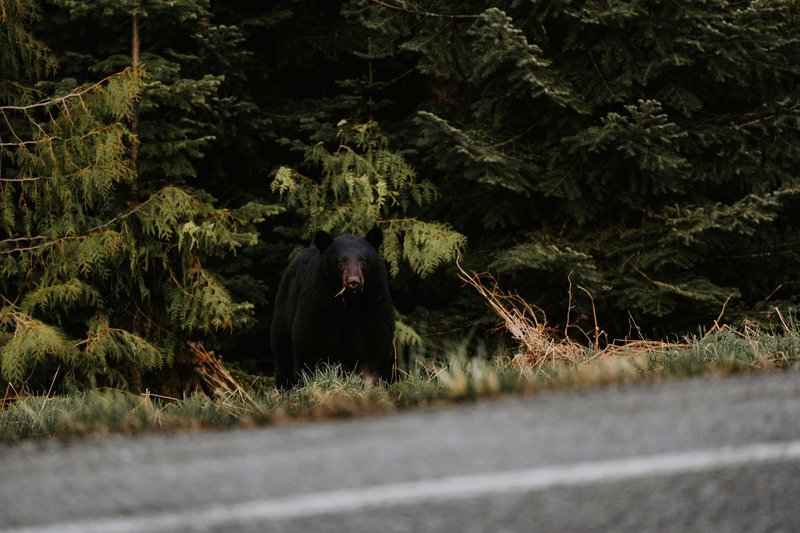
Asiatic black bear. Recognizable by the pale crescent on its chest, this bear survives in small numbers in Afghanistan’s eastern forests, particularly Nuristan and Kunar provinces near the Pakistan border. It’s an omnivore that will take fruit, insects, and carrion over hunting live prey when it can, which hasn’t stopped it from being killed as a perceived threat to livestock.
Himalayan brown bear. A separate, lighter-colored bear occupying higher and drier terrain than its black cousin, typically above the tree line in the northeast. Afghanistan’s brown bear population is thought to number only in the low hundreds, making it one of the rarer large mammals in the country.
Gray wolf. Afghanistan’s wolves range from the mountains down into open steppe, following whatever prey is available — ibex and marmots up high, livestock and hares lower down. Wolves are the mammal Afghan herders are most likely to actually encounter, which puts them on the losing end of retaliatory killing more often than almost any other predator here.
Eurasian lynx. A shy, mid-sized cat with tufted ears that hunts hares and game birds in forested and rocky mid-elevation habitat. Sightings are rare enough that population estimates for Afghanistan barely exist — most of what’s known comes from incidental camera-trap captures set up for snow leopard research.
Striped hyena. Not a mountain animal exactly, but a habitat generalist that moves between scrubland, foothills, and the edges of settlements, scavenging carcasses and taking small prey. Striped hyenas are one of the few large mammals in Afghanistan that isn’t in freefall — they tolerate human proximity better than almost anything else on this list.
Steppe and Desert Mammals
Drop below the foothills and the terrain flattens into dry steppe and, in the south and southwest, true desert. Fewer species, but ones built for heat and scarcity.
Pallas’s cat. A stocky, flat-faced wild cat about the size of a large housecat, with fur dense enough to look almost spherical in cold weather. It hunts pikas and small rodents across rocky steppe and is rarely seen — most records in Afghanistan come from camera traps rather than direct sightings.
Golden jackal. Common across the lower steppe and near agricultural land, golden jackals scavenge and hunt in pairs or small family groups. Unlike most of the animals on this list, jackals are doing fine — adaptable diet, tolerance for human-altered landscape, and a short breeding cycle keep numbers up.
Red fox. Present across nearly every habitat type in the country, from mountain scrub to desert edge. The Afghan population belongs to a subspecies suited to arid conditions, with a paler coat than European red foxes.
Goitered gazelle. A slim, pale gazelle named for the males’ seasonally swollen throat, once common across Afghanistan’s plains and now reduced to scattered pockets by decades of unregulated hunting. It’s one of the clearest examples of a species that was abundant within living memory and isn’t anymore.
Long-tailed marmot. A large, social rodent that digs extensive burrow colonies across alpine and sub-alpine meadow, and functions as a keystone prey species — snow leopards, wolves, and raptors all rely on marmots more than any single ungulate.
Wild boar. Found in reed beds and riverine scrub, mostly in the north, wild boar are one of the few mammals in Afghanistan whose population isn’t primarily limited by hunting — cultural and religious taboos around pork mean they’re left alone more than most game animals.
Cape hare. Widespread across open country at almost any elevation below the snowline, and the base of the diet for nearly every mid-sized predator on this list, from foxes to lynx.
Afghan pika. A small, rabbit-relative rodent living in rocky alpine terrain, and — along with the marmot — one of the two prey species the entire high-altitude food web quietly depends on.
Rhesus macaque. Afghanistan sits at the far western edge of the species’ enormous range, with a small population surviving in the forested valleys of Nuristan. It’s a strange fact to file away: the same monkey genus used in decades of biomedical research also lives wild in the Hindu Kush foothills.
The Bats Nobody Talks About
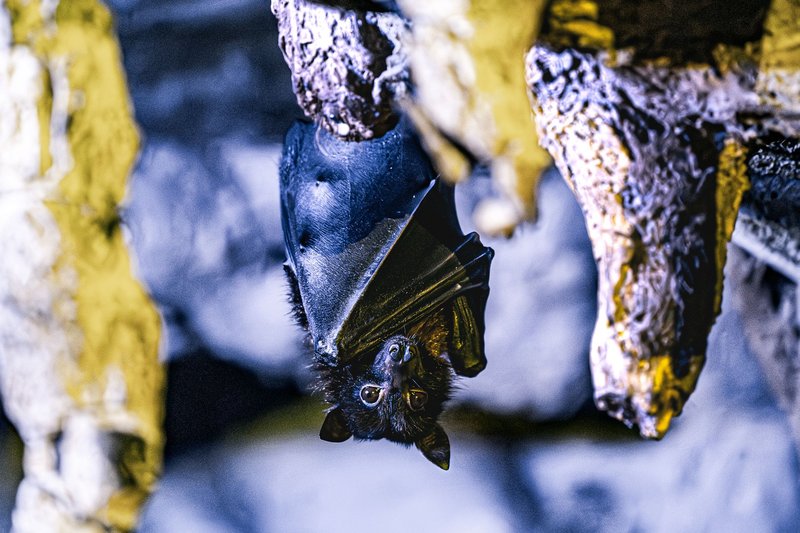
Skip past the headline predators and Afghanistan’s most numerically dominant mammal group isn’t a cat or a sheep — it’s bats. Roughly 40 species have been recorded in the country, including several pipistrelle and horseshoe bat species, occupying caves, ruins, and rock crevices from the lowlands up into mid-elevation forest. They almost never make a “wildlife of Afghanistan” list because nobody photographs them for a magazine cover, but they account for close to a third of the country’s total mammal diversity and do the unglamorous work of controlling insect populations across every habitat zone on this list.
Gone: What Afghanistan Has Already Lost
Not every entry in this guide gets to end in the present tense. Afghanistan’s large-predator guild used to be genuinely stacked, and most of the top of it is gone.
Caspian tiger. Extinct globally since the 1970s, the Caspian tiger once ranged along Afghanistan’s northern river valleys, particularly the reed beds bordering the Amu Darya. Habitat conversion to agriculture and direct hunting finished it off across its entire range, not just in Afghanistan.
Asiatic cheetah. Functionally extirpated from Afghanistan, with the last confirmed population anywhere now confined to a handful of individuals in Iran. Afghan cheetahs likely disappeared sometime in the mid-20th century as their gazelle prey base collapsed under hunting pressure.
Asiatic lion. Historical range maps put Asiatic lions across parts of what’s now Afghanistan and Pakistan centuries ago, though solid records are thin. Today the entire subspecies survives only in India’s Gir Forest, with roughly 600 individuals — none anywhere near Afghan territory.
Conservation Status at a Glance
| Species | IUCN Status | Where in Afghanistan |
|---|---|---|
| Snow leopard | Vulnerable | Wakhan Corridor, northeast highlands |
| Marco Polo sheep | Near Threatened | High Wakhan plateau |
| Markhor | Near Threatened | Eastern/northeastern mountains |
| Afghan urial | Vulnerable | Dry mid-elevation slopes |
| Siberian ibex | Least Concern | Northeast highlands |
| Asiatic black bear | Vulnerable | Nuristan, Kunar forests |
| Himalayan brown bear | Vulnerable | Northeast high country |
| Gray wolf | Least Concern | Mountains through steppe |
| Eurasian lynx | Least Concern | Mid-elevation forest/scrub |
| Striped hyena | Near Threatened | Foothills, scrubland |
| Pallas’s cat | Least Concern | Rocky steppe |
| Golden jackal | Least Concern | Lower steppe, farmland edges |
| Goitered gazelle | Vulnerable | Fragmented plains |
| Rhesus macaque | Least Concern (regionally scarce) | Nuristan forests |
| Caspian tiger | Extinct | Formerly Amu Darya river valleys |
| Asiatic cheetah | Critically Endangered (extirpated locally) | Formerly southern plains |
| Asiatic lion | Endangered (extirpated locally) | Formerly western/southern range |
Why So Few Large Mammals Survive
The short answer is decades of overlapping war, and the longer answer is what war does to wildlife management specifically. Four decades of conflict emptied out any consistent ranger presence, gutted protected-area enforcement, and put functioning firearms into more hands across more of the countryside than at any point in the country’s history. Large mammals — the ones that breed slowly and need big home ranges — took the worst of it, because a population that can’t outrun hunting pressure with its own reproduction rate simply shrinks every year until it’s gone.
Poaching compounds the war damage rather than replacing it. Snow leopard pelts and Marco Polo sheep horns carry real money on both domestic and cross-border markets, and a rural economy with few other income sources makes that trade hard to shut down through policy alone. Add habitat loss from a growing human and livestock population competing for the same grazing land as ibex and gazelle, and you get the pattern that shows up again and again in this guide: species that were common a century ago are now fragmented into a handful of refuges, usually the most remote and least accessible terrain the country has.
The Wakhan Corridor’s snow leopard numbers are the exception that proves the rule — sustained, well-funded, community-based conservation work through the Wildlife Conservation Society produced a measurable population increase in under a decade. It’s a small case study, but it’s the clearest evidence that Afghanistan’s wildlife decline isn’t inevitable so much as it’s a resourcing problem. Where someone has shown up consistently to do the unglamorous work of anti-poaching patrols and livestock insurance programs, the animals have responded.