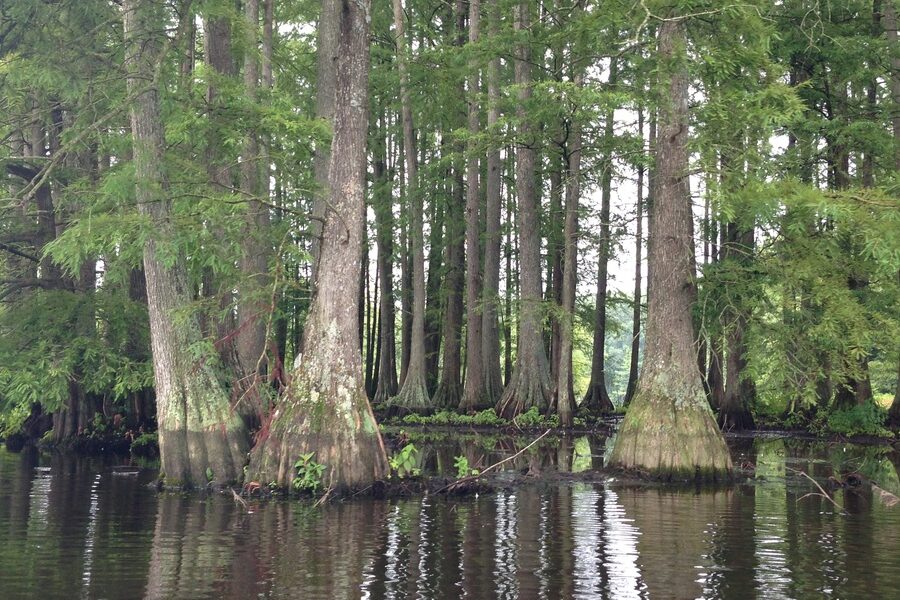
Micronesia’s scattered atolls and volcanic islands support a distinctive mix of coastal shrubs, forest trees, and reef-edge plants that local communities rely on for timber, medicine, and shade. The region’s varied soils, salt spray, and microclimates produce species you won’t find in the same combinations elsewhere.
There are 29 Plants of Micronesia, ranging from Alexandrian laurel to Vesi (Intsia). Entries are organized with Scientific name,Range & habitat,Height (m) so you can quickly compare where each species grows and how tall it typically gets — you’ll find below.
How can I tell which plants are native or introduced on this list?
Check the Range & habitat column for notes on distribution; endemic species are usually listed as restricted to particular islands or island groups. For confirmation, compare the entries with regional floras or herbarium records and local conservation lists.
Can this list help with gardening or restoration work in Micronesia?
Yes — the Scientific name,Range & habitat,Height (m) fields give basic guidance on suitability and mature size, but you should also seek local propagation advice, seed provenance, and any permit requirements before sourcing plants for restoration or landscaping.
Plants of Micronesia
| Name | Scientific name | Range & habitat | Height (m) |
|---|---|---|---|
| Coconut | Cocos nucifera | Widespread Micronesia; beaches, villages, atolls | 15.0 |
| Screw pine | Pandanus tectorius | Throughout Micronesia; coastal strands and reef islands | 6.0 |
| Sea hibiscus | Hibiscus tiliaceus | Coasts and lagoon shores across Micronesia | 6.0 |
| Milo (Pacific rosewood) | Thespesia populnea | Coastal villages and dry forests across Micronesia | 8.0 |
| Birdcatcher tree | Pisonia grandis | Atolls and larger islands; coastal forests and seabird colonies | 25.0 |
| Vesi (Intsia) | Intsia bijuga | Coastal and lowland forests across Micronesia | 25.0 |
| Alexandrian laurel | Calophyllum inophyllum | Coastal forests, villages, sandy soils across Micronesia | 12.0 |
| Tropical almond | Terminalia catappa | Beaches and villages throughout Micronesia | 12.0 |
| Boxfruit | Barringtonia asiatica | Fringing beaches and rocky shores across Micronesia | 12.0 |
| Nangai | Hernandia nymphaeifolia | Coastal forests and islets across Micronesia | 6.0 |
| Beach naupaka | Scaevola taccada | Fringing beaches and dunes throughout Micronesia | 2.0 |
| Beach morning glory | Ipomoea pes-caprae | Beaches and dunes across Micronesia | 0.2 |
| Red mangrove | Rhizophora mucronata | Seaward mangrove zones across many Micronesian coasts | 10.0 |
| Large‑leafed mangrove | Bruguiera gymnorhiza | Mangrove forests and tidal creeks across Micronesia | 12.0 |
| Grey mangrove | Avicennia marina | Upper mangrove fringe, salt flats and lagoons across Micronesia | 6.0 |
| Mangrove apple | Sonneratia alba | Seaward mangrove margins and tidal creeks across Micronesia | 12.0 |
| Hayun lagu (endemic) | Serianthes nelsonii | Guam and Rota (Northern Marianas); limestone forest remnants | 15.0 |
| Micronesian cycad | Cycas micronesica | Mariana Islands and Palau; limestone and ridgeline forests | 3.0 |
| Breadfruit | Artocarpus altilis | Cultivated and wild in islands across Micronesia; village groves | 12.0 |
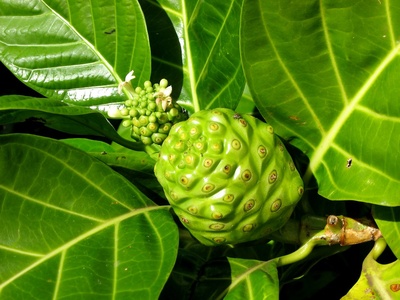
| Noni | Morinda citrifolia | Disturbed coastal forests and village gardens across Micronesia | 3.0 |
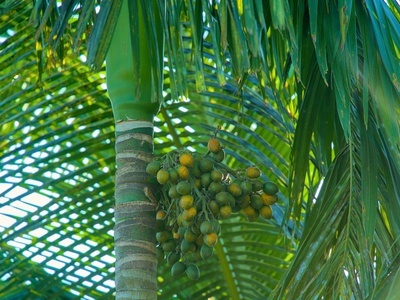
| Betel nut palm | Areca catechu | Villages, plantations and coastal areas across Micronesia | 12.0 |
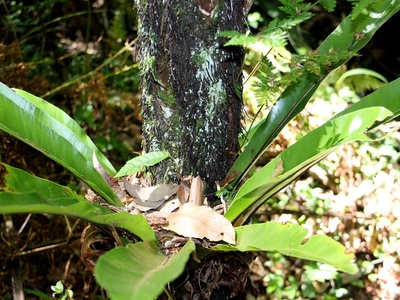
| Bird’s‑nest fern | Asplenium nidus | Moist forests across Micronesia; epiphytic on trunks and branches | 1.0 |
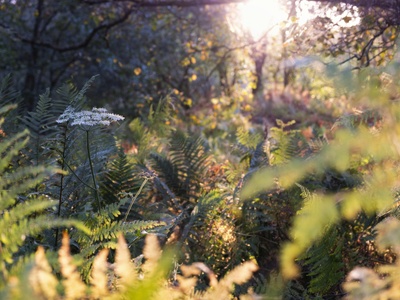
| Bracken fern | Pteridium aquilinum | Disturbed forests, slopes and open areas across Micronesia | 1.0 |
| Beach gardenia | Guettarda speciosa | Atoll shorelines and coastal forests throughout Micronesia | 8.0 |
| Seaside glorybower | Clerodendrum inerme | Coastal dunes, rocky shores and littoral scrub across Micronesia | 2.0 |
| Mangrove fern | Acrostichum aureum | Mangrove margins and brackish swamps across Micronesia | 1.5 |
| Pua (fragrant tree) | Fagraea berteroana | Village gardens and coastal forests across Micronesia | 5.0 |
| Premna | Premna serratifolia | Coastal forests, lagoon edges and gardens across Micronesia | 2.5 |
| Simpleleaf vitex | Vitex trifolia | Coastal scrub, dunes and coral rubble shores across Micronesia | 3.0 |
Images and Descriptions
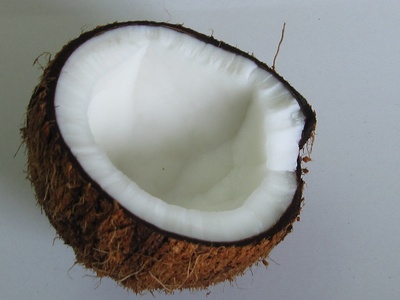
Coconut
Tall, iconic palm with smooth trunk and large pinnate fronds bearing coconuts. Found along shores and near settlements; vital food, drink, fiber and craft resource. Culturally central and naturally widespread, often stabilizes coastal sands and provides shade.
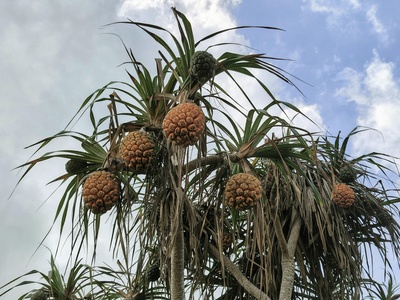
Screw pine
Stilt‑rooted tree with long spiky leaves and segmented fruit heads. Common on atolls; leaves used for mats and thatch while young fruit is edible. Highly salt‑tolerant and important for dune stabilization and traditional crafts.
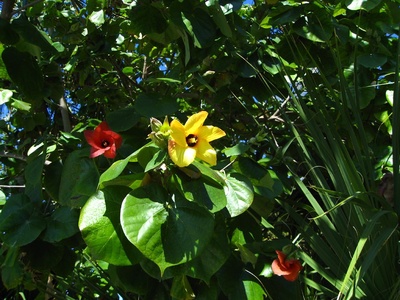
Sea hibiscus
Multi‑stemmed coastal tree with broad heart‑shaped leaves and yellow flowers that turn red. Makes dense shade and is used for timber, cordage and medicine. Easy to spot along beaches and village shorelines.

Milo (Pacific rosewood)
Small to medium tree with soft grey bark and showy yellow flowers. Valued for lightweight carving and canoe building; common near settlements and shorelines. Tolerant of salt spray and integral to traditional woodcraft.
Birdcatcher tree
Large shady tree with sticky fruits that can entangle seabirds. Forms dense canopy on many atolls and plays a major ecological role linking seabird guano to island soils. Notable for large, sometimes ephemeral stands.
Vesi (Intsia)
Massive hardwood tree with pinnate leaves and impressive buttress roots. Produces highly valued resistant timber used traditionally and commercially; overharvesting has made local populations vulnerable, making it a conservation concern.
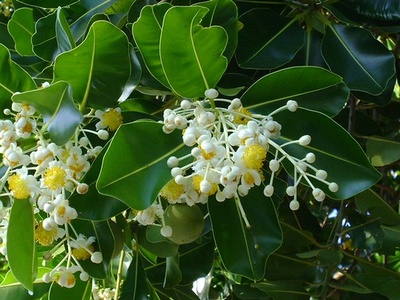
Alexandrian laurel
Evergreen tree with glossy leaves, fragrant white flowers and round oily seeds. Tamanu oil from seeds used medicinally; often planted near villages and beaches, and an important shade and windbreak species.
Tropical almond
Broad‑branched tree with tiered leaves that turn red before dropping. Produces edible nuts and provides reliable shade; commonly planted along roads and beaches and used for erosion control and traditional remedies.
Boxfruit
Large coastal tree with dramatic white overnight flowers and big buoyant fruits that disperse by sea. Flowers attract bats and moths; fruits were traditionally used for fish stunning. A striking shoreline species.
Nangai
Small tree with glossy leaves and a distinctive inflated fruit used as floats or containers. Common in coastal woods; wood and leaves have traditional uses. Noticeable by its soft fruits and pale bark.
Beach naupaka
Salt‑tolerant shrub with thick succulent leaves and white fan‑shaped flowers. Forms dense windproof hedges on shorelines and helps stabilize sand. Very common and easily identified by its distinctive flowers and sprawling habit.
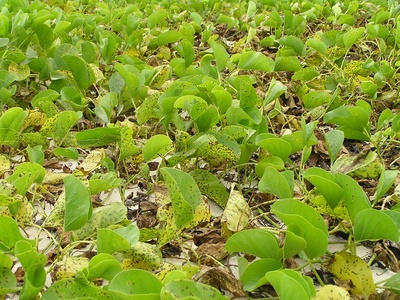
Beach morning glory
Prostrate, mat‑forming vine with pink to purple funnel flowers. Fast‑growing and excellent at binding sand dunes, easily seen along strandlines; key pioneer plant on many atolls protecting inland habitats from erosion.
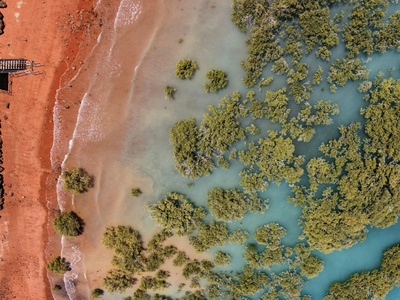
Red mangrove
Mangrove tree with prominent prop roots and viviparous propagules. Dominant in seaward zones, forming dense forests that absorb wave energy, trap sediment and serve as critical nursery habitat for fish and invertebrates.
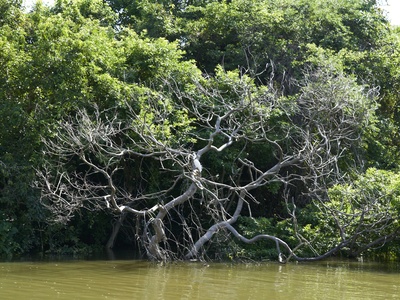
Large‑leafed mangrove
Stout mangrove with buttressed roots and knee‑like pneumatophores. Large glossy leaves and robust trunk; important for shoreline protection, local timber and traditional uses in coastal communities.
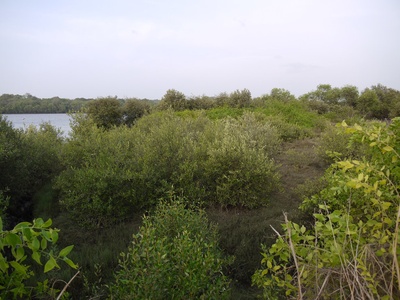
Grey mangrove
Shorter mangrove with pencil‑like pneumatophores and salt‑excreting grey‑green leaves. Tolerant of high salinity and exposed flats, it stabilizes sediments and often marks landward mangrove limits.
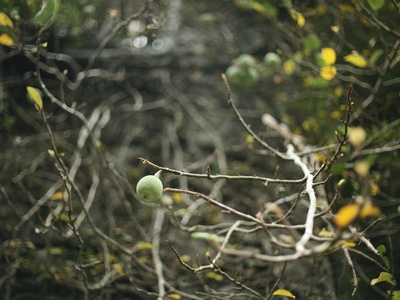
Mangrove apple
Tree with spongy pneumatophores and large white flowers opening at night. Often occupies the outer mangrove fringe, hosting diverse fauna and helping stabilize shorelines with extensive root systems.
Hayun lagu (endemic)
Striking endemic tree with feathery pinnate leaves and showy powder‑puff flower clusters. Critically endangered with very few wild trees left; high conservation priority and culturally significant in the Marianas.
Micronesian cycad
Stout trunked cycad with a crown of stiff, pinnate leaves and large cones. Once common but threatened by invasive insects and habitat loss; culturally significant and subject of recovery efforts.
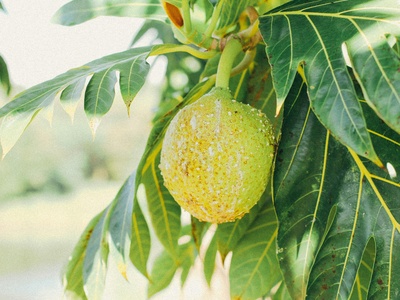
Breadfruit
Large tree with deeply lobed leaves and starchy fruits. Introduced by early voyagers and central to island diets; many traditional varieties exist. Produces abundant fruit used as a staple carbohydrate source.
Noni
Small tree with knobbly fragrant fruit used widely in traditional medicine and modern supplements. Tolerant of poor soils and salty conditions; common near homes and in secondary growth.
Betel nut palm
Slender palm with feathered fronds and clusters of orange to red nuts chewed culturally in some island communities. Often planted near homes; naturalized in many parts and used in ceremonial contexts.
Bird’s‑nest fern
Large rosette fern with broad, simple straplike fronds forming a “nest.” Common in shady forest understories and on tree trunks; easy to spot and sometimes used ornamentally but abundant in the wild.
Bracken fern
Robust fern forming large colonies of triangular fronds after disturbance. Persistent underground rhizomes allow rapid spread; historically used as food or fodder in some places but can dominate regenerating areas.
Beach gardenia
Coastal tree with glossy simple leaves and fragrant white tubular flowers. Produces large hard fruits; commonly found on beaches and valued for shade, traditional uses and its showy night‑scented blooms.
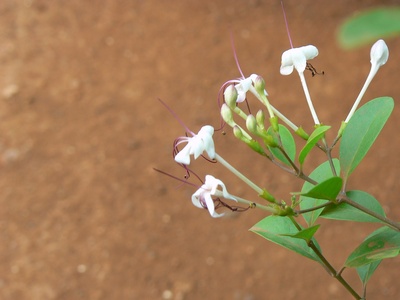
Seaside glorybower
Salt‑tolerant shrub with fleshy leaves and fragrant white flowers that age to pink. Often used for hedges and shoreline protection; tolerant of wind and salt spray, making it common on the strand.
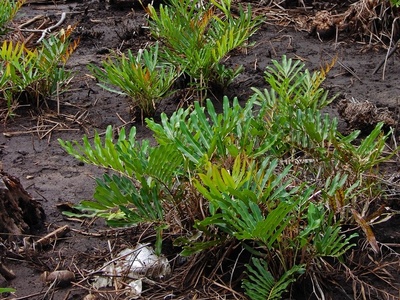
Mangrove fern
Large leathery fern forming dense stands at mangrove edges and swampy ground. Fertile fronds are distinctive brownish spikes; tolerates brackish conditions and often occupies transitional zones between mangrove and upland vegetation.
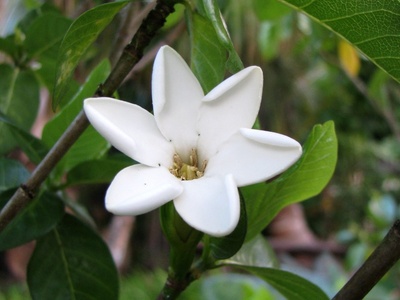
Pua (fragrant tree)
Small tree with glossy leaves and intensely fragrant white flowers used in leis and cultural decorations. Often planted near homes and sacred sites; notable for scent and cultural importance throughout the region.
Premna
Low shrub or small tree with opposite serrated leaves and clusters of small tubular flowers. Used traditionally for medicine and hedges; common in littoral forests and disturbed coastal areas.
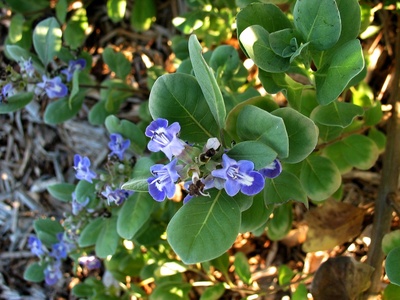
Simpleleaf vitex
Aromatic shrub with grey‑green pinnate leaves and small lilac flowers. Very tolerant of salt spray and wind, often used to stabilize coastal slopes and identifiable by its distinctive foliage scent.