Guatemala’s mix of lowland coasts, wetlands and highland forests supports a rich reptile fauna that reflects the country’s varied climates and habitats. From coastal mangroves to cloud forest edges, species appear in distinct pockets that are useful to know for fieldwork or travel planning.
There are 12 Reptiles of Guatemala, ranging from the American crocodile to the Terciopelo (Fer-de-lance). For each species the list provides Scientific name,IUCN status,Range in Guatemala — you’ll find below.
Are any of these reptiles dangerous to people in Guatemala?
Yes; a few species pose real risks, most notably venomous snakes such as the Terciopelo (Bothrops asper) and large crocodilians like the American crocodile in coastal waterways. Risk is highest when animals are surprised, cornered, or handled, so maintain distance, avoid tall grass and night walks near water, and seek local guidance when in known habitats.
How can I responsibly observe or identify these reptiles while visiting?
Visit protected areas with guides, go during recommended times (many reptiles are more active at dawn/dusk), use a field guide or app for quick ID, keep a respectful distance, and photograph rather than capture. Reporting sightings to local conservation groups can also support monitoring and protection efforts.
Reptiles of Guatemala
| Name | Scientific name | IUCN status | Range in Guatemala |
|---|---|---|---|
| American crocodile | Crocodylus acutus | Vulnerable | Pacific and Caribbean coasts, large rivers and estuaries |
| Spectacled caiman | Caiman crocodilus | Least Concern | Lowland wetlands, rivers in Petén, Izabal and northern lowlands |
| Boa constrictor | Boa constrictor | Least Concern | Lowland and foothill forests throughout much of the country |
| Terciopelo (Fer-de-lance) | Bothrops asper | Least Concern | Humid lowlands and foothills on both Atlantic and Pacific slopes |
| Central American rattlesnake | Crotalus simus | Least Concern | Lowlands and foothills, Pacific and Gulf slopes |
| Central American river turtle | Dermatemys mawii | Critically Endangered | Large rivers and floodplains, Petén and southern lowlands |
| Central American snapping turtle | Chelydra acutirostris | Least Concern | Rivers and wetlands in lowlands, Pacific and Caribbean slopes |
| Green sea turtle | Chelonia mydas | Endangered | Coastal waters and nesting beaches on both Pacific and Caribbean coasts |
| Hawksbill turtle | Eretmochelys imbricata | Critically Endangered | Coral reefs and nesting beaches, Caribbean and Pacific coasts |
| Leatherback turtle | Dermochelys coriacea | Vulnerable | Offshore waters and occasional nesting on Pacific beaches |
| Olive ridley turtle | Lepidochelys olivacea | Vulnerable | Pacific nesting beaches and nearshore waters |
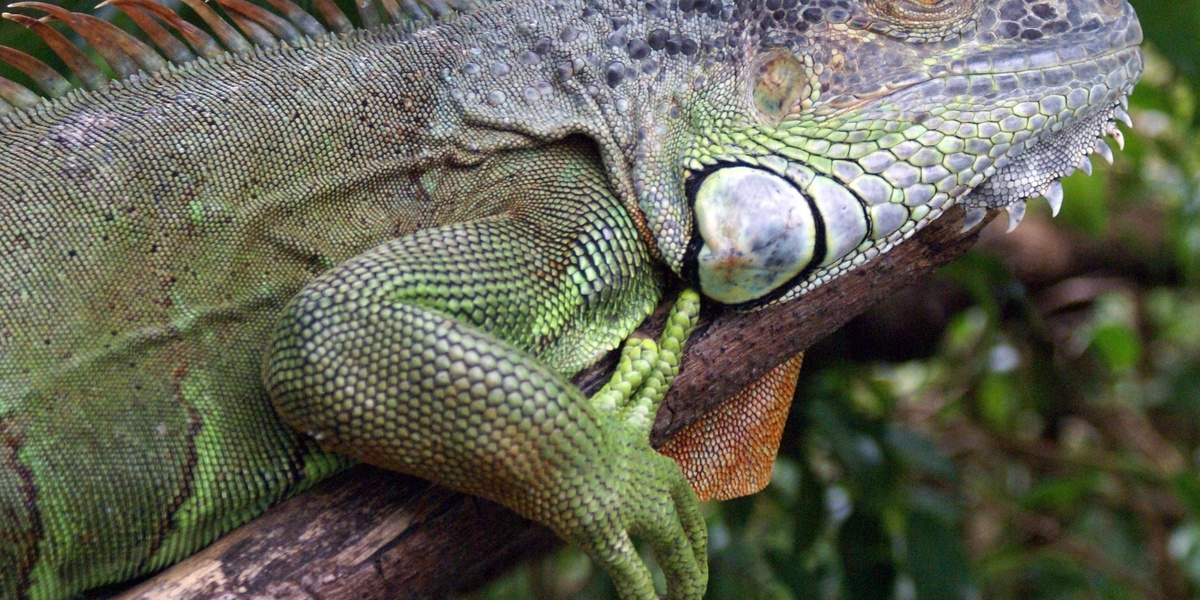
| Green iguana | Iguana iguana | Least Concern | Lowland forests, riversides, human areas in Atlantic and Pacific lowlands |
Images and Descriptions
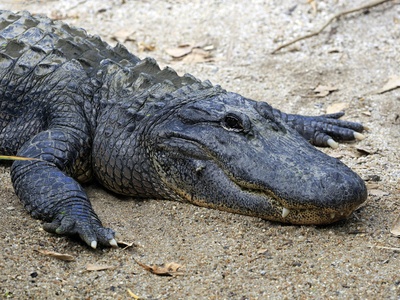
American crocodile
Large coastal crocodilian up to 4–5 m, lives in brackish mangroves and river mouths. Watch for ridged snout and pale belly; vulnerable from habitat loss and hunting, often seen near coastal fishing villages.
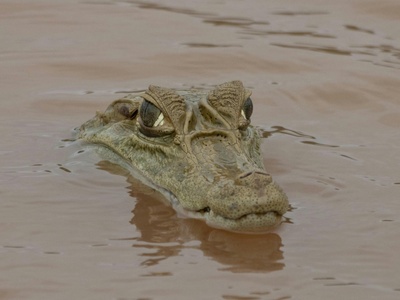
Spectacled caiman
Smaller crocodilian with bony ridge between eyes, usually under 2.5 m. Common in slow rivers and wetlands; tolerant of disturbed habitats and frequently found basking in sunlit marshes and oxbow lakes.
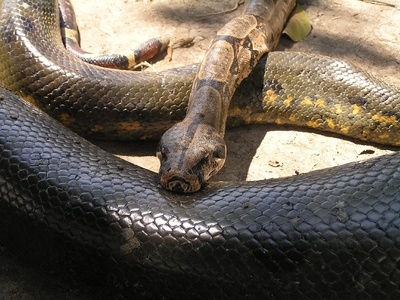
Boa constrictor
Heavy-bodied non-venomous snake up to 3 m with patterned brown bands. Nocturnal ambush predator of mammals and birds; often found near forest edges and agricultural areas.
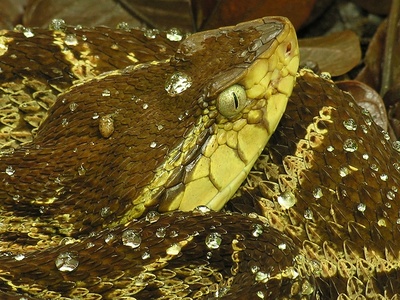
Terciopelo (Fer-de-lance)
Venomous pit viper; heavy-bodied, highly variable patterning, often found in banana plantations and forest edges. Responsible for many snakebites; avoid tall vegetation and night activity.
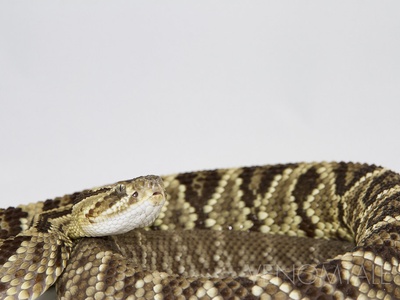
Central American rattlesnake
Medium to large rattlesnake with keeled scales and distinct rattle; wary but potentially dangerous. Prefers dry forests and scrub; look for triangular head and rattle warning when disturbed.
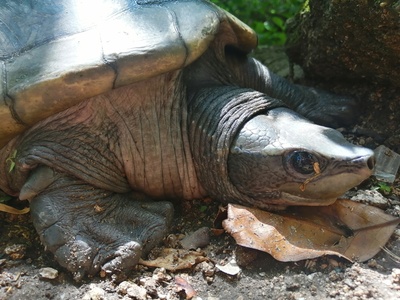
Central American river turtle
A unique, large aquatic turtle with smooth carapace, up to ~60 cm. Strictly freshwater, herbivorous; heavily hunted for food and culturally important — among Guatemala’s most endangered reptiles.
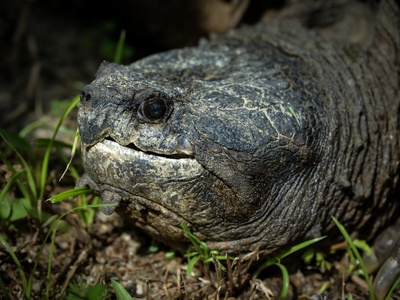
Central American snapping turtle
Aggressive freshwater turtle with powerful jaws and long tail. Often seen in slow-moving rivers and canals; omnivorous scavenger and important aquatic predator in lowland waterways.
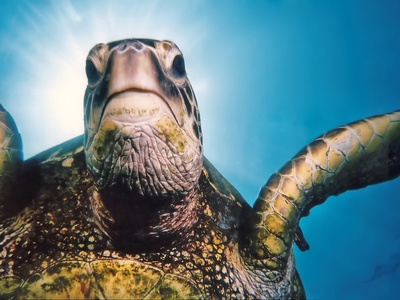
Green sea turtle
Large herbivorous sea turtle with smooth carapace, nests on sandy beaches. Frequently forages in nearshore seagrass beds; threatened by egg harvesting, bycatch and coastal development.
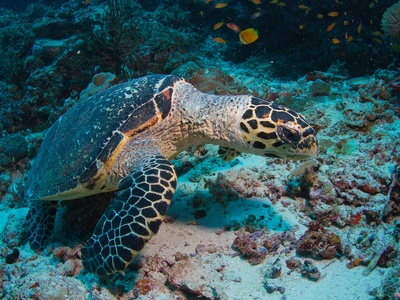
Hawksbill turtle
Smaller sea turtle with pointed beak and overlapping scutes; reef-associated sponge-eater. Highly endangered due to shell trade and nesting beach loss; prized and familiar to divers.
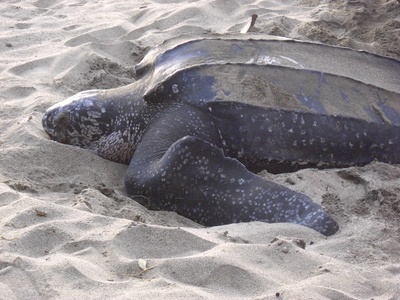
Leatherback turtle
World’s largest sea turtle with leathery shell, deep-diving jellyfish specialist. Rare but recorded offshore; migratory visitor susceptible to bycatch and marine pollution.
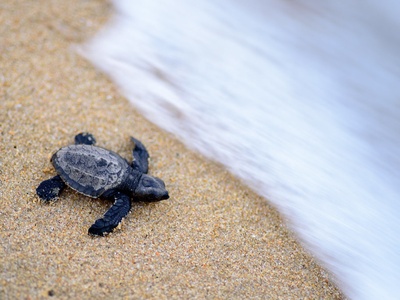
Olive ridley turtle
Small, gregarious sea turtle that nests in mass arribadas on Pacific coasts. Shell up to ~70 cm; common nester on Guatemala’s Pacific beaches but threatened by egg collection and fisheries bycatch.
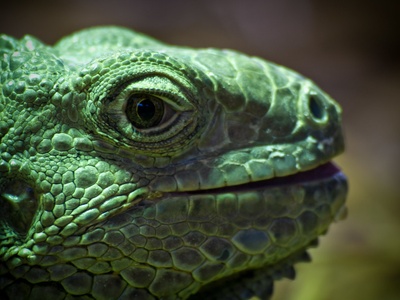
Green iguana
Large arboreal lizard up to 1.5 m with dewlap and crest; primarily herbivorous. Common along riverbanks and towns, excellent swimmer and frequent roadside sighting in lowland Guatemala.