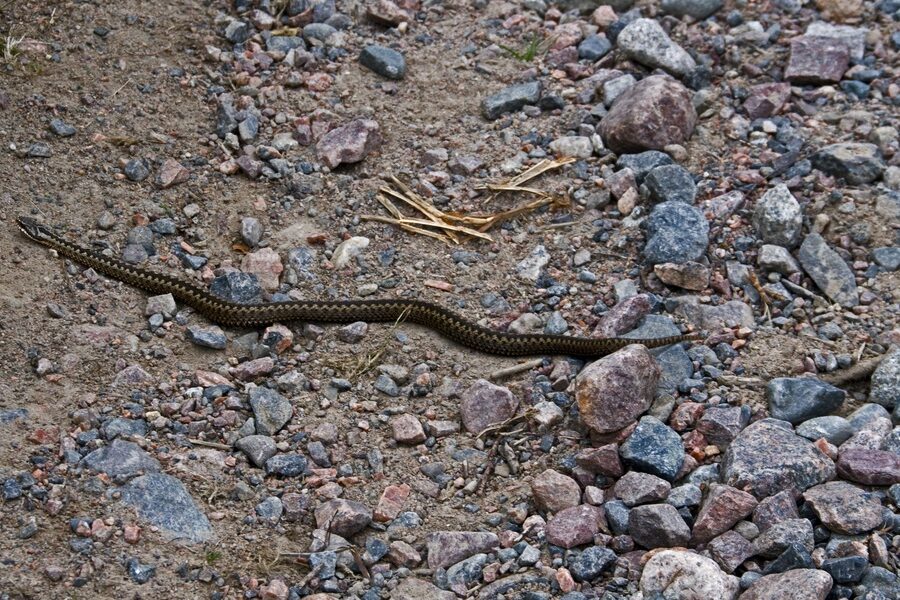
Across forests, grasslands, deserts and coastlines, North America’s reptiles play key roles in food webs and local cultures. Sightings can range from backyard snakes to river turtles, and a basic familiarity helps with identification, safety, and conservation.
There are 53 Reptiles of North America, ranging from the Alligator snapping turtle to the Western hognose, which illustrates the continent’s variety in size and habitat. The list is organized with columns showing Scientific name, Max length (cm), Range, and for each species you’ll find below those data points to help with quick reference.
How can I tell venomous from non-venomous reptiles in North America?
Look for a combination of characters rather than a single sign: head shape, pupil type, tail behavior, and habitat can all help, but regional exceptions exist. When in doubt, keep distance and consult local field guides or apps that match photos to species—never handle a snake unless you’re trained.
Where can I observe these species without disturbing them?
Visit established parks, wildlife refuges, and designated trails during appropriate seasons and times (many reptiles are more active in warm, sunny periods). Use binoculars or a camera with zoom, stay on trails, avoid handling, and follow local regulations to minimize stress to animals.
Reptiles of North America
| Name | Scientific name | Max length (cm) | Range |
|---|---|---|---|
| Garter snake | Thamnophis sirtalis | 120 | Canada, USA, Mexico |
| Northern water snake | Nerodia sipedon | 140 | Canada, USA (eastern, central) |
| Corn snake | Pantherophis guttatus | 180 | Southeastern USA, northern Mexico |
| Black rat snake | Pantherophis obsoletus | 240 | Eastern USA, southern Ontario |
| Eastern racer | Coluber constrictor | 150 | Canada, USA, northern Mexico |
| Timber rattlesnake | Crotalus horridus | 150 | Eastern USA, southern Ontario historically |
| Western diamondback rattlesnake | Crotalus atrox | 180 | Southwestern USA, northern Mexico |
| Eastern diamondback rattlesnake | Crotalus adamanteus | 200 | Southeastern USA (coastal plains) |
| Mojave rattlesnake | Crotalus scutulatus | 120 | Southwestern USA, northern Mexico |
| Copperhead | Agkistrodon contortrix | 100 | Eastern USA, northern Mexico patchily |
| Cottonmouth (water moccasin) | Agkistrodon piscivorus | 120 | Southeastern USA, Gulf coastal areas |
| Eastern coral snake | Micrurus fulvius | 80 | Southeastern USA, Caribbean coastlines |
| Milk snake | Lampropeltis triangulum | 150 | Canada, USA, Mexico (various regions) |
| Ring-necked snake | Diadophis punctatus | 45 | Canada, USA, Mexico (widespread) |
| Northern water snake (banded water variant) | Nerodia fasciata | 120 | Southeastern USA, Gulf states |
| Smooth green snake | Opheodrys vernalis | 60 | Canada, northern USA, isolated pockets |
| Eastern hognose | Heterodon platirhinos | 90 | Eastern USA, southern Canada |
| Western hognose | Heterodon nasicus | 60 | Plains USA, southern Canada, northern Mexico |
| California kingsnake | Lampropeltis californiae | 150 | Western USA, northern Mexico |
| Prairie rattlesnake | Crotalus viridis | 150 | Great Plains, western USA, parts of Mexico |
| Common kingsnake | Lampropeltis getula | 150 | Eastern, central USA, Mexico in parts |
| Green anole | Anolis carolinensis | 20 | Southeastern USA, introduced elsewhere |
| Brown anole | Anolis sagrei | 22 | Established Florida, Gulf states (introduced) |
| Western fence lizard | Sceloporus occidentalis | 22 | Western USA, into Baja California |
| Eastern fence lizard | Sceloporus undulatus | 18 | Eastern USA, Appalachians to Midwest |
| Collared lizard | Crotaphytus collaris | 30 | Southeastern and southwestern USA, Mexico |
| Common side-blotched lizard | Uta stansburiana | 14 | Western USA, northern Mexico deserts and scrub |
| Desert spiny lizard | Sceloporus magister | 28 | Southwestern USA, northern Mexico deserts |
| Texas horned lizard | Phrynosoma cornutum | 23 | South-central USA, northern Mexico |
| Chuckwalla | Sauromalus ater | 46 | Southwestern USA, Baja California deserts |
| Gila monster | Heloderma suspectum | 60 | Southwestern USA, northern Mexico |
| Mexican beaded lizard | Heloderma horridum | 90 | Pacific coast Mexico, pockets in Central America |
| Green iguana | Iguana iguana | 200 | Southern Mexico, Yucatán, introduced Florida |
| Common five-lined skink | Plestiodon fasciatus | 18 | Eastern USA, southern Canada |
| Broad-headed skink | Plestiodon laticeps | 30 | Southeastern USA woodlands and edges |
| Leopard lizard | Gambelia wislizenii | 30 | Western USA deserts and shrublands |
| Desert night lizard | Xantusia vigilis | 12 | Southwestern USA, Baja California deserts |
| Spiny-tailed iguana | Ctenosaura pectinata | 120 | Western Mexico, some Gulf islands |
| Common snapping turtle | Chelydra serpentina | 80 | Canada, USA, northern Mexico freshwater systems |
| Alligator snapping turtle | Macrochelys temminckii | 120 | Southeastern USA rivers and swamps |
| Painted turtle | Chrysemys picta | 30 | Canada, USA, northern Mexico ponds, lakes, slow rivers |
| Red-eared slider | Trachemys scripta elegans | 30 | Mississippi basin native; established widely |
| Box turtle (Eastern) | Terrapene carolina | 20 | Eastern USA woodlands, meadows |
| Ornate box turtle | Terrapene ornata | 18 | Central USA grasslands and prairies |
| Desert tortoise | Gopherus agassizii | 40 | Southwestern USA deserts (Mojave, Sonoran) |
| Texas tortoise | Gopherus berlandieri | 30 | Southern Texas, northeastern Mexico thorn-scrub |
| Loggerhead sea turtle | Caretta caretta | 120 | Atlantic coasts USA, Gulf of Mexico, Mexico |
| Kemp’s ridley sea turtle | Lepidochelys kempii | 60 | Gulf of Mexico, Atlantic Mexico, USA nesting |
| Green sea turtle | Chelonia mydas | 130 | Tropical Atlantic, Caribbean coasts, Mexico beaches |
| Leatherback sea turtle | Dermochelys coriacea | 250 | Atlantic coastlines, migratory to Canada, USA, Mexico |
| Hawksbill sea turtle | Eretmochelys imbricata | 95 | Caribbean Mexico, southern Florida coastal reefs |
| American alligator | Alligator mississippiensis | 435 | Southeastern USA freshwater marshes and rivers |
| American crocodile | Crocodylus acutus | 350 | Southern Florida, coastal Mexico, Central America |
Images and Descriptions
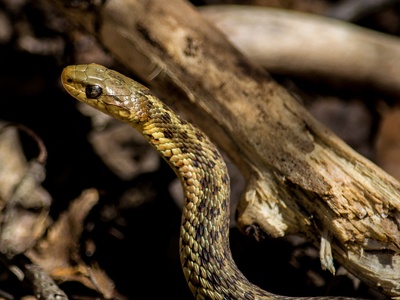
Garter snake
Common, slender snake with longitudinal stripes; lives in meadows, gardens and near water. Reaches about 1.2 m, harmless to people, often eats amphibians and fish. Widespread and adaptable; some local populations face habitat loss.
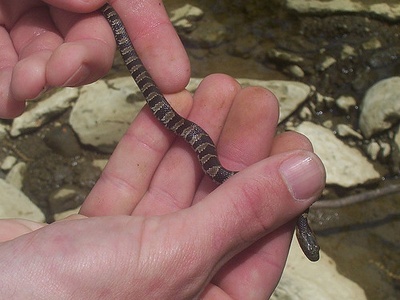
Northern water snake
Thick-bodied, banded watersnake often mistaken for venomous species; basks on rocks and swims in rivers, lakes, wetlands. Grows up to about 1.4 m, may bite when handled but nonvenomous. Common but sensitive to water pollution.
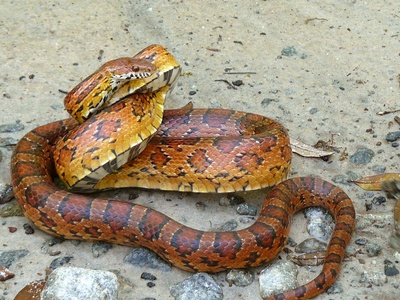
Corn snake
Colorful, reddish-brown orchard and forest snake with blotches; excellent climber and secretive. Reaches about 1.8 m, nonvenomous constrictor popular in captivity. Generally common where wooded or agricultural edges remain.
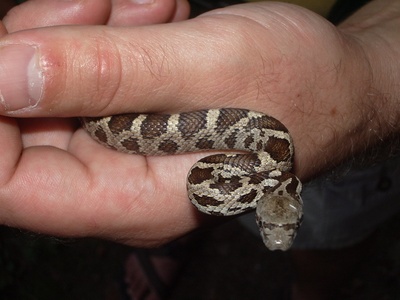
Black rat snake
Large black snake that climbs trees and barns; eats rodents and birds. Can reach about 2.4 m, nonvenomous and beneficial on farms. Tolerant of human landscapes but some populations decline from persecution.
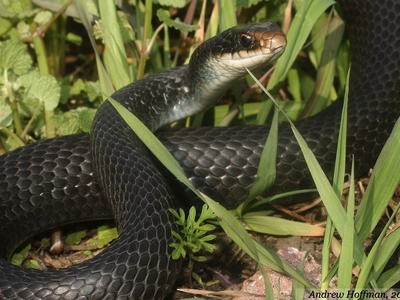
Eastern racer
Slim, fast-moving snake with uniform dark or patterned back; found in fields, forests and roadsides. Up to 1.5 m, nonvenomous and diurnal. Common but often killed due to mistaken identity.
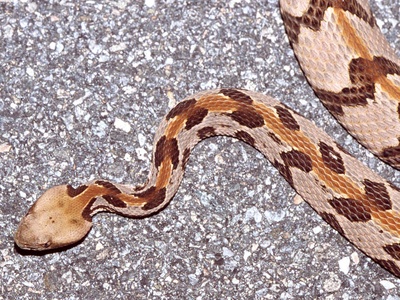
Timber rattlesnake
Large, heavy-bodied pit viper with rattles; prefers forests and rocky ledges. Up to about 1.5 m, venomous and potentially dangerous if threatened. Populations declined from habitat loss and persecution; some protected.
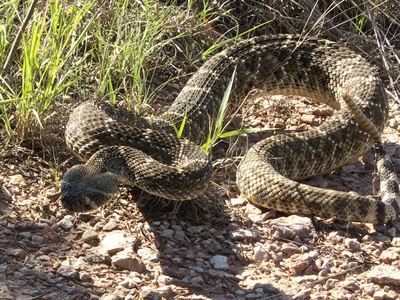
Western diamondback rattlesnake
Iconic rattler of deserts and grasslands with diamond pattern; sturdy, terrestrial. Reaches about 1.8 m, venomous and potentially dangerous. Locally common but subject to human conflict and control.
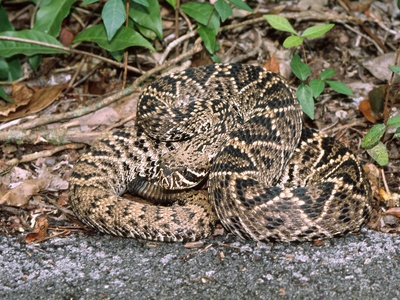
Eastern diamondback rattlesnake
Largest rattlesnake in North America with diamond pattern; inhabits pine flatwoods and scrub. Can exceed 2.0 m, highly venomous. Populations reduced by habitat loss and collecting; conservation concern.
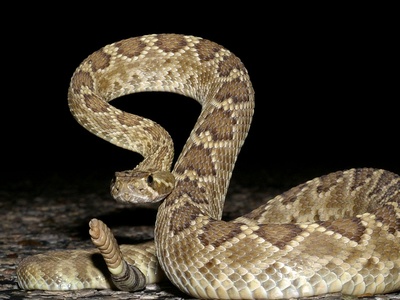
Mojave rattlesnake
Desert rattlesnake known for potent venom; greenish to brown with patterned body. About 1.2 m maximum; prefers arid scrub and rocky terrain. Notable medically; avoid and give wide berth.
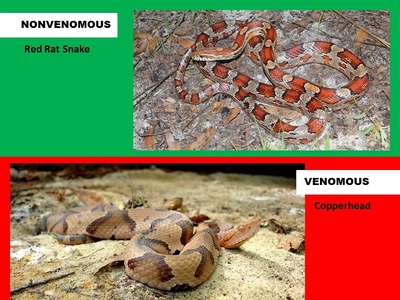
Copperhead
Medium, coppery hourglass-marked viper in forests and wetlands. Reaches about 1.0 m, venomous but rarely fatal to healthy adults. Common locally; bites usually defensive near human activity.

Cottonmouth (water moccasin)
Thick-bodied aquatic pit viper with dark bands; basks on logs in swamps and rivers. Up to about 1.2 m, venomous and defensive when cornered. Important predator; avoid close contact.
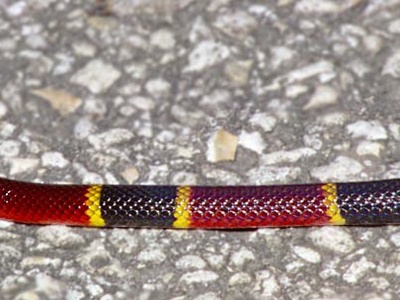
Eastern coral snake
Small, brightly banded red-black-yellow venomous snake in sandy woods and scrub. Rare and secretive, about 80 cm max; highly venomous but reclusive. Conservation status varies with habitat quality.
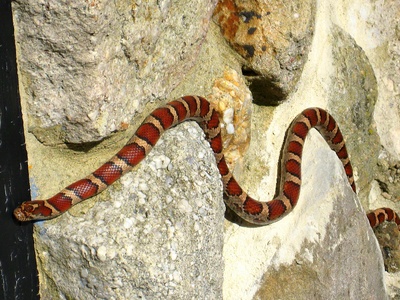
Milk snake
Colorful patterned kingsnake mimic of coral snakes; occupies forests, fields and rocky areas. Up to 1.5 m, nonvenomous constrictor that eats rodents and other snakes. Widely distributed and adaptable.
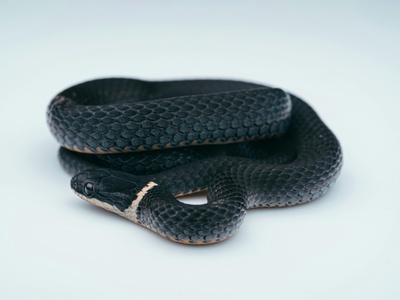
Ring-necked snake
Small, secretive snake with dark back and orange neck ring; prefers moist forests and under logs. About 45 cm max, mildly rear-fanged but harmless to people. Common but often overlooked.
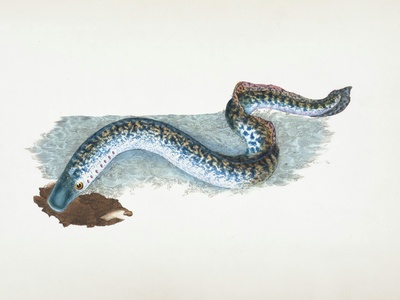
Northern water snake (banded water variant)
Aquatic, banded watersnake frequenting swamps and marshes; basks and hunts fish. Reaches about 1.2 m, nonvenomous though defensive when handled. Established and common in southern wetlands.
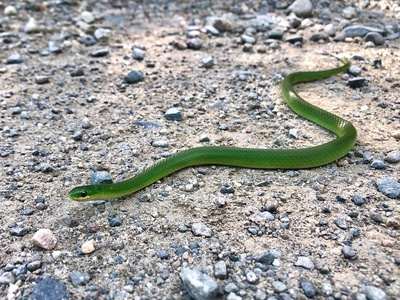
Smooth green snake
Small, bright green grass-dwelling snake that feeds on insects; favors meadows and marsh edges. About 60 cm max, completely harmless and secretive. Some local declines from habitat loss and pesticide use.
Eastern hognose
Stocky, upturned snout used for digging; flattens head and plays dead when threatened. About 90 cm max, mildly venomous to prey only, harmless to people. Prefers sandy soils; some populations declining.
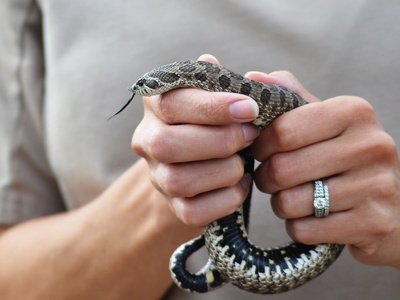
Western hognose
Small, stout snake with upturned snout for burrowing in sandy soils and prairies. About 60 cm long, rear-fanged and harmless to people, famous for dramatic defensive displays. Localized declines in degraded grasslands.
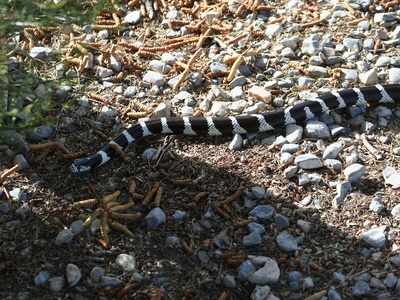
California kingsnake
Boldly banded or striped kingsnake that eats rodents and other snakes, including rattlesnakes. About 1.5 m max, nonvenomous and commonly encountered in deserts and chaparral. Popular in hobby trade; wild populations generally stable.
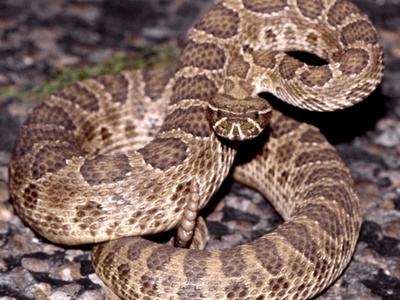
Prairie rattlesnake
Rattlesnake of grasslands and rocky hills with variable patterning; hunts rodents. Grows to about 1.5 m, venomous and important predator. Tolerant of open habitats but affected by human persecution.
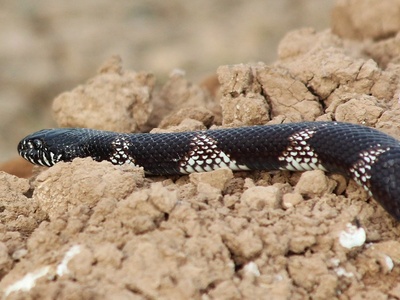
Common kingsnake
Black or banded constrictor that controls rodent and snake populations; versatile habitat use from wetlands to woodlands. Up to 1.5 m, nonvenomous. Locally common; some taxonomic splits exist in literature.
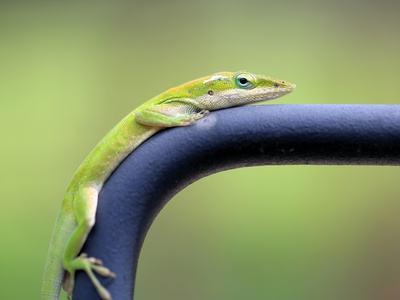
Green anole
Small slender lizard with color-changing throat dewlap; lives in trees, shrubs and buildings. About 20 cm total including tail, harmless and common in warm climates. Some competition from introduced anoles affects local populations.
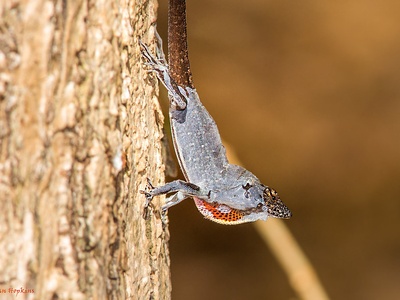
Brown anole
Small, brownish arboreal lizard originally from the Caribbean; established and widespread in Florida. About 22 cm long, invasive competitor of native anoles and prolific breeder. Common in urban and coastal habitats.
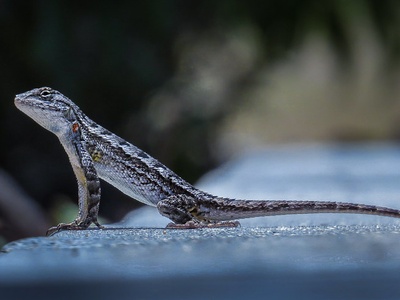
Western fence lizard
Spiny-bodied lizard often on fences, rocks, and logs; males show blue belly patches. Around 22 cm total length, insectivorous and common. Important for controlling ticks and insect pests.
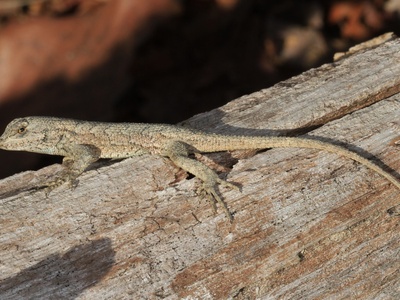
Eastern fence lizard
Robust, spiny lizard with blue belly patches in males; occupies dry, sunny habitats and tree trunks. About 18 cm total, common locally and helps control insects.
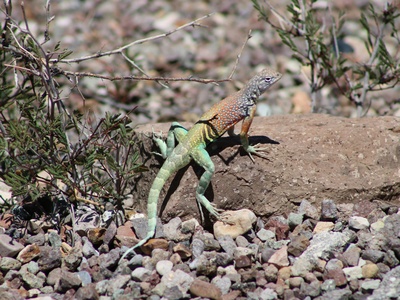
Collared lizard
Bold, large-headed lizard with black neck collars; prefers rocky outcrops and can run on hind legs. Up to about 30 cm, insectivorous and strikingly patterned. Localized but common where habitat remains.
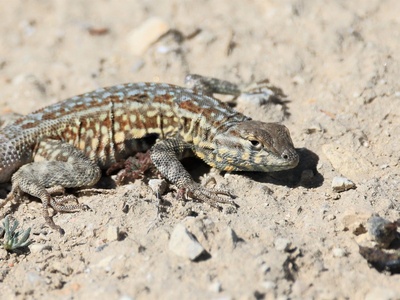
Common side-blotched lizard
Small ground-dwelling lizard with a dark blotch behind forelimb; widespread in arid regions. About 14 cm long, fast and numerous. Populations fluctuate with climate and habitat.
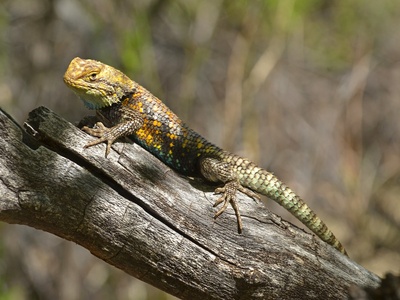
Desert spiny lizard
Large, stout spiny lizard common on desert rocks and walls; males show bold colors in breeding season. Reaches about 28 cm, insectivorous and heat-tolerant. A familiar desert species.
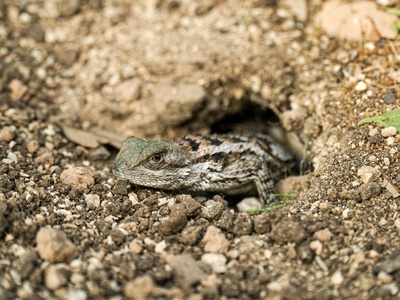
Texas horned lizard
Flattened, toad-like lizard with horned head and short tail; ambushes ants and beetles in arid grasslands. Up to about 23 cm, harmless but threatened by habitat loss and invasive fire ants.
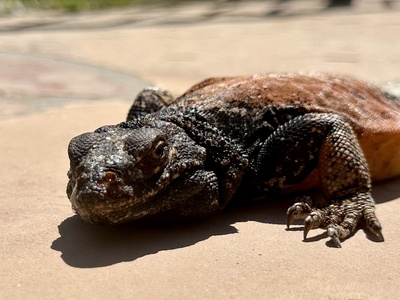
Chuckwalla
Large, chunky herbivorous lizard of rocky crevices; inflates body to wedge into holes. Reaches about 46 cm, docile and sun-loving. Locally common in crevice-rich habitats; some pressure from collection.
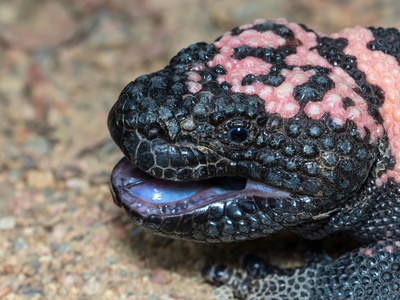
Gila monster
Heavy, stout venomous lizard with bead-like scales and bright pattern; slow-moving, feeds on eggs and small mammals. About 60 cm max, venomous but rarely aggressive. Protected in many places; vulnerable in parts of range.
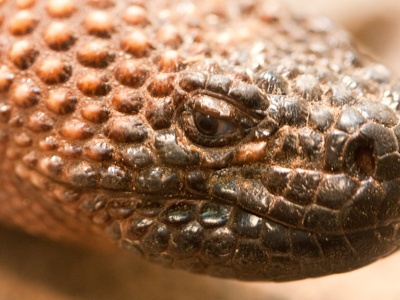
Mexican beaded lizard
Large, heavy, bead-scaled venomous lizard with bold pattern; prefers dry thorn-scrub and rocky areas. Up to about 90 cm, rare and locally threatened from collection and habitat loss.
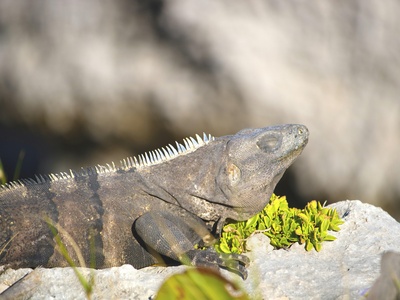
Green iguana
Large arboreal herbivore with dorsal crest and dewlap; common in tropical forests and coastal areas. Can reach 2.0 m including tail, harmless but can be destructive where overabundant. Populations declining in parts of native range.
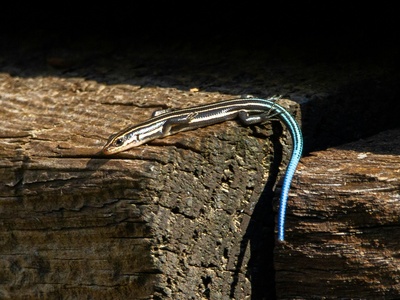
Common five-lined skink
Shiny skink with juvenile blue tails; occupies woodlands and gardens under logs. Up to about 18 cm, insectivorous and widespread. Some local declines due to habitat loss and invasive species.
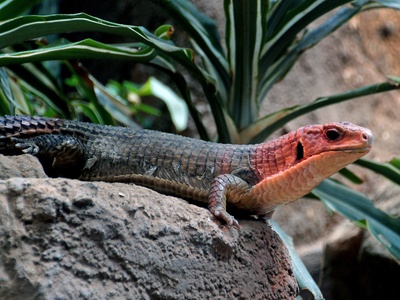
Broad-headed skink
Large skink with broad head in males and arboreal habits; active on trees and rocks. About 30 cm maximum, eats insects and small vertebrates. Common in suitable forested habitats.
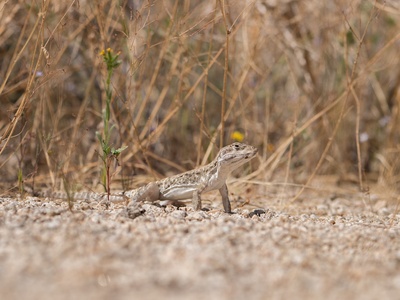
Leopard lizard
Slim, spotted lizard of open arid areas that feeds on insects and small lizards. Reaches about 30 cm, fast and territorial. Populations stable in intact desert habitats.
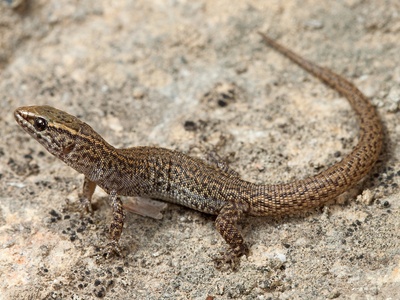
Desert night lizard
Small, secretive nocturnal lizard often under rocks and in crevices; prefers cool microhabitats. About 12 cm long, slow-moving and uncommon in captures. Sensitive to disturbance of rock habitats.
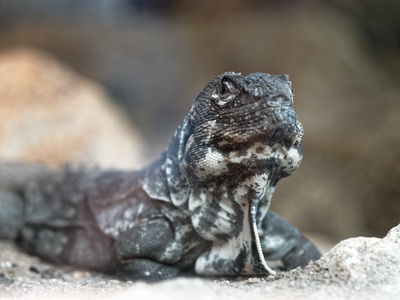
Spiny-tailed iguana
Large, spiny-tailed iguana of rocky areas and arid forests; excellent climber and basks on walls. Reaches about 1.2 m, mainly herbivorous and common in parts of Mexico. Some human use and habitat pressure.
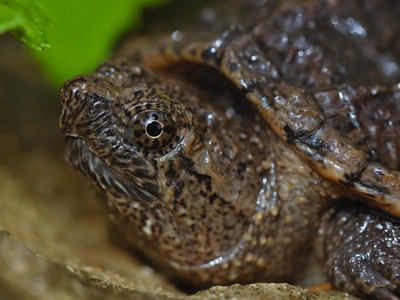
Common snapping turtle
Aggressive-looking, long-necked freshwater turtle with powerful bite; lives in ponds, rivers and marshes. Shell up to about 80 cm carapace length? (total length varies), large but widespread. Populations affected by road mortality.
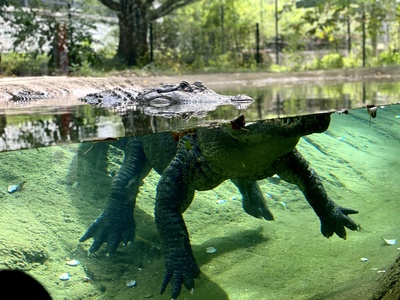
Alligator snapping turtle
Massive, ridged-shelled freshwater turtle with worm-like tongue lure to catch fish. Can reach about 1.2 m shell/total length combination, long-lived and rare in parts of range due to harvest.
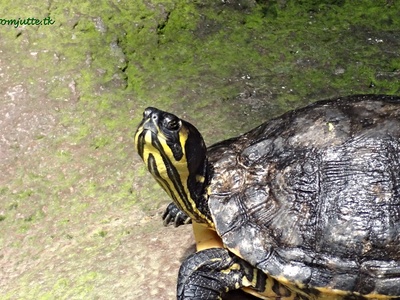
Painted turtle
Colorful plastron and striped head; basking pond turtle common across temperate wetlands. Up to about 30 cm shell length, non-threatening and widespread. Generally stable but local water quality matters.
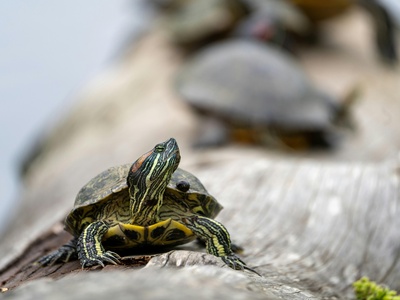
Red-eared slider
Freshwater pond turtle with red ear patch; thrives in disturbed, urban waterbodies and often released from pet trade. Up to 30 cm shell, mid-sized and prolific; invasive in many regions, threatening natives.
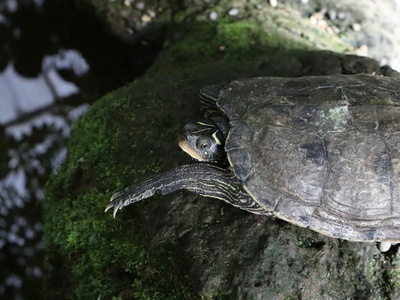
Box turtle (Eastern)
Domed, hinged-plastron terrestrial turtle that can close tightly into shell; prefers moist forests and edges. About 20 cm shell length, omnivorous and slow-reproducing. Many populations declining from collection and habitat loss.
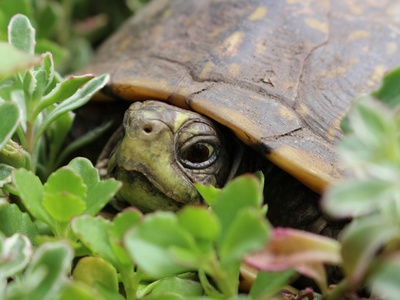
Ornate box turtle
Smaller box turtle with patterned carapace adapted to prairies and shortgrass habitats. Around 18 cm shell length, terrestrial and long-lived. Vulnerable where grasslands converted or fragmented.
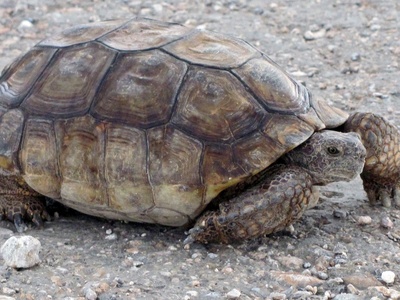
Desert tortoise
Burrowing tortoise of arid landscapes that eats grasses and succulents. Reaches about 40 cm shell length, slow-growing and highly vulnerable to habitat loss, disease and off-road recreation impacts.
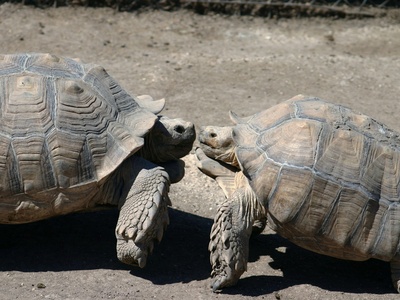
Texas tortoise
Small tortoise of scrub and thorn-scrub, eats vegetation and cactus. About 30 cm shell length, secretive and declining in parts of range due to habitat conversion and collection.
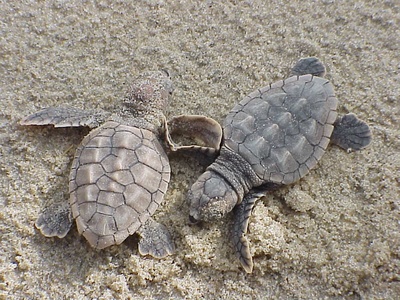
Loggerhead sea turtle
Large marine turtle with powerful jaw feeding on crustaceans; nests on warm sandy beaches. Shell about 90–120 cm, migratory and endangered in many areas from fisheries and habitat loss.
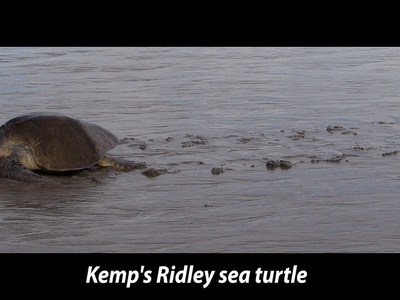
Kemp’s ridley sea turtle
Smallest sea turtle, critically endangered, nests mainly in western Gulf of Mexico. Carapace around 60 cm, faces high mortality from fisheries bycatch and beach disturbance; intensive conservation efforts ongoing.
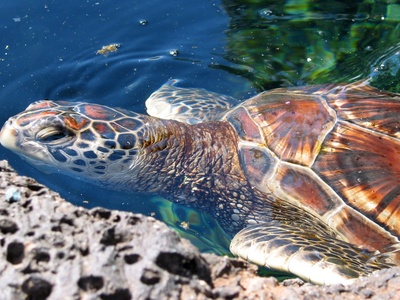
Green sea turtle
Large herbivorous sea turtle that feeds on seagrass and algae; nests in Mexico and Florida. Carapace up to about 130 cm, migratory and endangered from fishing gear and habitat loss.
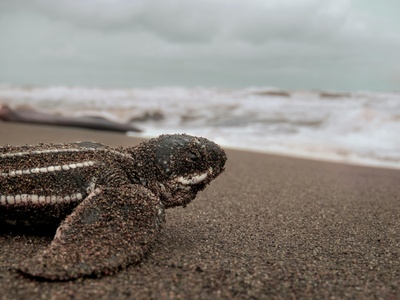
Leatherback sea turtle
Huge, shell-less sea turtle that feeds on jellyfish and migrates long distances. Up to about 2.5 m, critically endangered in some areas from bycatch and plastic ingestion.
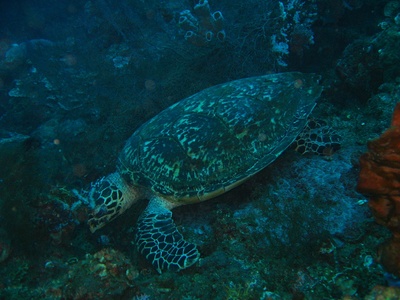
Hawksbill sea turtle
Beautifully patterned small-to-medium sea turtle that eats sponges on coral reefs. Carapace to about 95 cm, critically endangered from shell trade and reef degradation.
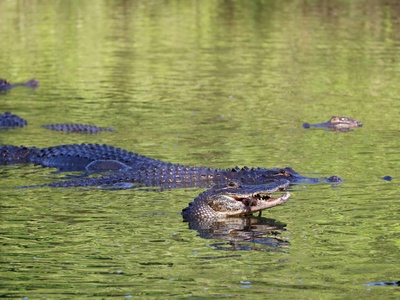
American alligator
Large freshwater crocodilian of swamps and lakes, apex predator and ecosystem engineer. Can reach about 4.35 m, powerful bite but avoids humans when undisturbed. Conservation success story after historical decline.
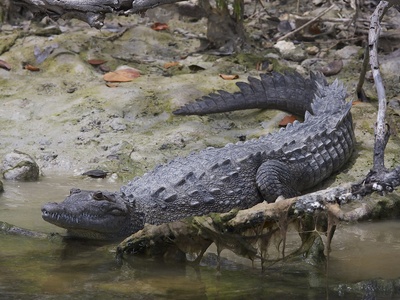
American crocodile
Tropical coastal crocodilian inhabiting brackish lagoons and estuaries; slender snout and salt tolerance. Up to about 3.5 m, potentially dangerous but reclusive. Locally threatened from habitat loss and coastal development.