Southeast Asia’s islands, coasts and rainforests are home to a wide variety of reptiles that play key roles in local ecosystems. From mangroves to coral reefs and inland rivers, species adapt to very different niches across the region, so spotting one place can reveal many different lifestyles.
There are 39 Reptiles of Southeast Asia, ranging from the Annulated sea snake to the Yellow-lipped sea krait, illustrating how species span open ocean to coastal and inland habitats. For each species you’ll find below data organized as Scientific name, Range (countries/region), IUCN status to help with quick comparison and conservation context — you’ll find below.
Which habitats in Southeast Asia support the most reptile diversity?
Reptile diversity peaks where habitat complexity and climate meet: lowland rainforests, mangrove estuaries, limestone karsts and freshwater wetlands. Coastal reefs and island chains add unique marine and insular species. Protecting a mix of these habitats preserves the full range of reptile life across countries.
How concerned should I be about venomous sea snakes like those listed here?
Many sea snakes are venomous but encounters are uncommon; most bites occur when animals are handled or accidentally caught in fishing gear. Treat them with caution, avoid handling, and report sightings to local authorities or researchers if you can safely share location and photos.
Reptiles of Southeast Asia
| Common name | Scientific name | Range (countries/region) | IUCN status |
|---|---|---|---|
| Saltwater crocodile | Crocodylus porosus | Myanmar, Thailand, Cambodia, Vietnam, Malaysia, Singapore, Indonesia, Philippines, Brunei | Least Concern |
| Siamese crocodile | Crocodylus siamensis | Cambodia, Laos, Thailand, Vietnam (very restricted populations) | Critically Endangered |
| Komodo dragon | Varanus komodoensis | Indonesia: Komodo, Rinca, Flores and nearby islands | Vulnerable |
| Water monitor | Varanus salvator | Widespread across mainland and maritime Southeast Asia including Borneo, Sumatra, Java, Philippines | Least Concern |
| Reticulated python | Malayopython reticulatus | Indonesia, Malaysia, Philippines, Thailand, Cambodia, Vietnam, Singapore | Least Concern |
| Burmese python | Python bivittatus | Myanmar, Thailand, Laos, Cambodia, Vietnam, Malaysia, parts of Indonesia | Vulnerable |
| Blood python | Python brongersmai | Malay Peninsula, Sumatra, Borneo | Near Threatened |
| King cobra | Ophiophagus hannah | Myanmar, Thailand, Malaysia, Indonesia, Philippines, Laos, Cambodia, Vietnam | Vulnerable |
| Monocled cobra | Naja kaouthia | Myanmar, Thailand, Laos, Cambodia, Vietnam, Malaysia | Least Concern |
| Equatorial spitting cobra | Naja sumatrana | Malay Peninsula, Sumatra, Borneo, Singapore, Java | Least Concern |
| Paradise tree snake | Chrysopelea paradisi | Thailand, Malaysia, Indonesia, Philippines, Singapore | Least Concern |
| Oriental whip snake | Ahaetulla prasina | Widespread across SE Asia including Malay Peninsula, Indonesia, Philippines | Least Concern |
| Wagler’s pit viper | Tropidolaemus wagleri | Thailand, Malaysia, Singapore, Indonesia, Philippines | Least Concern |
| White-lipped pit viper | Trimeresurus albolabris | Thailand, Laos, Cambodia, Vietnam, southern China, parts of Malaysia | Least Concern |
| Two-striped coral snake | Calliophis bivirgata | Malay Peninsula, Sumatra, Borneo, southern Thailand | Vulnerable |
| Banded krait | Bungarus fasciatus | Myanmar, Thailand, Laos, Cambodia, Vietnam, Malaysia, Indonesia | Least Concern |
| Yellow-lipped sea krait | Laticauda colubrina | Coastal waters of SE Asia: Indonesia, Philippines, Malaysia, Thailand | Least Concern |
| Annulated sea snake | Hydrophis cyanocinctus | Coastal and offshore waters throughout SE Asia | Least Concern |
| Olive ridley sea turtle | Lepidochelys olivacea | Coastal beaches and seas across SE Asia, nesting on Indonesia and Malaysia beaches | Vulnerable |
| Green sea turtle | Chelonia mydas | Nesting and coastal waters throughout SE Asia including Indonesia, Malaysia, Philippines | Endangered |
| Hawksbill sea turtle | Eretmochelys imbricata | Coral reefs and coastlines across SE Asia including Indonesia, Philippines, Malaysia | Critically Endangered |
| Leatherback sea turtle | Dermochelys coriacea | Open oceans and occasional nesting in SE Asian coasts | Vulnerable |
| Asian giant softshell | Pelochelys cantorii | Mekong, Thai-Malay rivers, parts of Borneo and Sumatra | Critically Endangered |
| Asiatic softshell turtle | Amyda cartilaginea | Freshwaters across SE Asia including Borneo, Sumatra, Malay Peninsula | Vulnerable |
| Elongated tortoise | Indotestudo elongata | Myanmar, Thailand, Laos, Cambodia, Vietnam, Malaysia, Sumatra | Critically Endangered |
| Malayan box turtle | Cuora amboinensis | Indonesia, Malaysia, Philippines, Borneo, Sumatra | Vulnerable |
| Black marsh turtle | Siebenrockiella crassicollis | Thailand, Cambodia, Philippines, Borneo, Sumatra | Endangered |
| Giant Asian pond turtle | Heosemys grandis | Thailand, Cambodia, Vietnam, Laos | Endangered |
| Asian leaf turtle | Cyclemys dentata | Mainland SE Asia, Malay Peninsula, Sumatra, Borneo | Near Threatened |
| Tokay gecko | Gekko gecko | Widespread across SE Asia in forests, villages and cities | Least Concern |
| Common flying dragon | Draco volans | Forested lowlands across Malay Peninsula, Borneo, Sumatra, Philippines | Least Concern |
| Oriental garden lizard | Calotes versicolor | Widespread Southeast Asia and introduced in some islands | Least Concern |
| Green crested lizard | Bronchocela cristatella | Malay Peninsula, Singapore, Sumatra, Borneo, Java | Least Concern |
| Common sun skink | Eutropis multifasciata | Widespread across SE Asia in open and forest habitats | Least Concern |
| Philippine sailfin lizard | Hydrosaurus pustulatus | Philippines (large islands, coastal mangroves and streams) | Vulnerable |
| False gharial | Tomistoma schlegelii | Indonesia (Sumatra, Borneo), Malaysia (Borneo), parts of Thailand | Vulnerable |
| Asian vine snake | Ahaetulla mycterizans | Mainland SE Asia and Sundaic islands | Least Concern |
| Common wolf snake | Lycodon aulicus | Widespread across mainland and maritime SE Asia | Least Concern |
| Banded krait | Bungarus fasciatus | Myanmar, Thailand, Laos, Cambodia, Vietnam, Malaysia, Indonesia | Least Concern |
Images and Descriptions

Saltwater crocodile
Largest living crocodile, salt-tolerant and powerful. Found in coastal mangroves, estuaries and rivers; ambush predator feeding on fish, mammals and birds. Important apex predator; some populations heavily hunted and locally monitored for human-wildlife conflict.
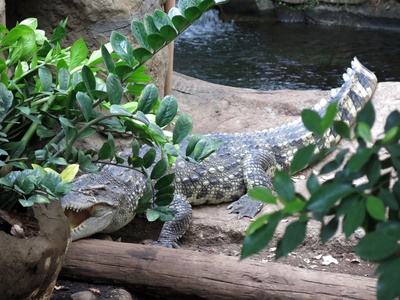
Siamese crocodile
Freshwater specialist found in rivers and floodplain wetlands. Relatively small crocodile with broad snout; historically widespread but now fragmented by habitat loss and hunting. Conservation programs include captive breeding and reintroduction in Cambodia.
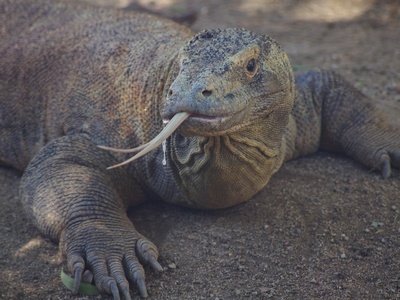
Komodo dragon
World’s largest lizard, heavy-bodied with rough scales and powerful tail. Terrestrial predator and scavenger in open savanna and forest edges; feeds on deer and pigs. Iconic island endemic protected in national parks but vulnerable due to limited range.
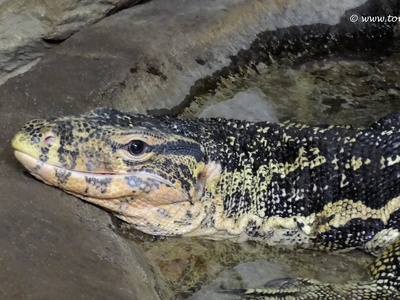
Water monitor
Large, adaptable monitor lizard frequenting rivers, mangroves and urban waterways. Dark body with yellow spots and powerful build; opportunistic diet includes fish, carrion, and small mammals. Common but locally persecuted.
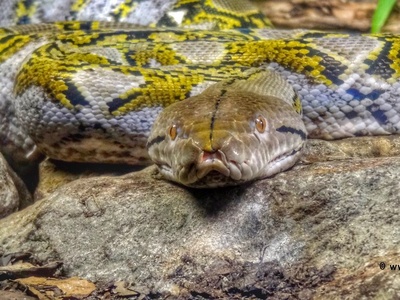
Reticulated python
Strikingly patterned, long constrictor often found in forests, plantations and near human settlements. Excellent swimmers that may prey on mammals and birds. Largest individuals can exceed several meters; frequently encountered in rural landscapes.
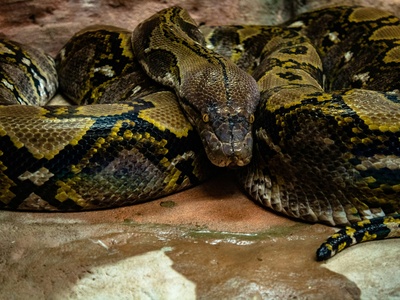
Burmese python
Heavy-bodied constrictor inhabiting grassland, forest and wetlands. Brown and tan patterned skin; ambushes prey including mammals and birds. Widely collected and hunted for skin and pet trade; wild populations declining in parts of range.
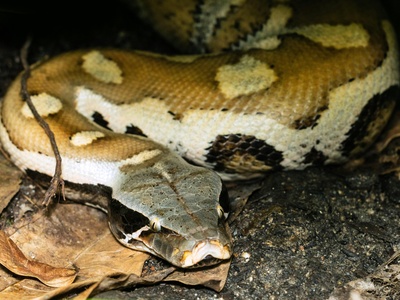
Blood python
Stout, relatively short python with rich reddish-brown bands; favors peat swamp, forest and marsh edges. Known for vivid coloration and docile temperament in captivity; threatened by habitat loss and overcollection for trade.
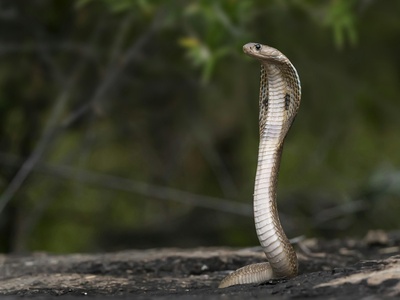
King cobra
World’s longest venomous snake, long-necked with hood and olive to brown coloration. Forest specialist that eats other snakes; iconic and feared species. Habitat loss and persecution threaten populations across its range.
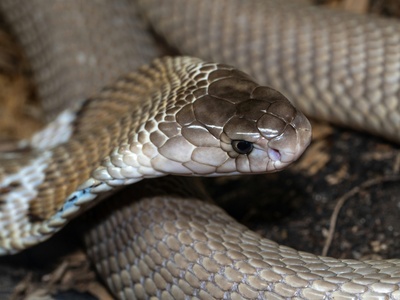
Monocled cobra
Medium-sized cobra with distinct circular neck pattern. Occupies farmland, wetlands and forests; venomous and medically important. Adapts to disturbed habitats but faces persecution and capture for traditional use.
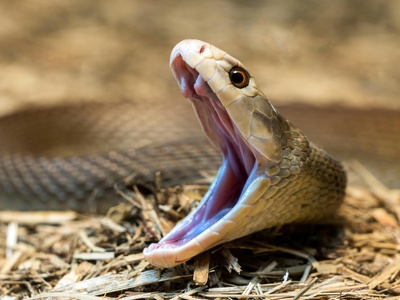
Equatorial spitting cobra
Spitting cobra that defends itself by ejecting venom into attackers’ eyes. Variably patterned brown to black, lives in forests and agricultural areas. Common locally though occasionally killed by people and collected for trade.
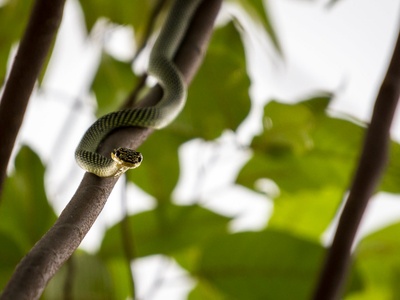
Paradise tree snake
Small arboreal snake famous for gliding between trees; brightly patterned with iridescent sheen. Day-active predator feeding on lizards and birds. Often seen in gardens and lowland forests; nonvenomous to humans.
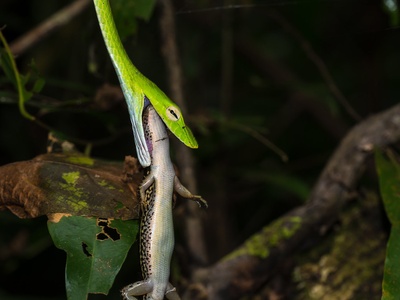
Oriental whip snake
Slender, bright green arboreal snake with pointed snout and excellent camouflage. Often hangs along branches hunting frogs and lizards. Mildly venomous to prey but typically harmless to people.

Wagler’s pit viper
Stocky, arboreal pit viper with sexually dimorphic patterns; found in lowland forests and plantations. Venomous ambush predator feeding on small mammals, birds and frogs. Common in disturbed habitats near humans in parts of its range.

White-lipped pit viper
Slender green pit viper with distinctive pale upper lip stripe. Inhabits lowland and hilly forests; often nocturnal ambush predator on branches. Bitten victims may suffer significant envenomation; habitat loss is a concern.

Two-striped coral snake
Small, vividly colored coral snake with striking red and black patterning and exceptionally potent neurotoxic venom. Secretive forest floor dweller feeding on other snakes. Habitat destruction and collection for trade contribute to declines.
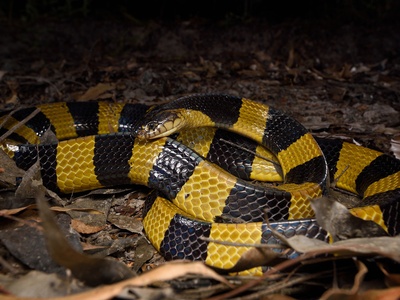
Banded krait
Distinctive black-and-yellow banded snake often found near water and human habitations. Nocturnal and highly venomous; preys on other snakes and rodents. Generally shy, but medically important where common.

Yellow-lipped sea krait
Amphibious sea krait with broad flattened tail and distinct yellow head banding. Hunts eels in coral reefs and returns to land to rest and lay eggs. Harmless if left alone but highly venomous.
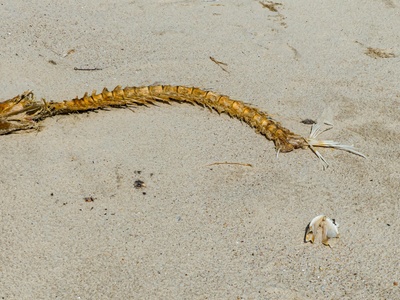
Annulated sea snake
Common sea snake with ringed black-and-white pattern, strongly adapted to marine life. Feeds on small fish in coral and sandy habitats. Vocal conservation interest due to fisheries bycatch and pollution impacts.
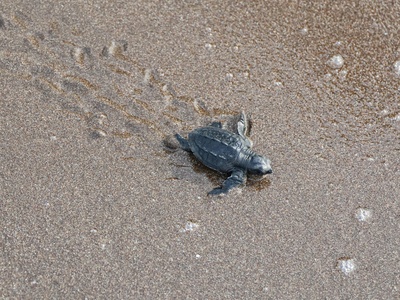
Olive ridley sea turtle
Small, social sea turtle that nests in large arribada gatherings in some areas. Olive-green carapace and streamlined body; feeds on jellyfish and invertebrates. Threatened by egg harvesting, bycatch and coastal development.
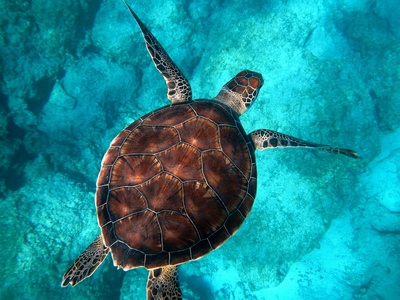
Green sea turtle
Large, herbivorous sea turtle with smooth, olive-colored shell. Feeds on seagrass and algae; important for healthy seagrass beds. Faces poaching, bycatch and habitat loss at nesting beaches and feeding grounds.
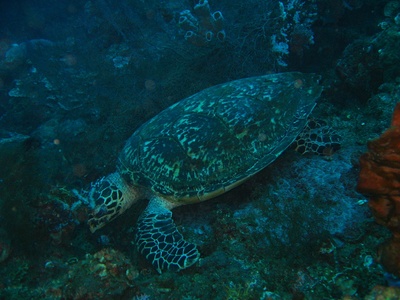
Hawksbill sea turtle
Small to medium sea turtle with striking patterned shell and hooked beak; specializes on sponges in coral reefs. Highly valued for “tortoiseshell,” now critically reduced by trade, habitat loss and bycatch.
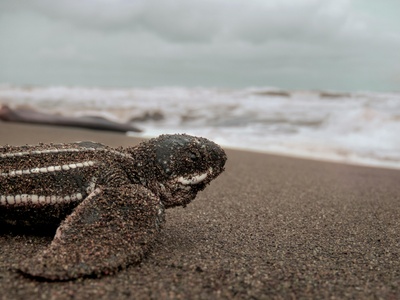
Leatherback sea turtle
Largest sea turtle with leathery shell and deep dives to feed on jellyfish. Wide-ranging migratory species that visits Southeast Asian waters; threatened by bycatch, plastic ingestion, and coastal threats at nesting sites.
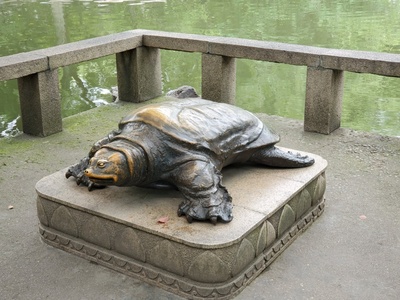
Asian giant softshell
Very large freshwater softshell turtle with flattened leathery carapace and broad head. Prefers large rivers and estuaries; highly elusive and heavily reduced by hunting and habitat degradation.
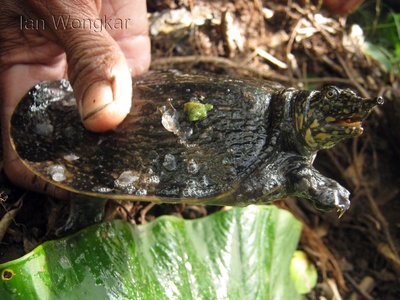
Asiatic softshell turtle
Broad-headed softshell turtle common in rivers and swamps; smooth leathery shell and rapid swimming. Frequently exploited for food and pet trade; adaptable but declining where collection is intense.
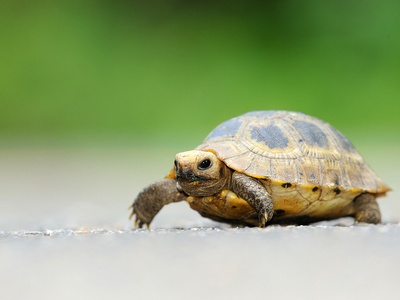
Elongated tortoise
Medium-sized land tortoise with elongated high shell and muted brown coloration. Inhabits dry forests and secondary growth; slow reproduction and heavy collection for food and pet markets have caused severe declines.
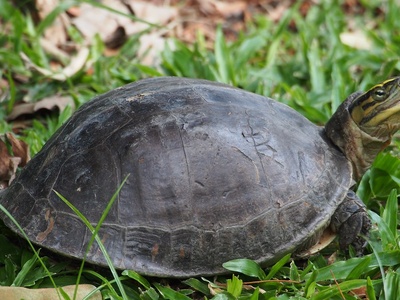
Malayan box turtle
Medium aquatic box turtle with hinged plastron for defense, domed shell and variable coloration. Lives in wetlands and slow rivers; widely collected for food and pet trade, facing population decreases across much of range.
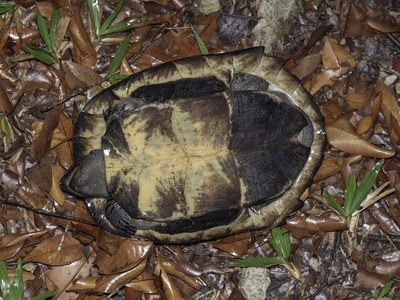
Black marsh turtle
Small dark freshwater turtle with thick neck and blunt face inhabiting swamps and slow rivers. Shy and secretive but heavily collected for food and pet trade; protected in parts of its range.
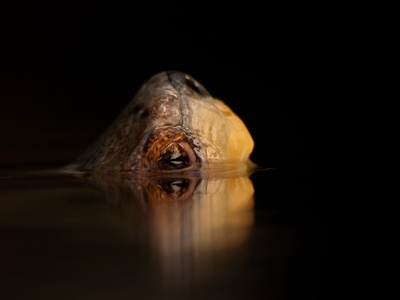
Giant Asian pond turtle
Large freshwater turtle with domed carapace often found in marshes, oxbows and slow rivers. Omnivorous diet and slow reproduction; targeted by hunters and impacted by wetland loss across mainland Southeast Asia.
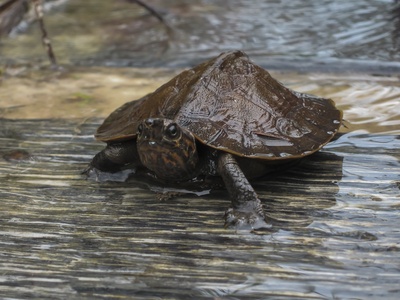
Asian leaf turtle
Small-to-medium freshwater turtle with leaf-like outline and brown mottled shell. Prefers forest streams and swampy areas. Subject to capture for local consumption and pet trade; habitat degradation also a concern.
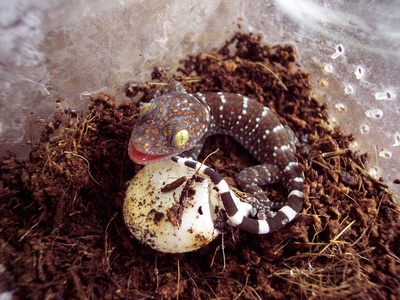
Tokay gecko
Large, vocal gecko with bold spots and sticky toe pads, often living in buildings and forests. Nocturnal insectivore used in traditional medicine and the pet trade but still commonly encountered in its range.
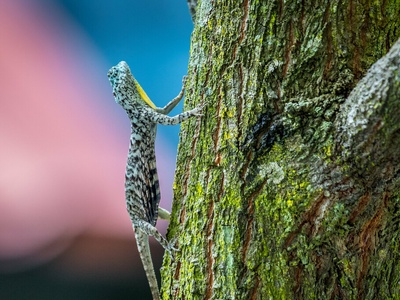
Common flying dragon
Small arboreal agamid with extendable gliding membranes between ribs; basks on trees and feeds on insects. Impressive glider allowing short-distance travel between trees in forest canopy and secondary growth areas.
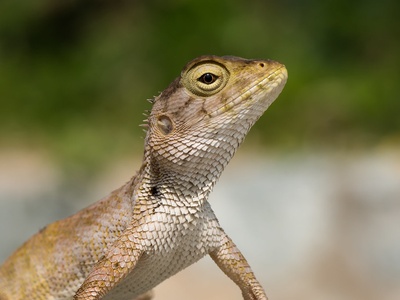
Oriental garden lizard
Common agamid with ability to change color during displays; seen on trees and walls in gardens and disturbed habitats. Omnivorous diet and tolerant of human-modified areas; often mistaken for venomous species.
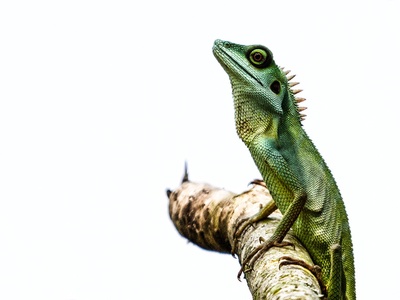
Green crested lizard
Slender, bright green arboreal lizard with long tail and crest in males. Often active in daylight on tree trunks and shrubs, feeding on insects and small vertebrates. Readily visible in lowland forests and gardens.
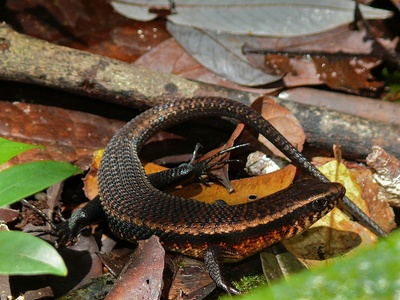
Common sun skink
Robust skink with smooth scales and streamlined body, often seen basking on logs and rocks. Opportunistic feeder of insects and small invertebrates; adapts well to disturbed habitats and gardens.
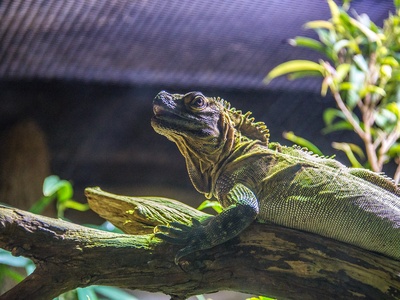
Philippine sailfin lizard
Impressive large agamid with sail-like crest on tail, semi-aquatic and often found near rivers and mangroves. Herbivorous and omnivorous tendencies; threatened by habitat loss and collection for pets and food.
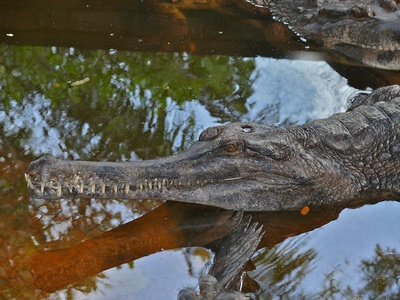
False gharial
Long, narrow-snouted crocodilian adapted to freshwater rivers and peat swamps. Feeds mainly on fish; shy and rare due to hunting and habitat destruction. Conservation focuses on habitat protection and captive breeding.
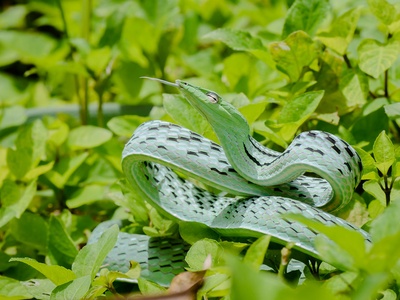
Asian vine snake
Thin, elongated green snake often mistaken for leaves or vines; diurnal tree-dweller hunting lizards and frogs. Mildly venomous to prey, harmless to most humans; well-camouflaged in foliage and gardens.
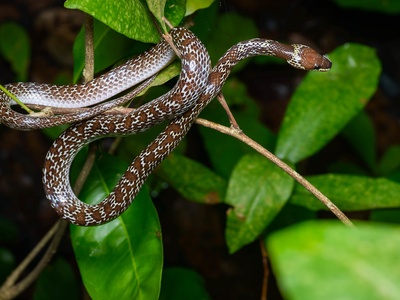
Common wolf snake
Small nocturnal colubrid with slender body and banded pattern; often found near human settlements preying on geckos and small rodents. Frequently mistaken for venomous species but non-aggressive and non-lethal to humans.
Banded krait
Distinctive black-and-yellow banded elapid found near water and agricultural land. Nocturnal and highly venomous; generally slow-moving and shy, but medically significant where humans overlap with habitat.