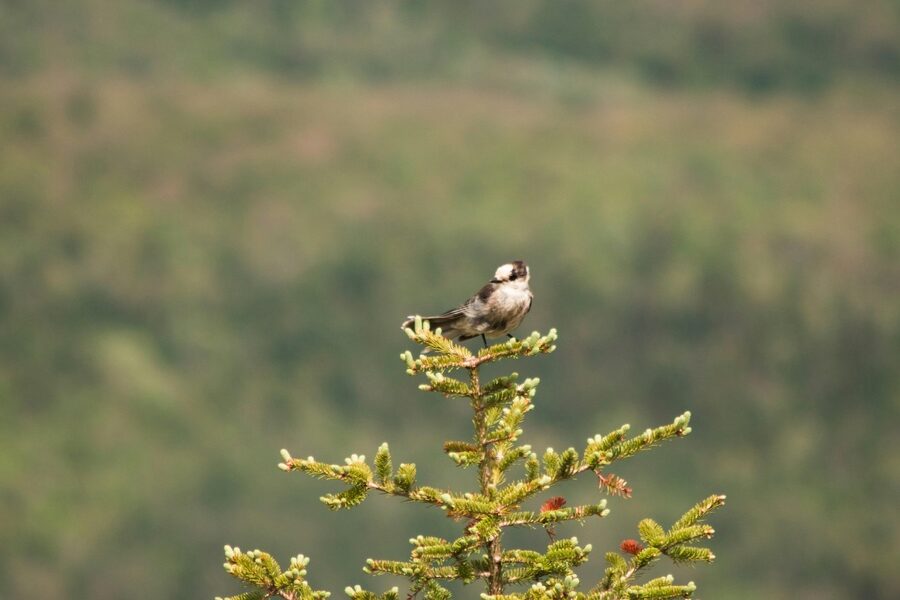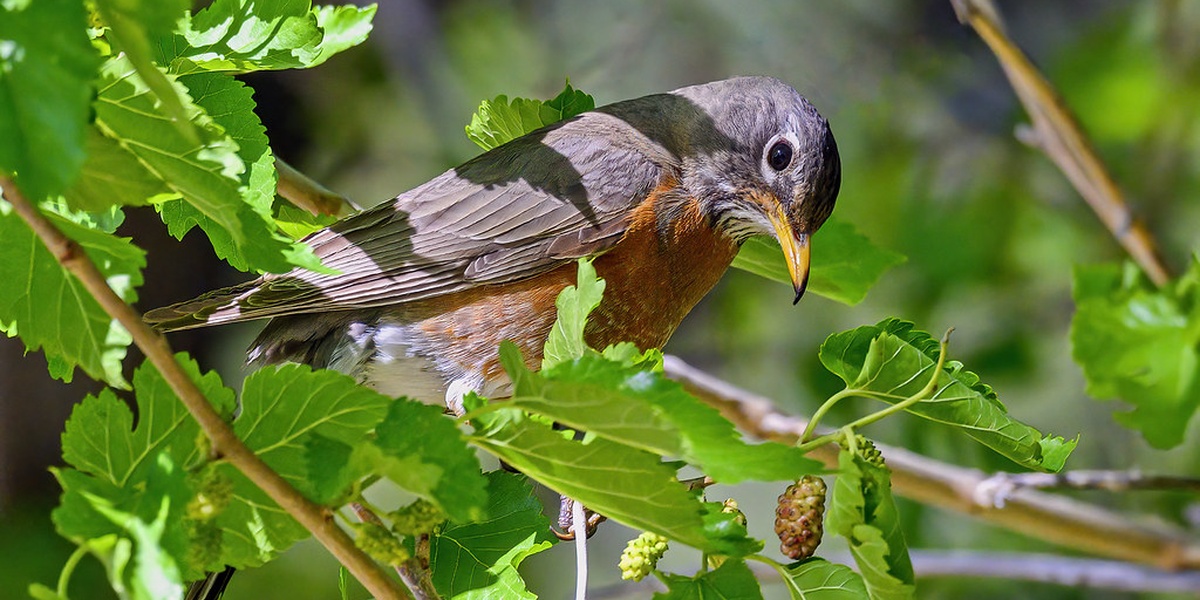
Spring and summer walks, backyard feeders and quiet mornings in parks are prime times to notice small, singing birds flitting through shrubs and trees. Songbirds occupy varied habitats—from city edges to open grasslands—and spotting a few common species is one of the simplest ways to learn about local wildlife.
There are 20 Songbird Examples, ranging from American Goldfinch to Zebra Finch. For each entry you’ll find below Scientific name,Length (cm),Range (region) so you can compare identification, size and geographic distribution at a glance—you’ll find below.
How were these 20 songbirds selected?
They were chosen to show a mix of families, sizes and ranges: common backyard species, migratory visitors and birds more typical of other regions. Selection prioritized species with clear field-identifying features and reliable size and range data so the list is useful for both beginners and more experienced observers.
Which of these songbirds am I most likely to see near my city?
That depends on where you live: an American Goldfinch, for example, is common in North American towns, while a Zebra Finch is native to Australia and often seen in aviaries rather than wild urban areas elsewhere. Use the Range (region) column and local birding apps or field guides to narrow the list to what’s likely in your area.
Songbird Examples
| Common name | Scientific name | Length (cm) | Range (region) |
|---|---|---|---|
| American Robin | Turdus migratorius | 25 | North America |
| European Robin | Erithacus rubecula | 14 | Europe, western Asia, North Africa |
| Northern Cardinal | Cardinalis cardinalis | 21 | Eastern and central North America |
| Song Sparrow | Melospiza melodia | 16 | North America |
| Common Nightingale | Luscinia megarhynchos | 16 | Europe, western Asia, North Africa |
| Common Blackbird | Turdus merula | 24 | Europe, Asia, North Africa |
| House Sparrow | Passer domesticus | 16 | Worldwide (introduced), urban areas |
| Blue Jay | Cyanocitta cristata | 27 | Eastern and central North America |
| European Starling | Sturnus vulgaris | 22 | Europe, Asia; introduced worldwide |
| House Finch | Haemorhous mexicanus | 15 | North America (west; introduced east) |
| Yellow Warbler | Setophaga petechia | 12 | North and Central America |
| Common Yellowthroat | Geothlypis trichas | 12 | North America |
| American Goldfinch | Spinus tristis | 13 | North America |
| Common Chaffinch | Fringilla coelebs | 14 | Europe, western Asia, North Africa |
| Black-capped Chickadee | Poecile atricapillus | 12 | Northern North America |
| Marsh Wren | Cistothorus palustris | 12 | North America |
| Carolina Wren | Thryothorus ludovicianus | 16 | Southeastern and eastern North America |
| Western Meadowlark | Sturnella neglecta | 23 | Western North America |
| Eurasian Skylark | Alauda arvensis | 16 | Europe, Asia, parts of Africa |
| Zebra Finch | Taeniopygia guttata | 10 | Australia; introduced globally |
Images and Descriptions
American Robin
Familiar large thrush with orange-red breast, gray back, and long legs. Cheerful melodic warbling and clear phrases; often sings from trees or rooftops. Found in gardens, parks, forests, and suburbs. Notable as a widespread migratory songster and common garden bird.
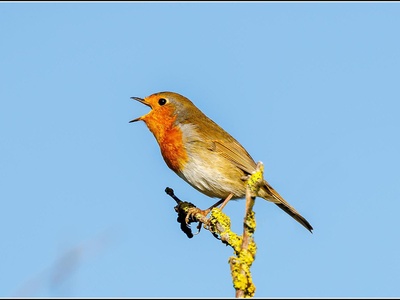
European Robin
Small plump bird with orange face and breast and olive-brown back. A rich, melodious warble and sharp territorial song year-round; often sings from low perches. Common in gardens, parks, and woodlands. Iconic European garden bird of folklore.
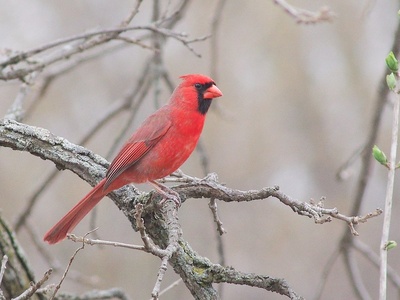
Northern Cardinal
Bright red male, warm brown female with crest and strong conical bill. Clear whistled songs and calls delivered from dense shrubs or perches. Prefers woodlands, gardens, and edges. Notable for striking plumage, year-round song, and popularity at feeders.
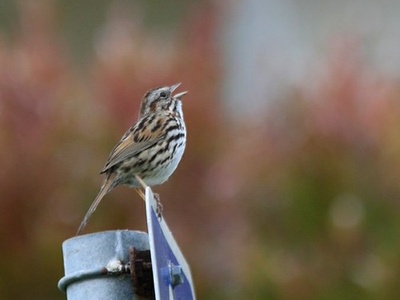
Song Sparrow
Streaked brown sparrow with rounded head and central breast spot. Strong, musical varied song often a short phrase then trills; frequently sings from low perches. Lives in brushy fields, marsh edges, and gardens. Highly variable subspecies and common across many habitats.
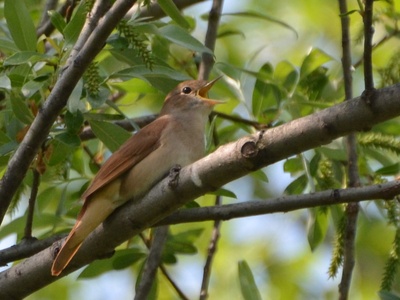
Common Nightingale
Plain brown, thrush-sized bird with a powerful, rich, and melodious song famed for night singing. Sings long cascades of whistles, trills, and loud phrases from dense scrub and woodland understory. Notable for inspiring poetry and prized song.
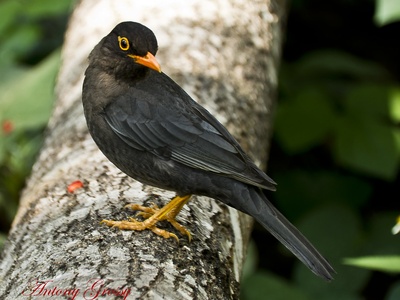
Common Blackbird
Glossy black male and brown female thrush with yellow eye-ring and bill. Fluted, melodious song often sung from treetops at dawn and dusk. Occupies gardens, parks, woodlands, and hedgerows. Widespread urban adapter known for early morning singing.
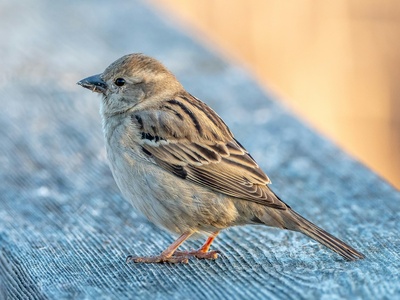
House Sparrow
Stocky, social bird with gray crown and brown streaked back; males have a black bib. Chirping, chattering calls and simple songs; often in noisy flocks. Lives in towns, farms, and around people. One of the most widespread familiar urban songbirds.
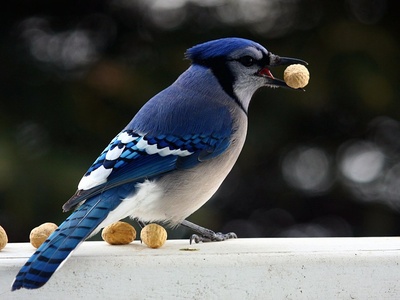
Blue Jay
Large crest, blue, white, and black plumage with bold face pattern. Noisy, varied calls including loud alarm notes; capable of mimicry. Found in woodlands, suburbs, and parks. Notable for intelligence, strong territorial behavior, and complex social calls.
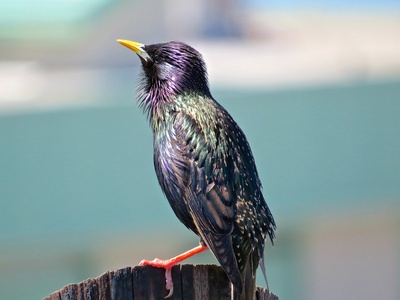
European Starling
Iridescent black with speckles in non-breeding plumage; short tail and pointed bill. Complex mimicry-rich songs and rapid chattering displays; forms dense, synchronized murmurations. Occupies open countryside, towns, and farmland. Notable for adaptability and massive flocking.
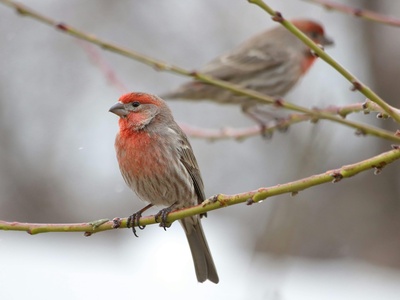
House Finch
Small finch with red forehead and breast in males, streaked brown females. Warbling, cheerful songs often sung from exposed perches. Common in urban and suburban areas, parks and open woodlands. Notable for colorful males and feeder visits.
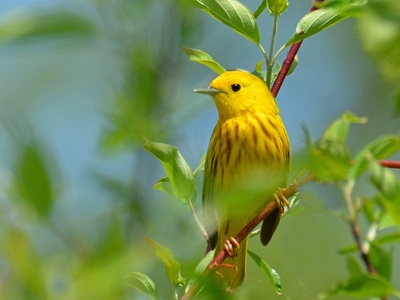
Yellow Warbler
Bright yellow small warbler with thin reddish streaks on the breast; males vivid yellow. Sweet, wire-like series of clear notes; often sings from shrubs. Found in thickets, wetlands, and riparian zones. Migratory and conspicuous during breeding season.
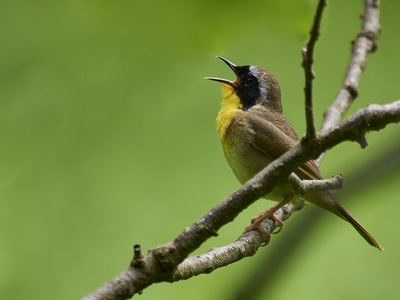
Common Yellowthroat
Olive-green warbler with bright yellow throat and black facial ‘mask’ in males. Sharp, repetitive “witchety-witchety” song; skulks in dense marshy vegetation. Prefers wet meadows, marshes, and tangles. Notable for its distinct mask and secretive feeding.
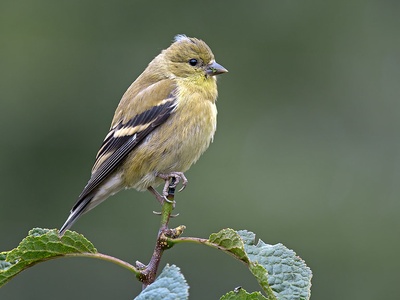
American Goldfinch
Small bright yellow male in summer with black cap; streaked brown winter plumage. Twittering, high-pitched warbling and flight calls; acrobatic seed feeder on thistles and nyjer. Occurs in fields, gardens, and open woodlands. Notable for seasonal color change tied to breeding.
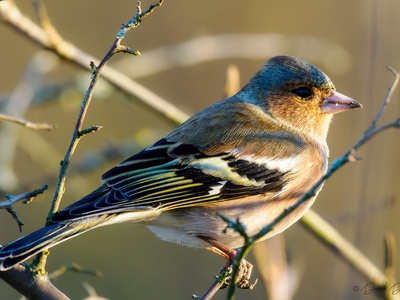
Common Chaffinch
Stocky finch with blue-gray cap and rufous underparts in males; females duller. Fast, descending song and lively trills; often perches in trees. Found in woodlands, parks, and gardens. Notable for loud, metallic song and common presence across landscapes.
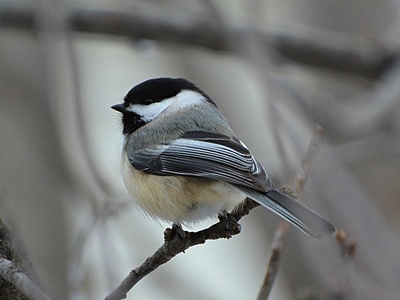
Black-capped Chickadee
Small, round-headed bird with black cap and bib and white cheeks. Clear two-note or variable “chick-a-dee” calls; inquisitive and bold at feeders. Prefers forests, edges, and backyards. Notable for complex social calls and food-caching behavior.
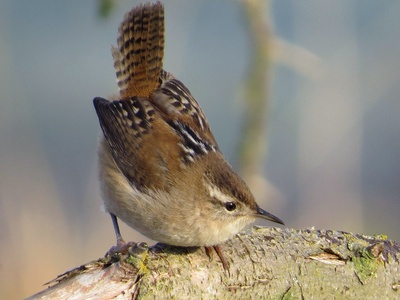
Marsh Wren
Tiny brown streaked wren with upright tail and subtle eyebrow. Loud, bubbling song often given from reeds; highly vocal and fiercely territorial. Found in marshes, cattail stands, and wet meadows. Notable for aggressive behavior and conspicuous reed-top singing.
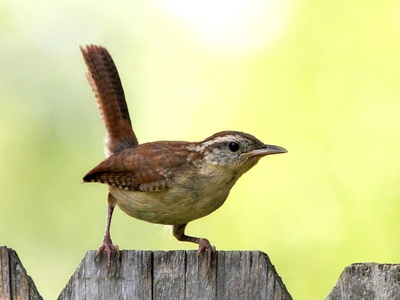
Carolina Wren
Rufous-brown wren with bold white eyebrow and long curved bill. Loud, cascading song of repeated phrases from perches; energetic hunter of insects around homes and woodlands. Notable for year-round singing and strong presence in human-altered habitats.
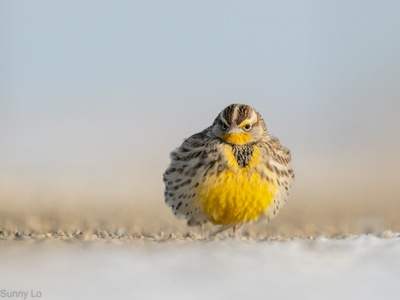
Western Meadowlark
Streaked brown back with bright yellow breast and black “V” mark. Rich, flute-like warbling song delivered from fence posts or fence-top perches; often seen in open grasslands and prairies. Notable for distinctive melodic song and territorial displays.
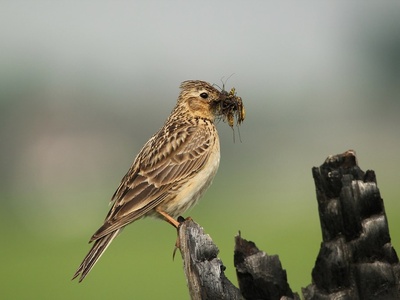
Eurasian Skylark
Brown streaked lark that soars high and sings continuously in flight. Complex, cascading song given during prolonged aerial display. Inhabits open fields, grasslands, and agricultural areas. Notable for long, high-altitude singing flights and rural soundscape presence.
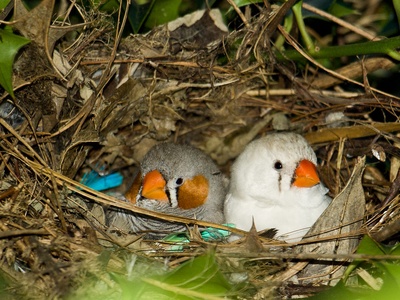
Zebra Finch
Tiny gray-brown estrildid finch with zebra cheek stripes and orange beak in males. High-pitched, repetitive chip-and-trill songs; social and colonial, often seen in pairs and flocks. Found in grasslands and savannahs near water. Notable as a common pet and lab species.