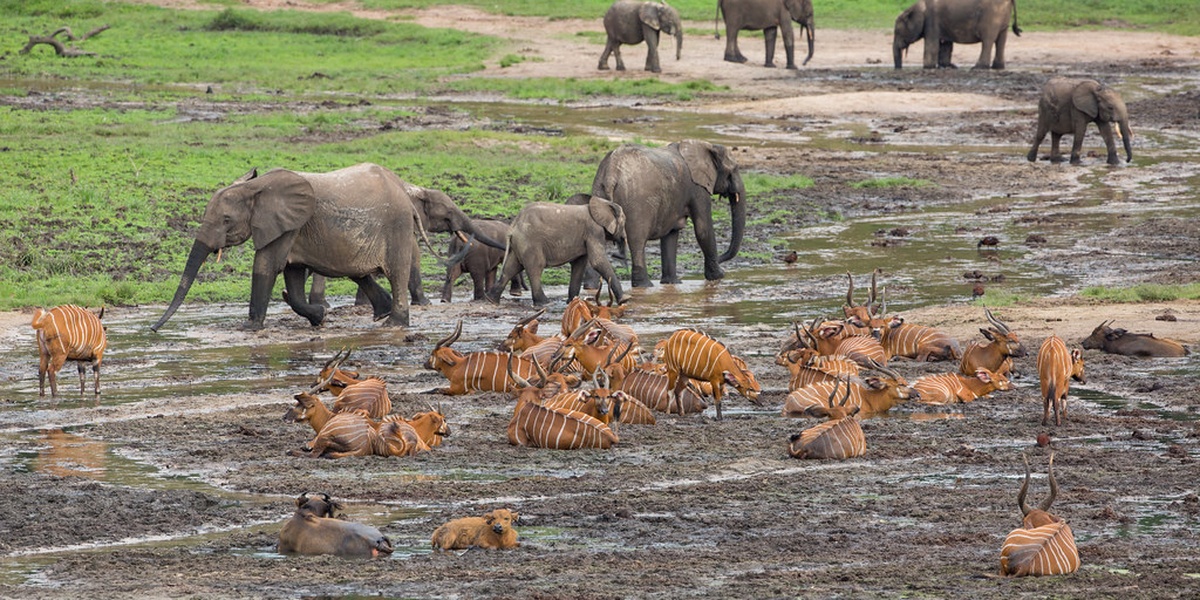
The Central African Republic sits where dense forest meets open savanna, and that edge creates a mix of habitats—from riverine wetlands to dry woodlands—that support a wide variety of mammal, bird and reptile species. Local communities and researchers both contribute to our understanding of these animals and how they use the landscape.
There are 35 The Central African Republic’s native animals, ranging from Aardvark to Yellow-backed duiker. For each species, the entries list Scientific name, Habitat, IUCN status so you can quickly see taxonomy, typical environment and conservation concern; you’ll find below.
Which of these native animals are most at risk?
Many species on the list are vulnerable to habitat loss, hunting and civil instability, and their IUCN status reflects that variation (from Least Concern to Endangered). Use the IUCN status column to spot high-risk species and look for local conservation programs or protected areas that target those priorities.
How should I interpret the columns and use this list?
The Scientific name gives the standard binomial, Habitat notes where the species is typically found, and IUCN status indicates global threat level; together they help you compare range and conservation needs and decide what to read about or observe when visiting or supporting conservation—details you’ll find below.
The Central African Republic’s Native Animals
| Name | Scientific name | Habitat | IUCN status |
|---|---|---|---|
| African forest elephant | Loxodonta cyclotis | forest | Critically Endangered |
| Western lowland gorilla | Gorilla gorilla gorilla | forest | Critically Endangered |
| Central chimpanzee | Pan troglodytes troglodytes | forest | Endangered |
| White-bellied pangolin | Phataginus tricuspis | forest | Endangered |
| African golden cat | Caracal aurata | forest | Vulnerable |
| Leopard | Panthera pardus | forest,savanna | Vulnerable |
| Lion | Panthera leo | savanna | Vulnerable |
| Spotted hyena | Crocuta crocuta | savanna | Least Concern |
| African buffalo | Syncerus caffer | savanna,riverine | Near Threatened |
| Hippopotamus | Hippopotamus amphibius | riverine,wetland | Vulnerable |
| Nile crocodile | Crocodylus niloticus | riverine,wetland | Least Concern |
| Roan antelope | Hippotragus equinus | savanna | Least Concern |
| Kob | Kobus kob | savanna,wetland | Least Concern |
| Sitatunga | Tragelaphus spekii | wetland,riverine | Near Threatened |
| Bushbuck | Tragelaphus scriptus | forest,riverine | Least Concern |
| Red river hog | Potamochoerus porcus | forest | Least Concern |
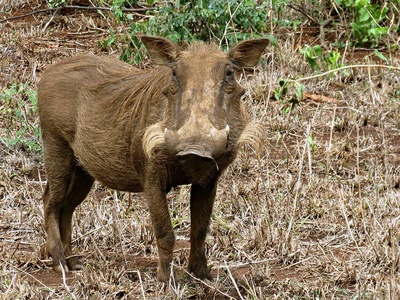
| Common warthog | Phacochoerus africanus | savanna | Least Concern |
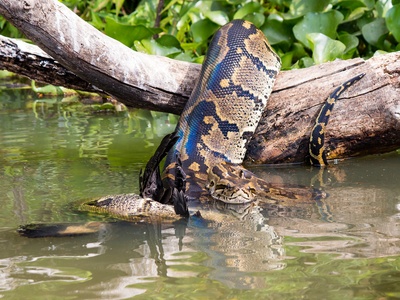
| African rock python | Python sebae | savanna,riverine | Least Concern |
| African civet | Civettictis civetta | forest,savanna | Least Concern |
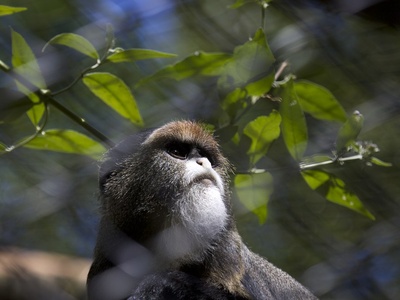
| De Brazza’s monkey | Cercopithecus neglectus | riverine,forest | Least Concern |
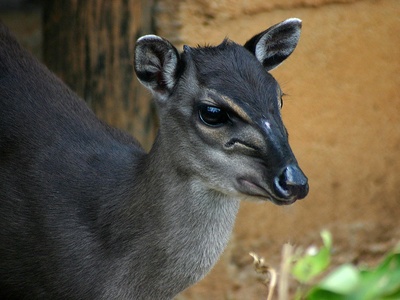
| Blue duiker | Philantomba monticola | forest | Least Concern |
| Yellow-backed duiker | Cephalophus silvicultor | forest | Near Threatened |
| African grey parrot | Psittacus erithacus | forest | Endangered |
| Great blue turaco | Corythaeola cristata | forest | Least Concern |
| African fish eagle | Haliaeetus vocifer | riverine,wetland | Least Concern |
| Saddle-billed stork | Ephippiorhynchus senegalensis | wetland,riverine | Least Concern |
| Pied kingfisher | Ceryle rudis | riverine,wetland | Least Concern |
| Nile monitor | Varanus niloticus | riverine,wetland | Least Concern |
| African bullfrog | Pyxicephalus adspersus | savanna,wetland | Least Concern |
| Nile tilapia | Oreochromis niloticus | riverine,wetland | Least Concern |
| Serval | Leptailurus serval | savanna,wetland | Least Concern |
| Side-striped jackal | Lupulella adusta | savanna,forest-edge | Least Concern |
| Aardvark | Orycteropus afer | savanna,riverine | Least Concern |
| Patas monkey | Erythrocebus patas | savanna | Least Concern |
| Guereza (black-and-white colobus) | Colobus guereza | forest | Least Concern |
Images and Descriptions
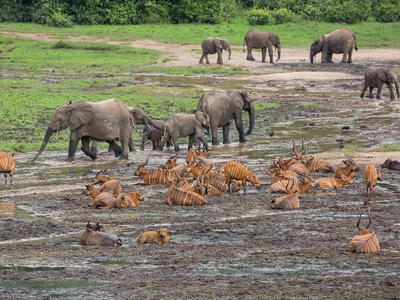
African forest elephant
A smaller, forest-adapted elephant found in southern CAR’s dense rainforests. Elusive but ecologically vital as a seed disperser; populations have crashed from poaching. Interesting fact: their rounded, downward-facing tusks and more finger-like trunk tip suit moving through thick forest.
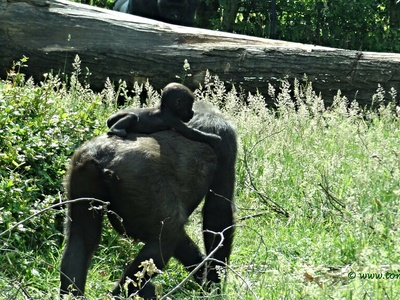
Western lowland gorilla
A large, primarily herbivorous ape in CAR’s lowland forests and protected areas. Slow-reproducing and sensitive to disturbance, they face poaching and disease threats. Interesting fact: western lowland gorillas use simple tools and have complex social groups led by a silverback.
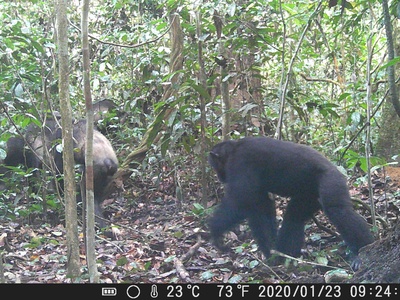
Central chimpanzee
Found in southern and southwestern forest zones, these intelligent apes live in social troops and use tools for foraging. Threatened by habitat loss and hunting. Interesting fact: troops display culture—different groups use distinct tools and hunting techniques.
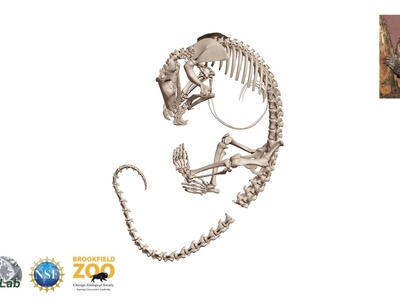
White-bellied pangolin
A small, nocturnal, tree-climbing pangolin that feeds on ants and termites in CAR’s forests. Heavily targeted by illegal trade for scales and meat. Interesting fact: pangolins curl into a tight armored ball when threatened and have strong, sticky tongues for ants.
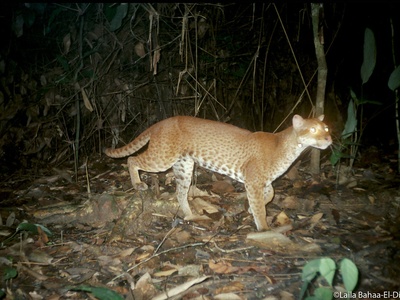
African golden cat
A secretive, medium-sized wild cat of dense Central African forests, rarely seen but an important mesopredator. Populations are fragmented and threatened by habitat loss. Interesting fact: coat color varies—from reddish to gray—making individuals look very different.
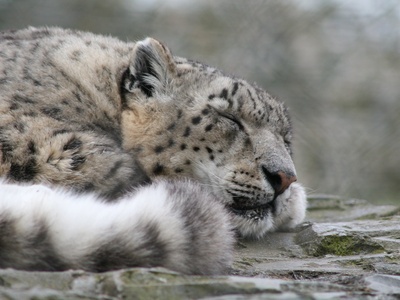
Leopard
An adaptable big cat occurring across CAR’s savannas and forest edges, often avoiding humans and hunting at night. Leopards persist where larger predators decline. Interesting fact: leopards stash kills in trees to protect them from scavengers like hyenas.
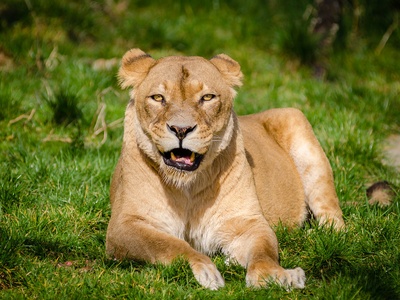
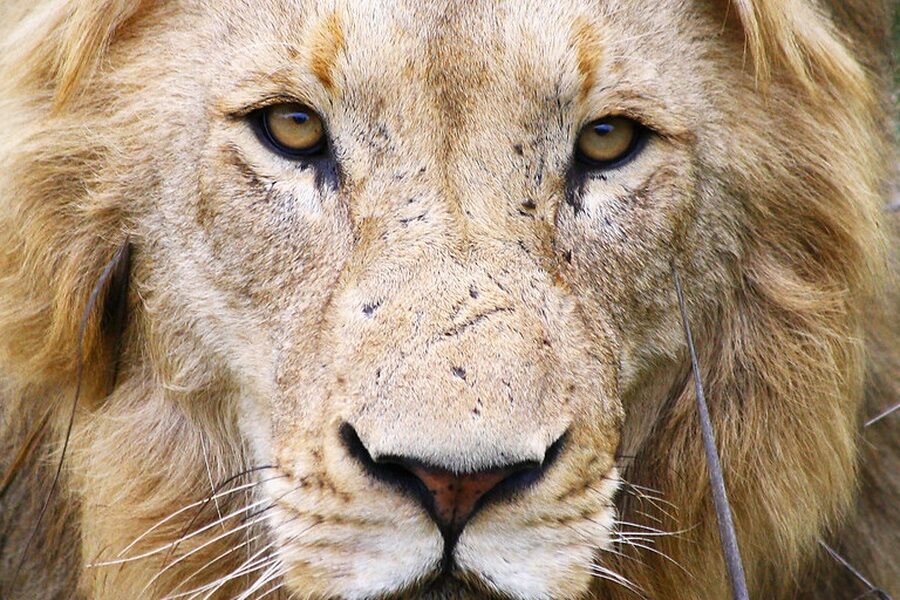
Lion
Present in northern savanna regions of CAR, lions are large social predators living in prides. Populations are patchy and threatened by conflict and habitat loss. Interesting fact: male lions’ manes vary with climate, age, and testosterone levels.
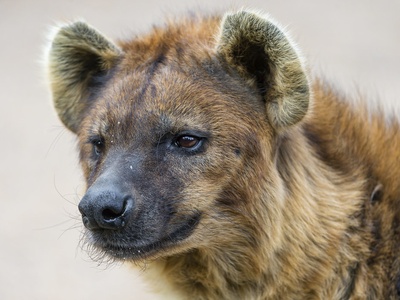
Spotted hyena
A common, highly social scavenger and hunter of CAR’s savannas, hyenas live in clans and are vocal at night. They play key ecosystem roles by recycling carcasses. Interesting fact: their complex social system is one of the most sophisticated among mammals.
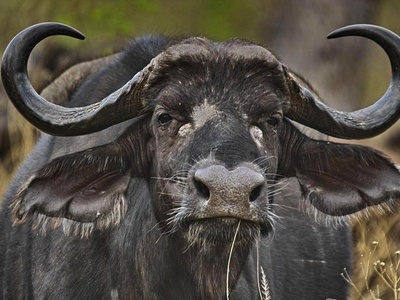
African buffalo
Large, herd-forming herbivore of CAR’s floodplains and savannas; buffalo can be dangerous when threatened. Populations face hunting and disease. Interesting fact: mature bulls often form bachelor groups separate from breeding herds.
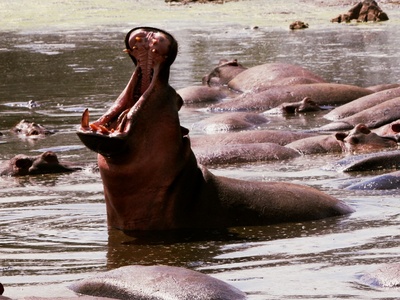
Hippopotamus
Common in larger rivers and wetlands, hippos are semi-aquatic and spend days submerged to keep cool, grazing at night. They can be aggressive toward people. Interesting fact: hippos secrete a reddish “blood sweat” that protects their skin and has antibacterial properties.
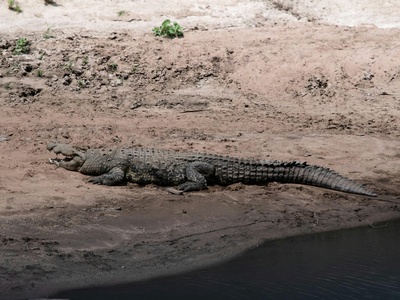
Nile crocodile
A large predator of CAR’s rivers and floodplains, Nile crocodiles ambush fish and mammals from the water’s edge. They are important apex predators. Interesting fact: female crocodiles guard nests and carry hatchlings to water in their mouths.
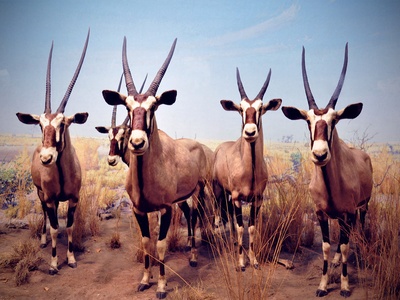
Roan antelope
A large, stripe-faced antelope of open woodlands and savannas in CAR, roan are fast and social in herds. They require large areas and good grazing. Interesting fact: roan antelopes have strong, backward-curving horns used in defense and dominance displays.

Kob
A widespread water-loving antelope in CAR’s floodplains and grassy savannas, kob form large breeding herds near water. They are notable for spectacular leaping displays during courtship. Interesting fact: male kobs perform impressive jumps and kicks to attract females.
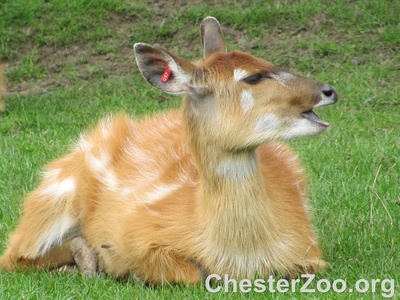
Sitatunga
A swamp-specialist antelope that moves through marsh vegetation with splayed hooves in CAR’s wetlands and riverine swamps. Often shy and hard to spot. Interesting fact: sitatunga hooves act like natural snowshoes, helping them walk on soft, marshy ground.
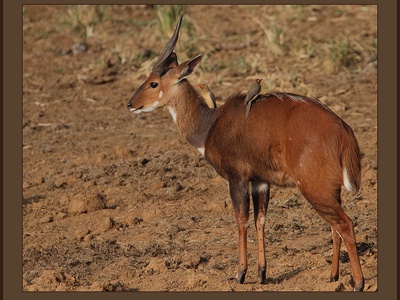
Bushbuck
A common, solitary antelope found in CAR’s forests and along waterways; highly adaptable to dense cover. They browse on foliage and are important prey for big cats. Interesting fact: bushbuck have unique facial markings that vary between individuals and regions.
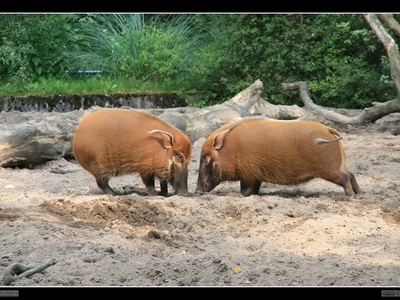
Red river hog
A colorful, forest-dwelling pig of CAR with striking facial markings and a reddish coat; active mostly at night. They root for tubers and fruits. Interesting fact: red river hogs live in family groups and can make a wide range of grunts and whistles.
Common warthog
A savanna pig known for tusks and facial warts; warthogs use abandoned burrows for shelter and graze on grasses. They are often seen kneeling to feed. Interesting fact: piglets have striped coats for camouflage; adults can run up to 48 km/h.
African rock python
A very large constrictor occurring near rivers and woodlands in CAR, feeding on mammals and birds. Not venomous but can take large prey. Interesting fact: rock pythons give live birth to dozens of sizeable young rather than laying eggs in cool climates.
African civet
A nocturnal, omnivorous small carnivore found across CAR’s habitats; civets are shy and notable for musk used in traditional perfumery. Interesting fact: their scat, called “civet coffee,” was historically used to flavor rare coffee varieties.
De Brazza’s monkey
A stout, secretive monkey often seen along forested rivers in CAR; males have a distinctive white beard and orange crown. They are shy and arboreal. Interesting fact: De Brazza’s monkeys are excellent at remaining hidden and are often detected by their distinctive calls.
Blue duiker
One of Africa’s smallest antelopes, the blue duiker lives in CAR’s dense forests and feeds on fallen fruit and leaves. It’s shy and solitary. Interesting fact: despite its small size, it can leap several meters to escape predators and thorny undergrowth.
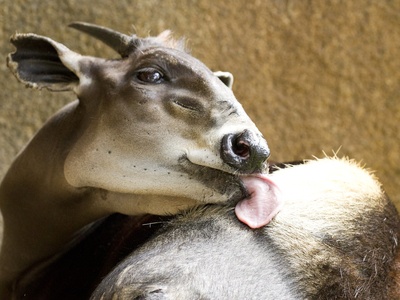
Yellow-backed duiker
A medium-sized forest antelope in CAR, the yellow-backed duiker prefers dense understory and is vulnerable to hunting for bushmeat. Interesting fact: duikers have a characteristic “springing” escape, disappearing into thick vegetation when startled.
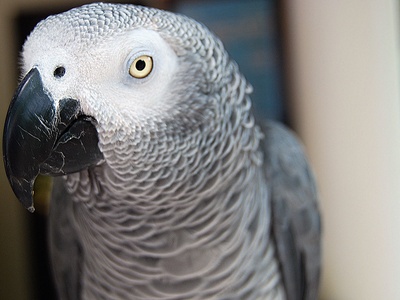
African grey parrot
A large, highly intelligent parrot of CAR’s rainforests prized for mimicking human speech; wild populations are declining due to trapping and habitat loss. Interesting fact: wild African greys form loose flocks and have complex social calls used in group coordination.
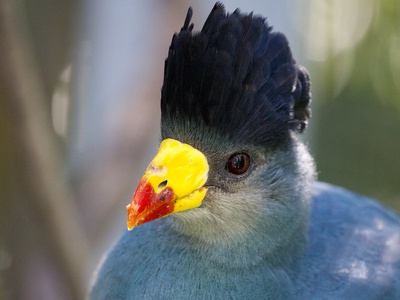
Great blue turaco
A striking, large forest bird with iridescent blue-green plumage found in CAR’s canopy. Usually seen moving in noisy groups along fruiting trees. Interesting fact: turacos have unique pigments—turacin and turacoverdin—found only in their feathers among birds.
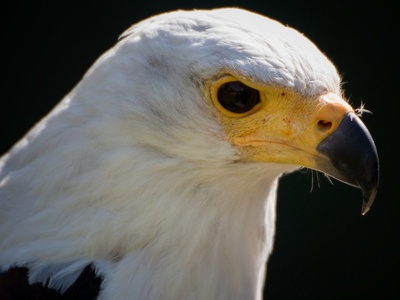
African fish eagle
A familiar raptor along CAR’s rivers and lakes, noted for its loud, whistling call and fish-based diet. It nests in large riverside trees. Interesting fact: the fish eagle’s distinctive cry is often used as a symbol of Africa in film and media.
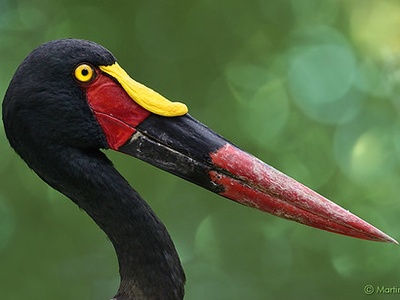
Saddle-billed stork
A tall, striking wading bird of CAR’s wetlands with a brightly colored bill and long legs, often seen hunting fish and frogs. Interesting fact: saddle-billed storks form long-term pair bonds and both parents care for chicks.
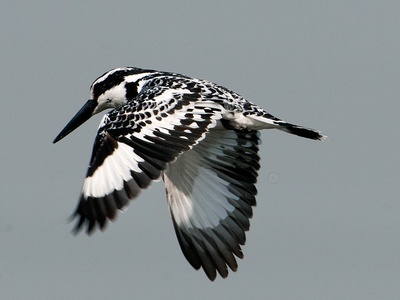
Pied kingfisher
A common, hovering kingfisher found along CAR’s rivers and pools that dives to catch fish with precision. It often nests in riverbanks. Interesting fact: pied kingfishers can hover stationary before plunging feet-first to seize prey.
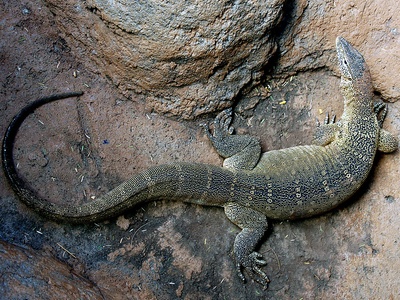
Nile monitor
A large, semi-aquatic lizard found along CAR’s waterways; an active predator of fish, birds, eggs, and small mammals. Monitors are strong swimmers. Interesting fact: Nile monitors have powerful limbs and a long, muscular tail used for swimming and defense.
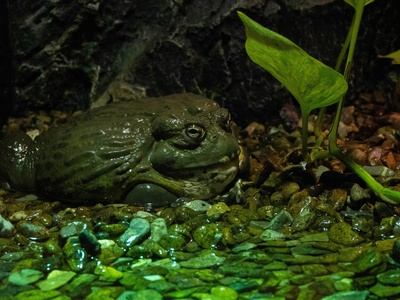
African bullfrog
A large, burrowing frog found in CAR’s seasonal pools and savannas; males guard tadpoles and sometimes build small nursery ponds. Interesting fact: male African bullfrogs can be fiercely territorial and have been observed protecting tadpoles from predators.
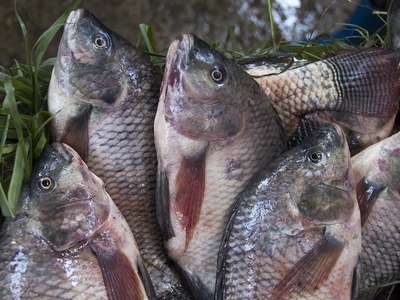
Nile tilapia
A widespread, hardy freshwater fish inhabiting CAR’s rivers and floodplain lakes, important for local fisheries. They tolerate varied conditions and breed readily. Interesting fact: tilapia are mouthbrooders—some species carry eggs or fry in their mouths for protection.
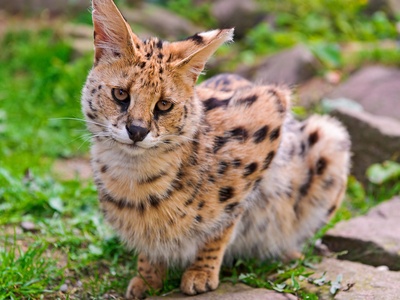
Serval
A medium-sized, long-legged wild cat common in tall grass and wetland edges in CAR; servals hunt by ear and pounce on small prey. Interesting fact: servals have exceptional hearing and can catch rodents underground by listening and striking precisely.
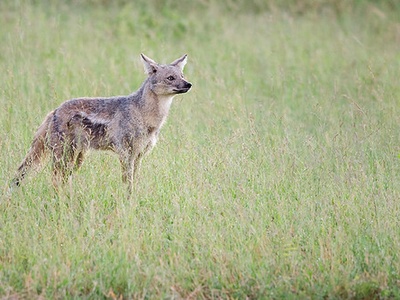
Side-striped jackal
A shy jackal species of CAR found in savanna and forest margins; omnivorous and often active at dawn and dusk. Interesting fact: side-striped jackals are monogamous and commonly hunt in pairs or small family groups.
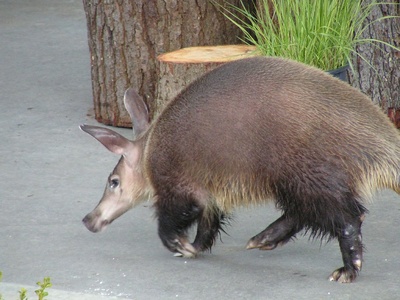
Aardvark
A nocturnal insect-eater that feeds on ants and termites using a long sticky tongue, found widely across CAR’s open habitats. It digs deep burrows for shelter. Interesting fact: aardvark burrows are later used by many other species for shelter, from foxes to reptiles.
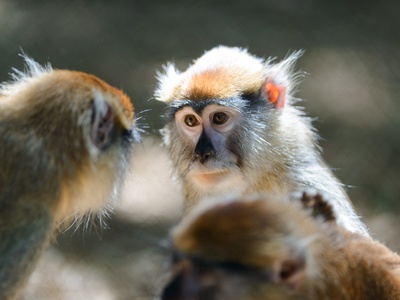
Patas monkey
A fast, ground-foraging monkey of CAR’s dry savannas, patas monkeys run swiftly across open ground and forage for insects and seeds. Interesting fact: patas monkeys are among the fastest primates on the ground, reaching bursts of speed to escape predators.
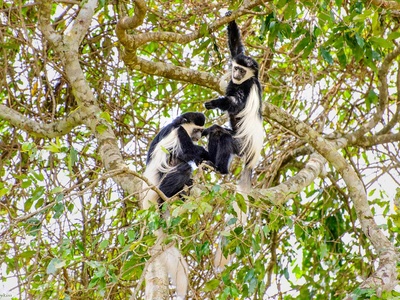
Guereza (black-and-white colobus)
A striking black-and-white leaf-eating monkey of CAR’s forests that moves through the canopy with long tails and strong limbs. They live in social groups and eat mostly leaves. Interesting fact: colobus monkeys lack thumbs, which helps them make long, graceful leaps between branches.