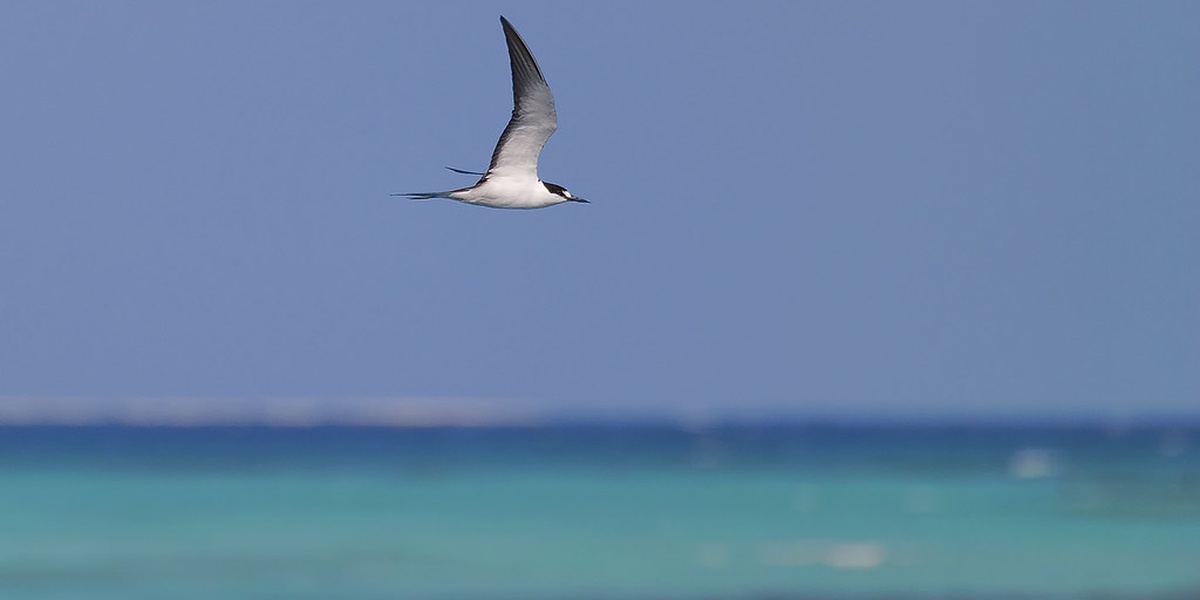
Tuvalu sits near the equator in the central Pacific, a chain of low-lying atolls where ocean, coral reef and sky shape the island life. Its wildlife is a mix of seabirds, reef fish and other marine species that depend on those fragile habitats and on seasonal movements across the Pacific.
There are 17 Tuvalu’s native animals, ranging from Black Noddy to Yellowfin Tuna. For each species you’ll find below the Scientific name, IUCN status, Main habitat / range so you can quickly see taxonomy, conservation priority and where each animal lives — you’ll find below.
Are all of these animals unique to Tuvalu?
Not necessarily; the list focuses on species native or regularly occurring in Tuvalu, including seabirds that breed on the atolls and wide-ranging fish like Yellowfin Tuna. Some are endemic or have local subspecies, but many are regionally distributed across Pacific islands and coastal waters.
How current are the IUCN statuses and habitat notes?
The IUCN status reflects the latest publicly available assessments, but conservation listings and range data can change with new surveys. Use the table below as a starting point and check the IUCN Red List or recent local research for the most up-to-date details.
Tuvalu’s Native Animals
| Name | Scientific name | IUCN status | Main habitat / range |
|---|---|---|---|
| Sooty Tern | Onychoprion fuscatus | Least Concern | Outer islets and reef flats |
| Brown Noddy | Anous stolidus | Least Concern | Coastal islets and trees |
| Black Noddy | Anous minutus | Least Concern | Sea-facing islets and trees |
| White Tern | Gygis alba | Least Concern | Over lagoons and motu |
| Great Frigatebird | Fregata minor | Least Concern | Roosts on trees, forages offshore |
| Brown Booby | Sula leucogaster | Least Concern | Rocky islets and reef edges |
| Masked Booby | Sula dactylatra | Least Concern | Secluded motu and reef islets |
| White-tailed Tropicbird | Phaethon lepturus | Least Concern | Over coastal waters and small islets |
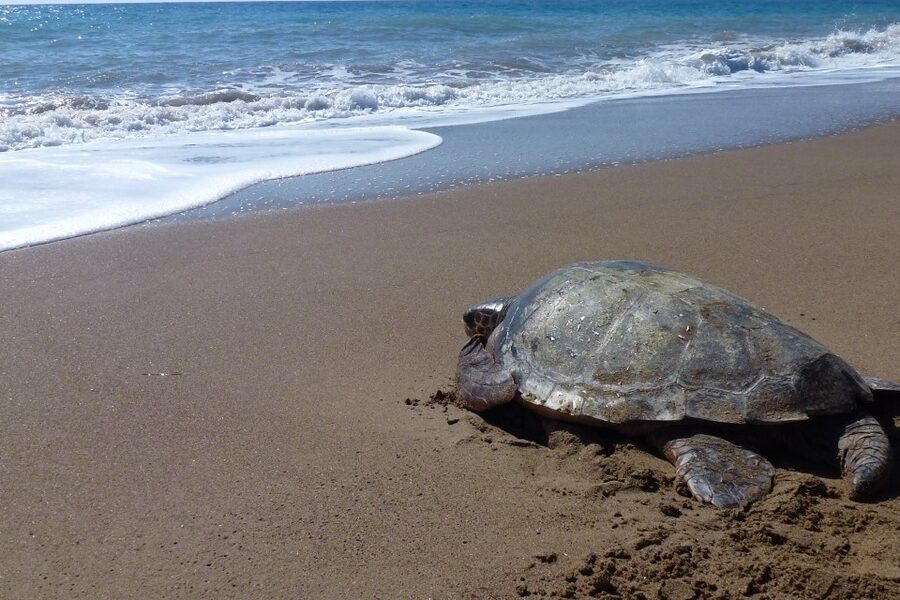
| Green Sea Turtle | Chelonia mydas | Endangered | Seagrass beds, sandy beaches |
| Hawksbill Turtle | Eretmochelys imbricata | Critically Endangered | Coral reefs and foraging grounds |
| Yellowfin Tuna | Thunnus albacares | Near Threatened | Open ocean and outer reef waters |
| Skipjack Tuna | Katsuwonus pelamis | Least Concern | Pelagic waters and lagoons |
| Giant Trevally | Caranx ignobilis | Least Concern | Reef slopes, passes and lagoons |
| Clark’s Anemonefish | Amphiprion clarkii | Least Concern | Lagoon reefs and anemones |
| Pacific Reef Heron | Egretta sacra | Least Concern | Rocky shores, reef flats and lagoons |
| Coconut Crab | Birgus latro | Data Deficient | Coastal scrub and islets |
| Polynesian Starling | Aplonis tabuensis | Least Concern | Village trees and coconut groves |
Images and Descriptions
Sooty Tern
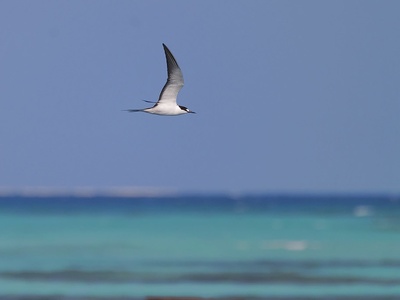
Sooty Terns nest in dense colonies on low motu, making loud nightly gatherings. Look for flocks resting on outer islets at dawn and dusk; very common breeder whose colonies are sensitive to human disturbance and introduced predators.
Brown Noddy
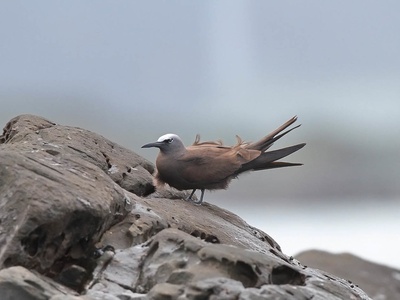
Brown Noddies form noisy coastal colonies on trees and scrub around motu. They are graceful gliders that feed on small fish near the surface; easy to spot in nesting season and often roost over lagoons and reef edges.
Black Noddy
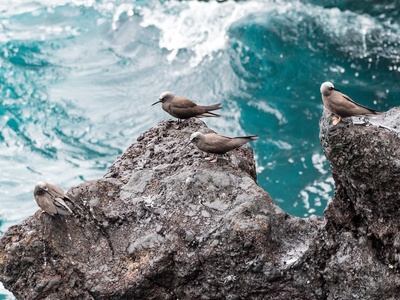
Black Noddies nest in mangroves and coastal trees, forming compact colonies on Tuvalu’s islets. Their dark plumage and gentle calls make them distinctive; watch for flocks around sunrise and foraging trips over nearby open water.
White Tern
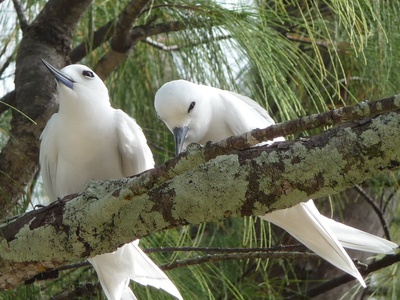
White Terns hover and perch on thin branches above lagoons, famously laying eggs on bare branches. Bright white and small, they are a delight to spot around villages and coral islets, often seen diving for small fish.
Great Frigatebird
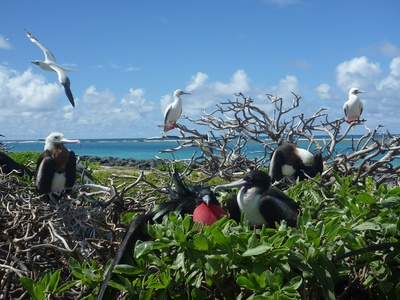
Great Frigatebirds patrol the skies with huge wings and forked tails, harassing other birds for food. Look for males’ red throat pouch during breeding; they rarely land on water and roost on trees of larger islets.
Brown Booby
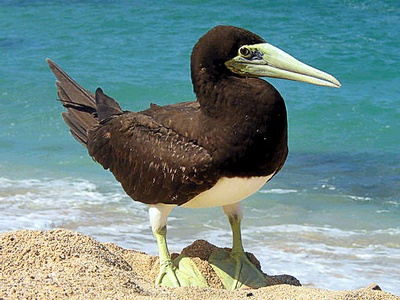
Brown Boobies are chunky plunging seabirds that nest on open sandy patches of motu. Watch for their dramatic high-speed dives to catch fish; colonies are easier to see from boats around outer reef edges.
Masked Booby
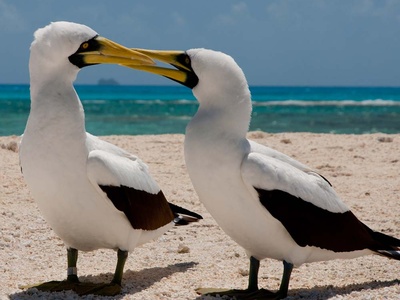
Masked Boobies prefer isolated motu for nesting, laying eggs on bare ground. Large and silent on land, they launch powerful plunges from height; take care near nesting sites to avoid disturbing colonies.
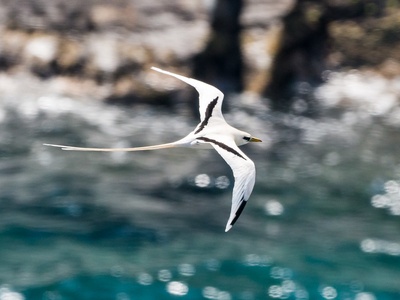
White-tailed Tropicbird
White-tailed Tropicbirds float elegantly above lagoons with long streamer tails, nesting in hidden crevices or vegetation. Their striking tail streamers make them unmistakable; they are solitary nesters often seen far offshore.
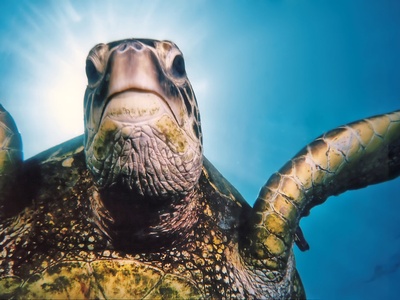
Green Sea Turtle
Green turtles forage on seagrass in Tuvalu’s lagoons and sometimes nest on quiet beaches. Large and slow, they are culturally important; avoid disturbing nesting females and report sightings to local conservation groups.
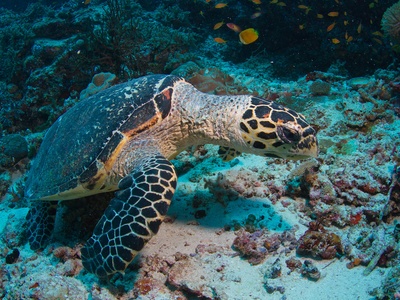
Hawksbill Turtle
Hawksbills feed on sponges among coral reefs and are vulnerable to poaching and habitat loss. Smaller than greens with pointy beaks and patterned shells, they are seldom seen but vital for reef health.

Yellowfin Tuna
Yellowfin tuna are powerful pelagic predators sought by fishers; large schools patrol offshore waters. They visit waters around atolls and are important to the local diet and economy—watch from boats rather than trying to approach.
Skipjack Tuna
Skipjack occur in large, fast-moving schools around Tuvalu and form the backbone of local tuna fisheries. Small-to-medium sized and energetic, they are often caught by trolling or pole-and-line from traditional boats.
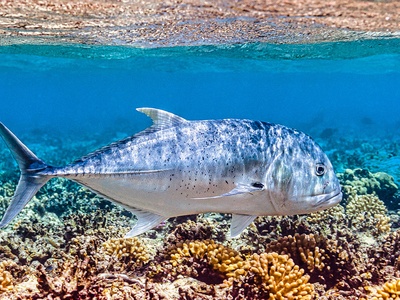
Giant Trevally
Giant Trevally are top reef predators—strong, silver and aggressive hunters around reef passes. Anglers prize them; snorkelers may spot smaller juveniles in shallow lagoons while adults patrol deeper reef drop-offs.
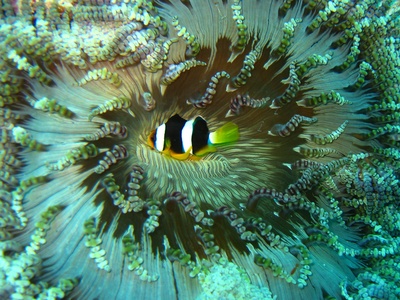
Clark’s Anemonefish
Clark’s anemonefish live among sea anemones in shallow lagoons, displaying bold orange-black markings and curious behavior. Easy to find while snorkeling, they are resilient and commonly seen in Tuvalu’s reef shallows.
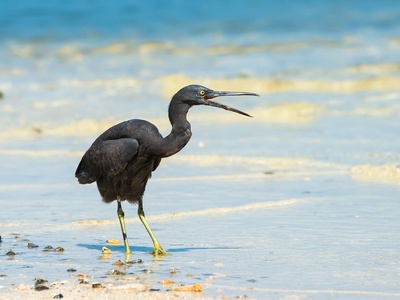
Pacific Reef Heron
Pacific Reef Herons stalk tide pools and reef flats for crabs and small fish in dark or white morphs. Patient and stealthy, they’re easiest to spot at low tide along reef edges and lagoon shores.
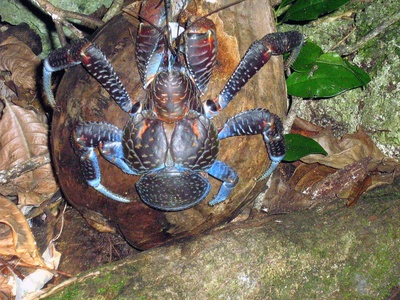
Coconut Crab
Coconut crabs are the world’s largest land crabs, roaming coastal scrub and motu at night to feed. Rare and vulnerable locally, sightings are notable—avoid handling and respect local rules protecting these iconic crustaceans.
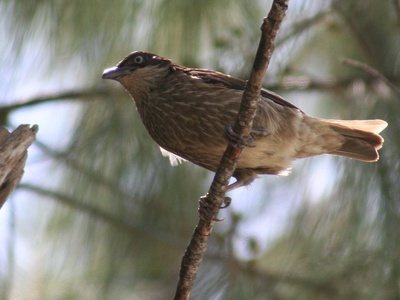
Polynesian Starling
Polynesian Starlings are glossy, medium-sized birds that forage in trees near villages. Bold and adaptable, they eat fruits and insects and often nest in coconut palms—easy to observe around human settlement areas.