TLDR
Steppe polecats are ground squirrel specialists. Rodents make up roughly 80% of their diet, and ground squirrels alone can account for the bulk of that in summer. When squirrels go into hibernation, the polecat pivots hard toward birds, carrion, and whatever else is moving. Near water, that list expands to fish and even chickens. It’s one of the most seasonally flexible diets of any mustelid, built around chasing whichever prey is easiest to catch at that time of year.
Table of Contents
- The short answer: ground squirrels, mostly
- Full prey list
- How the diet shifts with the seasons
- Hunting behavior: how a steppe polecat actually catches dinner
- Regional diet variation
- Steppe polecat vs. European polecat diet
- FAQ
The short answer: ground squirrels, mostly
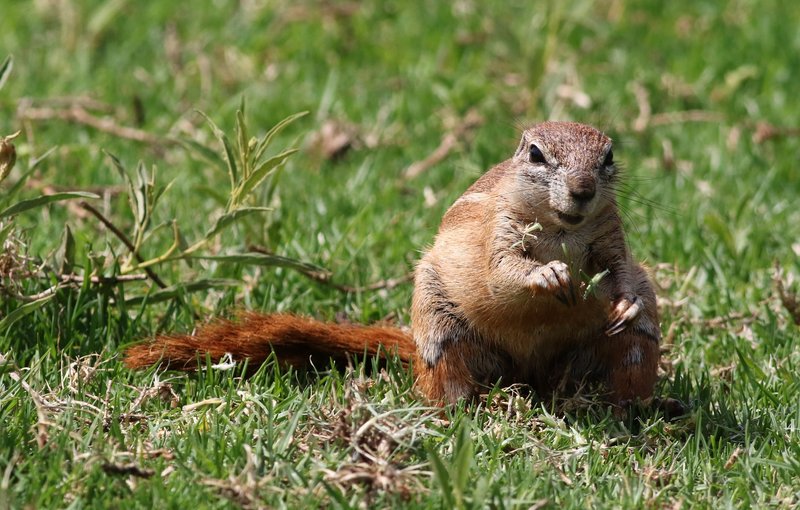
Rodents make up close to 80% of what a steppe polecat eats over the course of a year, and ground squirrels are the headline act. This isn’t a generalist that snacks on whatever wanders past. It’s a predator built around one specific prey base — the burrowing rodent colonies that carpet the Eurasian steppe — and everything else in its diet is a workaround for when that primary food source disappears underground for the winter.
That specialization is what separates the steppe polecat from its more famous relative. The European polecat, working smaller territories in woodland and farmland, mostly eats mouse-sized rodents. The steppe polecat goes bigger: ground squirrels, hamsters, pikas, and occasionally a marmot pup or an injured adult marmot too slow to escape.
Full prey list
Here’s what shows up on the menu, roughly in order of importance:
| Prey type | Role in diet | When it matters most |
|---|---|---|
| Ground squirrels | Primary prey, most of summer diet | Spring through early autumn |
| Hamsters | Major secondary prey | Year-round, especially where squirrels are scarce |
| Pikas | Regular prey in appropriate habitat | Spring through autumn |
| Marmots (young/injured) | Occasional, opportunistic | Late spring, early summer |
| Water voles | Substitute prey near water | Areas without ground squirrels |
| Birds (grey partridge, willow grouse) | Secondary, rises in winter | Cold months |
| Carrion | Fallback food | Winter, when live prey is scarce |
| Fish | Regional, opportunistic | Near rivers and wetlands |
| Poultry (chickens) | Rare, near human settlement | Anywhere squirrels are absent and coops are close |
| Reptiles, amphibians, insects | Minor, occasional | Warm months |
How the diet shifts with the seasons
This is the part most species profiles skip entirely, and it’s the most interesting thing about how a steppe polecat actually survives. Ground squirrels hibernate. That means for roughly half the year, the polecat’s main food source is simply unavailable — asleep in a burrow, sealed off from the surface.
In summer, small mammals dominate the diet almost completely. As squirrels enter hibernation in early autumn, the polecat switches strategy: instead of hunting squirrels on the surface, it starts excavating their burrows to reach ones that haven’t fully gone under yet, or that are still torpid near the entrance. Males, being larger, often have to dig and widen burrow entrances to get in; females and younger polecats are small enough to slip through gaps males can’t use.
By winter, with most squirrels unreachable, the diet leans much harder on birds and carrion. It’s not a preference — it’s what’s left. A steppe polecat in January is eating a genuinely different diet than the same animal in July, and the gap between those two seasonal menus is wider than in almost any other mustelid this size.
Hunting behavior: how a steppe polecat actually catches dinner
Steppe polecats hunt almost entirely at night, covering serious ground while they do it — up to 18 kilometers in a single night when prey is thin. Rather than following fixed paths, they move in what researchers describe as a random walk across the steppe, which sounds inefficient until you consider that ground squirrel colonies are scattered and unpredictable, so there’s no fixed route worth memorizing.
They’re also surprisingly agile for a low-slung mustelid, capable of leaping up to a meter to close the last gap on a fleeing rodent. And they don’t always eat everything they catch on the spot — steppe polecats will cache surplus carcasses in their burrow, a habit that buys them a buffer during the leaner stretches of winter when hunting turns up empty.
The polecat itself doesn’t stay put for long. It’s a nomadic hunter, settling into a territory only as long as the local ground squirrel population holds up, then moving on once that colony gets hunted down or dies off. That’s a direct consequence of how narrow its preferred prey base is — burn through the squirrels, and there’s no reason to stay.
Regional diet variation
Not every steppe polecat has ground squirrels within reach, and the diet adapts accordingly. In regions where ground squirrels are absent or scarce, hamsters and pikas take over as the primary prey. Near rivers, lakes, and wetlands, water voles become an important substitute, and the diet opens up to include fish and, near farms, the occasional chicken — a habit that hasn’t done the species any favors with local farmers.
This flexibility is worth noting because it means “steppe polecat diet” isn’t really one diet — it’s a default (ground squirrels) plus a set of regional substitutions that kick in wherever the default prey isn’t available.
Steppe polecat vs. European polecat diet
The two species split along a clear line: size of prey. The European polecat, found across most of Western and Central Europe, sticks to mouse-sized rodents and amphibians, particularly frogs, which make up a much larger share of its diet than they do for its steppe-dwelling cousin. The steppe polecat, by contrast, goes after prey several times larger — ground squirrels and young marmots that a European polecat generally wouldn’t tackle.
Part of this comes down to habitat. European polecats operate in mixed woodland and farmland with a wide variety of small prey options nearby. Steppe polecats work open grassland where ground squirrel colonies are often the single richest food source for kilometers, so evolution pushed them toward specializing in that resource rather than diversifying.
FAQ
Do steppe polecats eat frogs or fruit? Rarely. Amphibians and reptiles show up occasionally but aren’t a meaningful part of the diet, unlike in the European polecat. Fruit is an even smaller footnote — recorded, but not something the diet depends on.
Do steppe polecats eat carrion? Yes, especially in winter when live prey is scarce. Carrion becomes a genuine fallback food source once ground squirrels are hibernating and hunting success drops.
Are steppe polecats dangerous to livestock? Not in any serious way. They’re too small to threaten anything larger than poultry, and even chicken predation is opportunistic and regional rather than a consistent pattern. The IUCN lists the species as Least Concern, and human-wildlife conflict over livestock isn’t a significant driver of that status either way.
What eats steppe polecats? Natural predators are poorly documented, and by far the biggest pressure on the species is humans, who have historically hunted them for fur. Their main defense against any predator is the same one most mustelids rely on: a foul-smelling secretion from their anal scent glands, backed up by hissing, screaming, and bluff charges when cornered.