Table of Contents
- The Short, Honest Answer
- Why “Only in Norway” Is a Trickier Claim Than It Sounds
- The True Endemics: Svalbard’s Closed Ecosystem
- Mainland Species With a Norway-Only Story
- Populations You Can Only See in Norway
- So What’s Actually Worth Chasing
The Short, Honest Answer
If you want the species that are genuinely endemic to Norwegian territory and nowhere else on Earth, the list is short: the Svalbard reindeer, a handful of Svalbard insects like the dragonhead sap beetle, and a cluster of whitebeam trees found only in a few Norwegian valleys. Everything else that gets called “unique to Norway” online is really a species with a strong Norwegian population, a distinct subspecies shared with one neighboring territory, or the last European stronghold for something that vanished elsewhere.
That’s not a letdown — it’s the more interesting story, and it’s the one this list actually tells.
Why “Only in Norway” Is a Trickier Claim Than It Sounds
Mainland Norway shares a long, unfenced border with Sweden, Finland, and Russia, and wildlife doesn’t check passports. A moose that spends summer in Norwegian forest can wander into Sweden by autumn. That’s why the “List of Mammals of Norway” on Wikipedia tags most species as native-but-widespread across Scandinavia, not endemic.
Svalbard is different. It’s an isolated Arctic archipelago roughly 800 kilometers north of the mainland, cut off by open ocean, and that isolation is exactly what produces real endemism. Several of Svalbard’s land animals evolved in place, with nowhere else to interbreed, for thousands of years, developing the kinds of polar adaptations that define survival in extreme environments. So when this list gets specific about “only found in Norway,” it splits cleanly along that line: Svalbard’s closed system versus the mainland’s shared one.
The True Endemics: Svalbard’s Closed Ecosystem
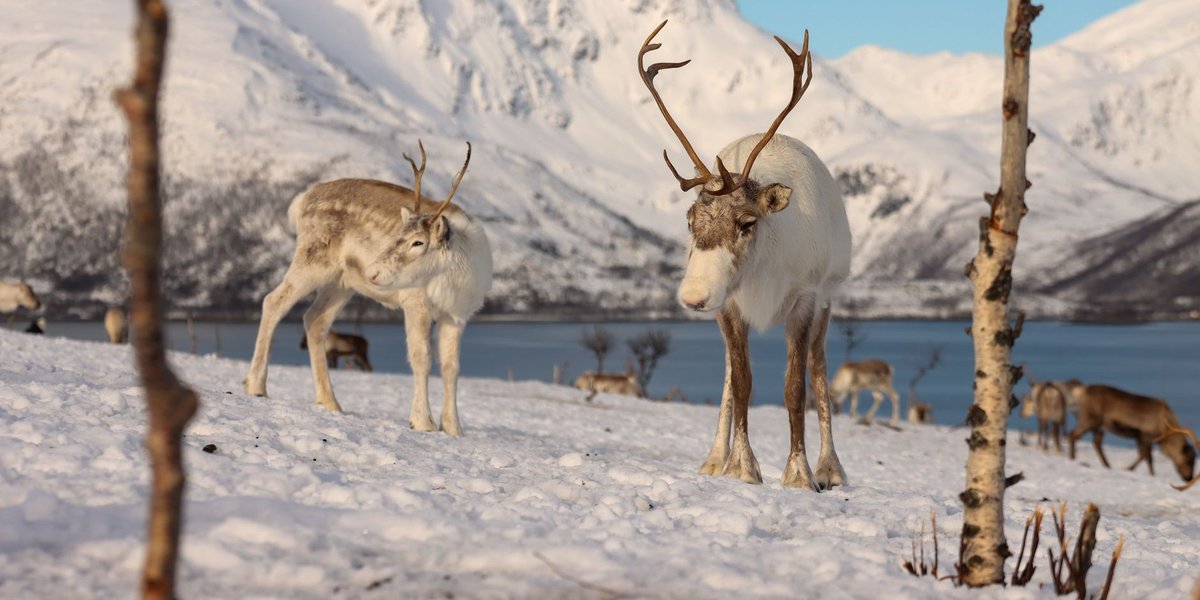
Svalbard reindeer (Rangifer tarandus platyrhynchus) top the list because they’re the real thing — a subspecies found nowhere on the planet except the Svalbard archipelago. They’ve been isolated there for at least 5,000 years, and it shows: shorter legs, a rounder body, and roughly a third less leg length than mainland reindeer, all adaptations for conserving heat rather than covering distance. They don’t migrate because there’s nowhere to go and no predators chasing them — Svalbard has no wolves or bears hunting reindeer year-round. The Norwegian Polar Institute classifies the subspecies as Vulnerable, largely because a warming Arctic means more rain-on-snow events that lock their food under ice.
Svalbard rock ptarmigan (Lagopus muta hyperborea) is the only bird that lives on Svalbard through the winter without migrating out, and the subspecies is found only there and on Russia’s Franz Josef Land — nowhere else. It survives 24-hour polar darkness by roughly doubling its body weight in autumn fat reserves and burrowing into snow to escape wind chill that would kill most birds its size. Norway’s environmental monitoring program MOSJ tracks its population closely as a sentinel species for how Arctic warming is reshaping snow cover.
A quiet roster of Svalbard insects rounds out the true-endemic category, and this is the part almost no travel blog mentions: the dragonhead sap beetle (Meligethes norvegicus), the rove beetle Cypha norvegica, and the parasitic wasp Blastothrix osloensis are all found only within Norwegian borders. None of them will end up on a wildlife safari itinerary, but they’re the animals that actually satisfy the literal claim in the strictest scientific sense.
Closest to endemic on land plants: a group of whitebeam trees — Sorbus sognensis, Sorbus neglecta, and several close relatives — grow in isolated Norwegian valleys and nowhere else, the product of ancient hybridization events between species that only overlapped in Norway’s fjord country.
Mainland Species With a Norway-Only Story
None of these are endemic in the strict sense, but each has a claim that a generic “wildlife of Norway” list glosses over.
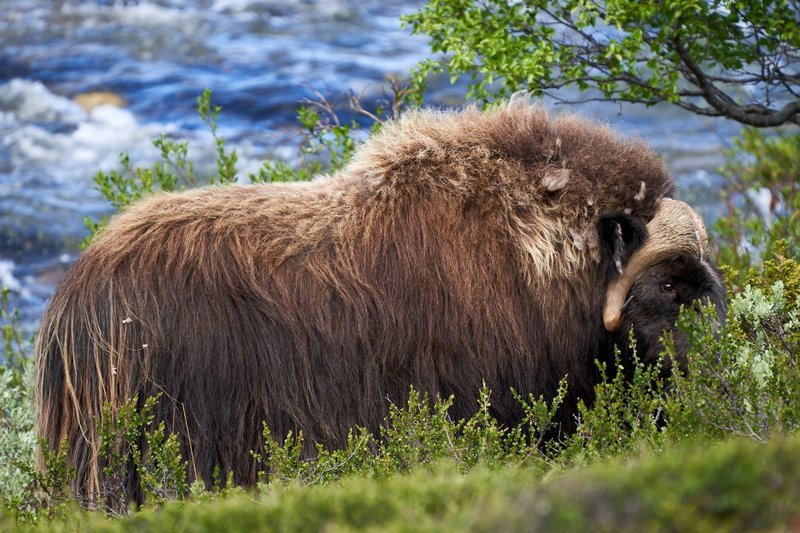
Dovrefjell’s muskoxen are the only wild, self-sustaining muskox population in mainland Europe. They’re not native — the herd descends from animals reintroduced from Greenland in the 1940s and 1950s after Norway’s original Ice Age muskoxen died out — but Dovrefjell National Park is now the one place on the European mainland where you can watch a wild muskox herd graze in the open, and nowhere else on the continent has replicated it.
The Norwegian Forest Cat isn’t a wild species, but it earns a place here anyway: it’s a landrace that developed its double coat, tufted ears, and bushy tail specifically to survive Norwegian winters, and Norway is the only place the breed developed without human breeding programs shaping it from scratch. Norse folklore already references a large forest-dwelling cat centuries before anyone formalized the breed standard in the 1930s.
The Norwegian coastal cod is genetically distinct from the migratory Northeast Arctic cod that spawns in the Barents Sea and swims south each winter — the two stocks share Norwegian waters but rarely interbreed, and the stationary coastal population has adapted specifically to fjord conditions rather than open ocean migration.
Norway lemmings (Lemmus lemmus) range across Fennoscandia rather than staying inside Norway’s borders, so they’re not technically endemic. But Norway is where the species’ famous boom-and-bust population cycles were first documented and where the “lemmings marching to their deaths” myth actually originated — a myth Disney manufactured for a 1958 nature film by physically pushing lemmings off a cliff, not a real behavior the animals exhibit.
The northern pool frog went extinct in the United Kingdom in the 1990s, and Norway is now the only country in northern Europe where a wild population survives — a small, cold-adapted colony near the Oslofjord that’s genetically distinct from the warmer-climate pool frogs found further south in Europe. It’s one of the rarest animals in Europe, a species that would vanish entirely without Norway’s protection of its remaining habitat.
Populations You Can Only See in Norway
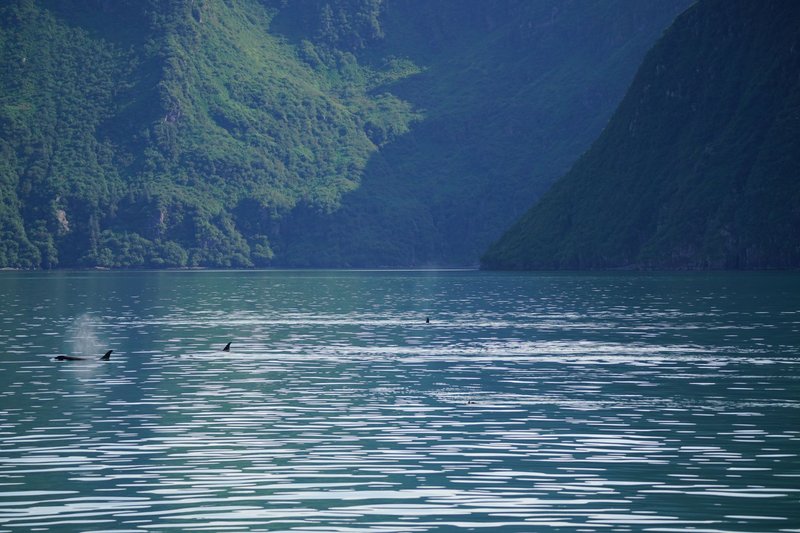
Herring-following orcas show up every winter in Norwegian fjords north of the Arctic Circle, in numbers and reliability found nowhere else on Earth. The orcas time their arrival to a specific herring stock that overwinters in Norwegian waters, which means the predictable, close-range orca encounters that draw wildlife boats to Tromsø and Skjervøy each November simply don’t exist at that scale anywhere else — the herring migration is the whole reason it works.
Svalbard’s Arctic fox population carries a coat-color variant mainland foxes rarely show at the same frequency: the “blue morph,” a year-round dark grey-brown coat instead of the white winter coat most Arctic foxes wear. Svalbard’s isolation means this color morph persists at unusually high rates in that specific population.
Norway’s white-tailed eagles make up the largest breeding population of the species in Europe, concentrated along the Norwegian coast in numbers no other European country comes close to matching — dense enough that eagle-watching boat trips out of the Lofoten Islands and Trondheimsfjord can reliably spot multiple birds in a single outing, something that would be a rare sighting almost anywhere else on the continent.
So What’s Actually Worth Chasing
If you’re planning a trip around this, prioritize by what “only in Norway” actually means to you. Want the strict, no-asterisks version? Svalbard is the destination — reindeer and rock ptarmigan are both there, both endemic, and both visible on a single guided trip out of Longyearbyen. Want the more accessible mainland version? Dovrefjell’s muskoxen and a winter orca trip in Troms deliver experiences genuinely unavailable elsewhere in Europe, even though the species themselves range wider.
Either way, skip the lists that just rename “common wildlife in Norway” as “unique to Norway.” The animals that actually earn that label are stranger, more isolated, and more worth the trip than a moose you could just as easily see in Sweden.