Zambia’s rivers, dambos and seasonal pools support a surprising variety of frogs and toads, shaped by the country’s mix of miombo woodlands, floodplains and highlands. Amphibians here are indicators of freshwater health and show distinct local patterns between wet and dry seasons.
There are 41 Amphibians of Zambia, ranging from African Clawed Frog to Water Lily Frog. For each species the list shows Scientific name,IUCN status,Main Zambia range & habitat so you can quickly see where each occurs and its conservation listing — you’ll find the full list and details below.
Which habitats in Zambia host the most amphibian species?
Wetlands and slow-moving waters (dambos, marshes, ponds and river margins) support the highest diversity, with adjacent miombo and riparian forest fragments adding species tied to leaf litter and streams. Many species rely on seasonal pools for breeding, so landscape connectivity and intact wet-season habitats are especially important.
How up-to-date are the IUCN statuses and range notes used here?
The list uses published IUCN assessments and regional records available at the time of compilation, but statuses and range data can change with new surveys and reassessments; check the IUCN Red List and recent local studies for the latest updates, especially for species listed as Data Deficient or Near Threatened.
Amphibians of Zambia
| Common name | Scientific name | IUCN status | Main Zambia range & habitat |
|---|---|---|---|
| Guttural Toad | Sclerophrys gutturalis | Least Concern | Widespread throughout Zambia in savannas, farms, and suburban gardens |
| Eastern Olive Toad | Sclerophrys garmani | Least Concern | Widespread in eastern and southern Zambia in savanna and grassland |
| Flat-backed Toad | Sclerophrys maculatus | Least Concern | Widespread in northern and central Zambia, typically in moist savanna |
| Raucous Toad | Sclerophrys rangeri | Least Concern | Southern Zambia, near the Zambezi and Kafue rivers, in riverine habitats |
| Red Toad | Schismaderma carens | Least Concern | Widespread throughout Zambia in savanna and open woodland, near seasonal pans |
| Fenoulhet’s Pygmy Toad | Poyntonophrynus fenoulheti | Least Concern | Southern, Central, and Eastern provinces in rocky savanna and grasslands |
| Giant Bullfrog | Pyxicephalus adspersus | Least Concern | Widespread in seasonal pans and grasslands, especially in Southern, Central, and Western provinces |
| Common Sand Frog | Tomopterna cryptotis | Least Concern | Widespread throughout Zambia in sandy savanna, grassland, and agricultural lands |
| Tandy’s Sand Frog | Tomopterna tandyi | Least Concern | Widespread in savanna and grassland habitats, often alongside other sand frogs |
| Delalande’s River Frog | Amietia delalandii | Least Concern | Eastern highlands and parts of northern Zambia, in and around permanent streams |
| Boettger’s Dainty Frog | Cacosternum boettgeri | Least Concern | Widespread in grasslands and savannas, especially in southern and central regions |
| Marbled Shovelnose Frog | Hemisus marmoratus | Least Concern | Widespread in savanna and woodland across most of Zambia |
| Dune Squeaker | Arthroleptis stenodactylus | Least Concern | Widespread across Zambia in leaf litter of savanna woodland and forests |
| Dwarf Squeaker | Arthroleptis xenodactyloides | Least Concern | Highlands of northeastern Zambia (Nyika Plateau) in montane grassland and forest patches |
| Angola Tree Frog | Leptopelis anchietae | Least Concern | Widespread in miombo and mopane woodlands across western and central Zambia |
| Bocage’s Tree Frog | Leptopelis bocagii | Least Concern | Widespread in open savannas and grasslands throughout Zambia |
| Mozambique Tree Frog | Leptopelis mossambicus | Least Concern | Found in the Luangwa and Zambezi valleys in eastern and southern Zambia |
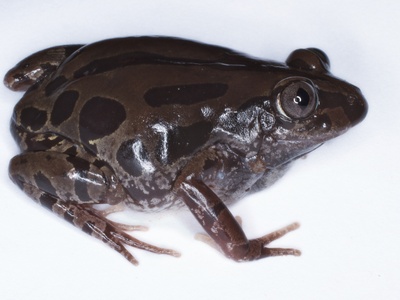
| Senegal Running Frog | Kassina senegalensis | Least Concern | Widespread throughout Zambia in savanna, grassland, and agricultural areas |
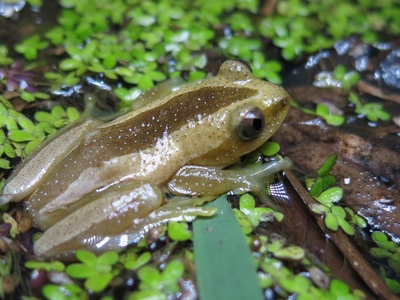
| Fornasini’s Spiny Reed Frog | Afrixalus fornasini | Least Concern | Widespread in wetlands, reedbeds, and flooded grasslands across Zambia |
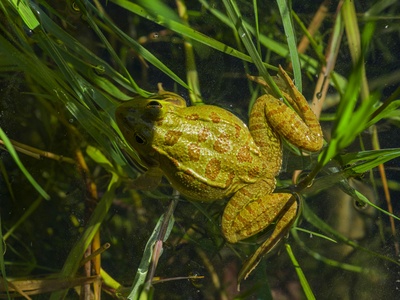
| Golden Leaf-folding Frog | Afrixalus aureus | Least Concern | Southern Zambia, particularly in the Zambezi Valley floodplains |
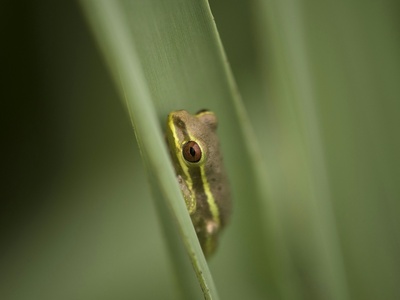
| Common Reed Frog | Hyperolius viridiflavus | Least Concern | Widespread and abundant throughout Zambia near almost any water body |
| Long-nosed Reed Frog | Hyperolius nasutus | Least Concern | Widespread in marshes, swamps, and dambos throughout Zambia |
| Tinker Reed Frog | Hyperolius tuberilinguis | Least Concern | Lowlands of eastern Zambia, such as the Luangwa Valley |
| Sharp-nosed Reed Frog | Hyperolius acuticeps | Least Concern | Northern and eastern Zambia in wetlands and dambos |
| Water Lily Frog | Hyperolius pusillus | Least Concern | Widespread in southern and eastern Zambia in pans, dams, and slow-moving rivers |
| Mitchell’s Reed Frog | Hyperolius mitchelli | Near Threatened | Restricted to montane forests on the Nyika Plateau in northeastern Zambia |
| Grey Tree Frog | Chiromantis xerampelina | Least Concern | Widespread in savanna woodlands throughout Zambia |
| Bushveld Rain Frog | Breviceps adspersus | Least Concern | Southern, Central, and Western provinces in sandy savanna and woodlands |
| Mozambique Rain Frog | Breviceps mossambicus | Least Concern | Widespread across eastern and northern Zambia in various savanna habitats |
| Banded Rubber Frog | Phrynomantis bifasciatus | Least Concern | Widespread in savanna and woodland, often found under logs or in termite mounds |
| Ornate Frog | Hildebrandtia ornata | Least Concern | Widespread in savanna and grasslands, breeding in temporary rain pools |
| Anchieta’s Grass Frog | Ptychadena anchietae | Least Concern | Widespread throughout Zambia in moist savanna, grassland, and dambos |
| Mascarene Grass Frog | Ptychadena mascareniensis | Least Concern | Widespread in wetlands, floodplains, and agricultural areas across Zambia |
| Sharp-nosed Grass Frog | Ptychadena oxyrhynchus | Least Concern | Widespread in savanna and woodland, especially in open, grassy areas |
| Mozambique Grass Frog | Ptychadena mossambica | Least Concern | Common throughout Zambia in savanna and grassland habitats |
| Broad-banded Grass Frog | Ptychadena taenioscelis | Least Concern | Widespread in seasonally flooded grasslands (dambos) across Zambia |
| Natal Puddle Frog | Phrynobatrachus natalensis | Least Concern | Widespread and abundant throughout Zambia, near any shallow water or damp area |
| Mababe Puddle Frog | Phrynobatrachus mababiensis | Least Concern | Widespread in savanna wetlands and dambos across much of Zambia |
| African Clawed Frog | Xenopus laevis | Least Concern | Southern Zambia, in permanent ponds, dams, and slow-moving rivers |
| Müller’s Clawed Frog | Xenopus muelleri | Least Concern | Widespread throughout Zambia in a wide range of aquatic habitats |
| Kirk’s Caecilian | Scolecomorphus kirkii | Least Concern | Restricted to montane forests in the extreme northeast (Mafinga Mountains, Nyika Plateau) |
Images and Descriptions
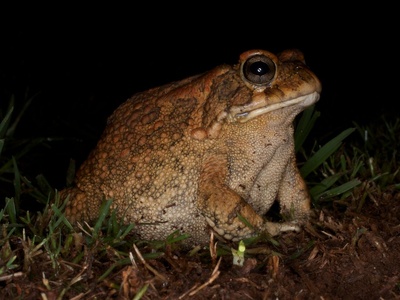
Guttural Toad
A very large, warty toad reaching 120 mm, famous for its loud, guttural snoring call heard after rains. Highly adaptable and common around human homes, it’s a beneficial predator of insects and is not considered threatened due to its resilience.
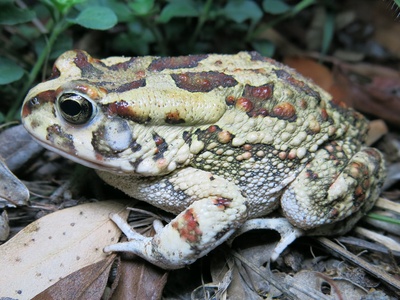
Eastern Olive Toad
A large toad with a prominent pale cross-shape on its head. It has a distinctive, loud “kwak-kwak-kwak” call. Often found near water bodies after dark, it is common throughout its range and adaptable to agricultural landscapes.
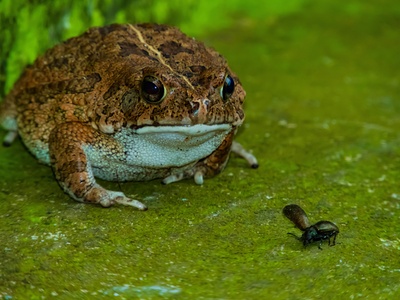
Flat-backed Toad
A medium-sized toad with a somewhat flattened appearance and paired dark markings on its back. It is a secretive species, emerging at night to hunt for insects. Its population is stable and it thrives in a variety of savanna habitats.
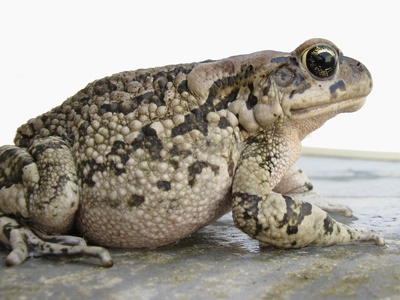
Raucous Toad
A large toad, very similar to the Guttural Toad, best identified by its loud, duck-like quacking call. It prefers areas closer to permanent water than its relatives. Common where it occurs, its populations are currently considered stable.
Red Toad
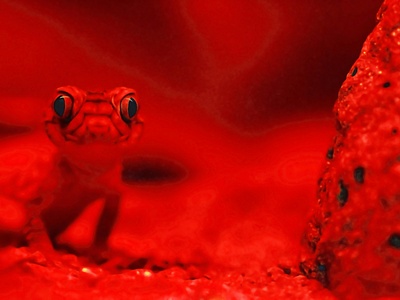
A large, smooth-skinned toad with a reddish-brown back and no visible parotoid glands. An explosive breeder, large numbers congregate at temporary pools after heavy rains. It’s a common and conspicuous species across much of southern Africa.
Fenoulhet’s Pygmy Toad
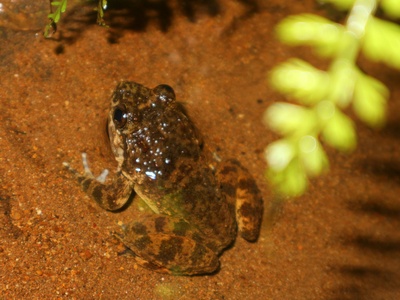
A very small, flattened toad, perfectly camouflaged to resemble gravel or granite. It hides in rock cracks during the day and emerges at night. Despite its small size, it is locally common in suitable rocky habitats and faces no major threats.
Giant Bullfrog
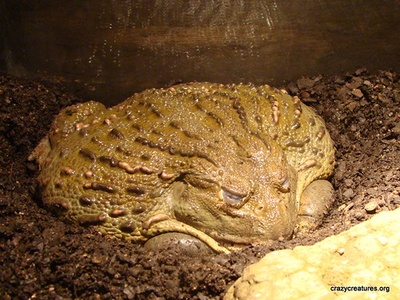
Africa’s largest frog, with males reaching a massive 245 mm and having powerful jaws. Famous for its explosive call and aggressive defense of its tadpoles in shallow pools. It is threatened by habitat loss and harvesting for food in some regions.
Common Sand Frog
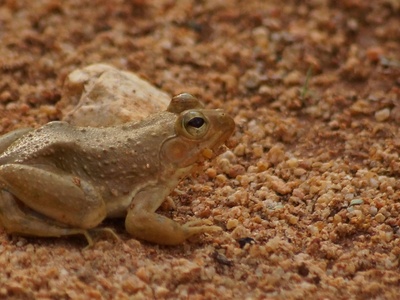
A medium-sized, burrowing frog with a stout body and a characteristic pale stripe down its back. It emerges from its burrow to call and breed after rains. Its high-pitched, ringing call is a common sound in the wet season.
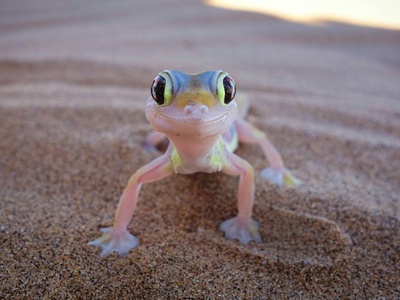
Tandy’s Sand Frog
Visually almost identical to the Common Sand Frog, it is best distinguished by its call, which is a series of short, high-pitched ringing notes. It is a common and widespread species, well-adapted to seasonally dry environments across Zambia.
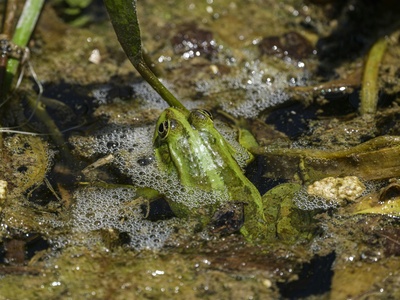
Delalande’s River Frog
A medium to large, streamlined frog with powerful legs, adapted for an aquatic lifestyle. It is usually found along the grassy banks of clear streams and rivers. Its populations are stable, though dependent on unpolluted water sources.
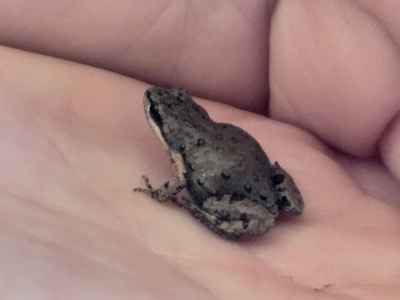
Boettger’s Dainty Frog
A tiny frog, only growing to about 25 mm. It has a distinctive call that sounds like a faint, high-pitched rattle or crackle. Huge numbers can be heard calling from flooded grasslands after rain, and it remains very common.
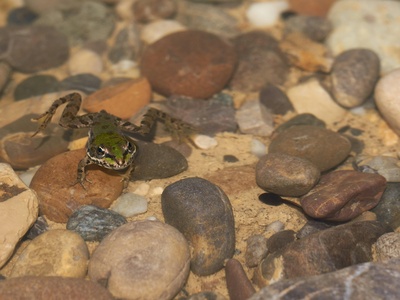
Marbled Shovelnose Frog
A small, round-bodied burrowing frog with a hardened, pointed snout used for digging. The back is patterned with dark and light marbling. It spends most of its life underground, emerging to breed in temporary pools after heavy rains.

Dune Squeaker
A small, brown terrestrial frog that lives and breeds in damp leaf litter, laying its eggs on land. It is named for its high-pitched, insect-like squeaking call. Very common but rarely seen due to its secretive habits.
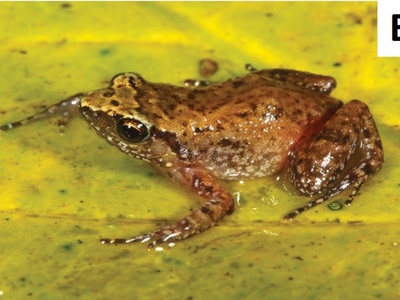
Dwarf Squeaker
A small squeaker found at high altitudes. It is similar to the Dune Squeaker but prefers cooler, montane habitats. Like its relatives, it develops directly from eggs into froglets, skipping the tadpole stage, and is threatened by habitat degradation.
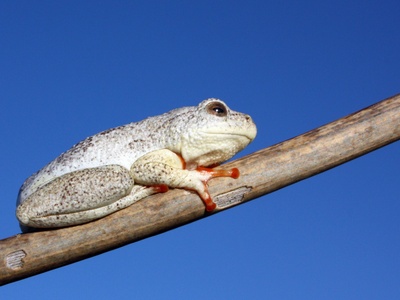
Angola Tree Frog
A large, robust tree frog, typically brown or grey with a dark triangular patch on its head. Males have a distinctive, loud “kloik” call, often heard from low bushes or trees on rainy nights. It is a common woodland species.
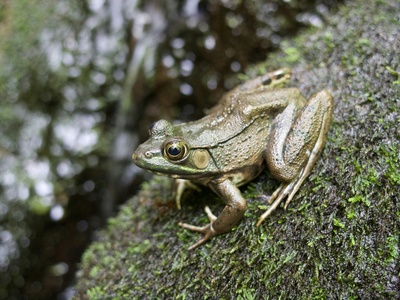
Bocage’s Tree Frog
A ground-dwelling member of the tree frog family, this species burrows in sandy soils. It is robust, typically brown or grey, and lacks the prominent toe discs of its climbing relatives. It is common and widespread in open habitats.
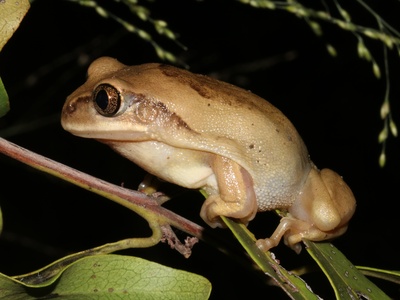
Mozambique Tree Frog
A medium-sized tree frog, often green or brown, with large eyes. It prefers moist savanna and woodland near water. Its distinctive clucking call can be heard from reeds or bushes after dark. Its range in Zambia is limited to the major river valleys.
Senegal Running Frog
A medium-sized, smooth-skinned frog with a distinctive pattern of bold, dark stripes or spots on a lighter background. It walks or “runs” rather than hops. Its call is a loud, liquid “boip” or “quoip,” often heard from water bodies.
Fornasini’s Spiny Reed Frog
A beautifully patterned reed frog with a broad, dark brown stripe down its back, bordered by golden-yellow. Males have tiny black spines (asperities) on their skin. It folds leaves to create nests for its eggs above water. A common and striking species.
Golden Leaf-folding Frog
A small, golden or yellow frog that inhabits reedbeds and emergent vegetation. As its name suggests, it lays its eggs in folded leaves over water. It is a vibrant and attractive species, though its range in Zambia is limited.
Common Reed Frog
An incredibly variable small frog; males are often green with light spots, while females can be brown with bold stripes. Part of a complex species group, it is one of the most common and frequently heard frogs in Zambia, with a sharp, clicking call.
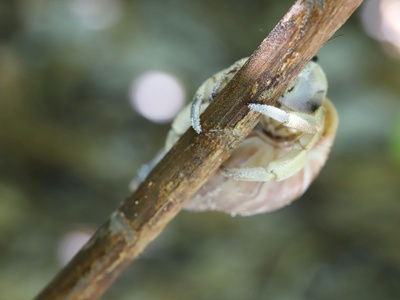
Long-nosed Reed Frog
A small, slender green frog easily identified by its distinctly pointed, long snout. It is perfectly camouflaged among reeds and grasses. Its call is a very high-pitched, insect-like “ziiiiing.” A common and widespread species in suitable wetlands.
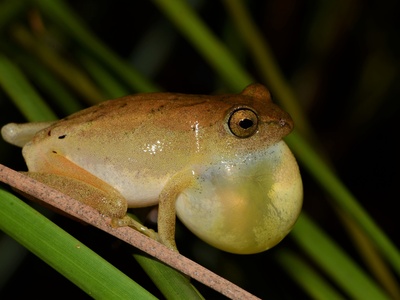
Tinker Reed Frog
A large, robust reed frog, typically uniform bright green or yellow-brown. Its name comes from its call, a loud, bell-like “ting” or “tink,” resembling a hammer striking an anvil. Common in reedbeds in the east of the country.
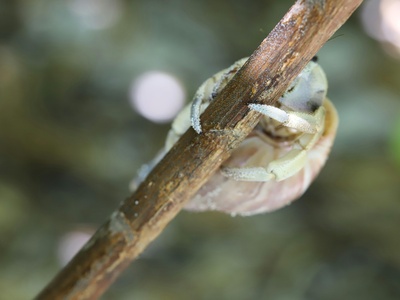
Sharp-nosed Reed Frog
A small, slender reed frog with a pointed snout, though not as long as in H. nasutus. Males are typically green, while females are brown with a distinctive hourglass pattern. It is a common species of grassy wetlands in its range.
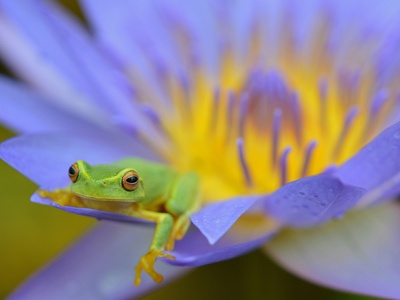
Water Lily Frog
A tiny, translucent green frog often found sitting on water lily pads. Its small size and colour provide excellent camouflage. It has a soft, insect-like buzzing call. Abundant in habitats with floating vegetation.
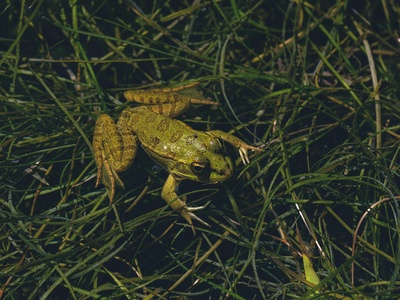
Mitchell’s Reed Frog
A strikingly coloured reed frog with a green back, white flanks, and bright red or orange on its feet and thighs. It is a habitat specialist, dependent on pristine montane forest streams, making it highly vulnerable to deforestation.
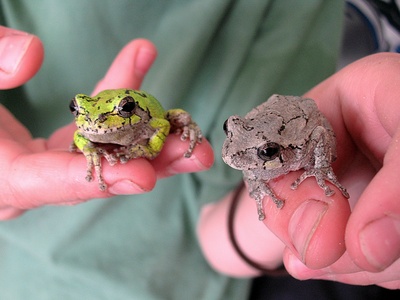
Grey Tree Frog
A large tree frog with a rough, grey or whitish skin that helps it reflect heat and conserve water. Famous for building large, communal foam nests on branches overhanging water, into which several females lay their eggs. A common and fascinating sight.
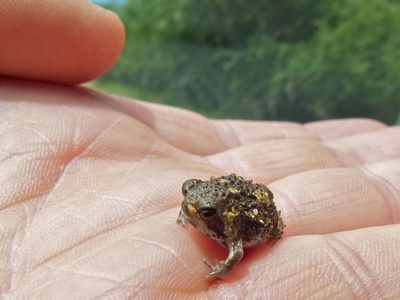
Bushveld Rain Frog
A comical, round-bodied frog with a short snout and tiny legs; it cannot hop and walks instead. It spends most of the year underground, emerging after heavy rains to feed and breed. Its call is a loud, high-pitched “weeeep.”
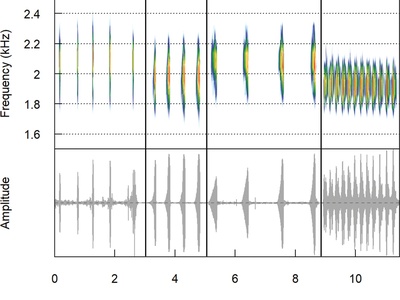
Mozambique Rain Frog
Similar to the Bushveld Rain Frog, this is a plump, burrowing species that emerges after rain. It is typically brown with mottled patterns. A secretive frog that is more often heard than seen, its populations are considered stable.
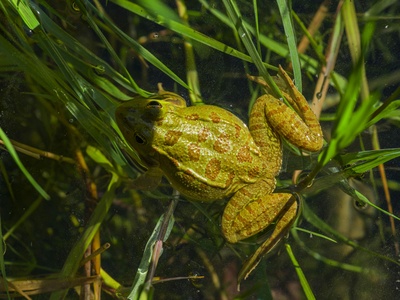
Banded Rubber Frog
A striking, smooth-skinned frog up to 65 mm, with bold red or pink bands on a black back. It walks rather than hops and secretes a toxic substance when threatened. Its beautiful, high-pitched, bell-like call is a common sound.
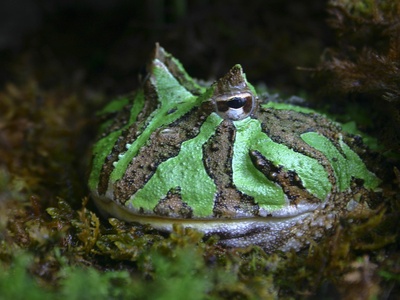
Ornate Frog
A robust, powerfully built frog with a large head and striking pattern of dark blotches and a vertebral stripe. It is an explosive breeder, appearing in large numbers after the first rains. Known to be cannibalistic.
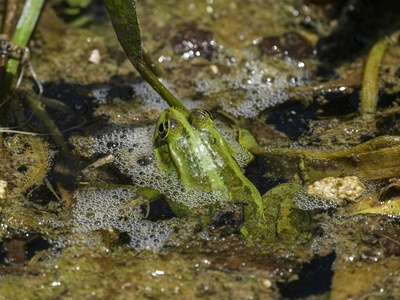
Anchieta’s Grass Frog
A common, medium-sized frog with a pointed snout and long, parallel skin ridges along its back. It is a powerful jumper, often found in damp, grassy areas. One of the most frequently encountered grass frogs in the country.
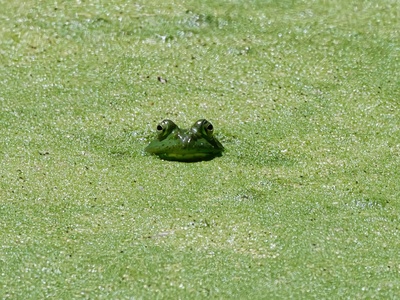
Mascarene Grass Frog
A slender, agile frog with prominent dorsal ridges and often a pale stripe down its spine. Highly adaptable, it thrives near marshes, dams, and irrigation canals. It is one of the most widespread frog species in Africa.
Sharp-nosed Grass Frog
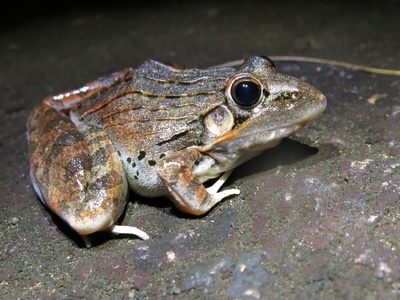
A large, athletic grass frog with a very pointed snout and powerful, long legs, making it an incredible jumper. It has distinct skin ridges along its back. It is a common species, often seen leaping away in grasslands during the day.
Mozambique Grass Frog
A medium-sized grass frog, recognized by the combination of longitudinal skin ridges and a light line running along the upper jaw. It is a very common species, often found some distance from water in grassy areas.
Broad-banded Grass Frog
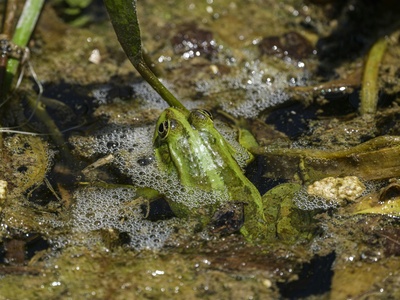
A small grass frog identified by a broad, dark band on the back of the thigh and a white line on its upper lip. It is an explosive breeder, and its fast, rattling call can be heard from thousands of individuals after heavy rain.
Natal Puddle Frog
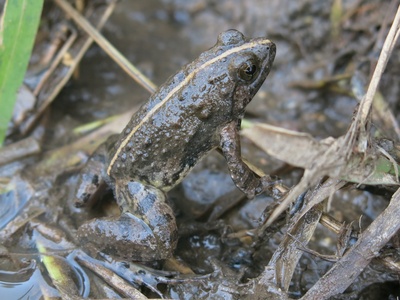
A small, warty brown frog that is extremely common. It can be found in puddles, ditches, and even damp lawns. It has a distinctive grating, insect-like call, and huge choruses can form after rain. One of Zambia’s most ubiquitous amphibians.
Mababe Puddle Frog
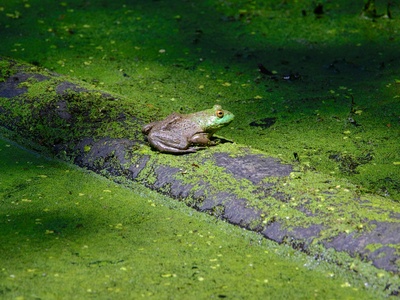
A small puddle frog similar to the Natal Puddle Frog, but often with a smoother skin and a more pointed snout. It is common in shallow, vegetated water bodies, where its soft, buzzing call can be heard.
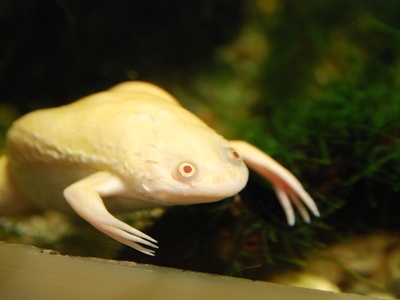
African Clawed Frog
A large, fully aquatic frog with a flattened body, powerful hind legs with black claws, and upward-facing eyes. It is highly adaptable and can survive droughts by burying itself in mud. It is a voracious predator of aquatic invertebrates.
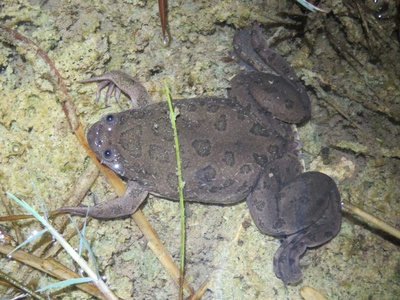
Müller’s Clawed Frog
Similar to the African Clawed Frog but generally smaller. It is also fully aquatic, found in permanent water bodies. This is the most widespread and common clawed frog in Zambia, tolerant of a wide range of conditions.
Kirk’s Caecilian
A legless, worm-like amphibian living entirely underground in moist soil. Reaching up to 450 mm, it has a uniform purplish-grey color. Rarely seen due to its burrowing lifestyle, it is vulnerable to deforestation in its limited range.