Deserts host a surprising variety of life adapted to scarce water and extreme temperatures. From wind-scoured dunes to cold inland basins, plant-eating animals form the base of food webs and shape how those ecosystems function.
There are 24 Desert Primary Consumers, ranging from Addax to Wild Bactrian Camel. For each species you’ll find below data organized as Scientific name,Diet & size (diet; length cm / mass kg),Desert region so you can quickly compare diets, body size and distribution—you’ll find below.
What counts as a primary consumer in desert ecosystems?
Primary consumers are species that feed mainly on producers (plants, lichens, seeds) — including true herbivores and some omnivores that rely on vegetation. In deserts they often show water-saving diets and seasonal shifts in foraging that let them survive with minimal moisture while supporting predators and nutrient cycles.
How should I use the columns to compare species?
Use the Scientific name for precise ID, Diet & size to understand feeding strategy and physical scale (length and mass give ecological context), and Desert region to see habitat and range — together these fields help assess vulnerability, competition and conservation priorities.
Desert Primary Consumers
| Common name | Scientific name | Diet & size (diet; length cm / mass kg) | Desert region |
|---|---|---|---|
| Desert Tortoise | Gopherus agassizii | Grasses, cacti, wildflowers; 25-36 cm / 4-7 kg | Mojave, Sonoran |
| Addax | Addax nasomaculatus | Grasses, desert succulents; 150-170 cm / 60-125 kg | Sahara |
| Kangaroo Rat | Dipodomys spp. | Mostly seeds; 9-14 cm / 0.03-0.18 kg | North American Deserts |
| Chuckwalla | Sauromalus ater | Leaves, flowers, fruits; 35-45 cm / up to 0.9 kg | Mojave, Sonoran |
| Red Kangaroo | Osphranter rufus | Grasses, forbs; 100-160 cm / 25-90 kg | Australian Deserts |
| Desert Bighorn Sheep | Ovis canadensis nelsoni | Grasses, shrubs, cacti; 150-180 cm / 55-90 kg | North American Deserts |
| Arabian Oryx | Oryx leucoryx | Grasses, tubers, buds; 150-235 cm / 65-75 kg | Arabian Desert |
| Desert Iguana | Dipsosaurus dorsalis | Creosote flowers, leaves, buds; up to 41 cm / 0.1-0.2 kg | Mojave, Sonoran, Baja California |
| Black-tailed Jackrabbit | Lepus californicus | Grasses, shrubs, cacti; 45-60 cm / 1.5-3 kg | North American Deserts |
| Dorcas Gazelle | Gazella dorcas | Leaves, flowers, seed pods; 90-110 cm / 15-20 kg | Sahara, Arabian Desert |
| Gambel’s Quail | Callipepla gambelii | Seeds, leaves, berries; 24-28 cm / 0.16-0.2 kg | Mojave, Sonoran, Chihuahuan |
| Ostrich | Struthio camelus | Grasses, seeds, succulents; 210-280 cm / 100-160 kg | African Deserts and Savannas |
| Spiny-tailed Lizard | Uromastyx spp. | Seeds, flowers, desert vegetation; 25-90 cm / 0.3-1.8 kg | Sahara, Arabian Desert, Middle East |
| Harvester Ant | Pogonomyrmex spp. | Seeds; 0.5-1.5 cm / <0.001 kg | Deserts Worldwide |
| Desert Locust | Schistocerca gregaria | Most vegetation; 6-9 cm / 0.002 kg | Africa, Middle East, Asia |
| Wild Bactrian Camel | Camelus ferus | Shrubs, grasses; 300 cm (height) / 600-1,000 kg | Gobi Desert |
| Pronghorn | Antilocapra americana | Shrubs, forbs, grasses; 130-150 cm / 40-65 kg | North American Semi-Arid Plains |
| Rock Hyrax | Procavia capensis | Grasses, forbs, shrubs; 45-55 cm / 2-4.5 kg | African and Middle Eastern Deserts |
| Desert Cottontail | Sylvilagus audubonii | Grasses, cacti, bark; 35-45 cm / 0.7-1.2 kg | North American Deserts |
| Desert Woodrat | Neotoma lepida | Cacti, yucca, seeds, leaves; 28-39 cm / 0.12-0.35 kg | North American Deserts |
| Sulcata Tortoise | Centrochelys sulcata | Grasses, succulents; 60-90 cm / 45-90 kg | Sahara, Sahel |
| Desert Snail | Sphincterochila boissieri | Soil lichens and algae; 1.5 cm / 0.001 kg | Negev, Sinai |
| Antelope Ground Squirrel | Ammospermophilus leucurus | Seeds, fruits, green vegetation; 20-25 cm / 0.1-0.14 kg | North American Deserts |
| Mourning Dove | Zenaida macroura | Almost exclusively seeds; 28-33 cm / 0.1-0.17 kg | North American Deserts |
Images and Descriptions
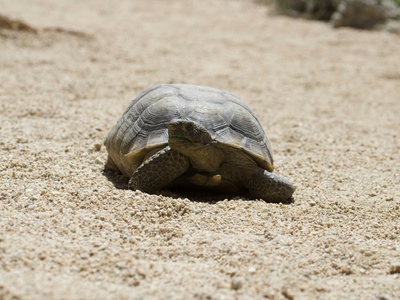
Desert Tortoise
This iconic herbivore is a keystone species, digging burrows used by other animals. It can store water in its bladder for up to a year, a crucial adaptation for surviving long droughts in the American Southwest.
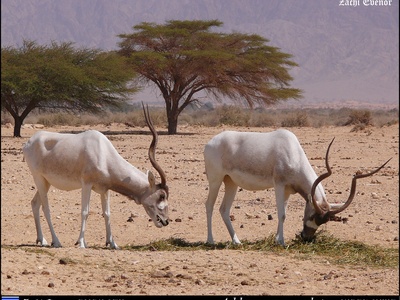
Addax
A critically endangered antelope perfectly built for the Sahara. As a desert grazer, it gets almost all the water it needs from the plants it eats and can survive extreme temperatures with its pale, reflective coat.
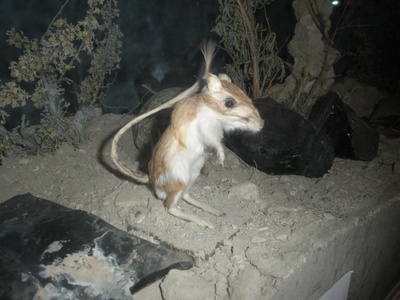
Kangaroo Rat
This small rodent is a master of water conservation, surviving without ever drinking. A key seed-eater, it has specialized kidneys that produce highly concentrated urine and gets moisture from its food and metabolic processes.
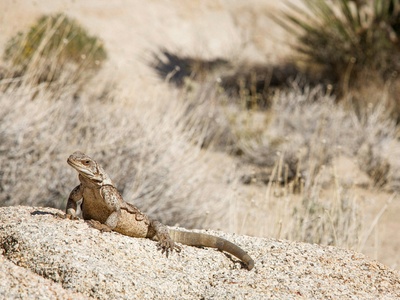
Chuckwalla
A large, pot-bellied lizard that is a strict herbivore, preferring desert flowers. For defense, it wedges itself into rock crevices and inflates its lungs with air, making it nearly impossible for predators to pull it out.
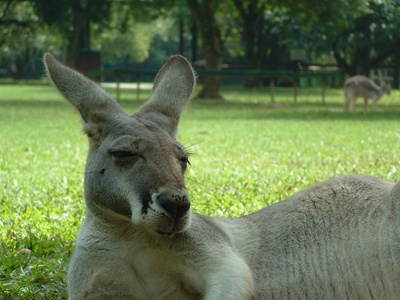
Red Kangaroo
The world’s largest marsupial, this grazer thrives in the arid Australian outback. It conserves energy with its efficient hopping gait and can survive long periods of drought, often congregating near remaining water sources.
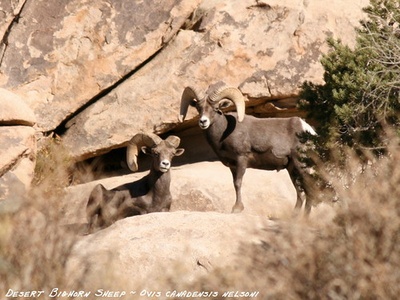
Desert Bighorn Sheep
This majestic herbivore navigates steep, rocky terrain with specialized hooves. It can tolerate significant dehydration and primarily eats tough desert plants like acacia and mesquite, playing a vital role in nutrient cycling.
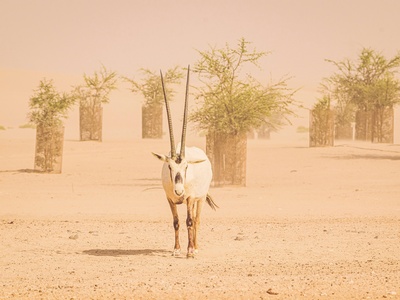
Arabian Oryx
Once extinct in the wild, this striking antelope has been successfully reintroduced. A nomadic grazer, it can detect rainfall from far away and travels vast distances to feed on the fresh plant growth that follows.
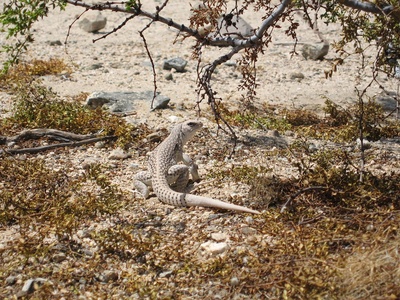
Desert Iguana
This sleek, pale lizard is one of the most heat-tolerant reptiles. As a primary consumer, it feeds almost exclusively on the flowers of the creosote bush, a plant most other herbivores find unpalatable.
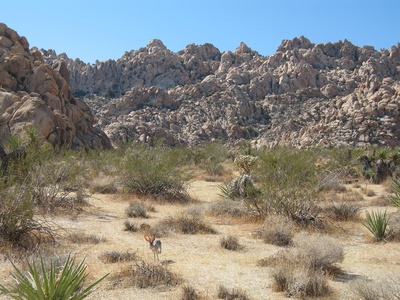
Black-tailed Jackrabbit
Famous for its enormous ears, this herbivore uses them to radiate heat and cool down. It survives on a diet of tough vegetation and escapes predators with incredible bursts of speed, reaching up to 60 km/h.

Dorcas Gazelle
A small, swift gazelle highly adapted to arid life. This browser and grazer can go its entire life without drinking water, obtaining all the moisture it needs from the plants it consumes, like acacia leaves.
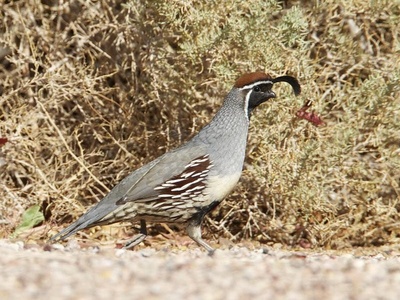
Gambel’s Quail
A social bird often seen scurrying across the desert floor. This important seed disperser forages in groups called coveys, feeding on a wide variety of plant matter and relying on succulents for water in dry periods.
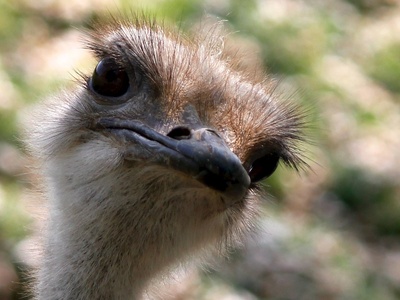
Ostrich
The world’s largest bird, the ostrich is a powerful herbivore of open, arid lands. It consumes a variety of plants and swallows small stones to help grind up tough vegetation in its gizzard for digestion.
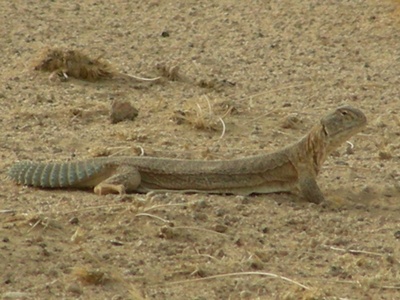
Spiny-tailed Lizard
Also known as the Dabb lizard, this herbivore uses its heavily spiked tail as a defensive club. It spends the hottest parts of the day in deep burrows and emerges to feed on plants, getting water from its food.
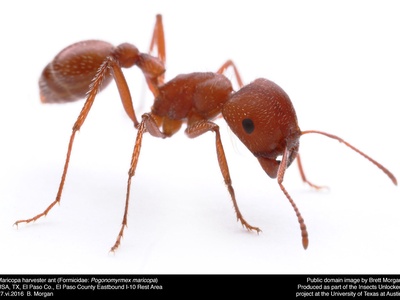
Harvester Ant
These industrious insects are vital seed predators and dispersers. They live in large colonies and create extensive underground granaries to store seeds, profoundly impacting the desert plant community and soil structure.
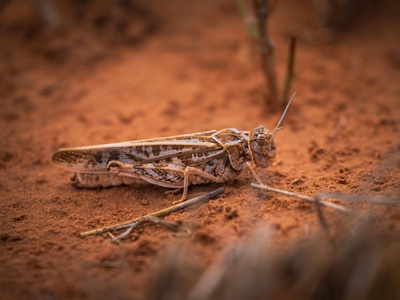
Desert Locust
A species of grasshopper that can form immense, destructive swarms. In its solitary phase, it’s a minor herbivore, but in its gregarious phase, it becomes a voracious primary consumer capable of stripping entire landscapes of vegetation.
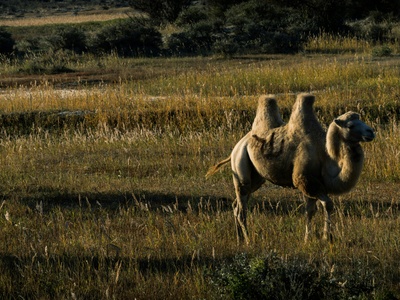
Wild Bactrian Camel
Critically endangered, this is the only truly wild camel species. This herbivore is uniquely adapted to the extreme cold and heat of the Gobi, able to drink large amounts of water (even salty) and eat thorny plants.
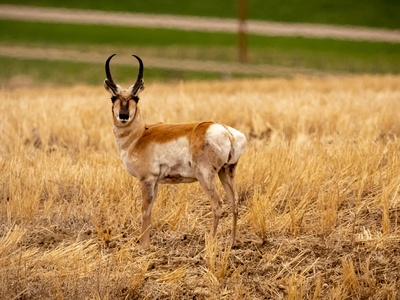
Pronghorn
The fastest land animal in North America, often found in sagebrush deserts. As a browser, it feeds selectively on a wide variety of plants and can digest vegetation that is toxic to domestic livestock.
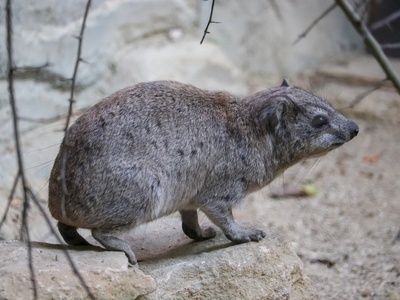
Rock Hyrax
Despite its rodent-like appearance, this herbivore is related to elephants. It lives in colonies among rocky outcrops (kopjes) and forages for plants, using lookouts to warn of predators like eagles.
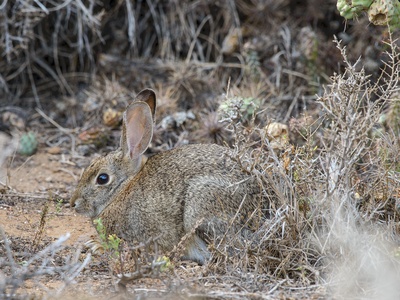
Desert Cottontail
This adaptable herbivore is a common sight in the American Southwest. It gets most of its water from the plants it eats, including prickly pear cactus, and spends hot days resting in the shade of shrubs or in burrows.
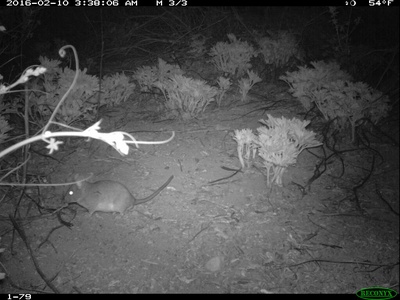
Desert Woodrat
Also known as a packrat, this rodent builds large stick nests called middens. It is an important herbivore that subsists on tough desert plants like cactus, which also provides most of its necessary water.
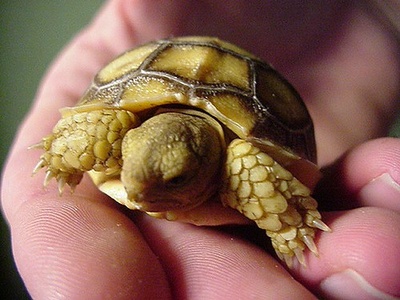
Sulcata Tortoise
The third-largest tortoise species in the world, also called the African spurred tortoise. This grazer excavates deep burrows to escape heat and feeds voraciously on grasses and weeds during the cooler parts of the day.
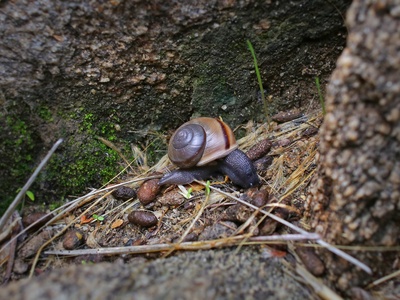
Desert Snail
This tiny herbivore survives extreme heat by entering a state of dormancy called estivation. It seals its shell opening and can remain inactive for years, waiting for rare rains to emerge and feed on soil crusts.
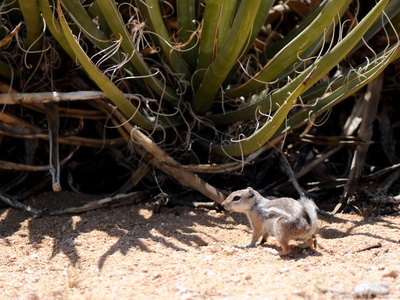
Antelope Ground Squirrel
This small, energetic squirrel is active during the heat of the day. A key granivore, it carries its tail over its back like an umbrella for shade and has a high body temperature tolerance, reducing its need for water.
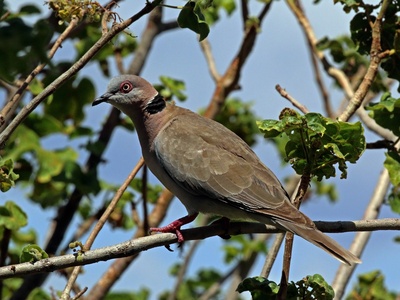
Mourning Dove
One of the most widespread birds in North America, this granivore is well-adapted to arid regions. It can drink brackish water that would be too salty for many other animals, allowing it to thrive in desert environments.