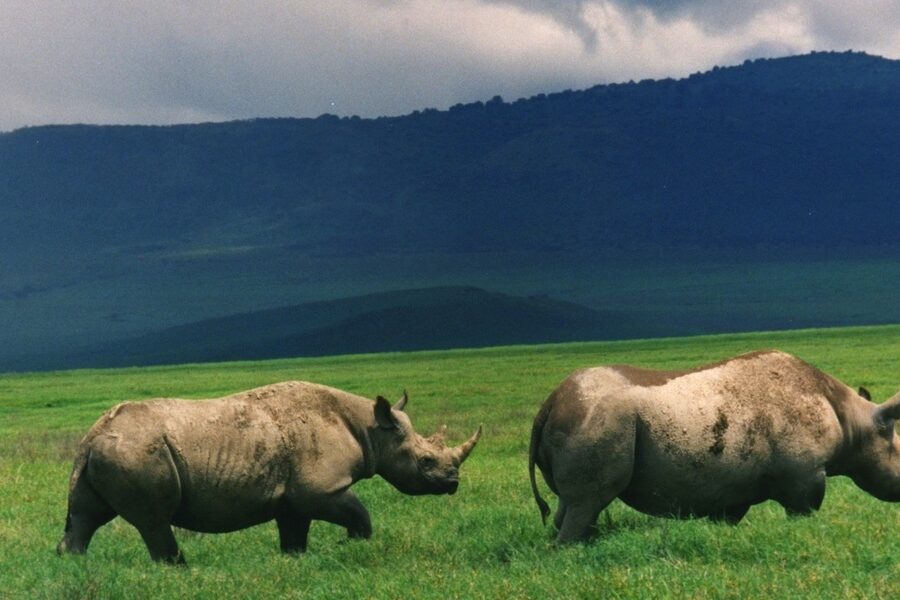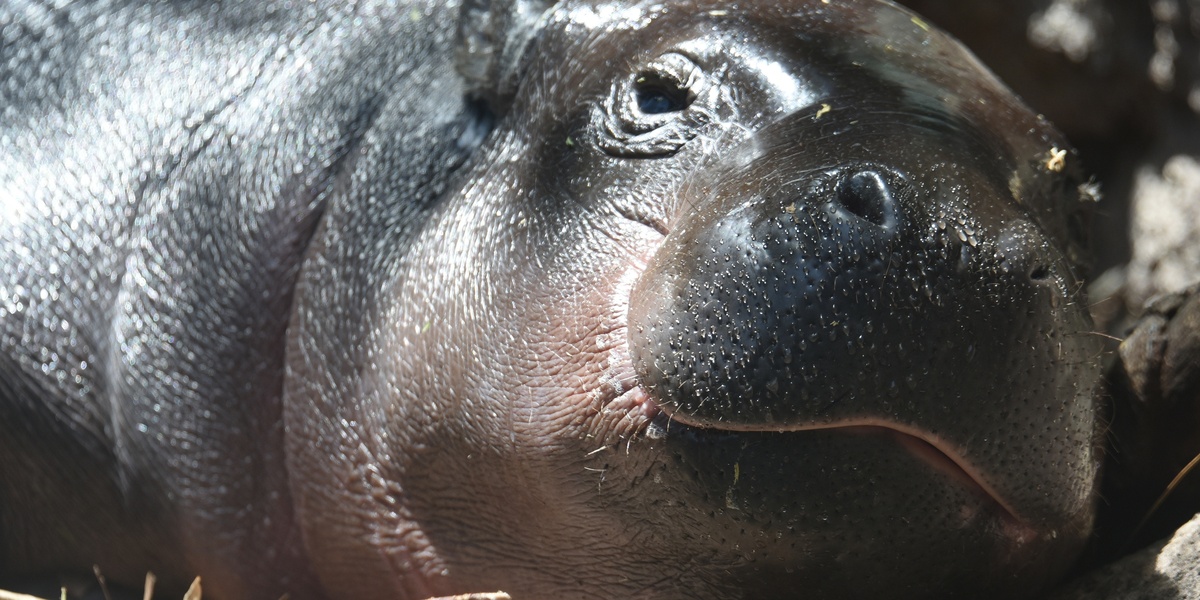
Sierra Leone’s mix of rainforest, savanna and Atlantic coastline supports a surprising variety of species, many of which stay out of sight because of limited surveys and shrinking habitats. That makes concise, well-organized lists useful for researchers, birders and nature-minded travelers who want realistic expectations before visiting.
There are 22 Rare Animals in Sierra Leone, ranging from African crowned eagle to White-necked rockfowl (rockfowl). For each entry you’ll see details organized with Scientific name,IUCN status,Habitat & where to find so you can quickly check identity, conservation concern and likely locations — you’ll find below.
How can I responsibly look for rare animals in Sierra Leone?
Go with a reputable local guide or conservation group, visit protected areas during dawn or dusk when wildlife is active, stay on trails, keep noise low, avoid disturbing nests or dens, and follow permit and biosafety rules; if a species is highly sensitive, avoid publicizing precise locations.
What do the IUCN statuses tell me about these species?
IUCN categories give a standardized snapshot of global extinction risk, but local populations can differ; use the status as a baseline, check recent field reports or local NGOs for up-to-date information, and prioritize species with higher risk when planning conservation-minded visits.
Rare Animals in Sierra Leone
| Name | Scientific name | IUCN status | Habitat & where to find |
|---|---|---|---|
| Western chimpanzee | Pan troglodytes verus | Endangered | Primary forest: Gola Forest, Loma Mountains, Tiwai Island |
| Pygmy hippopotamus | Choeropsis liberiensis | Endangered | Forest streams and swamps: Gola area, Tiwai Island, southern marshes |
| Diana monkey | Cercopithecus diana | Endangered | Upper canopy rainforest: Gola Forest, Loma Mountains |
| Western red colobus | Piliocolobus badius | Endangered | Primary tall forest: Gola, Loma Mountains |
| Sooty mangabey | Cercocebus atys | Vulnerable | Lowland and riverine forest fragments: Gola, Tiwai Island |
| Olive colobus | Procolobus verus | Vulnerable | Primary rainforest canopy: Gola Forest |
| Leopard | Panthera pardus | Vulnerable | Remote forests and savanna: Gola, Outamba-Kilimi, Loma foothills |
| White-bellied pangolin | Phataginus tricuspis | Endangered | Forest and forest edge: Gola, western lowlands |
| West African manatee | Trichechus senegalensis | Vulnerable | Coastal estuaries and major rivers: Sherbro, Scarcies, estuaries |
| White-necked rockfowl (rockfowl) | Picathartes gymnocephalus | Vulnerable | Limestone cliffs and forest caves: Loma Mountains, Gola |
| African grey parrot | Psittacus erithacus | Endangered | Primary forests and large trees: Gola, mature canopy |
| Hooded vulture | Necrosyrtes monachus | Critically Endangered | Woodland and human settlements: scattered inland and coastal areas |
| White-backed vulture | Gyps africanus | Critically Endangered | Open woodland and savanna edges: Outamba-Kilimi region (rare) |
| Hawksbill turtle | Eretmochelys imbricata | Critically Endangered | Nesting beaches and coral reefs: Sherbro Island, Banana Islands coast |
| Leatherback turtle | Dermochelys coriacea | Vulnerable | Open ocean and nesting beaches: Sherbro Island, Atlantic coast |
| Green turtle | Chelonia mydas | Endangered | Nearshore waters and nesting beaches: Sherbro Island, coastal bays |
| Olive ridley turtle | Lepidochelys olivacea | Vulnerable | Occasional nesting beaches and offshore waters: Atlantic coast |
| Slender-snouted crocodile | Mecistops cataphractus | Critically Endangered | Slow rivers, swamps: remote river systems and forest tributaries |
| Gola malimbe | Malimbus ballmanni | Endangered | Primary rainforest: Gola Forest (restricted) |
| Sierra Leone serotine (bat) | Neoromicia (Pipistrellus) tenuipinnis | Near Threatened | Forest edge, riverine habitats: Gola and western lowlands |
| Gola giant pouched rat | Cricetomys gambianus (population variant) | Near Threatened | Forest edge and secondary growth: Gola landscape |
| African crowned eagle | Stephanoaetus coronatus | Near Threatened | Upper canopy galleries and forest: Gola and Loma ranges |
Images and Descriptions
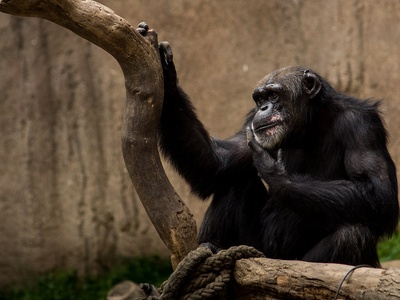
Western chimpanzee
Large, expressive great ape (40–60 kg). Social, arboreal and ground-feeding. Rare in Sierra Leone due to habitat loss and hunting; populations fragmented. Watch in protected forest blocks like Gola with expert guides.
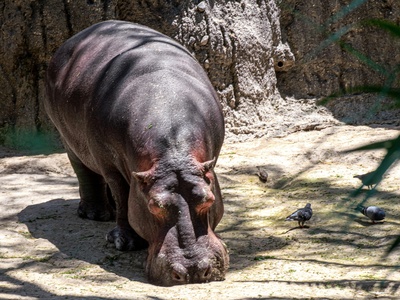
Pygmy hippopotamus
Shy, stocky forest hippo (~140–275 kg), nocturnal and semi-aquatic. Uncommon and secretive; rare because of forest clearance and hunting. Best chance in riverine forest and protected swamps.
Diana monkey
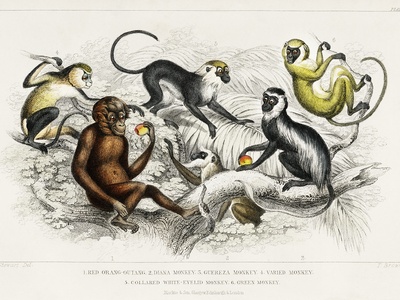
Medium-sized colorful monkey with white chest and striking face. Arboreal and vocal. Declining from logging and bushmeat hunting; seen in intact forest reserves with early-morning surveys.
Western red colobus
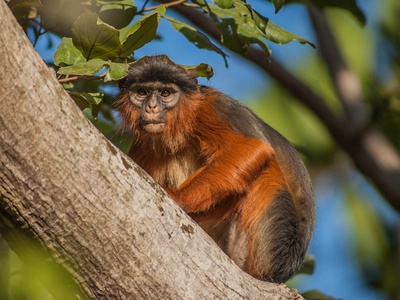
Slender leaf-eating monkey often in groups; reddish-brown coat. Vulnerable because it needs large intact forest and is hunted. Look for troops in large forest patches and canopy transects.
Sooty mangabey
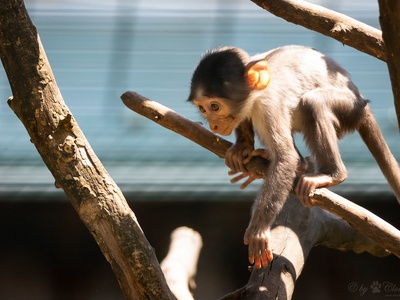
Medium, grey-brown ground-foraging monkey. Relatively tolerant of disturbance but locally rare from hunting and habitat loss. Best seen in larger forest fragments and riverine corridors.
Olive colobus
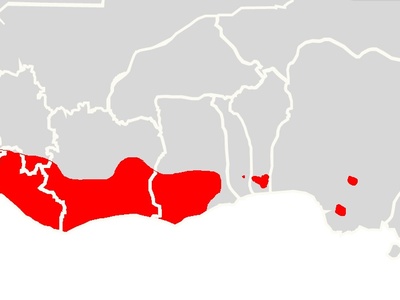
Small, rarely-seen colobus with olive fur, highly arboreal and shy. Rare due to dependence on intact canopy and heavy hunting pressure. Spotting requires quiet canopy walks in primary forest.
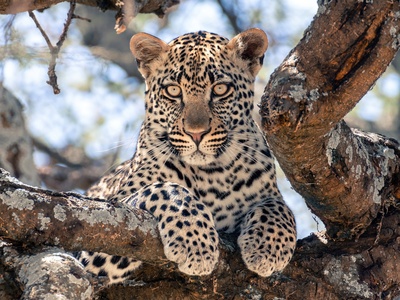
Leopard
Medium-large secretive cat, spotted coat. Survives in low densities; rare from habitat loss and persecution. Night surveys and camera traps in large reserves give best odds.
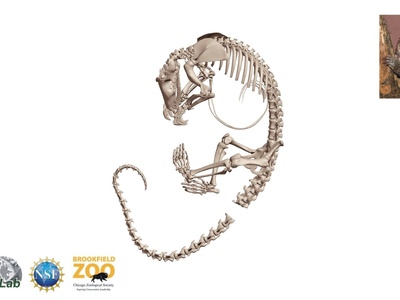
White-bellied pangolin
Small, scaled, nocturnal mammal that rolls into a ball when threatened. Scarce due to intense poaching for scales and meat; occasionally found in forest fragments or by sign at base of trees.
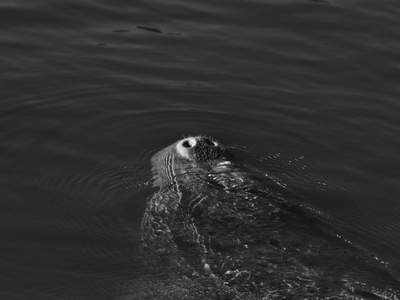
West African manatee
Large aquatic herbivore (~300–500 kg) with paddle-like flippers. Rare and cryptic in Sierra Leone’s estuaries, threatened by hunting, entanglement and habitat degradation.
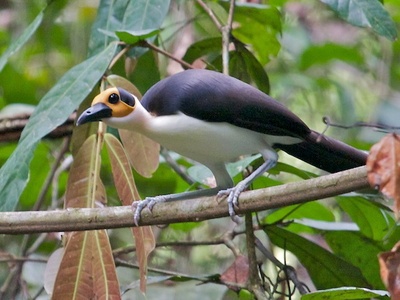
White-necked rockfowl (rockfowl)
Striking cave-nesting bird with bare-headed face, brown-and-white plumage. Local and patchily distributed; rare due to habitat disturbance and nest disturbance. Found at specific cliff sites in intact forest.
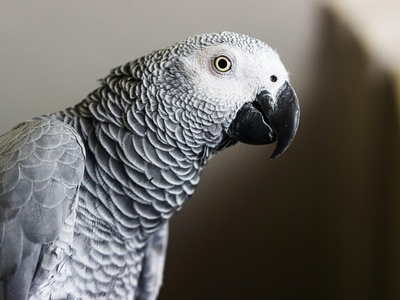
African grey parrot
Large grey parrot with red tail, highly vocal. Declining sharply from trapping for pet trade and forest loss; occasional flocks remain in large forest blocks.
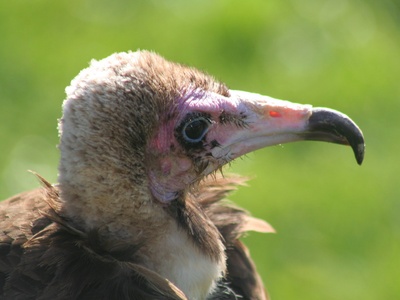
Hooded vulture
Small vulture with hooded appearance; scavenger dependent on carcasses. Rapid declines from poisoning, persecution and food shortages make it rare; seen near towns or carcass sites.
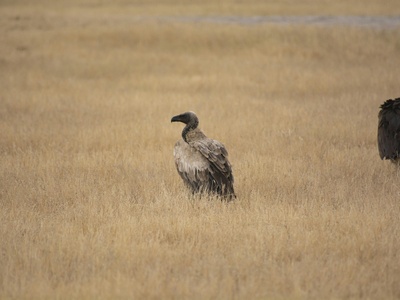
White-backed vulture
Large carrion-eating bird; declines dramatic from poisoning and habitat change. Very rare in Sierra Leone; occasional sightings near large carcasses or protected savanna reserves.
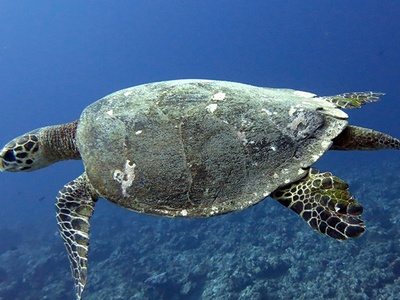
Hawksbill turtle
Small-to-medium sea turtle with patterned shell; nests on Sierra Leone beaches. Critically endangered from shell trade and coastal development; nesting monitored at key sites.
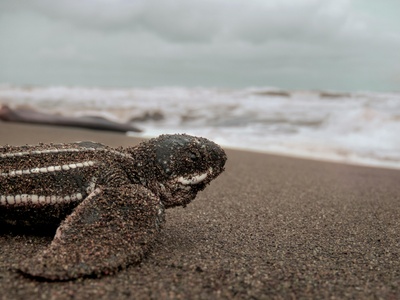
Leatherback turtle
Largest sea turtle (up to 600+ kg) with leathery shell. Uncommon nestings on Sierra Leone beaches; threatened by bycatch and coastal change, best seen offshore and on protected beaches.
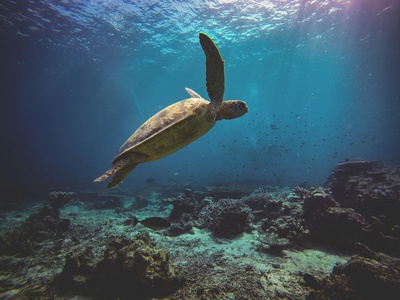
Green turtle
Large, herbivorous sea turtle with smooth shell. Local nesting and foraging sites exist but populations reduced due to egg and adult harvesting and habitat loss.
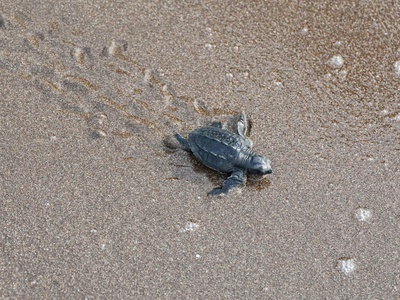
Olive ridley turtle
Small, gregarious turtle that nests in numbers elsewhere; in Sierra Leone records are scarce and sporadic. Vulnerable to bycatch and coastal threats.
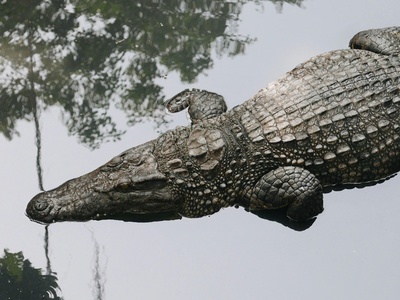
Slender-snouted crocodile
Medium, long-snouted crocodile favoring deep forest waterways. Extremely rare from hunting and wetland loss; look in quiet, well-vegetated river stretches with local guides.
Gola malimbe
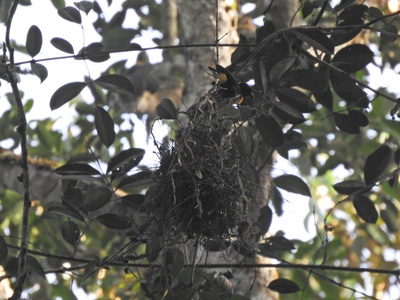
Bold black-and-yellow 20–25 cm passerine restricted to Gola region. Rare and locally endemic due to small range and deforestation. Best sought along forest interior trails in Gola.

Sierra Leone serotine (bat)
Small insectivorous bat with modest wingspan; uncommon in records within Sierra Leone. Rarity tied to forest fragmentation; detected by mist-netting surveys at dusk.
Gola giant pouched rat
Large rodent with cheek pouches; uncommon where forests intact. Locally rare because of habitat loss and hunting; sightings mostly nocturnal near farm edges.
African crowned eagle
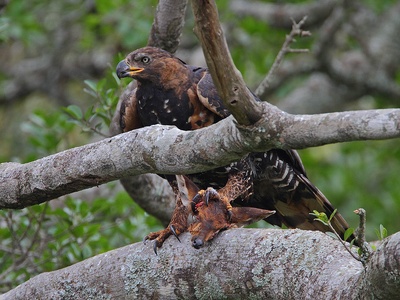
Powerful forest raptor with bold crest; predatory on monkeys and small mammals. Rare and territorial, declines from logging reduce nesting sites; best searched at forest edges at dawn.