Algeria’s landscapes — from Saharan dunes to the Atlas highlands and coastal wetlands — host a surprising mix of wildlife adapted to extreme conditions and fragmented habitats. Many species are localized, making them easy to miss but important for biodiversity and conservation planning in the region.
There are 14 Rare Animals in Algeria, from Addax to Striped hyena. For each species I list Scientific name,IUCN status,Algerian range & habitat (max 15 words),Description (30-50 words); you’ll find these details below.
How threatened are these species in Algeria?
Threat levels vary: some are critically endangered or endangered due to hunting, habitat loss, and desertification, while others are vulnerable or near threatened. National and international protections exist, but effective conservation depends on enforcement, habitat management, and monitoring to track population trends.
What practical steps can visitors or locals take to help protect rare wildlife?
Avoid disturbing or approaching animals, stick to marked trails and protected areas, report illegal activities to authorities, support local conservation groups, and choose responsible tour operators that follow wildlife-friendly practices. Small actions help reduce pressure on fragile populations.
Rare Animals in Algeria
| Name | Scientific name | IUCN status | Algerian range & habitat (max 15 words) | Description (30-50 words) |
|---|---|---|---|---|
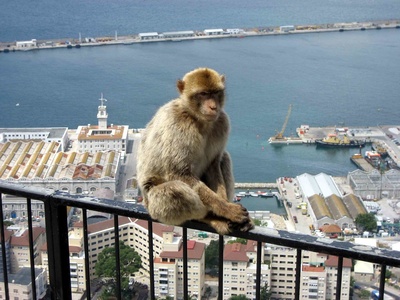
| Barbary macaque | Macaca sylvanus | Endangered | Kabylie, Tell Atlas forests | Barbary macaque is North Africa’s only macaque remaining in small Atlas forest fragments in Kabylie and the Tell Atlas. Endangered in Algeria due to habitat loss, fragmentation and tourism; notable for being a tailless, social primate surviving in isolated pockets. |
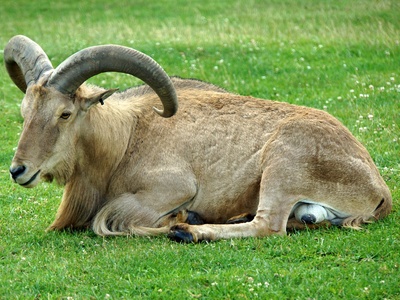
| Barbary sheep | Ammotragus lervia | Vulnerable | Saharan Atlas,Hoggar mountains | Barbary sheep is a rugged mountain ungulate in the Saharan Atlas and Hoggar ranges, now Vulnerable in Algeria. Populations are small from hunting, competition with livestock and habitat fragmentation; notable for large curved horns and sure-footed cliff climbing. |
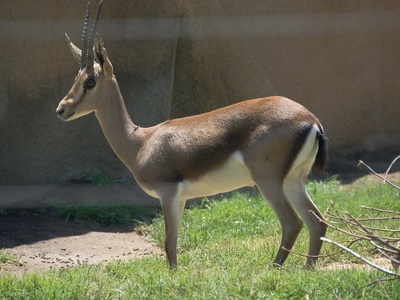
| Cuvier’s gazelle | Gazella cuvieri | Vulnerable | Tell Atlas foothills,northern Sahara edges | Cuvier’s gazelle is a medium-sized gazelle occurring in Tell Atlas foothills and northern Sahara edges. Vulnerable within Algeria because of habitat loss, hunting and fragmentation; notable for its stocky build and striking facial markings, surviving in small fragmented populations. |
| Slender-horned gazelle | Gazella leptoceros | Critically Endangered | Central and southern Sahara dunes and hammadas | Slender-horned gazelle is a delicate desert gazelle of sandy dunes and hammadas in central and southern Algeria. Critically Endangered locally after severe declines from hunting and competition; notable for narrow horns and pale coat adapted for extreme Sahara conditions. |
| Cheetah (Saharan population) | Acinonyx jubatus | Vulnerable | Hoggar,Tassili plateaus (Saharan zones) | Cheetah occurs as the Saharan population in remote Hoggar and Tassili regions of Algeria. The species is Vulnerable globally but the desert subspecies is Critically Endangered here; extremely rare due to hunting, prey loss and human persecution. |
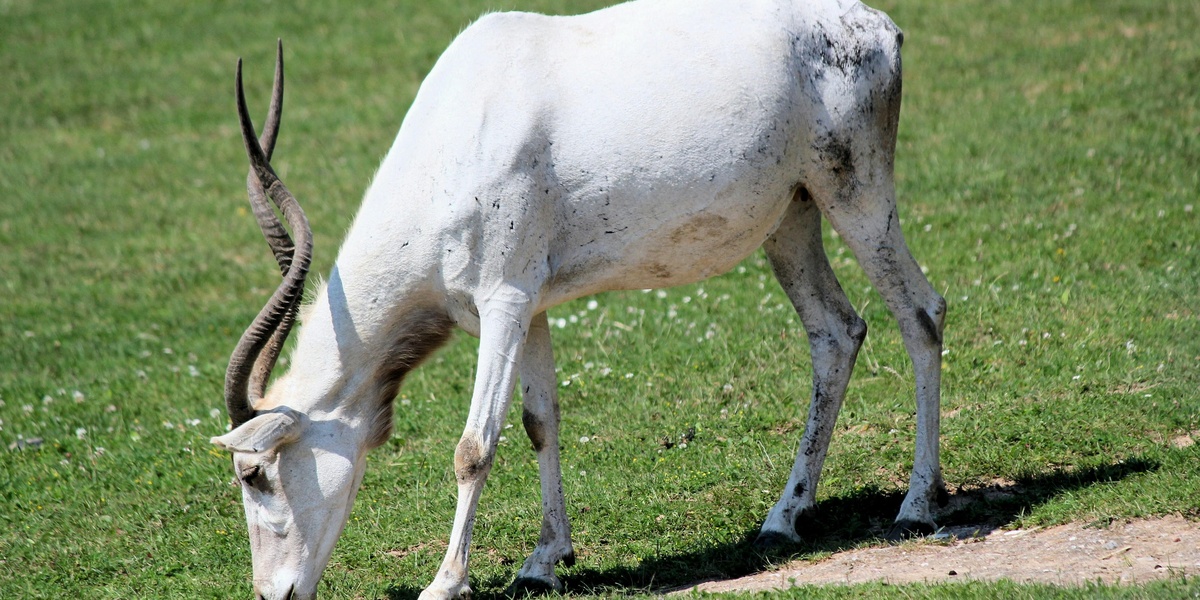
| Addax | Addax nasomaculatus | Critically Endangered | Sahara dunes and gravel plains (historical, remote) | Addax historically ranged across Algerian dunes and gravel plains but is now Critically Endangered and likely locally extirpated. Once famed for spiral horns and desert endurance, remaining wild numbers are tiny; key threats were overhunting and desert livestock competition. |
| Dama gazelle | Nanger dama | Critically Endangered | Southern Algerian Sahara (historical, relict records) | Dama gazelle once occurred in southern Algerian Sahara but now Critically Endangered with few or no confirmed wild records. Notable for long elegant limbs and pale coat; decline from hunting, habitat loss and drought-driven fragmentation. |
| Egyptian tortoise | Testudo kleinmanni | Critically Endangered | Western coastal dunes and lowlands | Egyptian tortoise survives in small coastal and lowland sites in western Algeria and Tunisia; Critically Endangered from collection and habitat loss. Tiny and slow-moving, it’s highly prized in illegal pet trade, making local populations very vulnerable. |
| Loggerhead sea turtle | Caretta caretta | Vulnerable | Mediterranean coast nesting beaches | Loggerhead sea turtle nests sparsely along Algeria’s Mediterranean beaches and is Vulnerable globally. Nesting is rare and threatened by coastal development, fisheries and pollution; notable for large, strong jaws and long migrations. |
| Green turtle | Chelonia mydas | Endangered | Mediterranean coast foraging and rare nesting | Green turtle visits Algeria’s Mediterranean coast and nests occasionally; listed Endangered. Rare nesting and foraging are harmed by fisheries bycatch, coastal loss and pollution; notable for herbivorous adult diet and round shell. |
| Egyptian vulture | Neophron percnopterus | Endangered | Tell Atlas cliffs, coastal open country | Egyptian vulture is an Endangered small scavenger found on Algeria’s cliffs and open country in the Tell Atlas and coast. Numbers have crashed from poisoning, reduced food supplies and disturbance; notable for white plumage and tool-use feeding behavior. |
| Bearded vulture | Gypaetus barbatus | Near Threatened | High Atlas peaks, remote Algerian mountains | Bearded vulture occurs rarely in high Atlas and Algerian peaks; Near Threatened with very limited Algerian range. Notable for bone-dropping behavior and large wingspan; threats include persecution and reduced food availability. |
| Striped hyena | Hyaena hyaena | Near Threatened | Saharan fringes and mountain wadis | Striped hyena is Near Threatened and occurs patchily in Algeria’s Saharan fringes and mountains. It is rare locally from persecution and scavenger food loss; notable for nocturnal scavenging and striped flanks. |
| Mediterranean monk seal | Monachus monachus | Critically Endangered | Algerian coast (historical, very rare sightings) | Mediterranean monk seal is Critically Endangered with historical records along Algeria’s coast and very rare modern sightings. Once common, it’s now threatened by disturbance, habitat loss and fisheries; any Algerian colonies would be globally significant. |
Images and Descriptions
Barbary macaque
Barbary macaque is North Africa’s only macaque remaining in small Atlas forest fragments in Kabylie and the Tell Atlas. Endangered in Algeria due to habitat loss, fragmentation and tourism; notable for being a tailless, social primate surviving in isolated pockets.
Barbary sheep
Barbary sheep is a rugged mountain ungulate in the Saharan Atlas and Hoggar ranges, now Vulnerable in Algeria. Populations are small from hunting, competition with livestock and habitat fragmentation; notable for large curved horns and sure-footed cliff climbing.
Cuvier’s gazelle
Cuvier’s gazelle is a medium-sized gazelle occurring in Tell Atlas foothills and northern Sahara edges. Vulnerable within Algeria because of habitat loss, hunting and fragmentation; notable for its stocky build and striking facial markings, surviving in small fragmented populations.
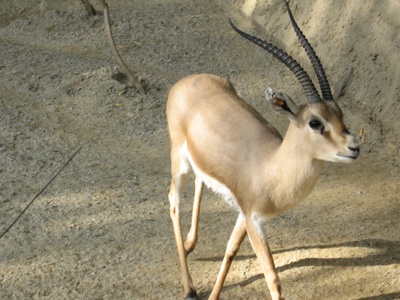
Slender-horned gazelle
Slender-horned gazelle is a delicate desert gazelle of sandy dunes and hammadas in central and southern Algeria. Critically Endangered locally after severe declines from hunting and competition; notable for narrow horns and pale coat adapted for extreme Sahara conditions.
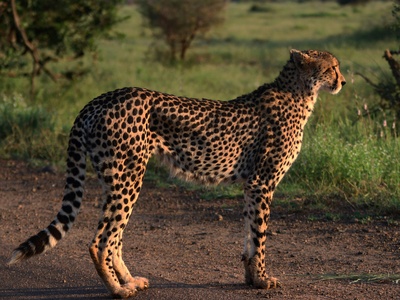
Cheetah (Saharan population)
Cheetah occurs as the Saharan population in remote Hoggar and Tassili regions of Algeria. The species is Vulnerable globally but the desert subspecies is Critically Endangered here; extremely rare due to hunting, prey loss and human persecution.
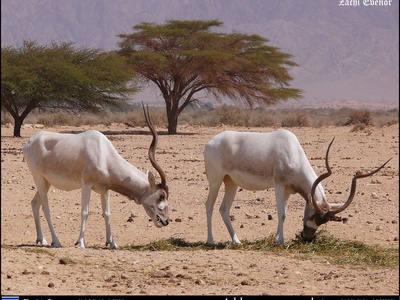
Addax
Addax historically ranged across Algerian dunes and gravel plains but is now Critically Endangered and likely locally extirpated. Once famed for spiral horns and desert endurance, remaining wild numbers are tiny; key threats were overhunting and desert livestock competition.
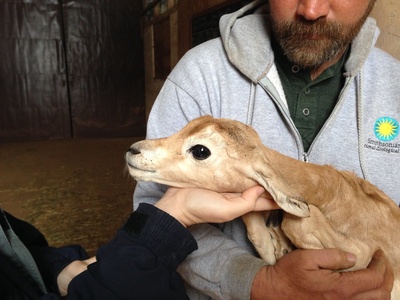
Dama gazelle
Dama gazelle once occurred in southern Algerian Sahara but now Critically Endangered with few or no confirmed wild records. Notable for long elegant limbs and pale coat; decline from hunting, habitat loss and drought-driven fragmentation.
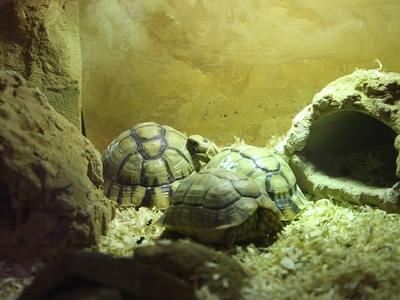
Egyptian tortoise
Egyptian tortoise survives in small coastal and lowland sites in western Algeria and Tunisia; Critically Endangered from collection and habitat loss. Tiny and slow-moving, it’s highly prized in illegal pet trade, making local populations very vulnerable.
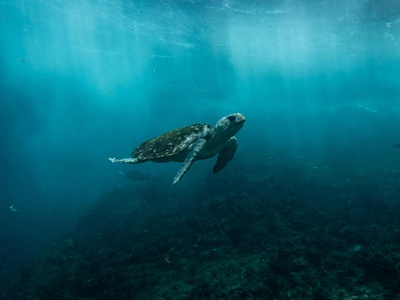
Loggerhead sea turtle
Loggerhead sea turtle nests sparsely along Algeria’s Mediterranean beaches and is Vulnerable globally. Nesting is rare and threatened by coastal development, fisheries and pollution; notable for large, strong jaws and long migrations.
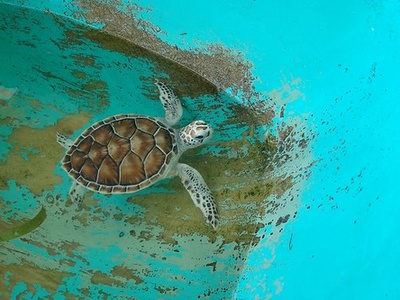
Green turtle
Green turtle visits Algeria’s Mediterranean coast and nests occasionally; listed Endangered. Rare nesting and foraging are harmed by fisheries bycatch, coastal loss and pollution; notable for herbivorous adult diet and round shell.
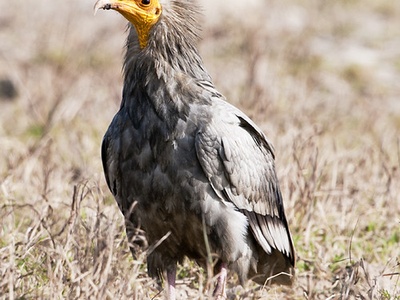
Egyptian vulture
Egyptian vulture is an Endangered small scavenger found on Algeria’s cliffs and open country in the Tell Atlas and coast. Numbers have crashed from poisoning, reduced food supplies and disturbance; notable for white plumage and tool-use feeding behavior.
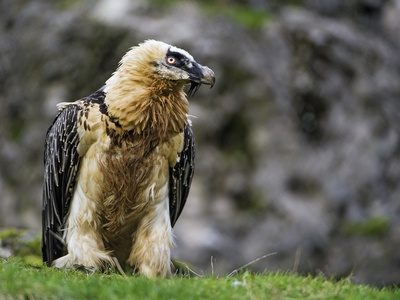
Bearded vulture
Bearded vulture occurs rarely in high Atlas and Algerian peaks; Near Threatened with very limited Algerian range. Notable for bone-dropping behavior and large wingspan; threats include persecution and reduced food availability.
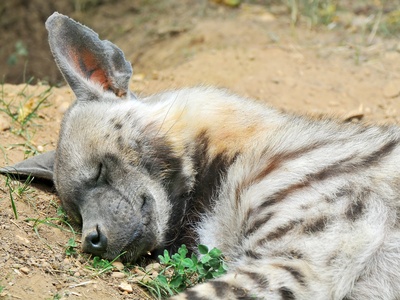
Striped hyena
Striped hyena is Near Threatened and occurs patchily in Algeria’s Saharan fringes and mountains. It is rare locally from persecution and scavenger food loss; notable for nocturnal scavenging and striped flanks.
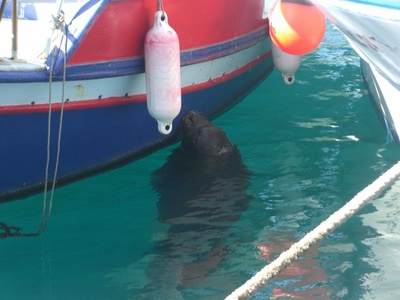
Mediterranean monk seal
Mediterranean monk seal is Critically Endangered with historical records along Algeria’s coast and very rare modern sightings. Once common, it’s now threatened by disturbance, habitat loss and fisheries; any Algerian colonies would be globally significant.