Kazakhstan is the world’s ninth-largest country (about 2.72 million km²) and contains a surprising range of habitats — from alpine peaks to vast steppe and desert — that support unique animal life. That sheer scale and variety help explain why Kazakhstan’s fauna includes species found nowhere else in Eurasia and why local ecosystems still sustain long-distance migrations and intact predator-prey networks.
These animals matter for more than tourism. Steppe grazers and mountain ungulates shape plant communities and soil health, raptors and carnivores regulate rodents and herbivore numbers, and desert specialists show remarkable physiological adaptations that teach us about survival in extreme climates. Many populations are vulnerable, however — the 2015 saiga die-off that killed roughly 200,000 animals was a stark reminder of disease and other threats (cite IUCN or Saiga Conservation Alliance).
This piece profiles twelve standout species across four broad groups — steppe and grassland giants, mountain and alpine specialists, desert-adapted mammals, and birds plus conservation icons — describing where to see them, why they matter ecologically and culturally, and the conservation challenges and successes around each one.
Steppe and Grassland Giants
Kazakhstan’s steppe ecosystems are seasonally productive grasslands that stretch for hundreds of thousands of square kilometres. They support migratory herds, resident grazers and a suite of predators that follow the movements of prey across broad, open landscapes.
Steppes are emblematic of the country’s identity: nomadic cultures, traditional livelihoods, and migration routes are all tied to these plains. Threats are clear — poaching, disease outbreaks, fencing, oil and road infrastructure, and agricultural conversion fragment these habitats and interrupt movements.
Conservation responses mix protected areas, community stewardship and targeted research. Examples include Altyn Dala State Nature Reserve, monitoring and recovery efforts led by the Saiga Conservation Alliance after the 2015 mass die-off, and eco-tour routes around Korgalzhyn that spotlight steppe fauna and Ramsar wetlands.
Alt text guidance: Herd of saiga antelope on Kazakh steppe at sunrise.
1. Saiga Antelope (Saiga tatarica)
The saiga is an iconic, odd-nosed antelope of the Kazakh steppe and a global conservation emblem. Its swollen nasal structure helps filter dust in summer and warm and humidifies cold air in winter.
Saiga are listed as Critically Endangered by the IUCN in some assessments, with populations that have fluctuated dramatically. The 2015 mass mortality event killed roughly 200,000 animals in a few weeks (cite IUCN or Saiga Conservation Alliance), a turning point that spurred intensified monitoring and veterinary response programs.
Ecologically, saiga grazing affects plant community composition and seed movement across the steppe, and culturally they feature in local knowledge and history. Best places to see them include Altyn Dala and the Korgalzhyn-Karagiye landscape where coordinated monitoring by government agencies and NGOs helps track recovery.
2. Przewalski’s Horse (reintroduced populations)
Przewalski’s horse is the only truly wild horse species historically native to Central Asia, and Kazakhstan has played a role in regional reintroduction and captive-breeding efforts. The species went extinct in the wild mid-20th century and has since been returned to parts of its former range through international cooperation.
Reintroduced herds help restore steppe dynamics by resuming grazing patterns that shape plant structure and by attracting eco-tourism that benefits local communities. Kazakhstan works with zoos, the EEP and conservation partners to manage releases and monitor genetics and health; verify exact release sites and dates with project reports when citing numbers.
3. Great Bustard (Otis tarda)
The great bustard is one of the heaviest flying birds and a classic steppe specialist. Males are large, stocky and showy during displays, making them a draw for birdwatchers visiting open grasslands.
Regionally the species faces pressure from habitat loss and collisions with powerlines, and monitoring by BirdLife International shows concerning declines in parts of its range. In Kazakhstan, sightings are concentrated in northern and central steppe tracts where conservation measures focus on habitat protection and mitigating infrastructure risks.
Mountain and Alpine Species
Kazakhstan’s mountains — the Tien Shan, Altai and the Kazakh Uplands — are biodiversity hotspots. Altitude creates steep environmental gradients, producing niches for specialized ungulates, small mammals and apex predators.
These ranges support range-edge or endemic populations and play outsized roles in watershed protection, seasonal movements and genetic connectivity. Protected areas such as Katon-Karagay and Aksu-Zhabagly, and regional Snow Leopard Trust and WWF programs, are central to mountain conservation.
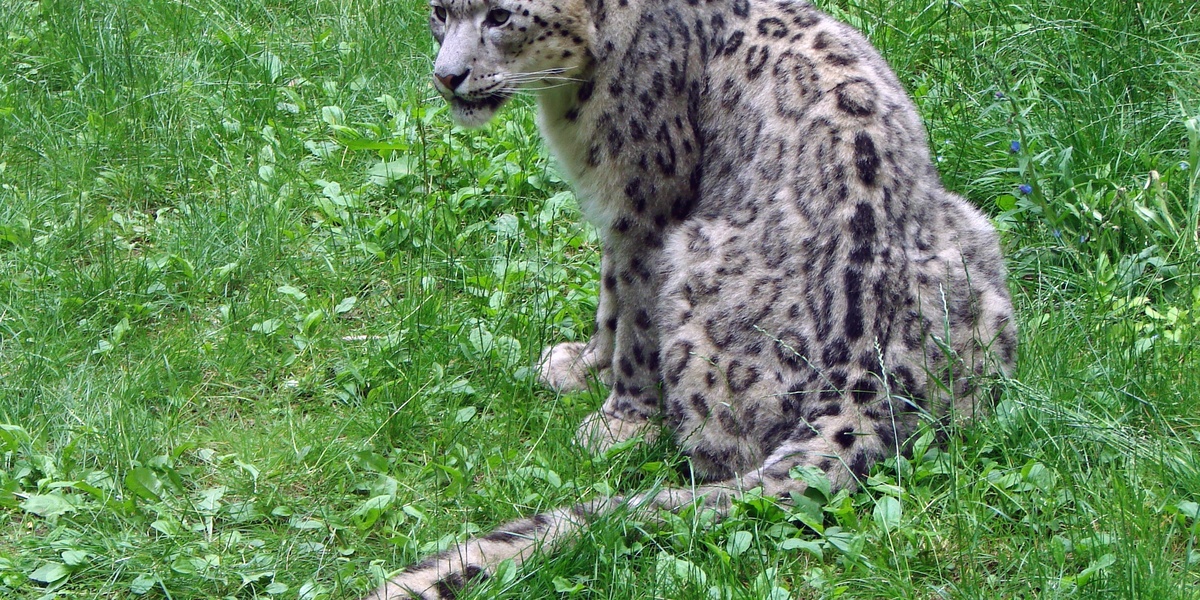
Alt text guidance: Snow leopard perched on rocky Tien Shan ridge.
4. Snow Leopard (Panthera uncia)
The snow leopard is a stealthy apex predator of Kazakhstan’s high mountains and an international conservation symbol. Global estimates put the species at roughly 4,000–6,500 individuals, with Kazakhstan holding a portion of the western range (IUCN, Snow Leopard Trust).
Snow leopards regulate herbivore numbers and influence plant community dynamics through trophic cascades. Monitoring in Kazakhstan uses camera traps and genetic sampling; community-based programs that include livestock compensation and anti-poaching patrols help reduce conflict.
Records come from Tien Shan and Altai ranges, with park reports and regional studies documenting occasional detections. Conservation work increasingly emphasizes cross-border cooperation, given the transboundary movement of both prey and predators.
5. Siberian Ibex (Capra sibirica)
The Siberian ibex is a rugged, sure-footed goat of steep alpine slopes. Thick hooves and muscular forequarters let it negotiate cliffs where predators have a harder time following.
Ibex serve as important prey for snow leopards and wolves and are valued by wildlife photographers and climbers. Populations occur in the Tien Shan and Altai; management includes park-level regulations and seasonal hunting controls in places where sustainable harvest is permitted.
6. Argali (Ovis ammon)
Argali are the world’s largest wild sheep, renowned for their massive, spiraled horns. They occupy high-altitude grasslands and alpine meadows where they forage on grasses and herbs.
Several argali subspecies exist across Central Asia, and threats include illegal hunting and competition with domestic livestock. Surveys in Tian Shan and Altai guide protected-area measures and targeted research to monitor trends and reduce unsustainable take.
Desert and Semi-Desert Specialists
Kazakhstan’s deserts — including Betpak-Dala, the Ustyurt Plateau and zones bordering the Kyzylkum — host mammals and small carnivores adapted to low rainfall, temperature extremes and sparse cover. Behavioral strategies (nocturnality, seasonal movements) and physiological traits (efficient water use) let these species persist.
Because desert populations are often low-density and fragmented, they’re sensitive to overgrazing, roads, and illegal hunting. Regional studies and IUCN assessments help prioritize action, while community-based patrols and protected corridors can reduce pressure.
Alt text guidance: Pallas’s cat crouched among low desert shrubs in Kazakhstan.
7. Pallas’s Cat (Otocolobus manul)
Pallas’s cat, or manul, is a compact wildcat adapted to cold, open plains and rocky semi-deserts. Its low, flattened profile and dense coat suit a life stalking small mammals among tussocks and boulders.
The species is listed as Near Threatened regionally by some authorities and is notoriously elusive. Camera-trap surveys are the primary method of detection, and targeted research programs in Kazakhstan’s semi-desert zones have begun to reveal seasonal patterns and habitat preferences.
For specialist wildlife watchers, manuls are a highlight; conservation groups and scientists use detections to inform local protection and reduce persecution from farmers who sometimes mistake them for threats to poultry.
8. Goitered Gazelle (Gazella subgutturosa)
The goitered gazelle is a lean, fast-running antelope well-suited to arid plains. Its speed and endurance help it escape predators and track patchy forage across the semi-desert.
IUCN assessments note regional declines driven by habitat fragmentation, fencing and illegal take. In Kazakhstan, Betpak-Dala and nearby semi-desert areas still hold remnant populations; conservation measures emphasize protecting movement corridors and preventing poaching.
9. Bactrian Camel (Camelus bactrianus — wild and domesticated populations)
Bactrian camels — both domesticated or feral herds and the very rare wild remnant populations in Central Asia — are adapted to extreme continental climates. Thick coats, fat-storing humps and broad feet help them handle sand, salt flats and temperature swings.
It’s important to distinguish common domestic or feral herds from the critically endangered wild Bactrian camel. Authors should verify up-to-date distribution data before claiming wild populations in Kazakhstan (see IUCN and Fauna & Flora sources).
Domesticated camels remain culturally and economically important for pastoralists in southern deserts, and feral herds are visible in some desert fringes; conservation of the wild form requires targeted protection across national boundaries.
Birds, Small Carnivores, and Conservation Icons
This group mixes raptors, medium-sized carnivores and large, widely recognized species that connect Kazakhstan to regional conservation networks. Many are migratory or transboundary, which makes international cooperation essential.
Charismatic species often anchor local conservation efforts: Korgalzhyn’s Ramsar wetlands attract migratory birds and birdwatchers, while snow leopard and steppe eagle initiatives tie Kazakhstan into Central Asian and global programs run by organizations like BirdLife, Snow Leopard Trust and WWF.
Alt text guidance: Steppe eagle soaring above Kazakh grasslands.
10. Steppe Eagle (Aquila nipalensis)
The steppe eagle roams wide swaths of open grassland and wetland, making long-distance migrations between breeding and wintering grounds. Its soaring flight and association with steppe wetlands make it a visible indicator of landscape health.
Population trends show declines in parts of the range, driven by poisoning, electrocution on poorly designed powerlines, and habitat loss. Sites like Korgalzhyn — a Ramsar-listed wetland complex — are important staging and breeding areas for steppe eagles and other raptors.
11. Eurasian Lynx (Lynx lynx)
The Eurasian lynx is a solitary medium-sized felid found in forested and rugged habitats across Kazakhstan’s northern and mountain zones. It prefers ungulate prey such as roe deer and smaller mammals when available.
Low densities and elusive habits make monitoring challenging; camera-trap studies in the Altai and Katon-Karagay provide much of the current knowledge. The lynx serves as an indicator of forest health and benefits from intact habitat patches and reduced poaching.
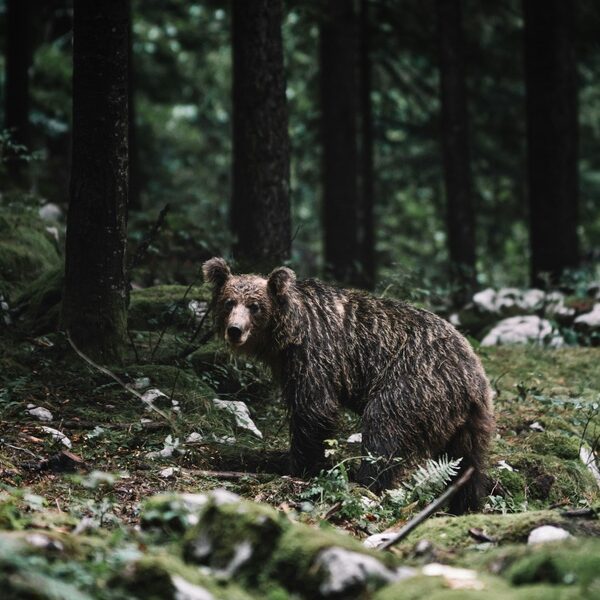
12. Brown Bear (Ursus arctos) — Altai Populations
Brown bears in Kazakhstan’s Altai are large omnivores that influence nutrient cycling through foraging and carcass use. Their diet ranges from berries and roots to ungulate carrion, giving them a broad ecological footprint.
Altai bears appear in Katon-Karagay National Park and contiguous cross-border habitats with Russia. Management balances tourism opportunities, such as regulated bear-viewing, with conflict mitigation measures like secure livestock enclosures and education for local communities.
Summary
- Kazakhstan hosts a varied and globally important suite of species across steppe, mountain, and desert habitats; many populations — from saiga to snow leopard — span national and international conservation concerns.
- Several species have suffered dramatic declines (for example, the 2015 saiga mass mortality) but focused efforts — protected areas, monitoring, captive-breeding and community programs — have begun to show results.
- Transboundary cooperation is essential: snow leopard, steppe eagle and Altai brown bear conservation all depend on coordination with neighboring countries and international NGOs.
- Support reputable organizations such as the Saiga Conservation Alliance, Snow Leopard Trust and BirdLife International, and consider respectful wildlife tourism in parks like Korgalzhyn, Altyn Dala, Aksu-Zhabagly and Katon-Karagay to help sustain local conservation efforts.