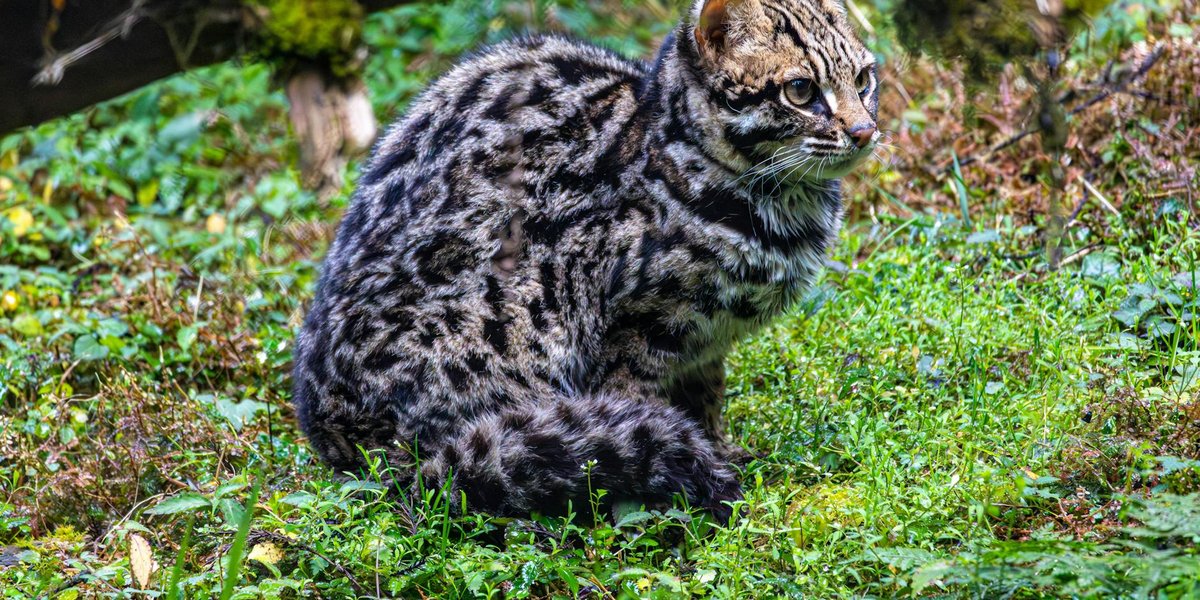
Spotted linsangs are carnivores. They eat mainly small rodents, plus birds, frogs, snakes, lizards, insects, eggs, and the occasional bit of carrion. If you came here for the one-sentence answer, that’s it.
But the short version misses the interesting part. The spotted linsang (Prionodon pardicolor) is a slender, cat-like predator from the forests of South and Southeast Asia, and almost everything about what it eats is shaped by two facts: it hunts at night, and it’s equally at home on the ground and up in the trees. That combination decides what it catches, how it catches it, and why its diet looks the way it does.
Table of Contents
- The quick answer
- What spotted linsangs actually eat
- How spotted linsangs hunt
- Do spotted linsangs eat fruit?
- Where the spotted linsang sits in the food chain
- Spotted linsang vs. banded linsang diet
- Frequently asked questions
The quick answer
The spotted linsang is a strict meat-eater. It belongs to the family Prionodontidae, the Asiatic linsangs, and despite looking like a long-tailed, leopard-spotted cat, it’s more closely related to civets and cats than to anything in the weasel family.
Here’s the prey breakdown, roughly from most to least common:
- Small rodents — rats, mice, and other ground-dwelling rodents make up the bulk of the diet
- Birds — caught both on the ground and in branches, along with nestlings
- Eggs — raided from nests, a low-effort, high-reward food
- Frogs and amphibians — taken near streams and damp forest floor
- Snakes and lizards — small reptiles are fair game
- Insects — beetles, grasshoppers, and other large invertebrates
- Carrion — it will scavenge a carcass when one is available
That’s a generalist predator’s menu within a carnivore’s constraints. The linsang isn’t picky about which small animal, only that it’s small, catchable, and made of protein.
What spotted linsangs actually eat
Rodents are the anchor of the diet. A linsang weighs only about 0.6 kilograms (roughly 1.3 pounds), so it’s hunting prey scaled to its own size — nothing it has to wrestle. A rat is already a substantial meal for an animal that light.
Birds are the second pillar, and this is where the linsang’s body plan pays off. Most small predators are stuck hunting whatever shares their level of the forest. The spotted linsang isn’t. Its Animal Diversity Web species account notes that it forages both on the ground and in trees, which means a roosting bird or a nest full of eggs is just as reachable as a mouse in the leaf litter. Eggs in particular are worth the climb: no chase, no struggle, pure calories.
The cold-blooded portion of the menu — frogs, snakes, lizards — tends to come from the wetter parts of its range and the warmer months, when amphibians and reptiles are active and easy to find. Insects round things out, especially for younger linsangs still building their hunting skills on slower, easier targets.
What you won’t find on the list is anything large. No deer, no monkeys, no prey that fights back. The spotted linsang occupies a specific slot: the small, agile night hunter that cleans up the forest’s smallest vertebrates.
How spotted linsangs hunt

The spotted linsang is nocturnal and solitary. It does its hunting after dark and almost always alone, which is normal for a small ambush predator — there’s no advantage to sharing a mouse.
Its hunting style is opportunistic and stealth-based rather than a high-speed chase. The body tells the story: a long, low, flexible frame, short legs, and a tail nearly as long as the rest of the animal. That build is made for creeping along branches and squeezing through dense cover, not sprinting across open ground. The linsang moves quietly through the understory and the canopy, closes the distance, and pounces at the last second.
The semi-arboreal habit is the real edge. Being able to climb well means the linsang exploits a vertical column of the forest that purely ground-based hunters can’t touch. A nest of eggs three meters up, a bird asleep on a branch, a tree frog clinging to bark — all of it is on the table. According to Wikipedia’s overview of the species, this ground-and-tree flexibility is a defining feature of how the animal lives and feeds.
Hunting at night also dictates the timing. Linsangs are most active in the dark hours, which lines them up with the rodents, frogs, and many insects that are themselves nocturnal. The predator’s schedule matches the prey’s schedule. That’s not coincidence — it’s the whole point.
Do spotted linsangs eat fruit?
This is where the sources start to disagree, and the honest answer is: occasionally, and not by preference.
Some species profiles list the spotted linsang as a pure carnivore and never mention plants at all. Others note that, like many of its civet relatives, it will take small amounts of fruit or plant matter when prey is scarce. Both can be true. The animal is a carnivore by design — its teeth, its hunting behavior, and the bulk of its diet all point to meat — but a hungry opportunist that can’t find a rodent won’t necessarily turn down an easy piece of fallen fruit.
So if you need a clean label, call it a carnivore. If you want the accurate one, call it a carnivore that occasionally supplements with plant matter under pressure. The fruit-eating is a fallback, not a food group.
Where the spotted linsang sits in the food chain
The spotted linsang is a mid-level predator. It eats the forest’s small vertebrates and invertebrates, and in turn it gets eaten by larger carnivores — bigger cats, large birds of prey, and other predators that outweigh it.
That middle position matters ecologically. By keeping rodent, bird, and reptile populations in check, the linsang helps regulate the small-animal layer of its ecosystem. It’s the kind of quiet, behind-the-scenes predator that doesn’t get documentaries made about it but does real work in the forest. The IUCN Red List currently lists the species as Least Concern, though it remains poorly studied across much of its range, which is part of why diet details are still thinner than for more famous carnivores.
Spotted linsang vs. banded linsang diet
People often look up linsangs as a genus and get the two Asiatic species mixed together. The spotted linsang (Prionodon pardicolor) and the banded linsang (Prionodon linsang) are close relatives with very similar diets.
Both are carnivorous, nocturnal, semi-arboreal hunters that target small vertebrates — rodents, birds, reptiles, amphibians, and insects. The differences are mostly in coat pattern and range rather than menu: the spotted linsang carries dark spots and lives across the Himalayan foothills, Northeast India, Nepal, and parts of Southeast Asia, while the banded linsang wears broad transverse bands and ranges through the Sundaic region farther south. If you’re asking “what do linsangs eat” at the genus level, the answer for both is the same short list of small prey.
Frequently asked questions
Are spotted linsangs carnivores? Yes. Spotted linsangs are carnivores. Their diet is built around small rodents, birds, eggs, frogs, snakes, lizards, and insects, with carrion taken when available. Any plant or fruit eating is rare and opportunistic.
Do spotted linsangs eat fruit? Rarely. Most of the diet is animal prey. Like some of their civet relatives, they may eat small amounts of fruit or plant matter when prey is hard to find, but it’s a fallback rather than a regular part of their diet.
What is the main food of a spotted linsang? Small rodents such as rats and mice. They’re the most reliable and substantial prey for an animal that weighs only about 0.6 kilograms.
Do spotted linsangs hunt in trees? Yes. They’re semi-arboreal and forage both on the forest floor and up in the branches. This lets them reach birds, nestlings, eggs, and tree-dwelling prey that ground-only predators can’t.
When do spotted linsangs hunt? At night. They’re nocturnal and solitary, hunting alone in the dark hours when much of their prey — rodents, frogs, and many insects — is also active.