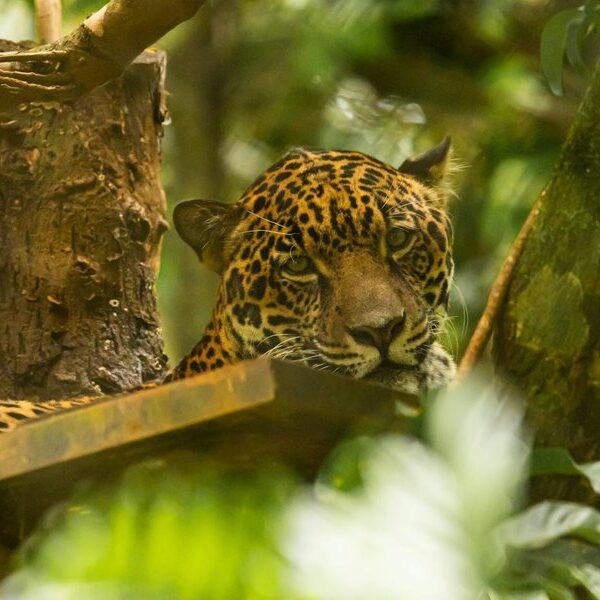
Most “dangerous animals in Lebanon” lists recycle the same nine entries and the same stock photos. They’ll tell you a striped hyena will hunt you down and that the brown recluse spider lurks in Beirut basements. Both claims are shaky. Lebanon is a small country with surprisingly few animals that can genuinely hurt a person, and the honest answer to “should I be scared?” is: mostly no, but pay attention to three snakes.
So here’s the version that actually rates the risk. Which animals can hurt you, how likely you are to ever encounter them, how bad it gets if you do, and the practical move if it happens. No padding, no copied spider entries.
Table of Contents
- TLDR: The Real Risk Ranking
- The Snakes That Matter
- Large Mammals: Hyena, Wolf, Jackal, Boar
- Spiders and Insects
- The Sea: Jellyfish and Weeverfish
- Is Lebanon Safe for Hiking?
- FAQ
TLDR: The Real Risk Ranking
If you only read one section, read this. Here’s how Lebanon’s “dangerous” wildlife actually stacks up.
| Animal | Chance of encounter | Severity if it goes wrong | When |
|---|---|---|---|
| Blunt-nosed viper | Low–moderate (rural, rocky) | High — medically serious bite | Apr–Oct |
| Palestine viper | Low | Moderate–high | Apr–Oct |
| Lebanon viper | Very low (high mountains) | Moderate | Summer |
| Wild boar | Moderate (farmland, forest edge) | Moderate — injury if cornered | Year-round, worse autumn |
| Gray wolf | Very low | Low (attacks on humans almost unheard of) | Winter |
| Striped hyena | Very low | Very low (will flee) | Night |
| Golden jackal | Low | Very low | Night |
| Mediterranean jellyfish | High in summer | Low (painful sting) | Jun–Sep |
| Black widow | Low | Moderate (rarely fatal) | Warm months |
The takeaway: the things people fear most (hyenas, wolves) are the least dangerous, and the real attention goes to vipers and, to a lesser degree, wild boar.
The Snakes That Matter
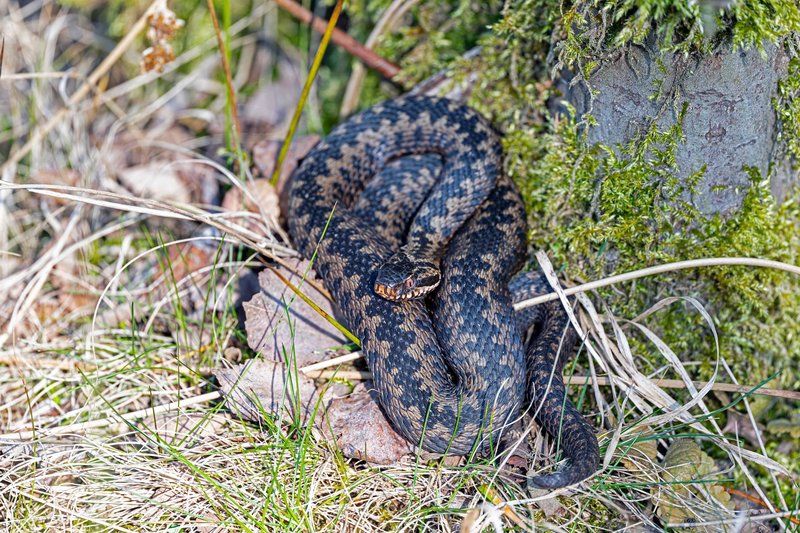
Lebanon has around 20 snake species. The vast majority are harmless — whip snakes, rat snakes, the dice snake that hunts in streams. Three are worth knowing.
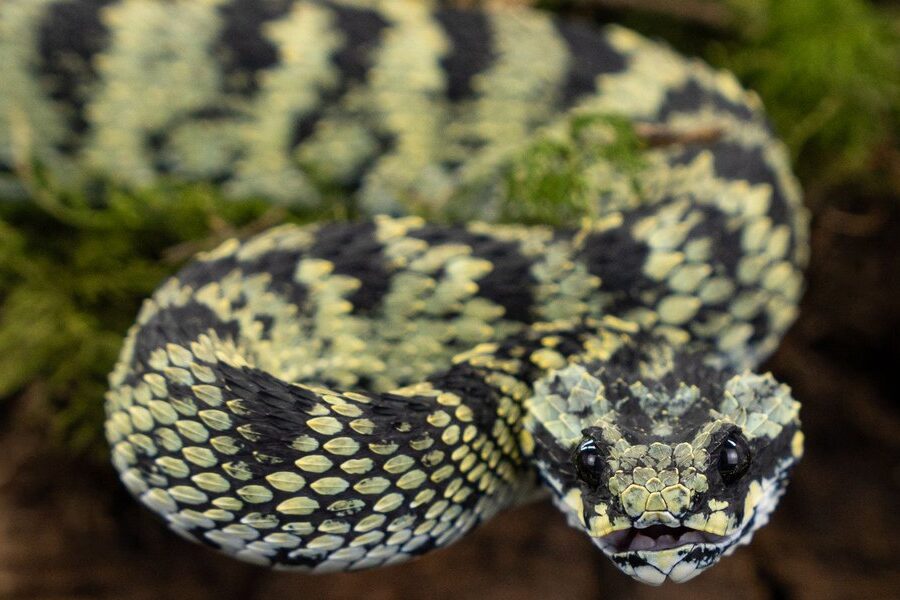
Blunt-nosed viper (Macrovipera lebetina). This is the most dangerous animal in Lebanon by a clear margin. It’s a thick-bodied viper that can exceed a meter, with a triangular head and a habit of sitting still rather than fleeing. It lives in dry, rocky terrain, stone walls, and the edges of cultivated land across the lower and middle elevations. Its venom is hemotoxic — it attacks blood and tissue, causing severe pain, swelling, and bleeding complications. Bites are medically serious and need antivenom. They’re also uncommon, because the snake would rather not meet you either.
Palestine viper (Daboia palaestinae). Smaller and more agile than the blunt-nosed viper, with a zigzag dorsal pattern. It’s more associated with vegetated, semi-humid areas and is responsible for a meaningful share of venomous bites in the broader Levant. Same response category: painful, serious, treatable with prompt care.
Lebanon viper (Montivipera bornmuelleri). A small mountain viper found only at high elevations on Mount Lebanon and a few neighboring ranges — genuinely Lebanese, genuinely rare. You’d need to be hiking summit scree in summer to have any chance of seeing one. Its bite is less severe than the other two but still warrants medical attention.
The thing to understand about all three: vipers don’t chase. Nearly every bite happens when someone steps on one, reaches into a rock crevice, or tries to handle it. Watch where you put your hands and feet on rocky ground and the odds drop close to zero.
If you’re bitten: Stay calm and keep the limb still and below heart level. Remove rings and watches before swelling starts. Do not cut, suck, apply a tourniquet, or pack it with ice — that old-movie stuff causes more harm than the bite sometimes. Get to a hospital fast; the World Health Organization’s snakebite guidance is clear that antivenom plus supportive care is the only real treatment. Try to note the snake’s appearance, but don’t risk a second bite to photograph it.
Large Mammals: Hyena, Wolf, Jackal, Boar
This is where the listicles lose the plot. Lebanon’s big mammals look scary on paper and almost never act on it.
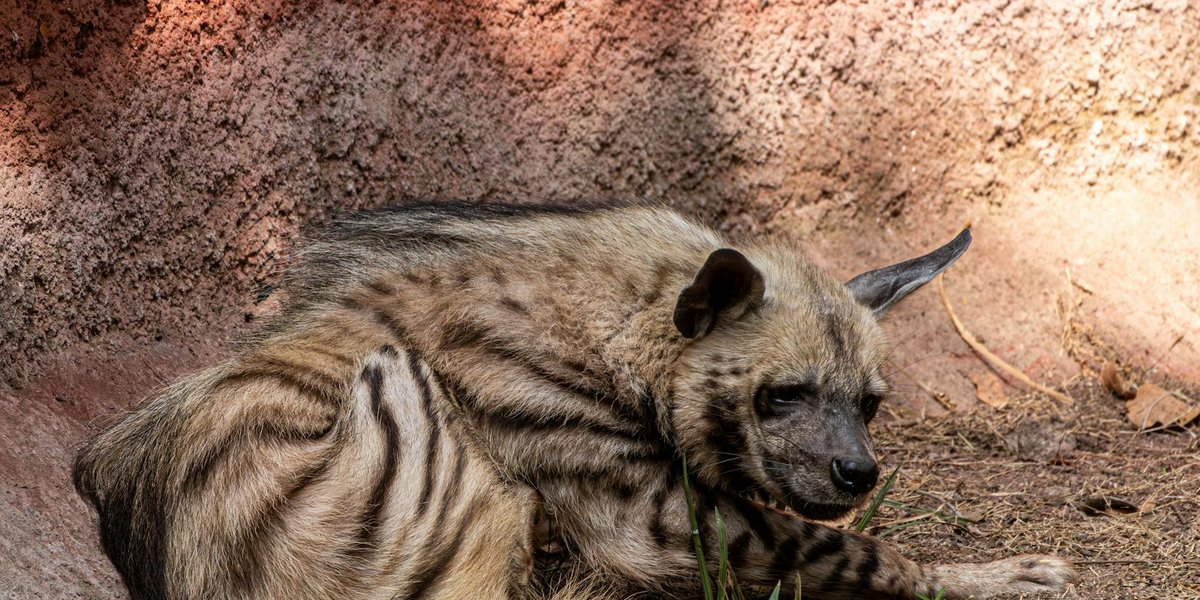
Striped hyena (Hyaena hyaena). Lebanon’s national animal, and the species the panic articles love most. Striped hyenas are scavengers, not pack hunters like the spotted hyenas of African documentaries. They’re shy, nocturnal, and avoid people. Documented attacks on humans anywhere in their range are extraordinarily rare. The realistic risk to a hiker is essentially zero — you’d be lucky to even see one. Lebanon’s IUCN-listed striped hyena population is small and declining, which is the more pressing story.
Gray wolf (Canis lupus). A handful survive in remote areas and mountain reserves like parts of the northern ranges. Wolf attacks on people are among the rarest large-predator incidents on Earth, and there’s no pattern of them in Lebanon. They keep their distance. The animal you’d actually worry about with wolves around is your unattended livestock, not yourself.
Golden jackal (Canis aureus). More common than the wolf and increasingly seen near towns and farmland. Jackals are small, opportunistic, and skittish. They raid garbage and chicken coops, not hikers. The only real concern, as with any wild canid, is rabies — so don’t approach or feed one, especially if it’s acting oddly tame or aggressive.
Wild boar (Sus scrofa). Here’s the mammal that actually deserves caution. Boar populations have exploded across Lebanon, and they’re now common around farmland, vineyards, and forest edges — including surprisingly close to villages. They’re powerful, can weigh well over 100 kg, and a cornered boar or a sow with piglets will charge and can inflict serious gashes with its tusks. They’re not predators and won’t stalk you, but a surprise encounter on a narrow trail is a genuine hazard.
These four are only the headline cast, of course — Lebanon’s hills and coast hold plenty more, and it’s worth seeing how they fit into the wider Mediterranean fauna of Lebanon before you decide what to actually watch for.
If you meet a boar: Don’t run, which can trigger a chase. Back away slowly, give it a clear escape route, and never get between a sow and her young. If one charges, get behind a tree or anything solid — boar turn poorly. Most encounters end with the boar crashing off into the brush the moment it notices you.
Spiders and Insects
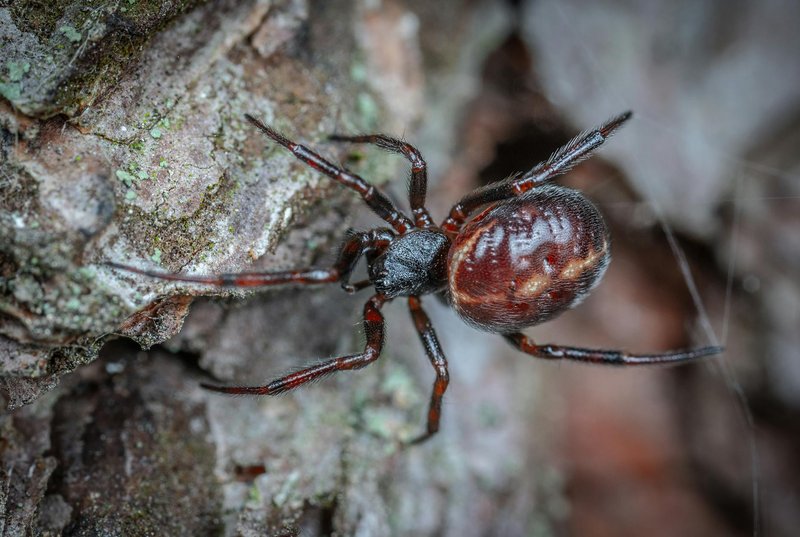
The copied listicles list both the black widow and the “brown recluse” for Lebanon. One of those belongs here. The other doesn’t.
Mediterranean black widow (Latrodectus tredecimguttatus). Real and present, mostly in dry agricultural fields and scrubland. Its neurotoxic bite causes latrodectism — muscle cramps, sweating, and pain that can last a day or two. It’s genuinely unpleasant and worth a doctor’s visit, but rarely dangerous to a healthy adult, and the spider is reclusive and non-aggressive. Bites usually happen during field work, not on a hiking trail.
The “brown recluse” claim. Loxosceles recluse spiders are not established in Lebanon, and bites attributed to them across the Mediterranean are routinely misdiagnosed — most “recluse bites” turn out to be infections or other causes. Treat the recurring Lebanese brown-recluse entry as listicle copy-paste, not field reality.
Scorpions. Lebanon has scorpions in dry, rocky areas, and a sting from the local species hurts roughly like a bad wasp sting — painful, not life-threatening for a healthy adult. Shake out boots and shake out your sleeping bag if you’re camping rough.
The Sea: Jellyfish and Weeverfish
Every Lebanon danger list ignores the coast, which is odd, because the most likely “dangerous animal” encounter for a summer visitor happens in the water.
Jellyfish. The eastern Mediterranean sees seasonal jellyfish blooms, and the nomad jellyfish (Rhopilema nomadica), a Red Sea migrant, now shows up along the Lebanese coast in summer. Its sting is painful and can welt up badly. Rinse with seawater (not fresh water), remove tentacle bits with tweezers or a card edge, and see a lifeguard or doctor if the reaction is severe.
Weeverfish and stingrays. Less famous but worth a mention — weeverfish bury in shallow sandy bottoms and have venomous dorsal spines that deliver a sharp, burning sting if you step on one. They’re the rare hazardous members of a coastline otherwise full of harmless species; if you’re curious which fish you’re actually sharing the water with, the complete list of fish of Lebanon covers the locals in detail. The standard fix for a sting is immersing the wound in water as hot as you can tolerate, which breaks down the venom. Shuffle your feet in shallow sand rather than stomping.
Is Lebanon Safe for Wildlife and Hiking?
Yes — comfortably so, by wildlife standards. The Lebanon Mountain Trail runs the length of the country and thousands of people walk sections of it every year. The animal precautions are simple and mostly about snakes and boar:
- Wear closed shoes and watch your footing on rocky, sunny terrain in the warm months.
- Don’t reach blindly into rock crevices, stone walls, or wood piles.
- Make a bit of noise on overgrown trails so boar hear you coming and leave first.
- Don’t feed or approach jackals, dogs, or any wild mammal — rabies is the real risk there.
- In summer, check local beach reports for jellyfish before swimming.
Do that, and the genuinely dangerous wildlife of Lebanon stays where it belongs: in the background.
FAQ
What is the most dangerous animal in Lebanon? The blunt-nosed viper. Its hemotoxic bite is medically serious and requires antivenom. It’s uncommon and avoids people, but it tops the list for actual harm potential.
Are there hyenas in Lebanon? Yes — the striped hyena is Lebanon’s national animal. It’s a shy, nocturnal scavenger that poses essentially no threat to humans, despite its reputation.
Are there wolves in Lebanon? A small gray wolf population survives in remote and mountainous areas. Wolf attacks on humans are among the rarest predator incidents anywhere, and none form a pattern in Lebanon.
Are there venomous snakes in Lebanon? Three that matter: the blunt-nosed viper, the Palestine viper, and the high-mountain Lebanon viper. Most of Lebanon’s roughly 20 snake species are harmless.
Is wild boar dangerous in Lebanon? It can be. Boar are abundant and won’t hunt you, but a cornered animal or a sow with piglets may charge and cause injury. Back away slowly and give it room.
Is it safe to hike in Lebanon? Yes. The main wildlife precautions are watching for vipers on rocky ground in summer and avoiding surprise boar encounters. Both are easily managed.