Table of Contents
- The Big Five (And Why They Got That Name)
- The Big Seven: Adding the Ocean
- More Land Animals Worth Knowing
- Endemic and Rare Species
- Best Parks to See South African Wildlife
- When to Go
South Africa has one of the most diverse wildlife rosters on the planet — and not just because of the Big Five, which every safari brochure leads with. The country packs in everything from penguins waddling on a Cape Town beach to white sharks circling off Gansbaai, from wild dogs on the run in Kruger to pangolins that almost no one ever spots. This guide covers the full picture: the iconic animals, the underrated ones, and the rare few that make a sighting feel like winning the lottery.
The Big Five (And Why They Got That Name) {#big-five}
The term “Big Five” wasn’t coined by a tourism board — it came from big-game hunters, who used it to describe the five most dangerous animals to hunt on foot. The prestige stuck, even after hunting gave way to safari photography.
1. African Lion South Africa’s lions are primarily found in fenced reserves, not roaming freely as in Tanzania or Kenya. Kruger National Park holds the largest population — around 1,500 to 2,000 individuals. Lions here live in prides that can exceed a dozen animals, and the park’s flat, open savannas make them relatively easy to spot, particularly around waterholes at dawn and dusk.
2. African Elephant The largest land animal on Earth and completely impossible to ignore. Kruger has roughly 20,000 elephants — so many that culling debates have resurfaced periodically. They’re browsers and grazers both, and you can watch them work a riverbank for hours. Addo Elephant National Park near Port Elizabeth runs a smaller, more intimate reserve specifically oriented around elephant watching.
3. Cape Buffalo Don’t let the bovine look fool you. Buffalo are responsible for more hunter deaths than lions historically, and they haven’t mellowed in captivity. Old male “dagga boys” — solo bulls that have left the herd — are the most unpredictable. Kruger holds around 40,000 of them, and they’re almost always visible in large herds near water.
4. African Leopard The most secretive of the five. Leopards are nocturnal, solitary, and prefer dense bush — which makes sightings genuinely exciting rather than guaranteed. The Sabi Sands private reserve, which shares an unfenced border with Kruger, has a dense leopard population habituated to vehicles. It’s one of the few places on the continent where a leopard sighting is likely rather than lucky.
5. White Rhinoceros South Africa holds approximately 70–80% of the world’s remaining white rhinos, according to the IUCN. That’s both a conservation triumph and a crisis — the country is also the epicenter of the poaching trade, losing hundreds of animals per year. Hluhluwe-iMfolozi Park in KwaZulu-Natal has the densest population and was the site of Operation Rhino, the 1960s program that pulled the white rhino back from near-extinction.
(The black rhino, smaller and more solitary, also lives in South Africa but in far smaller numbers. It’s the critically endangered counterpart — hooknosed, browser rather than grazer, and noticeably more aggressive.)
The Big Seven: Adding the Ocean {#big-seven}
South Africa’s coastline introduces two animals that no landlocked safari destination can match.
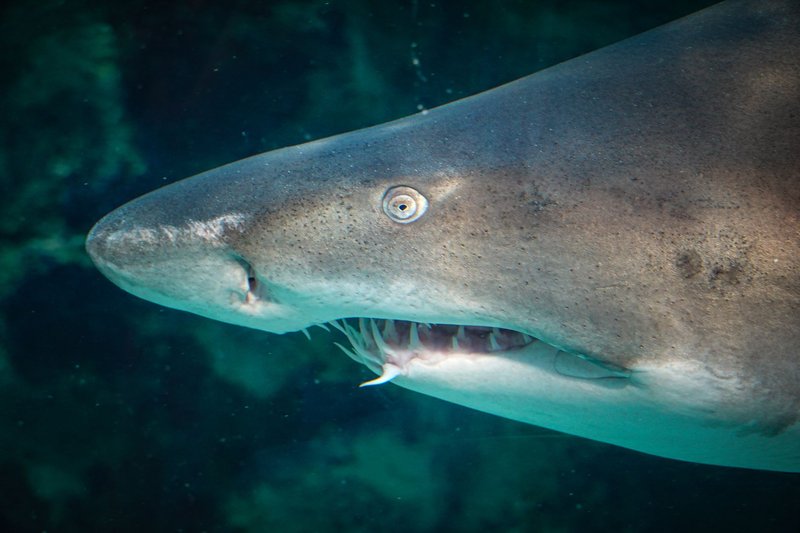
6. Great White Shark Gansbaai, about two hours east of Cape Town, is arguably the great white shark capital of the world. The concentration of cape fur seals at Dyer Island creates a permanent hunting ground, and the sharks here are large — regularly exceeding 4 meters. Cage diving operations run year-round, though winter (June–August) is peak season. Research by the Marine Dynamics Academy suggests the Gansbaai population is among the most studied in the world.
7. Southern Right Whale Between June and November, southern right whales migrate to South Africa’s south coast to calve. Walker Bay, near Hermanus, is the most accessible viewing point — it’s possible to watch whales breach from the clifftop coastal path without a boat. Females come into the bay specifically because the sheltered, shallow water makes it easier to nurse calves. The southern right’s distinguishing feature is the white callosities on its head, unique to each individual like a fingerprint.
More Land Animals Worth Knowing {#more-land-animals}
8. Cheetah The fastest land animal tops out at around 112 km/h, but only in short sprints — it overheats quickly and often loses its kill to larger predators. Cheetahs in South Africa are mostly found in private reserves and conservancies rather than Kruger, where competition from lions and leopards is intense. The Tswalu Kalahari Reserve runs a cheetah monitoring program that’s produced some of the most detailed behavioral data on the species.
9. Hippopotamus Aggressive, semi-aquatic, and responsible for more human deaths in Africa annually than crocodiles. Hippos spend the day submerged (they can’t actually swim — they walk along riverbeds) and come out at night to graze. St. Lucia Estuary in KwaZulu-Natal has one of the largest hippo populations in South Africa, sharing the waterway with crocodiles and a nesting colony of pelicans.
10. Nile Crocodile South Africa’s Nile crocodiles are mainly concentrated in Kruger’s rivers — the Luvuvhu, Olifants, and Sabie — and in the iSimangaliso Wetland Park. They can exceed 5 meters and live for decades; the largest crocodiles in Kruger are probably older than most of the rangers. Ambush predators: they wait at the water’s edge and explode into motion.
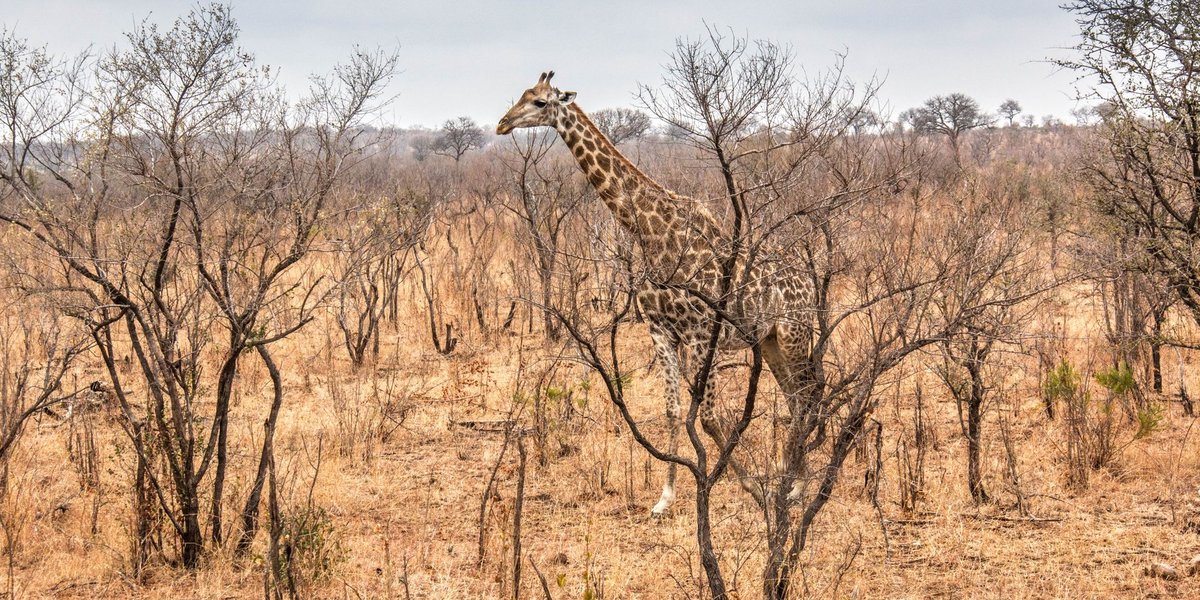
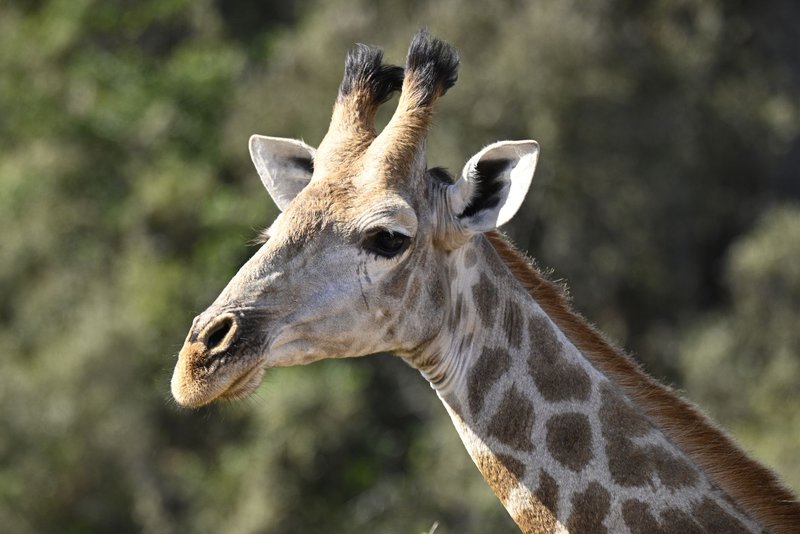
11. Giraffe The tallest animal alive, and surprisingly vulnerable for it — the physics of pumping blood up a 2-meter neck requires a heart that weighs around 12 kilograms. Giraffes need a wide stance to drink, which is when lions tend to strike. Kruger has healthy numbers; the subspecies present is the South African giraffe, with darker, more jagged patches than the Maasai giraffe you’d see in Kenya.
12. Zebra Burchell’s zebra (also called plains zebra) is the most common large mammal in many South African parks. No two zebra stripe patterns are identical — calves apparently recognize their mothers partly by stripe pattern. During the dry season, large herds concentrate around rivers in Kruger, creating some of the most photogenic wildlife scenes in the country.
13. Spotted Hyena Hyenas are more hunter than scavenger — research has flipped the old assumption. In Kruger, spotted hyenas make the majority of their kills themselves, and often lose them to lions rather than the reverse. Female spotted hyenas are larger than males and socially dominant, which is rare among mammals. Their haunting, whooping calls carry for kilometers at night.
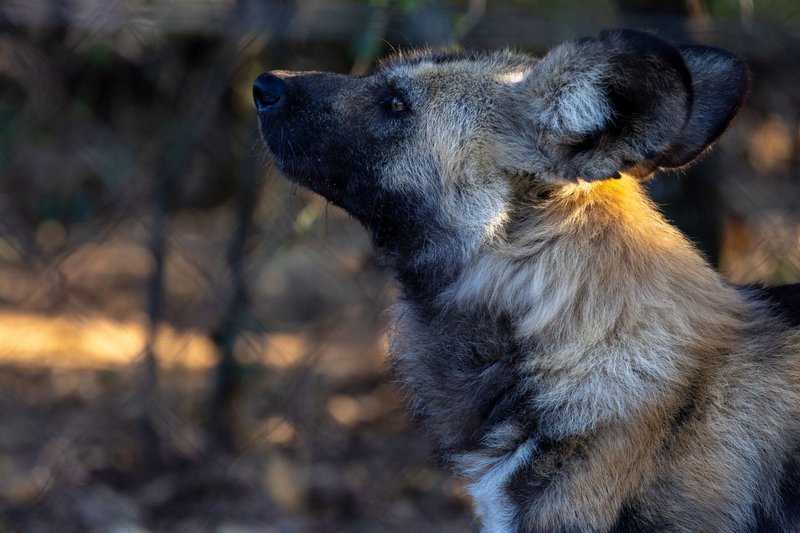
14. African Wild Dog One of the most endangered carnivores in the world, with fewer than 6,000 individuals left across the continent. South Africa’s population is concentrated in Kruger and a handful of private reserves. Wild dogs hunt in coordinated packs and have the highest success rate of any African predator — around 80% of hunts end in a kill. Watching a pack coordinate a hunt is one of the most viscerally impressive things a game reserve can offer.
15. Meerkat Meerkats live in the Kalahari and Karoo regions, not the bushveld. They’re diurnal, highly social, and genuinely entertaining to observe — sentinels rotate watch duty while the group forages, standing upright and scanning for raptors. The Tswalu Kalahari and certain spots around Oudtshoorn offer excellent close-up access to habituated groups.
16. Cape Fur Seal Up to 1.5 million cape fur seals live along South Africa’s west coast, making their colonies among the largest pinniped aggregations on Earth. Duiker Island near Hout Bay and the Cape Cross colony (technically Namibia) are the main viewing points. They’re also the primary food source that keeps the great white sharks at Gansbaai.
17. African Penguin The only penguin species that breeds in Africa, and one of the continent’s most surprising wildlife encounters. Boulders Beach near Simon’s Town holds a resident colony of roughly 3,000 birds — they nest on the beach, waddle through the parking lot, and occasionally hold up traffic. The species is listed as endangered by the IUCN Red List, with populations declining sharply due to overfishing of their prey.
18. Vervet Monkey Present everywhere from Kruger to Cape Town suburbs, vervets are intelligent, adaptable, and unafraid of humans — which creates problems. They’ve learned to raid cooler boxes, and the Cape Town ones in particular have developed a reputation for brazen beach bag theft. Watch your lunch.
Endemic and Rare Species {#endemic-rare}
Pangolin The most trafficked mammal in the world, pangolins are scaled, nocturnal insectivores that curl into a ball when threatened — which makes them easy to poach. South Africa has two species: the ground pangolin (Temminck’s) in the north, and the smaller Cape pangolin in drier regions. Spotting one in the wild is genuinely rare; many veteran rangers have never seen one. Organizations like the Pangolin Conservation group are working to track and protect them.
Aardvark Strictly nocturnal and solitary, aardvarks are one of the most elusive large mammals on the continent. They dig with powerful claws to reach termite mounds and ant nests, consuming tens of thousands of insects per night. Their burrows are then reused by warthogs, hyenas, and porcupines — making the aardvark a keystone species for den ecology. A night drive sighting is a legitimate prize.
Blesbok A medium-sized antelope endemic to the South African highveld, with a distinctive white blaze on its face. Extinct in the wild by the late 1800s due to hunting, it was brought back through private game ranching. Now stable, but still mostly found in protected areas and private reserves rather than open country.
Best Parks to See South African Wildlife {#best-parks}
Kruger National Park — The benchmark. Nearly 2 million hectares in Limpopo and Mpumalanga, covering savanna, riverine bush, and mopane woodland. The most species-diverse major park in the country. Self-drive is fully accessible; private concessions inside the park offer guided experiences.
Hluhluwe-iMfolozi Park — The best rhino park in Africa, full stop. Both white and black rhinos are present in numbers you won’t find elsewhere. Also excellent for wild dog sightings.
Addo Elephant National Park — Dense elephant population in the Eastern Cape. Also has lions, black rhino, and — unusually for a terrestrial park — includes marine sections where southern right whales and great whites can be seen.
Kgalagadi Transfrontier Park — Spans South Africa and Botswana, covering the southern Kalahari. Different ecosystem from Kruger — red sand dunes, dry riverbeds, sparse vegetation — and a different cast: cheetah, black-maned Kalahari lions, meerkats, and massive raptors.
iSimangaliso Wetland Park — South Africa’s first UNESCO World Heritage Site, covering estuaries, wetlands, and the Indian Ocean coast. Best for hippos, crocodiles, and marine turtles. A fundamentally different experience from a traditional bushveld park.
When to Go {#when-to-go}
The dry season (May through September) is the best time for general game viewing. Vegetation thins out, animals concentrate around water sources, and the absence of rain makes roads more accessible. This is the standard safari season.
The wet season (October through April) brings lush green landscapes, newborn animals, and migratory birds. Kruger in summer is a different experience — harder to spot game through thick bush, but rewarding for birders and for seeing predators with cubs.
For whales at Hermanus: June through November. For great white sharks at Gansbaai: year-round, but most active in winter. For African penguins at Boulders: any time, though they molt in December and January (they’re flightless anyway, but they’re also temporarily land-bound during molt season).
South Africa doesn’t give you a short list. The Big Five is the starting point, not the summary. Get off the main roads in Kruger at golden hour, take a night drive in Hluhluwe, and stand on the cliffs at Hermanus in July — and you’ll see why the country earns its reputation.