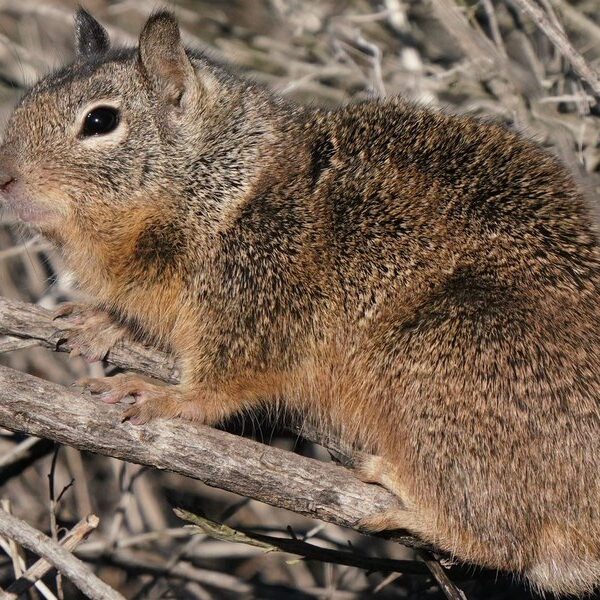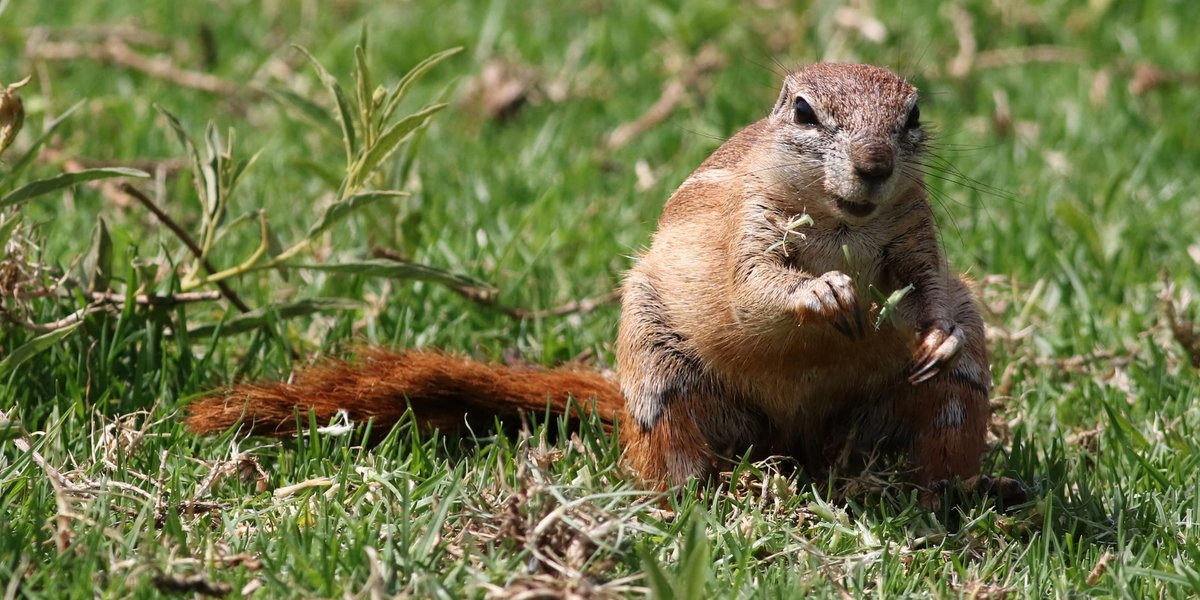
Columbian ground squirrels spend about eight months of the year asleep underground, so the four months they’re awake are essentially one long eating contest. Everything they do above ground — the foraging routes, the territorial disputes, the frantic pre-hibernation bingeing — is organized around food.
Here’s exactly what they eat, how that changes through the season, and why their diet is stranger than most people expect.
Table of Contents
- The Short Answer
- Spring: Early-Season Greens
- Summer: Seeds and Broadening the Menu
- Pre-Hibernation: The Fat-Building Push
- Specific Plants Columbian Ground Squirrels Prefer
- The Omnivory No One Talks About
- Foraging Behavior and Habits
- Diet in Agricultural Areas
- How Diet Compares to Related Species
- FAQ
The Short Answer
Columbian ground squirrels (Urocitellus columbianus) are primarily herbivores. Their diet centers on grasses, flowering plants, seeds, bulbs, and roots native to their mountain meadow and subalpine habitats in western North America. They’re not strict vegetarians, though — they’ll eat insects and occasionally carrion when the opportunity arises.
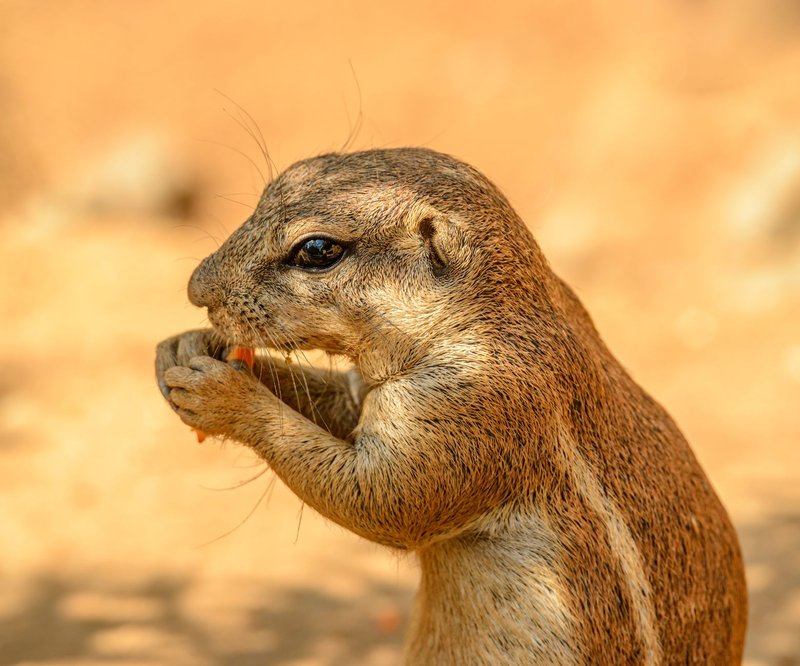
Spring: Early-Season Greens
When Columbian ground squirrels emerge from hibernation — typically late March through April depending on elevation and snowpack — the landscape looks like it’s still deciding whether to be winter. The squirrels don’t wait for conditions to improve.
Their first meals are whatever succulent green plants are pushing up through the thaw. Early-emerging forbs are the priority: fresh shoots have a high water content and are easier to digest after months of metabolic dormancy. The squirrels aren’t particularly selective at this point. They need calories and hydration fast, and tender young vegetation delivers both.
Bulbs and roots are important in early spring too. Glacial lilies (Erythronium grandiflorum) are a documented early-season food source in many parts of their range. The squirrels dig for the bulbs before the plant has even fully leafed out — a behavior you can observe in subalpine meadows where the ground still has patches of snow.
Summer: Seeds and Broadening the Menu
As the season progresses and vegetation matures, seeds become increasingly central to the diet. Grass seeds and the seeds of forbs are eaten directly from the plant — Columbian ground squirrels don’t cache food the way some other ground squirrels do, so they’re eating for immediate energy and fat accumulation rather than building a winter pantry.
By midsummer, the diet broadens. Flowering plants are at their peak, and the squirrels work through clover, yarrow, dandelion, and various grasses with methodical efficiency. They tend to clip stems and eat them close to the ground, working a patch before moving on — a foraging pattern that’s more like grazing than the opportunistic scavenging you’d see from a true omnivore.
Insects show up more consistently during summer. Grasshoppers, beetles, and caterpillars get eaten when encountered, providing a protein source that complements the largely carbohydrate-heavy plant diet. This isn’t the foundation of their nutrition, but it’s not trivial either.
Pre-Hibernation: The Fat-Building Push
Late July into August is when the feeding intensity peaks. Columbian ground squirrels at high elevation may have only four months above ground total, and by late summer they’re racing against the calendar. Body fat roughly doubles in the weeks before hibernation entry.
This is when seed consumption is heaviest. Seeds are calorie-dense relative to leafy vegetation, and the squirrels preferentially seek them out during this period. Research on related Urocitellus species confirms that fat-soluble energy stores — built from dietary fats and carbohydrates — are the primary fuel source through the eight-month fast underground.
The squirrels are also at their most visible during this period. They forage for longer stretches of the day, ranging farther from burrow entrances, and spend less time on social behavior. There’s a measurable urgency to it.
Specific Plants They Prefer
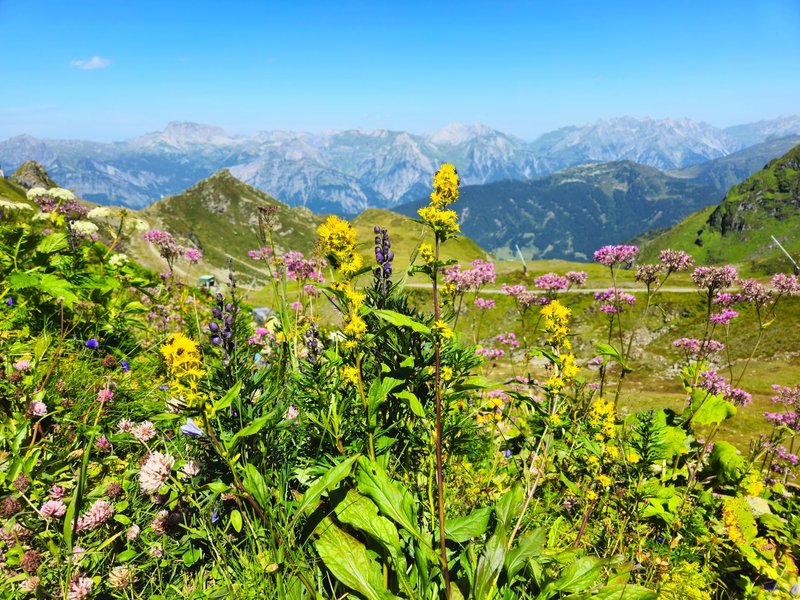
In the mountain meadows and subalpine parklands these squirrels inhabit across British Columbia, Alberta, Idaho, Montana, and Washington, the most commonly documented food plants include:
- Dandelion (Taraxacum officinale) — leaves, flowers, and seeds eaten throughout the season
- Clover (Trifolium spp.) — both leaves and seed heads
- Timothy grass (Phleum pratense) — stems and seeds
- Yarrow (Achillea millefolium) — flowers and foliage
- Glacier lily (Erythronium grandiflorum) — bulbs in early spring
- Fescues and bluegrasses — various native grasses form a dietary backbone
- Paintbrush (Castilleja spp.) — occasionally documented
- Vetches (Vicia spp.) — leaves and seeds
The exact composition shifts with what’s available. A wet year with abundant forb growth produces a different dietary profile than a dry year when grasses dominate.
The Omnivory No One Talks About
Most sources describe Columbian ground squirrels as herbivores, and that’s fair — plant material makes up the vast majority of what they eat. But the omnivory is real and worth understanding.
Insects are eaten opportunistically throughout the active season. Bird eggs have been documented in their diet. And carrion — including the carcasses of other squirrels — is eaten when encountered. This last one surprises people, but it makes evolutionary sense: a high-calorie food source encountered in passing is worth taking, especially during the pre-hibernation energy push.
According to the Animal Diversity Web at the University of Michigan, Columbian ground squirrels are classified as omnivores, with plant matter dominant but animal protein regularly supplementing the diet. The omnivory is most pronounced when protein needs are high — during lactation in females, and during the rapid fat accumulation period before hibernation.
Foraging Behavior and Habits
Columbian ground squirrels are diurnal — they forage during daylight and return to burrows at night. Activity peaks in the morning and again in the late afternoon, with a midday rest during the hottest part of summer days.
They don’t cache food. Unlike Richardson’s ground squirrels or chipmunks, they don’t stockpile seeds in underground chambers. All the energy for hibernation has to be stored as body fat before they enter torpor.
Foraging range is relatively small — typically within 50–100 meters of the burrow entrance for most of the season, though this expands in late summer when food competition increases. Colony members aren’t cooperative foragers; they’re individually territorial about their foraging patches during periods of resource scarcity.
One behavioral detail worth noting: Columbian ground squirrels are alert feeders. They spend a significant fraction of foraging time upright, scanning for predators. Golden eagles, badgers, and coyotes all predate them heavily, and the cost of that vigilance is real — it limits feeding time and affects how much they can eat per foraging bout.
Diet in Agricultural Areas
Where Columbian ground squirrels overlap with farmland — grain fields and hay meadows in parts of Alberta and British Columbia — they adapt. Crop species become part of the diet: wheat, oats, and alfalfa are all eaten. This makes them unpopular with some agricultural operations, which have historically pursued control measures.
For landowners dealing with Columbian ground squirrel activity, the agricultural diet is predictable from their natural preferences: they follow the same grass-and-forb pattern, just applied to cultivated species.
How Diet Compares to Related Species
Three species often get compared because their ranges overlap or because they look similar:
Richardson’s ground squirrel (Urocitellus richardsonii) has a very similar diet — grasses, forbs, seeds, some insects — but occupies flatter prairie habitat farther east. Both species eat dandelion and clover heavily, and both show the same pre-hibernation fat-building strategy.
Thirteen-lined ground squirrel (Ictidomys trideclineatus) is more genuinely omnivorous. It eats significantly more insects and small vertebrates relative to plant material, and its range covers open grasslands of central North America. If you’re on the prairies and see a squirrel actively hunting a mouse, it’s more likely to be a thirteen-lined than a Columbian.
Golden-mantled ground squirrel (Callospermophilus lateralis) is often mistaken for a chipmunk in mountain environments where both occur alongside Columbian ground squirrels. The golden-mantled is a confirmed food cacher and eats a higher proportion of fungi and seeds relative to green vegetation.
The Columbian’s diet sits in the middle of this range — more herbivorous than the thirteen-lined, less seed-focused than the golden-mantled, with the same seasonal fat-building imperative all three share.
FAQ
Do Columbian ground squirrels eat meat? Occasionally, yes. Insects are a regular part of the diet, and carrion and bird eggs are eaten opportunistically. It’s not the foundation of their nutrition, but animal protein appears throughout the active season.
Do they store food in their burrows? No. Unlike chipmunks or some other squirrel species, Columbian ground squirrels don’t cache food. All the energy for their eight-month hibernation is stored as body fat.
What do baby Columbian ground squirrels eat? Pups nurse for three to four weeks, then transition directly to solid food when they emerge from the burrow — the same plant-based diet as adults. There’s no extended weaning period onto soft foods; they start foraging almost immediately.
Can Columbian ground squirrels eat human food? They will, but they shouldn’t be fed. Habituated squirrels in parks and campgrounds that accept handouts shift away from their natural diet and can suffer nutritional deficiencies, plus they become bolder around humans in ways that typically end badly for the squirrel. Parks Canada recommends against feeding any wildlife for exactly these reasons.
How much do they eat per day? No precise figures exist for daily intake in the wild, but the pre-hibernation weight gain gives a sense of scale: body mass can increase by 35–40% in the final weeks before they go underground. That’s a significant caloric surplus built primarily from seeds and high-carbohydrate vegetation.
The Columbian ground squirrel’s diet isn’t complicated, but it’s finely tuned to a short growing season and an extreme hibernation cycle. Everything they eat serves the same end: surviving eight months underground on stored fat alone. The specific plants vary by location and year, but the strategy is consistent — eat plants, supplement with protein, maximize calories before the snow returns.