Table of Contents
- The Problem No One’s Talking About
- Invasive Plants
- Invasive Insects
- Invasive Aquatic Species
- Invasive Animals and Mammals
- What’s Being Done — And What Isn’t
The Problem No One’s Talking About
Slovakia sits at a geographic crossroads — Central Europe’s river corridors, warm southern lowlands, and dense trade routes make it a natural entry point for species that don’t belong there. And once something gets in, it tends to stay.
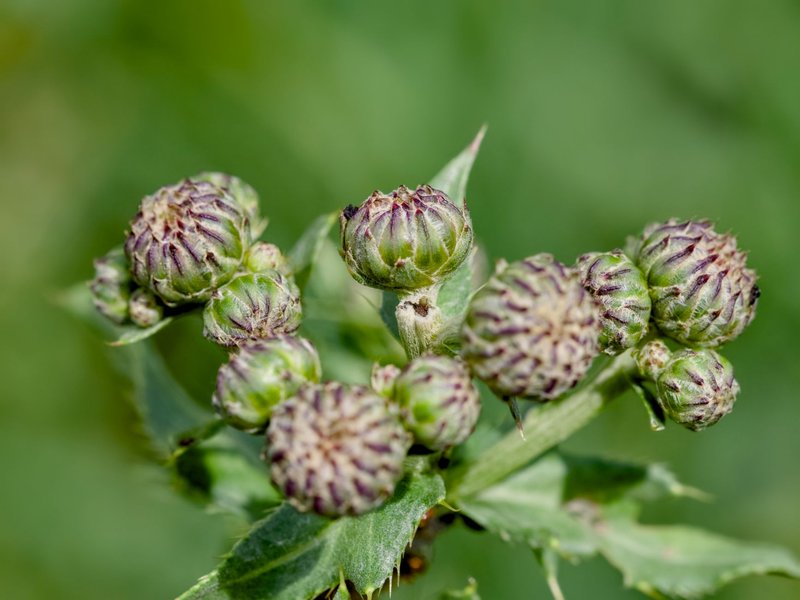
Invasive alien species (IAS) are organisms introduced outside their native range that outcompete, displace, or destroy native wildlife. In Slovakia, this plays out in reed beds crowded out by Asian knotweed, rivers losing their native crayfish to North American competition, and floodplains gradually being converted into monocultures of plants that nothing local wants to eat.
The academic literature on Slovakia’s invasive species is extensive. The public-facing conversation is almost nonexistent. That gap is exactly what’s making things worse.
Invasive Plants

Japanese Knotweed (Reynoutria japonica)
This is the one that gets press, and for good reason. Japanese knotweed arrived in Europe as an ornamental in the 19th century and has since colonized riverbanks, roadsides, and disturbed land across the continent. In Slovakia, it’s widespread along the Morava, Váh, and Hron river corridors. It can grow up to 3 cm per day in summer and its root system — the rhizome network — extends 3 meters deep and 7 meters outward. Cutting it above ground does almost nothing. The rhizomes just push harder.
What it displaces: native riparian vegetation that stabilizes banks and provides habitat for insects, birds, and small mammals. Knotweed-dominated stretches are near biological deserts by comparison.
Also worth noting is its close relative, Bohemian knotweed (Reynoutria × bohemica), a hybrid that spreads even more aggressively and is increasingly documented in Slovak lowland areas.
Giant Hogweed (Heracleum mantegazzianum)
Originally from the Caucasus, giant hogweed reaches up to 5 meters tall and produces a phototoxic sap that causes severe chemical burns on contact with sunlight. It’s been recorded along rivers in central and western Slovakia, and it’s not just an ecological problem — it’s a human safety hazard. Children who play near it without knowing what it is risk serious skin injury.
Goldenrod (Solidago canadensis and Solidago gigantea)
Less dramatic than knotweed, but arguably more pervasive. Canadian and late goldenrod have colonized vast areas of abandoned agricultural land, former industrial sites, and the edges of forests in southern Slovakia. They form dense stands that prevent native meadow plants from establishing. The Southern Slovak Basin, with its warm climate and large areas of marginal farmland, is particularly affected.
Elodea (Elodea canadensis)
A waterweed from North America, Elodea arrived in European ponds and rivers via the aquarium trade. It’s fully submerged, grows rapidly, and can choke out native aquatic vegetation in slow-moving or still water bodies. In Slovakia it’s well-established in lowland rivers and standing waters.
Invasive Insects
Asian Hornet (Vespa velutina)
The Asian hornet has been spreading west across Europe since its accidental introduction to France in 2004. It’s a specialist predator of honeybees — a single hornet can kill 50 bees per hour while hawking outside a hive. Slovakia is now considered at risk of colonization, and confirmed sightings have been increasing in neighboring Austria and Hungary. Once it establishes permanent colonies, eradication becomes effectively impossible.
The European Food Safety Authority has flagged Vespa velutina as one of the most serious threats to pollinator populations in Europe.
Tiger Mosquitoes (Aedes albopictus) and Yellow Fever Mosquitoes (Aedes aegypti)
Both species have been detected in Slovakia, with Aedes albopictus (tiger mosquito) recorded in urban and peri-urban areas including Bratislava. These mosquitoes can transmit dengue fever, chikungunya, and Zika virus — diseases that were not previously a concern in Central Europe. Their spread is directly tied to warming temperatures and increased freight traffic, which moves larvae in standing water inside cargo containers.
Research published in PMC/NCBI documents their expanding presence across Slovak municipalities and models how climate change will extend their viable range northward within the next decade.
Colorado Potato Beetle (Leptinotarsa decemlineata)
An older arrival, but still worth including. Introduced from North America, this beetle has been causing crop losses in Central European potato production since the mid-20th century. Chemical resistance is increasing in Slovak populations, making control progressively harder.
Invasive Aquatic Species
Signal Crayfish (Pacifastacus leniusculus)
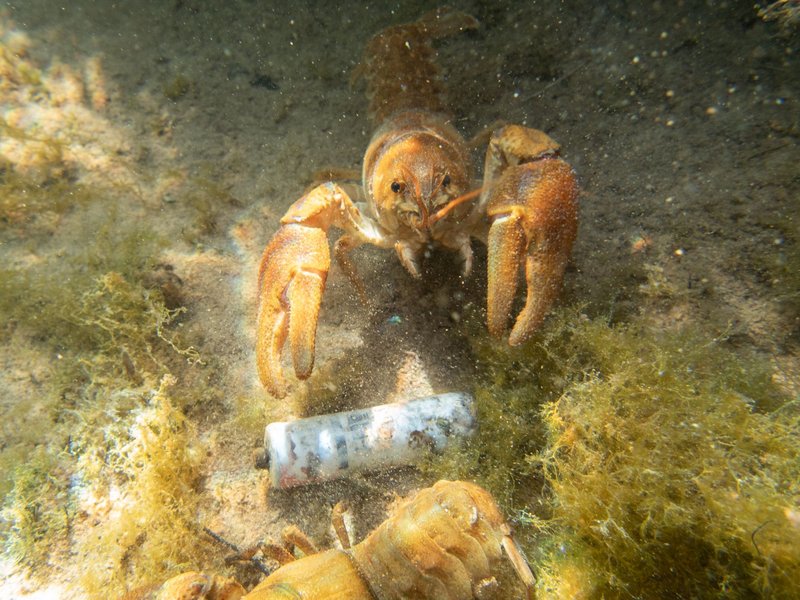
Signal crayfish from North America carry Aphanomyces astaci — crayfish plague — to which they are largely immune. European crayfish species have no resistance. The result: wherever signal crayfish establish, native stone crayfish (Austropotamobius torrentium) and narrow-clawed crayfish (Pontastacus leptodactylus) collapse rapidly. Both native species are protected under Slovak and EU law, and both are in ongoing decline — mirroring the pressures facing many endangered species in Slovakia that have lost ground to introduced competitors. The Morava and Danube river systems are the primary entry corridors.
Round Goby (Neogobius melanostomus)
This small bottom-dwelling fish arrived from the Ponto-Caspian region via ballast water. It’s now established in the Danube and is an aggressive competitor for spawning sites and food with native benthic fish species. Round goby can reproduce multiple times per season, and their populations build faster than native fish can displace them. Slovak fisheries on the Danube have documented its spread since the early 2000s.
Monkey Flower (Mimulus guttatus) and Floating Pennywort (Hydrocotyle ranunculoides)
Two plant species that complete Slovakia’s aquatic invasion picture. Floating pennywort in particular forms dense mats on slow-moving water that reduce oxygen levels and block light for submerged native vegetation.
Invasive Animals and Mammals
Raccoon (Procyon lotor)
Originally from North America, raccoons were introduced to Europe in the 1930s — initially in Germany — and have since spread east. They’re opportunistic omnivores with no natural predators in Europe, and they’re documented in western Slovakia, particularly near the Austrian and Czech borders. They raid bird nests, compete with native species like stone martens for food, and carry diseases including raccoon roundworm (Baylisascaris procyonis).
Muskrat (Ondatra zibethicus)
Long established in Slovakia, muskrat arrived from North America in the early 20th century via introductions in Bohemia. It burrows into river banks and dike systems, which damages flood-control infrastructure — a serious practical concern given Slovakia’s reliance on river management. Native water voles suffer from competition.
American Mink (Neovison vison)
Escaped or released from fur farms, American mink are now established in several Slovak river valleys. They’re efficient predators of waterfowl, fish, and small mammals, and their impact on ground-nesting birds near rivers and wetlands is well-documented across Europe. Slovakia has made control attempts, but populations persist.
What’s Being Done — And What Isn’t
The EU’s Regulation on Invasive Alien Species (1143/2014) requires member states to monitor, prevent, and manage listed species. Slovakia is legally bound by this framework, and the country maintains species monitoring through its State Nature Conservancy (Štátna ochrana prírody).
In practice, management is uneven. Japanese knotweed control along major rivers is ongoing but undersized relative to the problem — mowing and cutting without chemical treatment largely fails, and coordinated mechanical removal across property boundaries requires interagency cooperation that rarely materializes. Crayfish plague monitoring exists, but habitat loss and water quality issues compound the native crayfish decline in ways that IAS policy alone can’t fix.
For mosquitoes, Bratislava and several southern municipalities have surveillance programs tracking Aedes populations, partly driven by the public health angle. This is probably where IAS monitoring is strongest in Slovakia — the disease vector framing creates political will that pure conservation arguments often don’t.
There is no national removal plan covering the full breadth of invasive species across all taxa. The academic literature is solid. The field coordination is fragmented. And the gap between what’s known and what’s being acted on is wide enough to drive a knotweed colony through.
Final Thoughts
Slovakia’s invasive species problem is real, documented, and growing. The species themselves aren’t going anywhere — knotweed doesn’t negotiate, and signal crayfish don’t respond to awareness campaigns. What’s missing is a sustained, coordinated response that matches the scale of the problem.
For anyone spending time in Slovak nature — along rivers, in wetland areas, or in the southern lowland basin — knowing what these species look like and where they tend to show up is genuinely useful. The more documented sightings there are, the better the picture authorities have to work from.
Slovakia’s State Nature Conservancy accepts invasive species reports and maintains regional biodiversity records. If you spot something that looks out of place, that’s a reasonable place to start.