Pink is the most versatile color in a flower garden. It spans from barely-blush to almost-red, reads as romantic without being loud, and plays well with nearly every other flower in the bed. The problem is that “pink flowers” is a huge category — and most lists just dump 25 names on you alphabetically with no useful context.
This one organizes them by how you’d actually use them: spring bloomers, summer workhorses, fall standouts, cut flower favorites, and a few wildflowers worth knowing. Each entry covers hardiness zone, bloom season, care difficulty, and one specific tip that matters.
Table of Contents
- Spring Pink Flowers
- Summer Pink Flowers That Bloom for Months
- Fall-Blooming Pink Flowers
- Pink Flowers for Bouquets and Cutting
- Pink Wildflowers
- Quick Comparison Table
- Pink Flower Symbolism and Gifting
- FAQ
Spring Pink Flowers {#spring-pink-flowers}
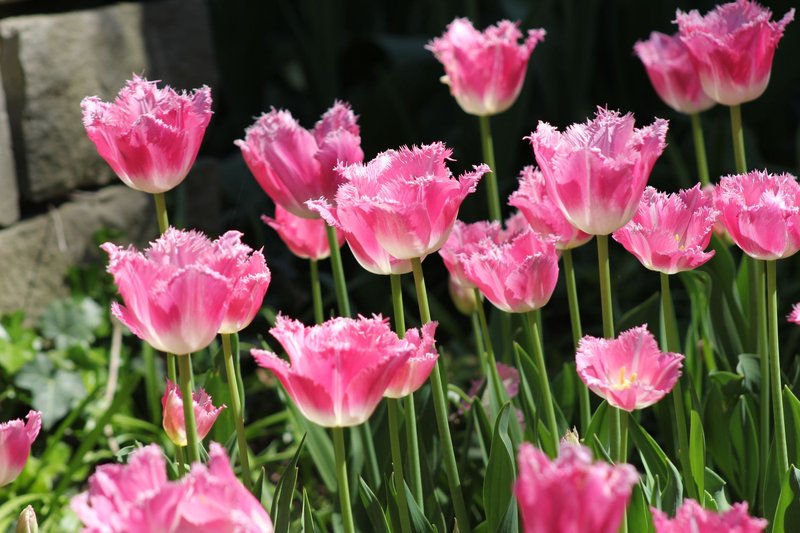
Spring pinks tend to be fleeting — a few weeks of color before summer heat pushes them out. That’s not a flaw. It’s what makes them worth planting.
1. Cherry Blossom (Prunus serrulata)
Zone: 5–8 | Bloom: March–April | Difficulty: Moderate
The bloom window is 7–14 days. That’s it. But no other tree produces that specific cloud-of-pink effect, and the bare branches against the sky before and after are half the point. Plant in full sun with good drainage. Skip the fertilizer-heavy approach — too much nitrogen pushes leaf growth at the expense of flowers.
2. Pink Tulip (Tulipa spp.)
Zone: 3–8 | Bloom: March–May | Difficulty: Easy
Darwin hybrid tulips in pink hold up longer in the vase and in the garden than most other tulip types. ‘Apricot Impression’ is technically orange-pink but photographs beautifully. Plant bulbs in fall, 6–8 inches deep. In warmer zones (7–8), treat them as annuals — they rarely rebloom reliably after the first year.
3. Bleeding Heart (Lamprocapnos spectabilis)
Zone: 3–9 | Bloom: April–June | Difficulty: Easy
The dangling heart-shaped flowers on arching stems are unmistakable. Classic bleeding heart goes dormant in summer heat, which looks like the plant died but isn’t — pair it with hostas or ferns to fill the gap. The ‘Gold Heart’ variety has golden foliage and is worth the slightly higher price.
4. Azalea (Rhododendron spp.)
Zone: 4–9 (varies by cultivar) | Bloom: April–May | Difficulty: Moderate
Azaleas need acidic soil (pH 4.5–6.0) — skip them if your soil is alkaline unless you’re prepared to amend heavily. In the right conditions, a mature azalea in full bloom is one of the loudest visual statements in any garden. ‘George L. Taber’ is a popular pink with near-white edges.
5. Pink Peony (Paeonia lactiflora)
Zone: 3–8 | Bloom: May–June | Difficulty: Easy
Peonies live for 50+ years in the same spot without dividing — plant them once and they outlast most garden plans. They need cold winters to set buds, which is why they don’t perform well below Zone 8. Plant the eyes (red buds) no more than 1–2 inches below the soil surface; plant them too deep and they won’t bloom. ‘Sarah Bernhardt’ is the classic blush-pink, and it’s a classic for a reason.
Summer Pink Flowers That Bloom for Months {#summer-pink-flowers}
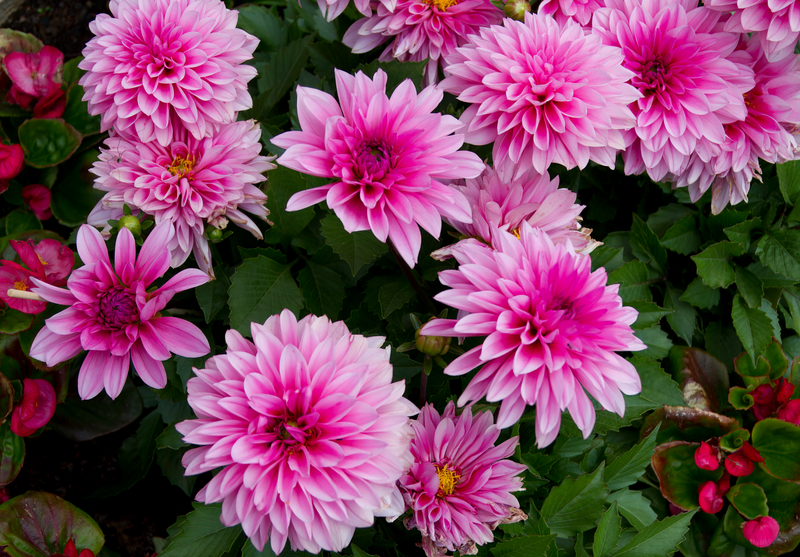
These are the ones that carry the garden from June through September. Most are perennials or self-seeding annuals — plant once, enjoy for years.
6. Coneflower (Echinacea purpurea)
Zone: 3–9 | Bloom: June–October | Difficulty: Easy
Despite the name, most coneflowers in garden centers skew pink-to-magenta rather than purple. They’re deer-resistant, drought-tolerant once established, and attract both butterflies and goldfinches (which eat the seed heads in fall — leave them standing). ‘Magnus’ has larger-than-average petals and holds its color late into the season.
7. Phlox (Phlox paniculata)
Zone: 4–8 | Bloom: July–September | Difficulty: Moderate
Garden phlox has a sweet fragrance that carries across a patio on a still evening — one of the few flowers where the scent is as valuable as the visual. Prone to powdery mildew in humid climates; space plants at least 18 inches apart and choose mildew-resistant cultivars like ‘David’ (white) or ‘Bright Eyes’ (pink with a red eye).
8. Bee Balm (Monarda didyma)
Zone: 3–9 | Bloom: June–August | Difficulty: Easy
The shaggy, almost spidery blooms don’t look like most people’s idea of a “pink flower,” but hummingbirds don’t care what it looks like — they’ll work every floret. Spreads aggressively via rhizomes; plant where you want a colony or be prepared to divide it every 2–3 years.
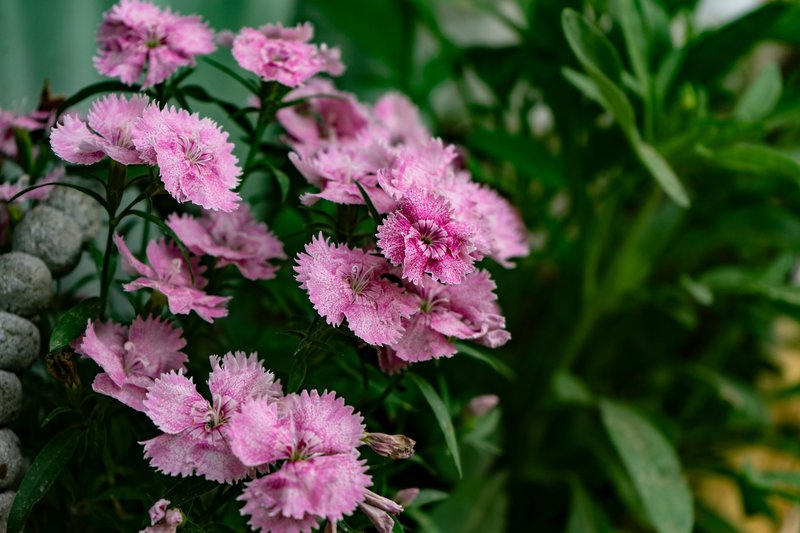
9. Dianthus (Dianthus spp.)
Zone: 3–9 | Bloom: May–September (reblooms) | Difficulty: Easy
Cottage pinks are the old-fashioned variety — small, fringed petals, intensely clove-scented. Modern hybrids like the ‘Firewitch’ series bloom for much of the summer if deadheaded. Deer-resistant. Good edging plant at 6–12 inches tall.
10. Salvia (Salvia spp., pink varieties)
Zone: 5–10 (varies) | Bloom: June–frost | Difficulty: Easy
Most salvias are purple or red, but Salvia involucrata (‘Rosy Jane’) and Salvia greggii pink cultivars are genuinely pink. Long bloom season, drought-tolerant, loved by hummingbirds and pollinators. Cut back by one-third mid-summer to encourage a second flush.
11. Penstemon (Penstemon spp.)
Zone: 3–9 | Bloom: May–July | Difficulty: Easy
Penstemons are underused. Tubular flowers on upright spikes, available in multiple pink shades, extremely drought-tolerant once established. They prefer lean, well-drained soil — too much fertilizer produces floppy plants with fewer blooms. ‘Husker Red’ has burgundy foliage that contrasts beautifully with its pink-white flowers.
12. Lavatera (Lavatera trimestris)
Zone: Annual | Bloom: July–frost | Difficulty: Easy
An annual that behaves like a shrub — grows 3–5 feet tall in a single season, covered in silky, mallow-like blooms. ‘Silver Cup’ is a reliable pink. Direct sow in place; it doesn’t transplant well.
13. Cosmos (Cosmos bipinnatus)
Zone: Annual | Bloom: July–frost | Difficulty: Very easy
Feathery foliage and papery flowers in white, pink, and magenta. Thrives in poor soil — rich soil produces more leaves, fewer flowers. Self-seeds prolifically; once you plant cosmos, you’ll have it for years. Excellent cut flower and a magnet for bees.
14. Zinnias (pink varieties)
Zone: Annual | Bloom: June–frost | Difficulty: Very easy
Among the easiest annuals to grow from seed. Zinnias in pink and salmon are heat-lovers that keep blooming right through summer into fall. The ‘Benary’s Giant’ series has large blooms on long stems — better for cutting. Direct sow after frost; they don’t need a head start indoors.
Fall-Blooming Pink Flowers {#fall-pink-flowers}
Most gardens fade to yellow and bronze in fall. These keep pink in the picture.
15. Turtlehead (Chelone lyonii)
Zone: 3–8 | Bloom: August–October | Difficulty: Easy
Native to eastern North America. Snapdragon-like blooms on 2–3 foot stems in a distinctive rosy pink. Tolerates moist soil and part shade — genuinely useful in spots where other plants sulk. Host plant for the Baltimore checkerspot butterfly.
16. Japanese Anemone (Anemone hupehensis)
Zone: 4–8 | Bloom: August–October | Difficulty: Easy
Delicate-looking flowers on wiry stems that sway in any breeze — they’re tougher than they look. ‘Pamina’ is a deep rose-pink double. Spreads slowly into a colony; give it room. One of the few fall flowers that’s actually elegant rather than loud.
17. Sedum / Stonecrop (Hylotelephium spp.)
Zone: 3–9 | Bloom: August–October | Difficulty: Very easy
‘Autumn Joy’ starts with broccoli-green flower heads in summer that slowly shift to dusty pink, then rust-red in fall. Drought-tolerant, deer-resistant, and the seed heads look good all winter. The flat flower clusters are landing pads for monarch butterflies on their fall migration.
18. Obedient Plant (Physostegia virginiana)
Zone: 3–9 | Bloom: July–September | Difficulty: Easy
The flowers are called “obedient” because they stay where you push them on the stem (temporarily). Spreads aggressively — one of the few plants where “vigorous” is a fair warning. Grows well in moist soil and part shade.
Pink Flowers for Bouquets and Cutting {#pink-bouquet-flowers}
These earn a spot in a cutting garden specifically.
19. Pink Ranunculus (Ranunculus asiaticus)
Zone: 8–11 (or grow as annual) | Bloom: Spring | Difficulty: Moderate
The layered, papery petals look like peonies but at a fraction of the cost. Popular with florists for a reason. Grow from corms planted in fall in mild climates or early spring in cold ones. They don’t love heat — production drops off once temperatures climb consistently above 75°F.
20. Lisianthus (Eustoma grandiflorum)
Zone: Annual | Bloom: Summer–fall | Difficulty: Difficult
The vase life is exceptional — 2–3 weeks with fresh water. Available in blush, dusty rose, and deep pink. Notoriously slow from seed (up to 200 days); most home gardeners buy transplants. Worth the effort for cut flower production.
21. Snapdragon (Antirrhinum majus, pink)
Zone: Annual | Bloom: Spring and fall (cool-season) | Difficulty: Easy
Snapdragons fade in summer heat but come back in cooler fall weather — plant twice for two seasons of cutting. The ‘Rocket’ series has tall stems suited for vase work. According to research on pollinators, bumblebees are the primary pollinator, strong enough to force open the closed flower.
22. Sweet William (Dianthus barbatus)
Zone: 3–9 (biennial) | Bloom: May–June | Difficulty: Easy
Clustered blooms in shades ranging from white to deep crimson, with pink being the most common. Strong clove scent. Biennial, so plant in summer for blooms the following spring. Self-seeds reliably once established.
Pink Wildflowers {#pink-wildflowers}
23. Pink Lady’s Slipper Orchid (Cypripedium acaule)
Zone: 3–7 | Bloom: May–June
A native North American orchid that grows in acidic, mossy forest soil. It’s protected in many states — do not collect from the wild. It requires a specific soil fungus to survive, which is why it’s notoriously difficult to transplant or cultivate. Worth knowing on sight.
24. Wild Bergamot (Monarda fistulosa)
Zone: 3–9 | Bloom: July–September
The pale lavender-pink relative of bee balm. Native to dry prairies and open woodlands across North America. More drought-tolerant than its garden cousin, and just as good for pollinators. According to the USDA Plant Database, it’s considered a facultative upland species — at home in dry conditions most garden flowers can’t tolerate.
25. Fireweed (Epilobium angustifolium)
Zone: 2–7 | Bloom: July–August
One of the first plants to colonize burned areas — named for it. Tall spikes of bright magenta-pink flowers, top-to-bottom. Spreads by wind-carried seeds, so it naturalizes quickly in disturbed ground. A jar of fireweed honey from the Pacific Northwest or British Columbia has a genuinely distinct floral flavor.
Quick Comparison Table {#comparison-table}
| Flower | Zone | Season | Deer-Resistant | Good for Cutting | Pollinator Magnet |
|---|---|---|---|---|---|
| Cherry Blossom | 5–8 | Spring | — | No | Yes |
| Peony | 3–8 | Spring | Yes | Yes | Yes |
| Coneflower | 3–9 | Summer | Yes | Yes | Yes |
| Garden Phlox | 4–8 | Summer | No | Yes | Yes |
| Bee Balm | 3–9 | Summer | No | No | Yes (hummingbirds) |
| Cosmos | Annual | Summer–fall | No | Yes | Yes |
| Japanese Anemone | 4–8 | Fall | Yes | Yes | Yes |
| Sedum | 3–9 | Fall | Yes | No | Yes |
| Ranunculus | 8–11/annual | Spring | No | Yes | No |
| Lisianthus | Annual | Summer | No | Yes | No |
| Coneflower | 3–9 | Summer | Yes | Yes | Yes |
| Wild Bergamot | 3–9 | Summer | No | No | Yes |
Pink Flower Symbolism and Gifting {#symbolism}
Pink has a broader symbolic vocabulary than most colors. Light pink reads as gratitude, admiration, and sweetness — appropriate for thank-you gifts, new babies, and get-well gestures. Hot pink signals confidence and energy. Deep rose leans toward love and appreciation without the intensity of red.
For gifting, a few combinations work particularly well:
- Gratitude: pink peonies + white ranunculus
- Sympathy: pale pink roses + white lisianthus + greenery
- New baby: blush tulips + cream snapdragons
- Birthday: hot pink gerbera daisies + pink cosmos + zinnias
Peonies in particular carry a cultural weight in East Asian traditions — they symbolize prosperity and honor, which is one reason they’re a staple at weddings.
FAQ {#faq}
What pink flowers bloom all summer? Coneflower, garden phlox, dianthus, cosmos, and bee balm all bloom from June or July through September with minimal deadheading. Zinnias and lavatera are summer annuals that bloom continuously until frost.
What pink flowers are deer-resistant? Coneflower, dianthus, catmint (lavender-pink), peonies, and sedum are all reliably deer-resistant in most regions.
What are the most fragrant pink flowers? Garden phlox, dianthus (especially old-fashioned cottage pinks), and peonies are the top three for fragrance. Pink jasmine and pink roses round out the list, though fragrance varies significantly by cultivar in roses.
Are pink flowers good for pollinators? Many are. Coneflower, bee balm, wild bergamot, cosmos, and phlox are particularly high-value for bees, butterflies, and hummingbirds. Color itself isn’t the driver — flower shape and nectar production matter more — but pink flowers in the daisy, tube, and spike forms consistently attract pollinators.
What pink flowers grow in shade? Bleeding heart, astilbe, turtlehead, and Japanese anemone all perform well in part to full shade. Most pink flowers want sun, but these four are genuinely shade-tolerant.