Table of Contents
- Ukraine’s Avian Landscape at a Glance
- Urban and Agricultural Birds
- Forest Birds
- Wetland and Floodplain Birds
- Steppe and Open Grassland Birds
- Coastal and Delta Birds
- Migration: When to Go
- Best Birdwatching Sites
- Threatened Species Worth Knowing
Ukraine’s Avian Landscape at a Glance {#ukraines-avian-landscape}
Ukraine’s bird list sits at over 450 recorded species — 454 to 457 depending on the source and how recent additions are counted. That’s a lot of birds for a country most people picture as flat and agricultural. But that flatness is actually the point. Ukraine spans five distinct ecological zones: mixed forest in the north, ancient steppe in the east and south, major river floodplains cutting through the middle, the Danube Delta in the southwest, and a strip of Black Sea coastline. Each one pulls a different cast of species.
Of those 450+ species, the IUCN classifies 27 as globally threatened — a conservation context that’s worth keeping in mind as you read through the list below.
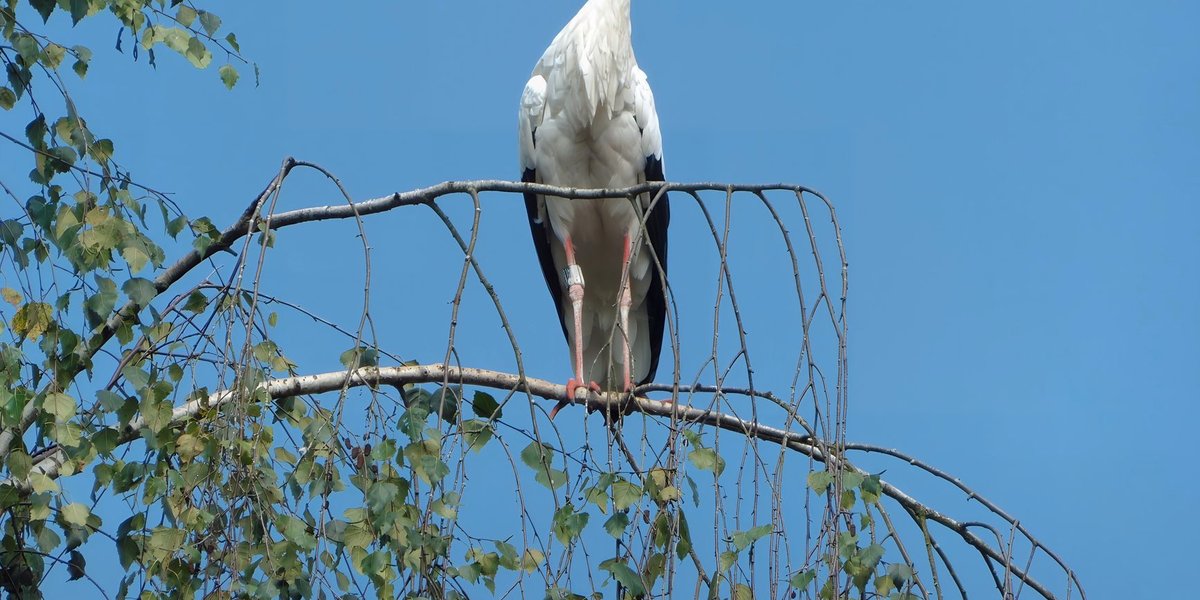
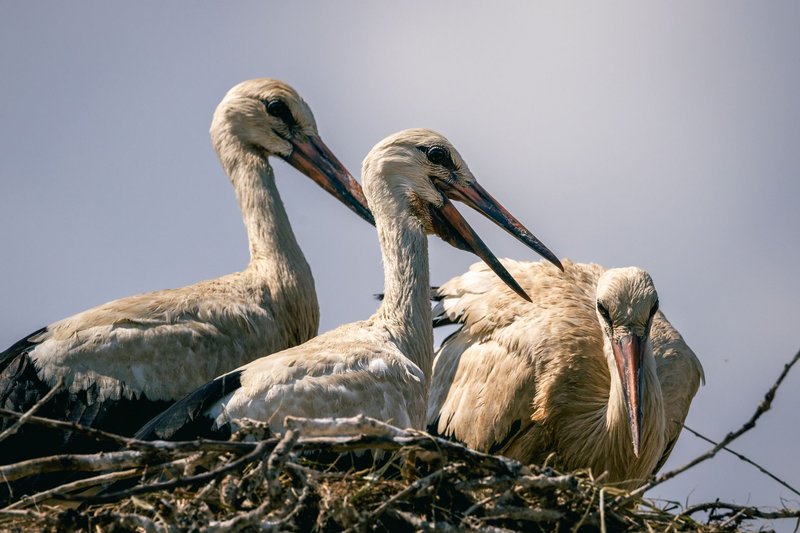
The national bird is the White Stork (Ciconia ciconia), which tells you something about how deeply embedded birds are in Ukrainian culture. Storks nest on chimneys and power poles across rural villages, and their return in spring is still treated as a sign of seasonal renewal.
Urban and Agricultural Birds {#urban-and-agricultural-birds}
Ukraine’s cities and farmland host a predictable but characterful mix. Common House Sparrows (Passer domesticus), Barn Swallows (Hirundo rustica), and Eurasian Jackdaws (Corvus monedula) are everywhere — the birds you’ll see whether you’re looking for them or not.
White Stork (Ciconia ciconia) — The national symbol. Storks return from sub-Saharan Africa between late March and April, setting up on nests they reuse for decades. Nests can weigh hundreds of kilograms after years of additions. You’ll find them concentrated in Polissia and Podolia, where traditional agricultural practices have kept frog and vole populations high enough to sustain them.
Common Nightingale (Luscinia megarhynchos) — Culturally, arguably as important as the stork. Its song is referenced throughout Ukrainian poetry and folk music. Nightingales arrive in late April and breed in dense shrubby thickets near rivers and forest edges. You’ll rarely see one — the males sing from deep cover — but the song is unmistakable once you know it.
Eurasian Hoopoe (Upupa epops) — Unmistakable orange-pink bird with a black-and-white crest that it fans dramatically when alarmed. Common in orchards and open woodland edges across central Ukraine. The call — a three-note “hoo-poo-poo” — carries farther than you’d expect.
Forest Birds {#forest-birds}
Northern Ukraine’s Polissia region is a vast belt of mixed forest and marshland — one of the largest lowland forest ecosystems in Europe. This is the core habitat for Ukraine’s woodpeckers, owls, and forest passerines.
Black Woodpecker (Dryocopus martius) — The largest woodpecker in Europe at around 45 cm, with a wholly black body and a red cap. It excavates cavities large enough that other species — stock doves, jackdaws, pine martens — move in after it’s done. Listen for the long, laughing call that carries through old-growth pine.
Short-toed Eagle (Circaetus gallicus) — A large raptor that specializes in snakes and lizards. It hovers like a buzzard, head pointing down, then drops. Breeds in forest areas with open clearings and is a regular summer visitor to Ukraine’s southern forests. The diet is genuinely unusual for a European eagle of its size.
Tawny Owl (Strix aluco) — The quintessential European forest owl. Common in deciduous and mixed woodland across Ukraine. Strictly nocturnal; the male’s “hoo-hoo” and the female’s “ke-wick” response (the classic double call you’ve probably heard) are the best field marks after dark.
Hazel Grouse (Tetrastes bonasia) — A compact, well-camouflaged bird that lives year-round in dense forest understory with a preference for alder and hazel thickets. Polissia is its Ukrainian stronghold. Secretive to the point of being maddening to find, but the thin, high whistle is diagnostic once learned.
Wetland and Floodplain Birds {#wetland-and-floodplain-birds}
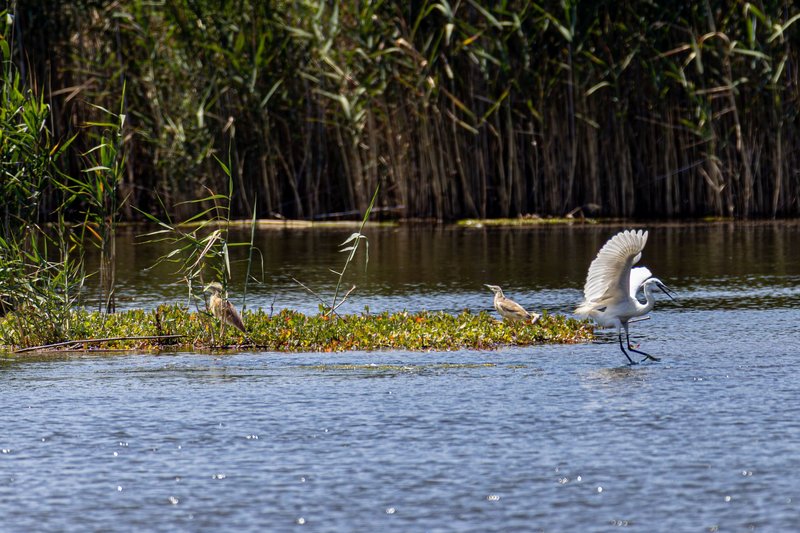
The Dnipro, Dniester, and Desna floodplains, along with Ukraine’s network of oxbow lakes and man-made reservoirs, support an enormous diversity of waterbirds. The Ramsar-listed Shatsky Lakes in Volyn Oblast are a particular hotspot.
Great White Pelican (Pelecanus onocrotalus) — Breeds in the Danube Delta and occasionally wanders into Ukrainian wetlands to feed. Seeing a pelican in inland Ukraine still stops people dead. They move in groups and are visible from considerable distance.
Purple Heron (Ardea purpurea) — Slimmer and darker than the Grey Heron, with a distinctly snaky neck pattern. Breeds in dense reedbed stands in the Dnipro floodplains and Danube Delta. Secretive and difficult to observe well, but patient watching from a reed edge pays off.
Whiskered Tern (Chlidonias hybrida) — A marsh tern that nests on floating vegetation in shallow lakes and slow rivers across southern Ukraine. Dips to the water surface to snatch insects rather than plunge-diving like sea terns. Nesting colonies in the Dnipro Delta can number in the thousands.
Great Bittern (Botaurus stellaris) — The boom call of the Bittern — a deep, resonant “pump” repeated several times — is one of the most atmospheric sounds in European wetlands. The bird itself is almost impossible to see: its brown streaked plumage and habit of standing motionless with neck extended make it a reed stalk until it moves. Listen for it at dawn and dusk from April onward.
Ferruginous Duck (Aythya nyroca) — A diving duck with rich chestnut plumage and a white eye. Globally near-threatened and declining, but Ukraine holds one of Europe’s more significant breeding populations in its southern lakes and reservoirs. Much smaller than Pochard; the white undertail coverts flash visibly in flight.
Steppe and Open Grassland Birds {#steppe-and-open-grassland-birds}
Ukraine holds some of the last remaining natural steppe in Europe. The Askania-Nova Biosphere Reserve in Kherson Oblast is the best surviving example — a protected fragment of what once covered the entire southern half of the country. Steppe birds are specialists in wide-open, wind-exposed terrain, and many are struggling as that habitat disappears. The broader picture of what lives here extends well beyond birds — Ukraine’s grassland fauna also includes a striking range of mammals, reptiles, and invertebrates shaped by the same open, wind-exposed conditions.
Great Bustard (Otis tarda) — The heaviest flying bird in Europe, with males weighing up to 16 kg. A small but significant population survives in southern Ukraine’s agricultural steppe zones. Males perform an extraordinary courtship display — feathers inverted, neck puffed, looking like a white foam ball on legs. According to BirdLife International, the species is globally vulnerable, and Ukraine’s steppe remnants are a key refuge.
Little Bustard (Tetrax tetrax) — Smaller and harder to see than the Great Bustard, but the male’s display in spring includes a nasal “prrt” call repeated from a tuft of grass. More widespread than its larger relative but equally tied to unplowed steppe.
Montagu’s Harrier (Circus pygargus) — A slim, long-tailed harrier that breeds in open agricultural areas and steppe across southern Ukraine. Males are pale grey with black wingtips; females brown-streaked. Hunts by quartering low over the ground.
Eurasian Stone-curlew (Burhinus oedicnemus) — A bird of dry, stony open habitats. Large yellow eyes, cryptic brown plumage, and a habit of standing absolutely still. Mostly nocturnal and surprisingly loud for something so hard to see — the wailing call at dusk is startling the first time you hear it.
Coastal and Delta Birds {#coastal-and-delta-birds}
The northern Black Sea coast and the Danube Delta where Ukraine meets Romania are the country’s most productive birding zones for sheer species diversity.
Dalmatian Pelican (Pelecanus crispus) — Larger than the Great White Pelican, with curly grey nape feathers and an orange-red pouch. Globally vulnerable. The Danube Delta holds one of the largest breeding colonies in the world. In Ukraine, the Tylihulsky Estuary near Mykolaiv also supports birds.
Eurasian Spoonbill (Platalea leucorodia) — The spatula bill is unmistakable. Breeds in the Danube Delta and disperses across southern Ukraine’s coastal lagoons. Feeds by sweeping the bill from side to side in shallow water, which looks robotic and oddly compelling to watch.
Sandwich Tern (Thalasseus sandvicensis) — Black cap, yellow-tipped black bill, and a harsh “kirrick” call. Breeds in colonies on sandy islands and spits along the Black Sea coast. The Kinburn Spit area near the Dnipro estuary has historically been a major site.
Ruddy Shelduck (Tadorna ferruginea) — A striking orange-brown duck with a pale head that breeds in steppe lakes and river banks in southern Ukraine. Noisy and conspicuous — you’ll hear the honking call before you see it.
Migration: When to Go {#migration-when-to-go}
Ukraine sits on the Black Sea–Mediterranean flyway, which makes spring and autumn genuinely spectacular for migration watching.
Spring (March–May) is the more dramatic passage. Storks and raptors move through in March and April. Warblers, flycatchers, and waders pour through in May. The Danube Delta and southern coastal sites see the biggest concentrations.
Autumn (August–October) is slower but often more diverse in shorebirds — waders that bred in Arctic Russia stop over on Ukraine’s southern estuaries and reservoirs. September and October bring raptor movement — hundreds of Honey Buzzards, Marsh Harriers, and Hobby can pass Crimea-facing sites in a single morning.
Winter is quieter but not empty. Siberian thrushes (Fieldfare, Redwing) move into Ukrainian orchards from November. The Shatsky Lakes hold wintering ducks and geese. And the country’s wintering Short-eared Owls hunt steppe margins from November through February.
Best Birdwatching Sites {#best-birdwatching-sites}
Danube Delta (Odessa Oblast) — Ukraine’s portion of the delta is smaller than the Romanian side but no less significant. Pelicans, spoonbills, herons, and terns are the headliners. Boat access through the delta channels is the way to get into it properly.
Shatsky National Nature Park (Volyn Oblast) — A complex of over thirty interconnected lakes in northwest Ukraine, near the Belarusian border. Breeding wildfowl, Black Storks, and White-tailed Eagles. Spring and early summer are the most productive times.
Askania-Nova Biosphere Reserve (Kherson Oblast) — The last significant protected steppe in Europe. Great Bustards, steppe raptors, and Demoiselle Cranes use this area. Access is managed and requires advance arrangements.
Dnipro Floodplains (Central Ukraine) — The river’s extensive oxbow lakes and reedbeds between Kremenchuk and Dnipro city support large colonies of herons, egrets, cormorants, and Whiskered Terns. Accessible by road and boat.
Kinburn Spit (Mykolaiv Oblast) — A narrow sandy peninsula between the Dnipro-Buh estuary and the Black Sea. Breeding terns, passage waders, and an impressive diversity of wildfowl on the lagoons.
Threatened Species Worth Knowing {#threatened-species-worth-knowing}
Twenty-seven species recorded in Ukraine appear on the IUCN Red List as globally threatened or near-threatened. A few of particular note:
- Sociable Lapwing (Vanellus gregarius) — Critically endangered. Breeds in central Asian steppe; Ukraine is a rare wintering and passage location.
- Pallid Harrier (Circus macrourus) — Near-threatened. A pale steppe harrier on decline across its range; Ukraine’s open south is key migration habitat.
- Ferruginous Duck — As noted above, one of Europe’s strongholds for this near-threatened diving duck.
- Great Bustard — Vulnerable globally; Ukraine’s agricultural steppe remnants hold a disproportionate share of responsibility for this species.
For a broader look at the country’s wildlife under pressure, the endangered species in Ukraine list covers animals and plants facing extinction across all taxonomic groups, not just birds.
The broader context: agricultural intensification across southern Ukraine’s steppe zone, drainage of wetland areas, and ongoing conflict have all affected bird populations in ways that are still being documented. Ukraine’s scientific community, supported by BirdLife International, continues monitoring work even under difficult conditions.
Ukraine’s 454+ species aren’t just a number — they reflect an ecosystem diversity that most people don’t associate with the country. The stork on the chimney is the surface. Beneath it: pelicans in the delta, bustards in the steppe, and nightingales singing from thickets you’ll never quite manage to see into.