Saint Vincent and the Grenadines packs an absurd amount of plant life into 32 islands and cays. You get cloud forest on the flanks of La Soufrière, dry scrub on the southern Grenadines, and mangrove fringe in between, all inside a country smaller than the city of Chicago. That range is why a single hike can take you past a 150-foot silk cotton tree, a roadside hibiscus, and a nutmeg grove that smells like Christmas baking.
This is a working field list of 25 plants you’ll actually run into here, sorted so the rare stuff comes first. Endemics you can’t see anywhere else on Earth, then the big native trees, the ornamentals everyone photographs, the crops that built the economy, and the invasives quietly taking over. Scientific names included, because half the fun is knowing what you’re looking at.
Quick reference table
| # | Common name | Scientific name | Status | Where you’ll see it |
|---|---|---|---|---|
| 1 | Soufrière tree | Spachea perforata | Endemic | Forest reserves, Botanical Gardens |
| 2 | St. Vincent begonia | Begonia rotundifolia | Endemic | Wet forest, shaded banks |
| 3 | Gommier | Dacryodes excelsa | Native | Rainforest interior |
| 4 | Silk cotton tree | Ceiba pentandra | Native | Valleys, village edges |
| 5 | Bay rum tree | Pimenta racemosa | Native | Hillsides, plantations |
| 6 | Black mangrove | Avicennia germinans | Native | Coastal lagoons |
| 7 | Manchineel | Hippomane mancinella | Native | Beaches, back-shore |
| 8 | Hibiscus | Hibiscus rosa-sinensis | Introduced | Gardens, hedges |
| 9 | Bougainvillea | Bougainvillea glabra | Introduced | Walls, resorts |
| 10 | Frangipani | Plumeria rubra | Introduced | Yards, cemeteries |
| 11 | Flamboyant | Delonix regia | Introduced | Roadsides |
| 12 | Ixora | Ixora coccinea | Introduced | Hedges, borders |
| 13 | Heliconia | Heliconia bihai | Native/cultivated | Forest edge, gardens |
| 14 | Bird of paradise | Strelitzia reginae | Introduced | Ornamental beds |
| 15 | Anthurium | Anthurium andraeanum | Introduced | Shade gardens |
| 16 | Nutmeg | Myristica fragrans | Introduced (crop) | Inland farms |
| 17 | Breadfruit | Artocarpus altilis | Introduced (crop) | Villages, yards |
| 18 | Arrowroot | Maranta arundinacea | Native (crop) | Farmland |
| 19 | Banana | Musa spp. | Introduced (crop) | Plantations |
| 20 | Coconut palm | Cocos nucifera | Introduced | Every coastline |
| 21 | Cocoa | Theobroma cacao | Introduced (crop) | Shaded farms |
| 22 | Soursop | Annona muricata | Introduced (crop) | Yards, markets |
| 23 | Coralita | Antigonon leptopus | Invasive | Fences, dry scrub |
| 24 | Christmas bush | Chromolaena odorata | Invasive | Disturbed ground |
| 25 | Lantana | Lantana camara | Invasive | Roadsides, pasture |
Table of contents
- The endemics: plants found nowhere else
- Native forest giants
- The ornamentals you’ll photograph
- Crops that built the islands
- The invasives taking over
- Where and when to see them
- FAQ
The endemics: plants found nowhere else
These two are the headliners. Endemic means they evolved here and grow wild nowhere else on the planet, which makes them the botanical equivalent of the St. Vincent parrot.
1. Soufrière tree (Spachea perforata)
The national flower, and a genuinely rare one. Spachea perforata is a small forest tree with clusters of pale yellow-to-white five-petaled flowers, named for La Soufrière, the volcano whose 2021 eruption reshaped the northern third of the island. It’s restricted to a handful of forest sites and listed as threatened on the IUCN Red List, which is exactly why it shows up at the Botanical Gardens in Kingstown rather than along every trail. If a guide offers to show you one in the wild, say yes.
2. St. Vincent begonia (Begonia rotundifolia)
A wild begonia with round, slightly fleshy leaves and small white-to-pink flowers that hugs shaded, damp banks in the interior forest. It’s the kind of unshowy endemic that botanists get excited about and most tourists walk right past. Look for it on rock faces near streams where the canopy keeps things permanently humid.
Native forest giants
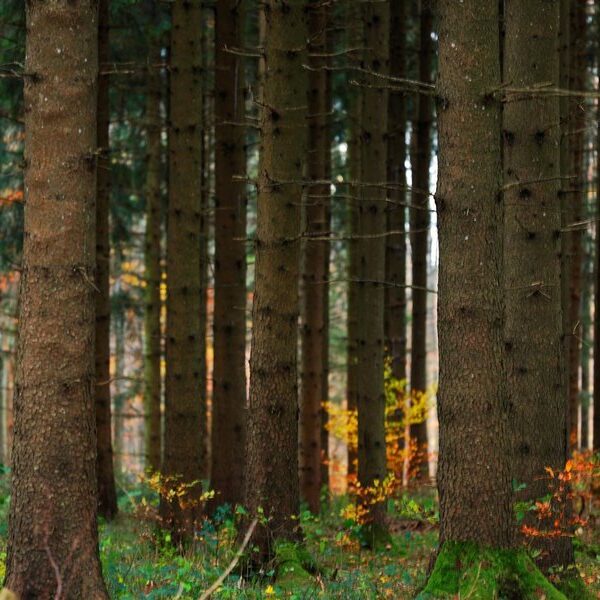
The wet windward forest is built on a few keystone hardwoods. These are the trees that make the Vermont Nature Trail and the Vermont/Cumberland forests feel cathedral-like.
3. Gommier (Dacryodes excelsa)
The dominant canopy tree of the eastern Caribbean rainforest, growing straight and tall with buttressed roots. It bleeds a fragrant white resin (the “gum” in gommier) that islanders have long used to start fires and caulk boats. Where you see big gommier, you’re standing in mature, healthy forest.
4. Silk cotton tree (Ceiba pentandra)
The kapok, and the giant of the lot. Silk cotton trees can top 150 feet with a trunk wide enough to hide behind, and they’re wrapped in Caribbean folklore as the home of spirits, which is partly why old specimens were left standing when surrounding land got cleared. The seed pods burst into a silky fiber that was once stuffed into mattresses and life jackets.
5. Bay rum tree (Pimenta racemosa)
Crush a leaf and you’ll get it instantly: this is the source of bay rum, the spicy aftershave-and-cologne scent. The leaves are distilled into an essential oil, and the West Indian bay rum industry leaned on trees like these for generations. Same genus as allspice, so the whole plant smells like a spice cabinet.
6. Black mangrove (Avicennia germinans)
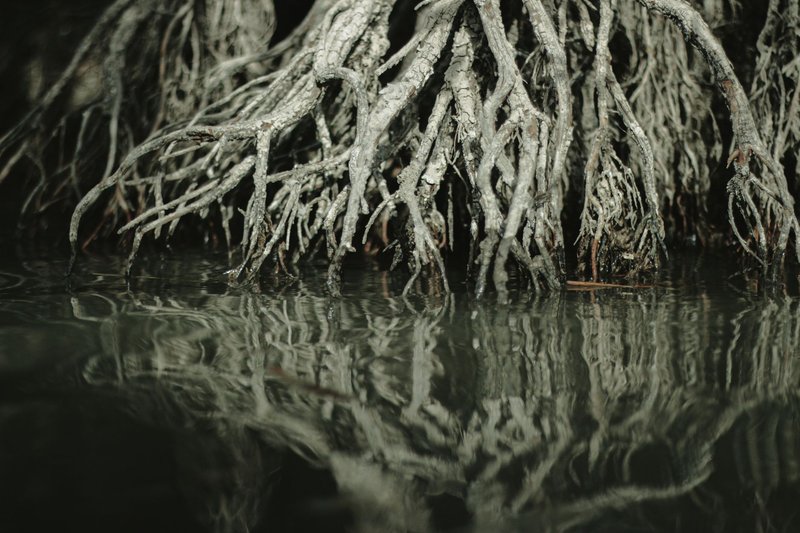
Mangroves are the unsung infrastructure of the coastline, and the black mangrove handles the saltiest, lowest ground. It pushes up pencil-like breathing roots (pneumatophores) through the mud and excretes salt crystals you can sometimes see on the underside of its leaves. These thickets are nurseries for fish and the first line of defense in a storm surge.
7. Manchineel (Hippomane mancinella)
The one to know for the wrong reasons. The manchineel grows along back-beaches and produces small green fruit that look like crabapples, sometimes called the “little apple of death.” Its milky sap blisters skin, and sheltering under it in rain is a bad idea because runoff carries the irritant. National Geographic and plenty of botanists rank it among the most dangerous trees in the world. Many on populated beaches are marked with a painted band. Admire it, don’t touch it.
The ornamentals you’ll photograph
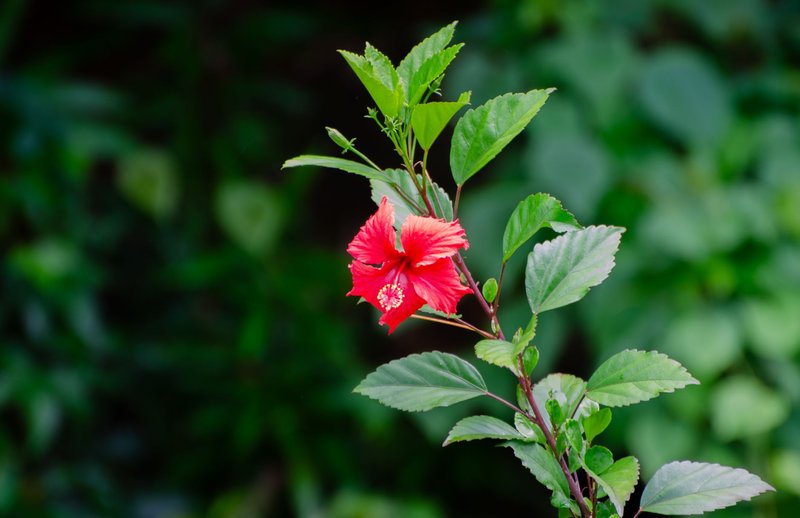
These are the colors that make a Vincentian village look like a postcard. Most are introduced, but they’ve been here so long they define the look of the place — and they’re only a handful of the island’s wider range of flowering plants, just the ones you’ll point a camera at most.
8. Hibiscus (Hibiscus rosa-sinensis)
The workhorse of every garden and hedge, throwing out dinner-plate blooms in red, pink, orange, and yellow with a long central stamen column. Each flower lasts about a day, but a healthy bush never stops producing. You’ll see it trimmed into living fences all over the main island.
9. Bougainvillea (Bougainvillea glabra)
That riot of magenta, orange, or white spilling over a wall isn’t flowers, technically: the color comes from papery bracts surrounding tiny actual blooms. It’s brutally drought-tolerant, which is why it thrives in the drier Grenadines where fussier plants give up.
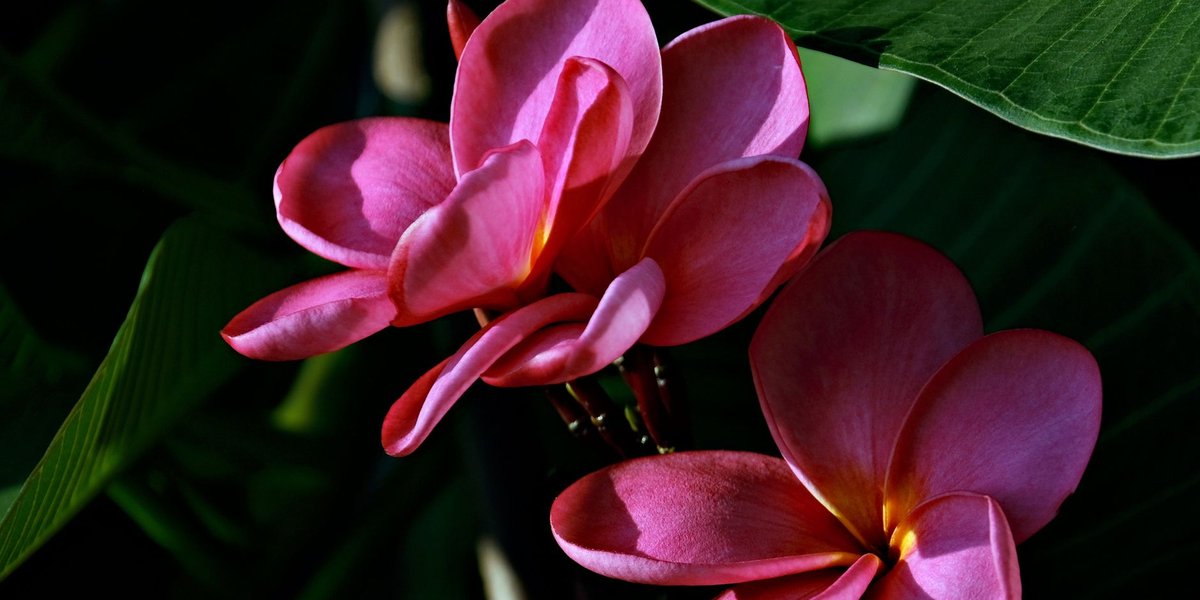
10. Frangipani (Plumeria rubra)
Frangipani trees drop their leaves and still flower, putting out waxy, intensely fragrant blooms in white, yellow, and pink that perfume the evening air. The scent is strongest after dark to attract moths. You’ll find them planted around homes and, by old Caribbean tradition, in cemeteries.
11. Flamboyant (Delonix regia)
When a flamboyant goes off in June and July, the whole crown turns scarlet-orange and the tree looks like it’s on fire. The rest of the year it’s a graceful umbrella of ferny leaves, later hung with long woody seed pods that kids use as rattles.
12. Ixora (Ixora coccinea)
Tight clusters of small tubular flowers, usually fire-red or orange, on a compact glossy shrub. It’s the default hedge plant for resorts and roundabouts because it blooms nearly year-round and shrugs off heavy pruning.
13. Heliconia (Heliconia bihai)
The lobster claw. Heliconias send up bold, waxy bracts in red, orange, and yellow that zigzag along a stem, with the real flowers tucked inside. They love the forest-edge humidity and are a magnet for hummingbirds and bananaquits.
14. Bird of paradise (Strelitzia reginae)
Unmistakable: the flower looks like the head of a crested orange-and-blue bird mid-call. It’s a banana relative from southern Africa, grown here as a cut flower and ornamental in well-watered beds.
15. Anthurium (Anthurium andraeanum)
The glossy, almost plastic-looking heart-shaped “flower” is a spathe, with the true flowers crowded on the central spike. Anthuriums thrive in the shaded, dripping conditions of the windward side and are a staple of the local cut-flower trade.
Crops that built the islands
The agricultural history of Saint Vincent and the Grenadines is written in these plants. Some made fortunes, one of them caused a mutiny.
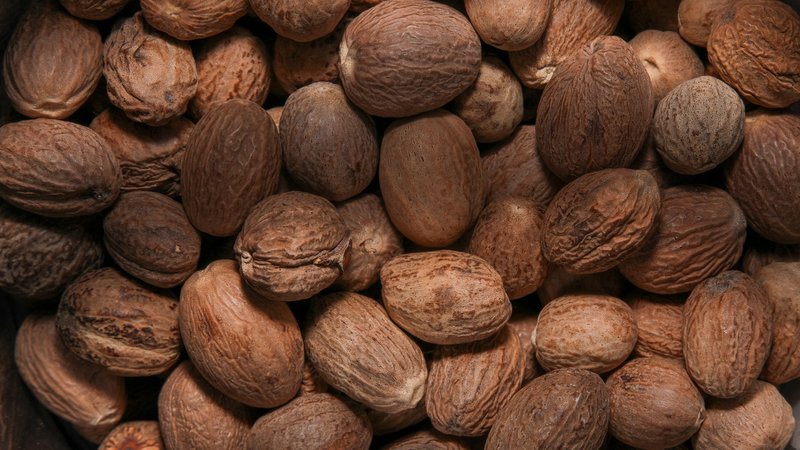
16. Nutmeg (Myristica fragrans)
Spice-trade royalty. Each fruit splits to reveal a seed wrapped in a scarlet lacy aril: the seed is nutmeg, the aril is mace, two spices from one fruit. SVG remains a Caribbean nutmeg producer, and inland farms ship the spice alongside neighboring Grenada’s larger crop.
17. Breadfruit (Artocarpus altilis)
This is the famous one. In 1793, Captain William Bligh delivered breadfruit seedlings to Saint Vincent on HMS Providence, the voyage that followed his earlier, mutiny-derailed Bounty attempt. The descendant breadfruit trees still grow in the St. Vincent Botanical Gardens, the oldest botanical garden in the Western Hemisphere, founded in 1765. The starchy fruit is roasted, boiled, and fried as a staple all over the islands.
18. Arrowroot (Maranta arundinacea)
For much of the 20th century, Saint Vincent was the world’s leading producer of arrowroot, a fine, easily digested starch extracted from the plant’s rhizomes. It went into baby food, biscuits, and even early carbonless paper. The industry has shrunk, but the crop remains a point of Vincentian pride.
19. Banana (Musa spp.)
Bananas were the backbone of the economy for decades, with green hillsides of Musa feeding the UK market under preferential trade terms. Those terms collapsed in the 1990s and 2000s, hammering small farmers, but bananas and plantains are still everywhere, both for export and the pot.
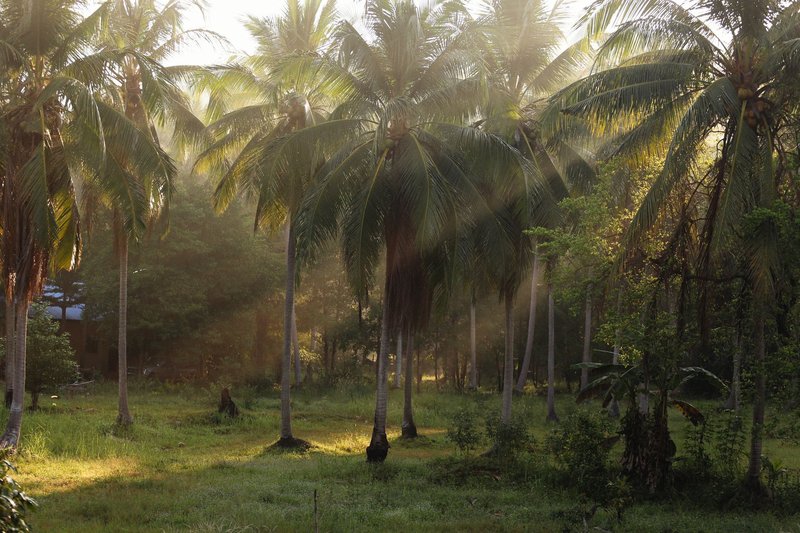
20. Coconut palm (Cocos nucifera)
The plant that frames every Grenadines beach photo. Beyond the postcard, the coconut is a full pantry and toolkit: water, flesh, oil, fiber, and fronds. Roadside vendors will machete one open for the water, which is the genuinely correct way to drink it.
21. Cocoa (Theobroma cacao)
Cocoa grows in the shade of bigger trees on the wetter slopes, its pods sprouting straight off the trunk in yellow, red, and purple. SVG has a small but rising fine-flavor cocoa scene, with local makers turning beans into single-origin chocolate.
22. Soursop (Annona muricata)
A spiky green fruit the size of a football with soft white pulp that tastes like a tart cross of pineapple and banana. It’s blended into juices and ice cream across the islands, and the leaves are a common bush-tea remedy.
The invasives taking over
Not every pretty plant is a good citizen. These three spread aggressively and crowd out native species, a real concern on small islands where habitat is limited.
23. Coralita (Antigonon leptopus)
Also called coral vine or “bee bush,” coralita drapes fences and dry scrub in clouds of pink flowers. It looks lovely and the bees love it, but it smothers everything underneath and is one of the most problematic invasive vines in the dry Caribbean. Pretty and a problem at the same time.
24. Christmas bush (Chromolaena odorata)
A fast-growing shrub that colonizes any disturbed or abandoned ground, flowering pale lilac-white around the holidays, hence the name. It forms dense thickets that block forest regeneration and burns fiercely in the dry season.
25. Lantana (Lantana camara)
Those cheerful multicolored flower heads, shifting from yellow to orange to pink on the same cluster, belong to one of the world’s worst weeds. Lantana is toxic to livestock, forms impenetrable scrub on pasture and roadside, and is tough to clear once established.
Where and when to see them
If you only do one botanical thing here, make it the St. Vincent Botanical Gardens in Kingstown. Founded in 1765, it’s the oldest in the Western Hemisphere and the easiest place to see the Soufrière tree, Bligh’s breadfruit lineage, and a concentrated mix of natives and ornamentals in an hour.
For wild forest plants, the Vermont Nature Trail and the trails toward the Cumberland and Mesopotamia valleys deliver gommier, heliconia, and tree ferns under real canopy. The La Soufrière ascent climbs through changing vegetation zones, though check trail status after volcanic activity.
On timing: ornamentals like hibiscus and bougainvillea flower year-round, but the flamboyants peak in June and July, and the dry-season months of January to May give the most reliable hiking weather. For the Grenadines (Bequia, Mustique, Union Island), expect drought-adapted plants, bougainvillea, coconut, and coralita, rather than the lush rainforest species of the main island.
FAQ
What is the national flower of Saint Vincent and the Grenadines? The Soufrière tree, Spachea perforata, a rare endemic with pale yellow-white flowers named after the La Soufrière volcano. It grows wild nowhere else in the world.
Which plants in Saint Vincent are endemic? The two best-known endemics are the Soufrière tree (Spachea perforata) and the St. Vincent begonia (Begonia rotundifolia), both restricted to the island’s forests.
Are there dangerous plants on Saint Vincent’s beaches? Yes. The manchineel tree (Hippomane mancinella) grows along back-beaches; its sap and small green fruit are toxic and can blister skin. Many are marked with a warning band, so don’t touch or shelter under unfamiliar beach trees.
What crops is Saint Vincent and the Grenadines known for? Historically arrowroot (it was once the world’s top producer) and bananas, plus nutmeg, breadfruit, coconut, and a growing fine-flavor cocoa industry.
Where can I see the most plants in one visit? The St. Vincent Botanical Gardens in Kingstown, the oldest botanical garden in the Western Hemisphere, founded in 1765.