Table of Contents
- Why Sudan’s Plant List Looks the Way It Does
- Desert and Semi-Desert Zone
- Savannah Zone
- Riverine and Nile Floodplain Zone
- Rainforest Fringe (South)
- What’s Actually Threatening These Plants
Why Sudan’s Plant List Looks the Way It Does
Sudan holds more than 3,000 species of flowering plants across roughly 170 families, and by some estimates the true figure — counting non-flowering species — pushes past 4,000. About 15% of that flora is found nowhere else on Earth, a number that surprises people who picture Sudan as one long stretch of sand.
That’s the wrong picture. The country runs from Saharan desert in the north through semi-desert and savannah, along a Nile corridor that stays green through the dry season, down to a sliver of rainforest-fringe habitat near the South Sudan border and the Boma Plateau. Each zone produces a different plant community, and most “plants of Sudan” lists flatten all of that into a single alphabetical roll call. This one doesn’t. Here are 18 species grouped by where you’d actually find them.
Desert and Semi-Desert Zone
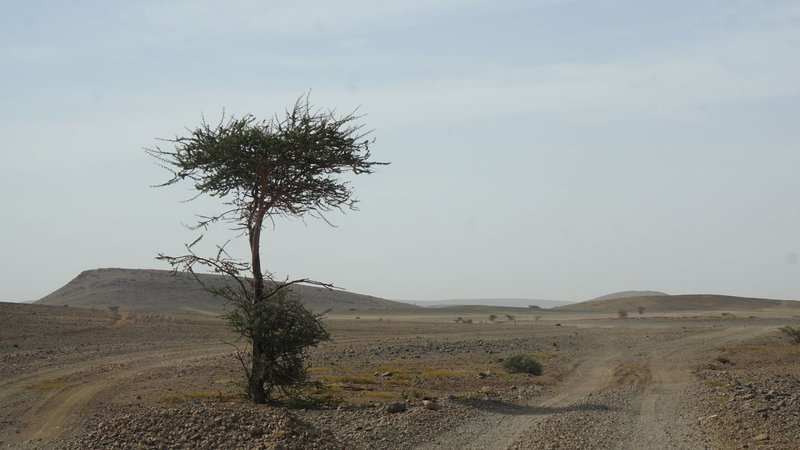
The Sahara doesn’t leave much room for error. Plants here survive on root systems that chase groundwater for meters, waxy coatings that cut water loss, and — often — a taste bitter enough to keep browsing animals away.
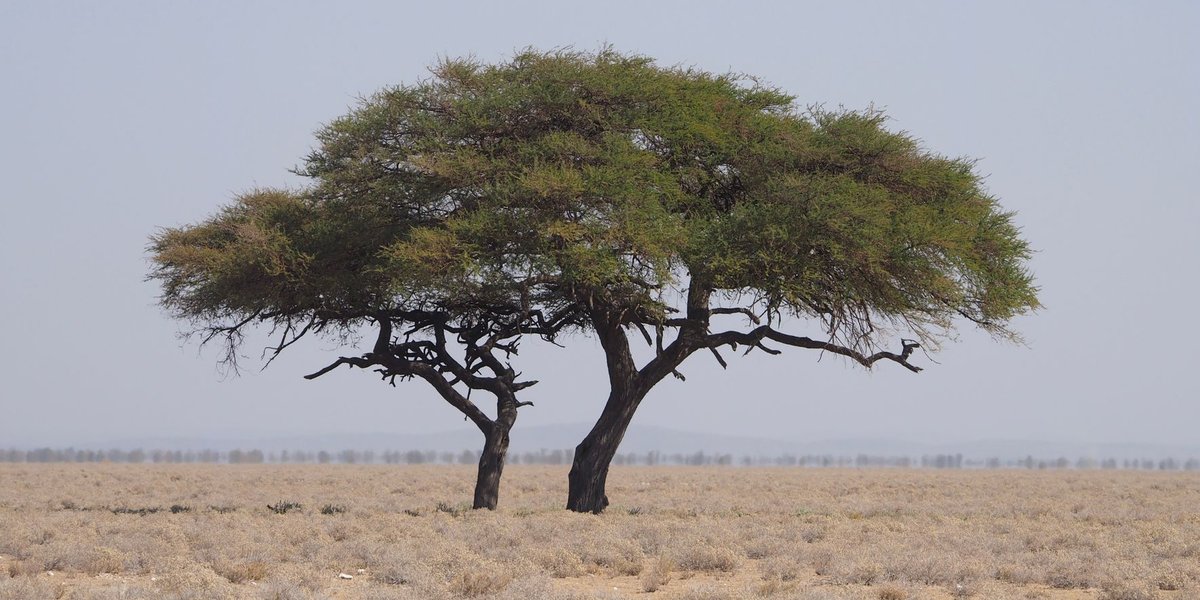
1. Umbrella Thorn Acacia (Vachellia tortilis)
The flat-topped silhouette that shows up in every “Africa” stock photo is usually this tree. Its canopy spreads wide and low, shaped by decades of wind and grazing pressure, while a taproot can run deep enough to tap water tables well out of reach of grasses. Straight thorns up to 5cm long deter all but the most determined browsers, and small hooked thorns lower down finish the job.
2. Gum Arabic Tree (Senegalia senegal, formerly Acacia senegal)
This is the tree behind Sudan’s oldest export industry. Wounded bark oozes a hardened sap — gum arabic — that ends up stabilizing everything from soft drinks to pharmaceutical tablets, and Sudan still produces a large share of the world’s supply from the “gum belt” running across Kordofan and Darfur. Locally, the gum has also been used for kidney complaints, the leaves for sore throats, and the root, boiled down, for wound care.
3. Desert Date (Balanites aegyptiaca)
A thorny, olive-green tree that produces a date-like fruit with a bitter, oily kernel used for cooking oil and soap-making. It shows up across traditional medicine for diabetes management and hypertension, and its resilience to drought means it’s often one of the last trees standing on badly degraded land — which locals read as a marker of where the soil has given out.
4. Sodom’s Apple (Calotropis procera)
A shrub with pale, papery seed pods and a milky latex that’s toxic enough to have earned a reputation across the region as both a poison and a folk remedy, depending on dose and preparation. It colonizes disturbed, sandy ground fast — roadside verges, abandoned fields, dune bases — which makes it one of the most-seen plants in the drier parts of the country even though almost nobody plants it on purpose.
5. Desert Broomrape Relative — Firewood Bush (Leptadenia pyrotechnica)
A leafless, jointed shrub that looks more like a bundle of green wire than a plant, an adaptation that slashes water loss to almost nothing. Its dried stems ignite easily, which is exactly what its name and its traditional use as tinder and firewood both point to. It anchors dunes the way marram grass anchors coastal ones, which makes it a quiet player in desertification control.
6. Sudan Aloe (Aloe sinkatana)
Endemic to the Red Sea Hills region around Sinkat, this aloe grows in rocky, arid terrain and has drawn academic interest for the antimicrobial compounds in its leaf gel. It’s a good example of the endemic slice of Sudan’s flora that broader “top plants” lists tend to skip entirely, since it’s neither famous nor easy to photograph in the wild.
Savannah Zone
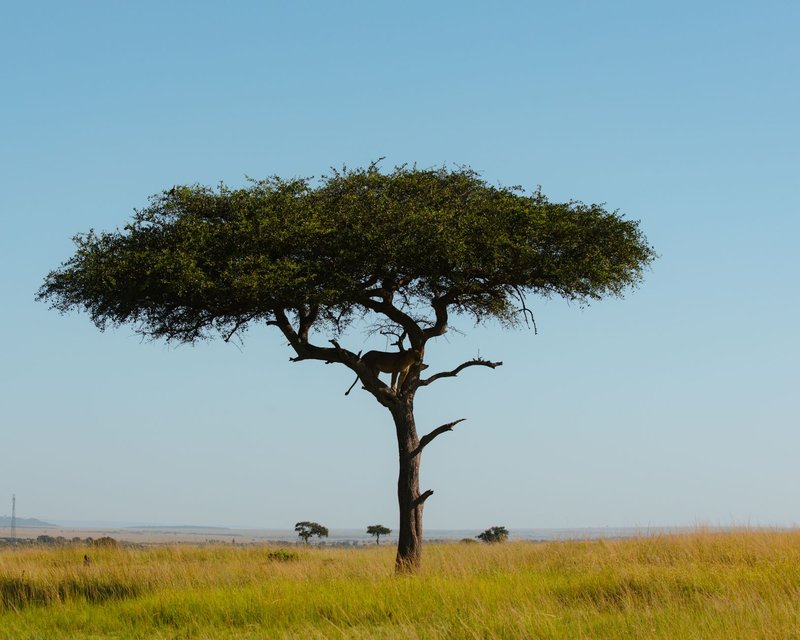
South of the semi-desert belt, rainfall picks up enough to support grassland studded with trees rather than bare sand studded with shrubs. This is Sudan’s most agriculturally important zone and its most biodiverse for large, useful trees.
7. Red Acacia (Vachellia seyal, “Sunt”)
Known locally as sunt, this acacia has a distinctive reddish, powdery bark and grows in dense stands across the clay plains of central Sudan. It’s flood-tolerant in a way the desert acacias aren’t, which lets it colonize seasonally waterlogged ground that other trees avoid, and its wood has long supplied charcoal for Khartoum’s markets.
8. Baobab (Adansonia digitata)
The baobab’s swollen trunk stores water through the dry season, and a mature tree can live well over a thousand years — some estimated specimens across Africa are pushing two thousand. The fruit’s dry, tangy pulp is eaten directly or dissolved into a drink, and the tree shows up repeatedly in Sudanese medicinal-plant surveys for treating fevers and digestive complaints. Almost every part gets used somewhere: bark fiber for rope, leaves for sauces, seeds for oil.
9. Tamarind (Tamarindus indica)
A dense, evergreen shade tree with pods full of sticky, sour pulp used in cooking, drinks, and traditional remedies for fever and digestive upset. It’s slow-growing but long-lived, and in savannah villages a single old tamarind often functions as the de facto meeting point — shade being a genuine resource where midday temperatures regularly clear 40°C.
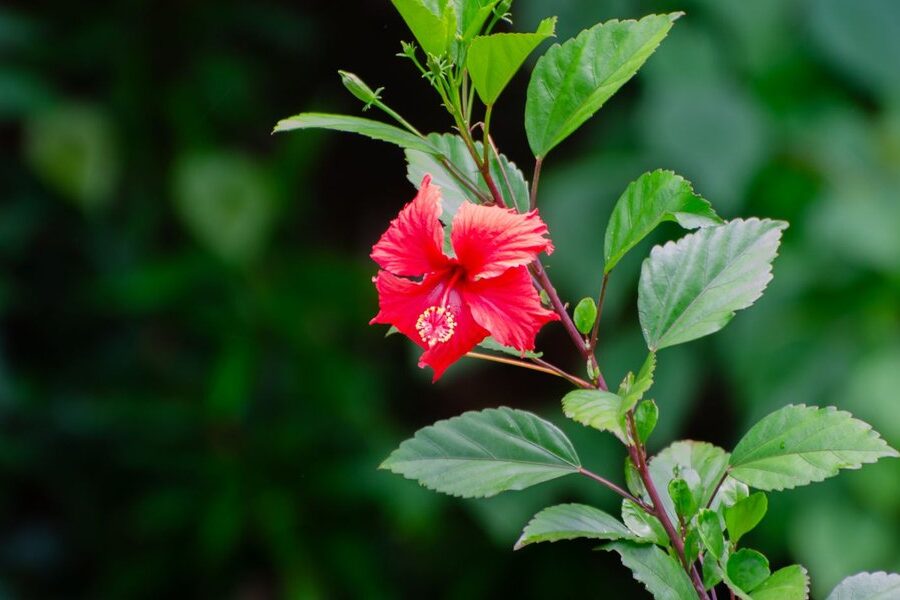
10. Roselle (Hibiscus sabdariffa)
Roselle isn’t a tree at all — it’s an annual shrub grown for its fleshy, deep-red calyces, which get dried and steeped into karkade, the tart hibiscus drink that’s close to a national beverage in Sudan. It’s also one of the country’s more important smallholder cash crops, particularly in the west, where it tolerates poorer soils better than most alternative crops — a resilience reflected across Sudan’s savanna plants.
11. Neem (Azadirachta indica)
Not native to Africa originally — it arrived from South Asia — but so thoroughly naturalized across Sudanese towns and shelterbelts that most residents treat it as local. Its bitter leaves and seed oil are used against a long list of skin and pest problems, and its fast growth made it a go-to species in anti-desertification tree-planting programs from the 1970s onward.
12. Sudan Grass (Sorghum × drummondii) and Wild Sorghum Relatives
Wild sorghum relatives native to this savannah belt are part of the reason Sudan sits inside the broader “Sudanic” center of crop domestication recognized by botanists — sorghum itself was very likely first brought under cultivation in this general region. These wild grasses still form a genetic reservoir that modern sorghum breeders draw on for drought tolerance.
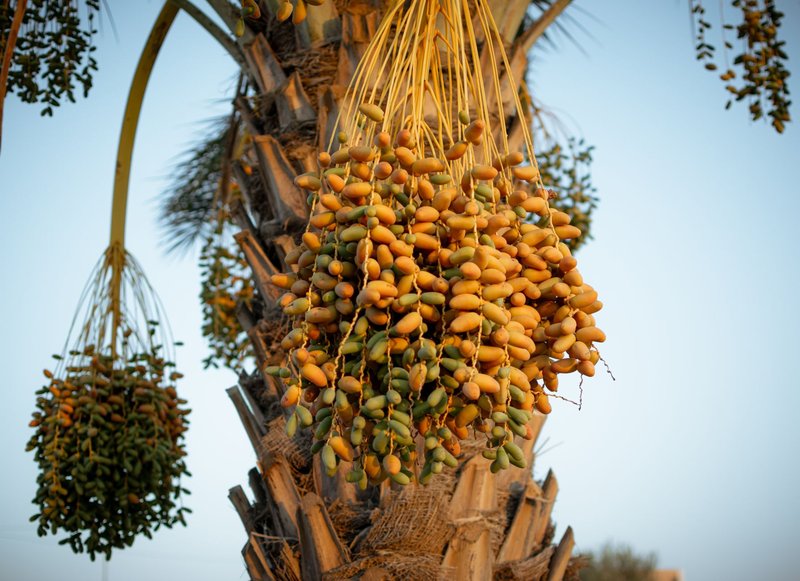
Riverine and Nile Floodplain Zone
The Nile and its tributaries cut a green ribbon through country that would otherwise be desert on either side. Plant life here depends on flood cycles and groundwater rather than direct rainfall, which produces a very different set of species.
13. Doum Palm (Hyphaene thebaica)
The doum palm branches — unusual for a palm — into a dichotomous, forked crown, and produces a fibrous, gingerbread-scented fruit that’s been chewed and traded along the Nile since Pharaonic times. It favors wadis, riverbanks, and groundwater-fed low ground, often forming dense stands where less flood-tolerant acacias give out. The hard fruit shell has even been carved as a vegetable ivory substitute.
14. Egyptian Sycomore Fig (Ficus sycomorus)
A broad, heavy-canopied fig that grows directly along riverbanks and irrigation channels, valued as much for shade and fodder as for its fruit, which is edible but unremarkable compared to cultivated figs. Its extensive root system helps stabilize riverbanks against the erosion that comes with seasonal Nile flooding.
15. Nile Acacia (Vachellia nilotica, “Sunt al-Nil”)
Distinct from the red acacia, this species lines Nile banks and irrigation canals across central Sudan and produces pods historically used in tanning leather, a trade that shaped parts of Khartoum’s old industrial economy. Its dense, durable wood is also a preferred material for traditional boat-building along the river.
16. Water Hyacinth (Pontederia crassipes) — and Papyrus (Cyperus papyrus)
Papyrus once formed vast stands in the White Nile’s Sudd wetlands, the reed that gave ancient Egypt its writing material and that still shapes the Sudd’s hydrology today by choking channels and altering flow. Water hyacinth, an introduced invader, has become the opposite kind of story — a floating mat that clogs the same waterways and costs Sudan real money in cleared irrigation canals and blocked river transport every year.
Rainforest Fringe (South)
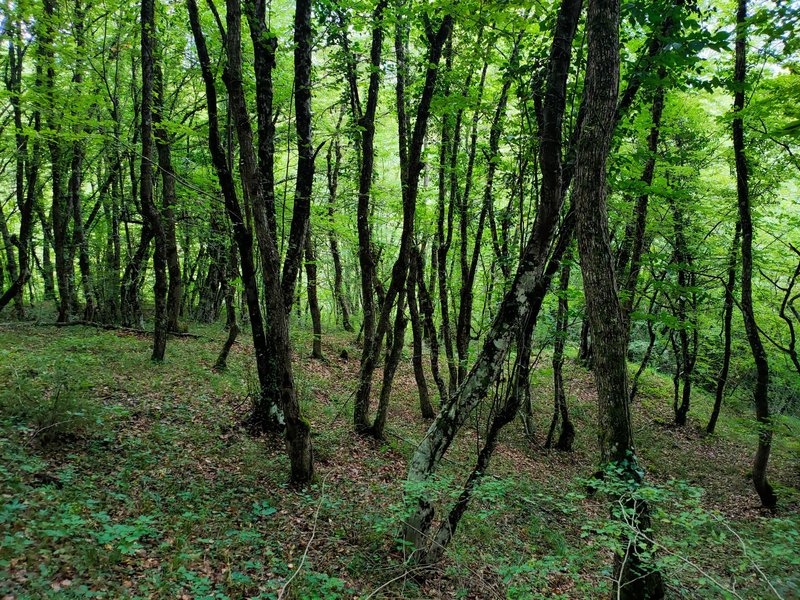
Toward the South Sudan border and the Boma Plateau, rainfall and elevation combine to support broadleaf woodland that has more in common with Central African forest than with the Sahel further north, sharing many species with the trees of South Sudan across the border.
17. African Mahogany (Khaya senegalensis)
One of the most commercially valuable hardwoods native to this belt, prized for furniture-grade timber with a reddish-brown grain that darkens with age. Unregulated logging pressure has pushed it onto conservation watch lists across its African range, Sudan and South Sudan included, and it’s now far more common to find large old specimens near villages — protected by custom — than in open forest.
18. Shea Tree (Vitellaria paradoxa)
The southern woodland belt marks close to the eastern edge of shea’s natural range, and the tree’s oil-rich seeds have supplied cooking fat and skin balm across this part of Africa for centuries. Shea trees take over a decade to bear fruit and can keep producing for two centuries, which means the ones standing today were mostly planted, or protected from clearing, by someone’s grandparents.
What’s Actually Threatening These Plants
Sudan’s flora is under more pressure than any single-species profile suggests. Overgrazing along the desert-savannah boundary strips vegetation faster than it can reseed, exposing bare soil to wind erosion — a feedback loop that has visibly pushed the Sahara’s effective edge southward over the past several decades. The IUCN tracks several Sudanese hardwoods, including species of Khaya, as increasingly vulnerable to unregulated logging.
Climate shifts compound the grazing problem: rainfall in the Sahel band has grown more erratic, and species like gum arabic acacias — already living at the edge of their moisture tolerance — respond to shorter, less predictable wet seasons with lower yields, which in turn pushes harvesters to clear more marginal land to compensate. None of it moves fast enough to make headlines. It moves fast enough that a checklist written today will read differently in twenty years.